Unknown's avatar

About B Gourley

Bernie Gourley is a writer living in Bangalore, India. His poetry collection, Poems of the Introverted Yogi is now available on Amazon. He teaches yoga, with a specialization in pranayama, and holds a RYT500 certification. For most of his adult life, he practiced martial arts, including: Kobudo, Muay Thai, Kalaripayattu, and Taiji. He is a world traveler, having visited more than 40 countries around the globe.

BOOK REVIEW: River of Teeth by Sarah Gailey

River of Teeth (River of Teeth #1)River of Teeth by Sarah Gailey
My rating: 4 of 5 stars

Amazon page


This alternative history book takes as its premise the “what-if” of: what if feral hippopotamuses had been introduced into the bayous of Louisiana. This was apparently an idea that was considered in the real world, presumably by people who didn’t realize that hippos are one of the most territorial and cantankerous creatures in nature. Those who’ve read the writings of the explorers / adventurers who made their way through Africa in the 18th and 19th centuries will be well aware that hippos were among the most feared creatures faced by those expeditions — rivaling black mamba and lions, and not at all like the cattle they were expected to be.

The first part of the novel consists of a hippo wrangler of British origin, named Winslow Houndstooth, building his team of hippo wranglers Magnificent Seven style. Houndstooth has a contract from the federal government to drive feral hippos out of a marshy river basin called “the Harriet.” Houndstooth also has a plan to do this dangerous job in a way that—if it works—will make the job quick and easy while exacting revenge on his archenemy, a man named Tavers who operates gambling riverboats on the Harriet. The story is as engrossing as it sounds. Dangers abound for our protagonist and his team of misfits – misfits of varying reliability, and —like George R. R. Martin—Gailey isn’t afraid to kill off a character.

The introduction of hippos isn’t the only way in which the story is alt-history. It’s also set in a world in which people of various sexual orientations and gender identities are much more open with their sexuality than they would have been in the Louisiana of the early 20th century as we know it. (Note: It’s not clear whether it was the introduction of hippos to America that created divergence in the parallel timeline that allowed for this progressiveness, whether it was a more open societal outlook on sexuality that facilitated the introduction of hippos, or whether these are independent events.)

At any rate, while gender and sexual orientation issues are quite prominent in the story, there’s only one area in which this disparity between historical reality and the alt-world became a distraction for me. I should point out that there would be no distraction in a science-fiction or fantasy story, as there is in historical fiction, because the author can create or destroy societal mores and norms as she wishes in a non-existent world. Anyhow, the one distraction I referred to had to do with one character, Hero, for whom the plural pronoun is used throughout. I must admit that I spent a few pages trying to figure out whether Hero had two heads like Zaphod Beeblebrox before I concluded that it was an attempt to deal with gender identity (I think.) I will say that the character development is skillful and Gailey does a great job of producing characters that evoke love or hate but not indifference.

I enjoyed this story. It’s a quick read, has likable and loathable characters, and builds tension throughout. There is a second book that I understand can be read independently of this one called “Taste of Marrow.” I have not yet read it, but probably will.

View all my reviews

BOOK REVIEW: The Psychobiotic Revolution by Scott C. Anderson, et. al.

The Psychobiotic Revolution: Mood, Food, and the New Science of the Gut-Brain ConnectionThe Psychobiotic Revolution: Mood, Food, and the New Science of the Gut-Brain Connection by Scott C. Anderson
My rating: 5 of 5 stars

Amazon page


For centuries there have been cases in which a change in diet –often accidental– led to relief from a mental illness. However, given the sporadic nature of such effects and the complete lack of understanding of microbes, the enteric nervous system (i.e. the gut’s own “brain” that communicates with — but is also autonomous of — our “first” brain,) and the complexity the symbiotic relationships involved, these anecdotal cases had limited influence on the state of medicine. However, recent years have seen an explosion of understanding in this domain. This has resulted in a vast number of books being written on the role of microbes in the gut for overall health, the role that changing diet can have on changing our microbiota, and related topics such as how the overuse of antibiotics can have a deleterious effect on health by tossing out the microbial baby with the bath water. This book touches on all those topics (and more) as it explores the role of our bacterial hangers-on on our mental health.

The book consists of nine chapters. The chapters are organized so as to first present one with the necessary background to understand how changes to one’s gut microbiota can improve one’s health —particularly one’s mental health (though many of the mental illnesses influenced by microbiota are linked to physical ailments)— before moving on to the specifics of what microbes have been shown to have a given effect and what diseases can be influenced by consumption of probiotics.

The first five chapters give the reader an introduction to the topic and an overview of information one needs to know to understand the later chapters. Chapter three gives one an overview of the changing profile of one’s microbiota over the course of one’s life. Particular emphasis is given to one’s youth and to the transfer of bacteria to infants. [Readers may be aware of the problem that c-section births result in a failure of babies to receive a dose of beneficial microbes imparted by passage through the vaginal canal.] Chapter four takes one on a quick ride through one’s alimentary canal from mouth to rectum, with particular emphasis on questions such as how bacteria survive the stomach’s acid bath, and which parts of the digestive system contain which microbes (and to what effect.)

The last four chapters dig deeper into the specifics. These chapters look at specific probiotics, how one can get them into one’s system, and what science has found out about probiotics and psychobiotics (like probiotics, but specifically ones that influence mood and mental states) effects on specific ailments. Chapter eight, which deals with major diseases, does cover physical ailments as well as mental ones because – as mentioned— these afflictions often go hand-in-hand. The last chapter (Ch. 9) looks at where this body of knowledge is going. It delves into practices that are presently well-established, such as fecal matter transplants, but also into challenging works-in-progress such as attempts to develop narrower spectrum antibiotics so that we can get the life-saving benefits of these medications without their crippling side-effects.

The book has many graphics, as one would expect from a work that investigates such a complex scientific topic. I can’t really speak to the quality of the graphics as the review copy I read didn’t have completed graphics. However, the subjects of the graphics seemed appropriate and well-placed. The book also has a glossary, annotations, and a further reading section to assist the reader in the study of this subject.

I found this book to be informative and engaging, and would highly recommend it for anyone interested in the role of microbiota on mental health. The text was well-organized and readable. Given the scientific nature of the material, it’s easy for such a book to become ponderous, but the authors made attempts to keep the tone light and the presentation non-intimidating.

View all my reviews

BOOK REVIEW: A Monster Calls by Patrick Ness

A Monster CallsA Monster Calls by Patrick Ness
My rating: 5 of 5 stars

Amazon page


A twelve-year-old boy, Conor, is forced into early adulthood when his mother is laid low by a terminal illness. Conor’s father is remarried and lives across the ocean in America (the book is set in England.) When Conor’s mother has to be hospitalized, Conor must go to stay with his grandmother. This is undesirable both because Conor longs for a return to normality and because his grandmother— while a fundamentally caring woman—is much more uptight and prim than Conor’s mother.

Conor has been terrorized by a recurring nightmare of late, and when the Yew tree from outside his window comes to life, the Yew tree monster is, relatively speaking, a welcome relief from the much more dire scene that confronts Conor nightly in his nightmare. The Monster informs Conor that it will tell the boy three stories over multiple nights, and when it is done Conor will be required to return the favor by telling the Monster one true story in return. The book plays out with the monster telling Conor stories as well as encouraging the boy to act out to release the building tension that threatens to destroy him. All the while, the story builds toward a moment of reckoning. The idea of repressed rage building into a monster of its own is central to this work.

The book is generally classed as “low fantasy”—a genre in which a limited supernatural element barges into an otherwise real world story. However, it can arguably be read as more psychological in nature. When the Monster visits, Conor finds evidence of his presence— e.g. leaves and berries—but to my recollection no one ever sees such evidence besides Conor, and so the reader is free to view these clues as harbingers of a descent into madness.

The book, itself, has an interesting back story. Apparently, the idea came from Siobhan Dowd, a writer of children’s / YA literature, when she had cancer. Patrick Ness was brought in after Dowd died to take her characters and premise and turn them into a book. Ness completed the book, which was made into a film a couple of years back.

I’d highly recommend this book. It builds and maintains tension throughout the story and is highly readable.

View all my reviews

BOOK REVIEW: Selected Early Poems by Robert Frost

Selected Early PoemsSelected Early Poems by Robert Frost
My rating: 5 of 5 stars

Amazon page


This is a collection of collections. It gathers the first three of Robert Frost’s books into one volume. “A Boy’s Will,” “North of Boston,” and “Mountain Interval” are all part of Frost’s early work and they came out in a relatively short span: 1913, 1914, and 1916, respectively. However, one can see definite shifts in the nature of the poems across these collections. The poems of the first collection feature many shorter poems that are rhymed and metered. The middle poems are longer, are largely unrhymed and of varied meter / unmetered, and are often written as extended dialogs that convey a story or a bit of tension from one. The last collection features Frost’s most famous poem, “The Road Not Taken,” and contains many poems that are similar to that one in that they have more of the lyric quality of “A Boy’s Will” but take the form of a short meditation.

The theme that cuts across these poems is rural New England life. Apple-picking, wall mending, visiting someone in a snowy scene– these are the kind of events that transpire in this work. Nature features in Frost’s poems, but is largely secondary to the human element—a setting not a subject.

I enjoyed this collection, and would highly recommend it for poetry readers.

View all my reviews

DAILY PHOTO: Puppies of Savandurga

Taken in March of 2015 near Savandurga


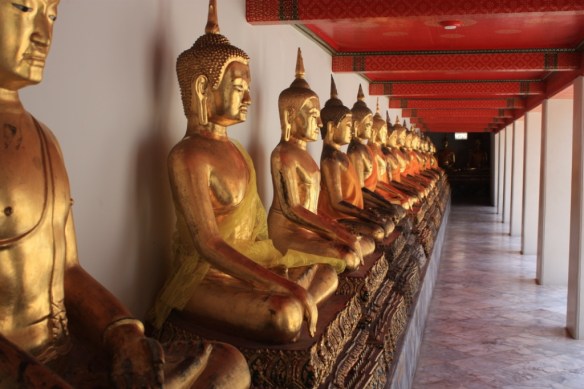
DAILY PHOTO: Buddha Row

Taken at Wat Pho in the summer of 2014

5 Gripping Works of Fiction I Read in 2017

NOTE: I previously did posts on books written in 2017 and nonfiction books I read this year.  These are fiction books I read this year that were written in previous years, and which are all awesome in some way. The hyperlinks in the titles are to my reviews on GoodReads.


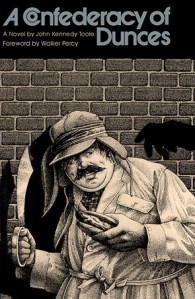
5.) A Confederacy of Dunces by John Kennedy Toole: A pretentious and lazy man-child is forced to get a job to help out the mother who treats him as though he’s twelve.  Hilarious.


4.) Challenger Deep by Neal Schusterman: A young man is institutionalized with mental illness and the reader is granted glimpses into both his real life and his delusions.  Evocative.


3.) The Guide by R.K. Narayan: An ex-convict is mistaken for a spiritual guru. Thought-provoking.


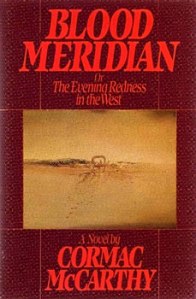
2.) Blood Meridian by Cormac McCarthy: Men of violence being violent the borderlands of Texas. Visceral.


1.) All the Light We Cannot See by Anthony Doerr: The fates of a blind French girl and a bright German boy intertwined during the Second World War. Gripping.

DAILY PHOTO: Mythical Beasties of Cambodia

Taken in October of 2012 in Phnom Penh


2017: My Year in Review

Lilla and I return to Bangalore on New Years Eve from a trip to Hungary by way of Vienna, Austria. It was my first time in Vienna since a similar overnight trip that I believe was over 20 years ago (i.e. my first trip to Budapest in 1994-ish, if memory serves–which it seldom does anymore.) Of course, the parts of the city that attract the eye look the same–the classic Viennese architecture. I’d be lying if I said I had any great recollections from the prior trip except that the weather was cold and drizzly and Vienna’s legendary cafes were much in need. (Fun fact: there’s a Cafe Coffee Day in Vienna. That will mean nothing to my non-Indian friends, but may be interesting to my Indian friends.) This time we had beautiful blue skies and a tolerable dry cold.

January was fairly unremarkable except for several trips to the dentist to get a tooth fixed that shattered upon eating a piece of hard but delicious food. Thankfully, the fracture of previously capped tooth was painless–as long as I didn’t drink beverages of extreme temperatures. And Lilla began her busy season that runs through the first few months of each year.

In the later half of February and through early March, I was in Rangsit, Thailand at the Muay Thai Institute to complete the third level of their Fundamentals course. Thailand is always fun and friendly, and I finally picked the right time of year for Thai-boxing training. [I’ve done the rainy season, and that’s no fun –when you sweat as intensely as I– because nothing ever dries, including one’s shoes. I’ve also trained during the hottest time of year, and the suckiness of that will be self-explanatory to anyone who knows how hot and humid Thailand can get.] On Sundays, I got to see a few new sites around Bangkok (e.g. the Zoo and the Ananta Samakhom Throne Hall) in addition to watching the fights at the Rangsit Arena, but mostly this trip was training four hours per day, six days a week– leaving little time or energy for touring.

In April, Lilla and I traveled through four states of India’s Northeast (Assam, Meghalaya, Nagaland, and Manipur.) This is a fascinating part of the country because it feels like a different country–except for Assam. It’s very tribal, and if one can imagine what Burma would be like if Christian missionaries converted most of the population instead of Buddhists having done so, that’s what Nagaland feels like.  Highlights of the trip included seeing Indian Rhinos from elephant-back and drinking tea with a group of tattoo-faced old men who’d once taken part in internecine killing. (FYI-This was cannibal country once-upon-a-time.)

 Our Northeast excursion continued into the early part of May. May was also notable for our participation in the TCS (Tata Consultancy Services) 10K run. This was the first time I’d run such a race and probably the first time Lilla ran 10 consecutive kilometers without stopping in her life. (This was not Lilla’s first race though, she’d participated in a shorter race (a 7k) earlier in the year.)

We also returned to stay at the Golden Mist Coffee Plantation Homestay near Madikeri. This is a quiet estate where they grow coffee, tea, and various spices, and it makes for a relaxing weekend away from the chaos that reigns in Bangalore. Golden Mist was one of the first excursions we made when we came to India, and the food and experience was true to our memory of it.

In June we returned to Zambia, and made short side trips to Botswana and Kenya. (The latter because the Kenyan Airline allows one to stay over at no additional cost.) This time Lilla and I made it to Livingstone to see Victoria Falls. During our previous trip to Lusaka, there wasn’t time, and so we were glad we got an opportunity to go back. (To put it in context, going to Lusaka and not going see Victoria Falls is like going to Flagstaff and not going to see the Grand Canyon.)

The trip to Botswana was to Chobe National Park which sits just across the border / Zambezi River. There is actually a point in the middle of the Zambezi River where four countries’ boundaries touch (Zambia, Zimbabwe, Botswana, and Namibia [which has a little negotiated neck of land that stretches to the Zambezi for water access]) and which I would have passed quite close to when crossing at the Kazungula border checkpoint.

In Kenya, I made a trip to Amboseli National Park. This park is most famous for: a.) its spectacular view of Mt. Kilimanjaro which many argue is better than the view in Tanzania (the country in which the mountain actually resides) At any rate, the volcanic cone was entirely socked in with clouds, and so I didn’t get this benefit the view at all. b.) the Maasai people, famous both as warriors and cattle-herders. and c.) the wildlife–and most especially a huge group of elephants who’re supported by the vegetation of a marsh created by Kilimanjaro glacial runoff. The wildlife more than made up for the lack of view of the mountain. In fact, the experience of viewing wildlife in Africa was mind-blowing–dare I say, life-changing. Being on the savanna in Kenya and reflecting on the origins of our species put the world in perspective.

July and August were fairly quiet, though we had an intense rainy season in Bangalore this year. In our first few years in India, the most intense rains all came after the rainy season should have been over. Not so this year.

In September I resumed teaching yoga. I’d been on a hiatus because our plans had been up in the air. Previously, we were supposed to be returning home to United States sometime in the summer or early fall of this year. At any rate, we found out that we’d be staying here almost until our five-year anniversary in India– beyond which Indian visa law prohibits residency. In other words, we are now scheduled to leave India in the summer of next year–i.e. July-ish of 2018. Where we will go remains anyone’s guess, but the Indian government–taking a line from Semisonic’s “Closing Time” says, “we don’t have to go home, but we can’t stay here.”  Anyhow, I co-taught a  shatkarma (cleansing practices) workshop for a teacher’s training with Amrutha Bindu Yoga Shala. That was a new experience for me, but mostly I’ve been teaching small classes and private lessons on asana (postural practice), pranayama (breath), and yoganidra (relaxation.)

Also in September, we made our first trip to Gujarat to visit Ahmedabad and some of the nearby historic sites. We saw some awesome temples and step-wells, some of which dated back as far as the eleventh century. Ahmedabad was in festival season splendor, heightened by having recently been chosen as India’s first UNESCO Heritage City.

In November I participated in National Novel Writing Month, and for the first time successfully completed the challenge of drafting a 50,000 word novel (novella) in one calendar month. I’ve started this challenge before, but it never really worked either because of ideas failing me or scheduling, but this year we only had one long weekend trip to Rishikesh and my teaching schedule, and so I was able to keep the required daily writing. This time I had the sense to work on a much less convoluted story than the draft that sits on my hard-drive, mocking me like some hallow-souled demon of the abyss.

Rishikesh was awesome and relaxing. We did some rafting on the Ganges, and saw a number of huge ashrams and temples.

That brings me to December. Lilla and I will be going to the Philippines in the latter half of the month for the holidays, with a day-long layover in Kuala Lumpur, Malaysia on the way back. This will be our first time in the Philippines, but our second time to KL. Besides a couple days in Manila, we’ll be in the Visayas, which is the quiet belt of small islands in the middle of the country–as opposed to Luzon (the big island to the North where Manila is located) or Mindanao (the big island to the South in which Muslim rebels are said to be active.)

As with this year, we should be back in Bangalore in time to ring in 2018.

5 Fascinating Nonfiction Books I Read in 2017

NOTE: I already did a post of the books published in 2017 that had the most profound effect on me. That post can be seen here. This one is about books I read in 2017, most of which weren’t published this year. The hyperlinks go to my GoodReads review of the respective book.


5.) Narconomics by Tom Wainwright: This is a look at how drug cartels have been drawing from the playbooks of successful multinational corporations to make their operations more efficient and profitable. It contains gripping journalism and–for an economics wonk such as myself–it hits the spot with regards to scholarly curiosity as well.


4.) The Man Who Wasn’t There by Anil Ananthaswamy: Neuroscience has been converging on a conclusion drawn by Buddhists long ago (though not necessarily sharing identical explanations /mechanisms) that the self is an illusion. Ananthaswamy considers the neuroscience of self by examining how nervous system ailments and injuries have challenged common explanations about what the self is based on what it feels to be a self. (e.g. Out-of-body experiences can be induced with electrodes. Some people deeply feel they are dead, or that they either have limbs that aren’t present or that limbs that are don’t belong to them.)


3.) The Way of the Iceman  by Wim Hof and Koen De Jong: Any book that can get one to start taking cold showers has to be pretty persuasive. Wim Hof is known for his cold endurance “stunts,” but his argument in this book is that anyone can do it and that there are health benefits to doing so. The authors report on the science of said benefits as well as offering a program to start one’s way on such a program.


2.) Trying Not to Try by Edward Slingerland: Slingerland brings a fresh look at the ancient Chinese concept of wu-wei (apparently pronounced “ooo-way.”) Wu-wei is variously translated as “actionless action” or “to do without doing,” and–while that may sound like meaningless bumper-sticker wisdom–it reflects a state of effortless action that requires an elusive but powerful state of mind.  Slingerland presents varied Taoist and Confucian approaches to the subject, but also relates the idea to modern ideas such as Mihaly Csikszentmihalyi’s “Flow.”


1.) How Enlightenment Changes Your Brain by Andrew Newberg and Mark Waldman: A neuroscientist and a positive psychologist team up to explain the common routes to the enlightened states of mind described in both Eastern religious / spiritual traditions and the mystic branches of Western religions (i.e. Jewish Kabbalah, mystic Christian sects, and Sufi Islam,) as well as their scientific underpinnings.