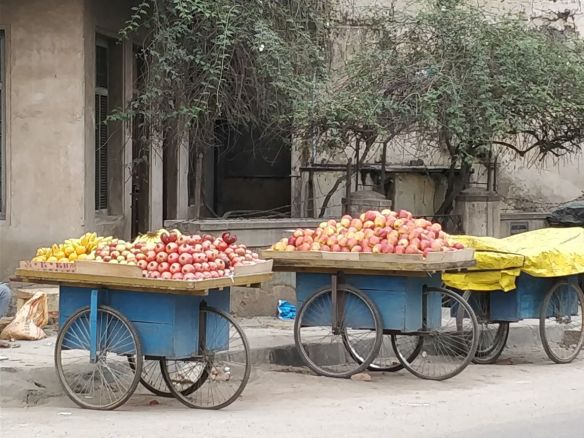
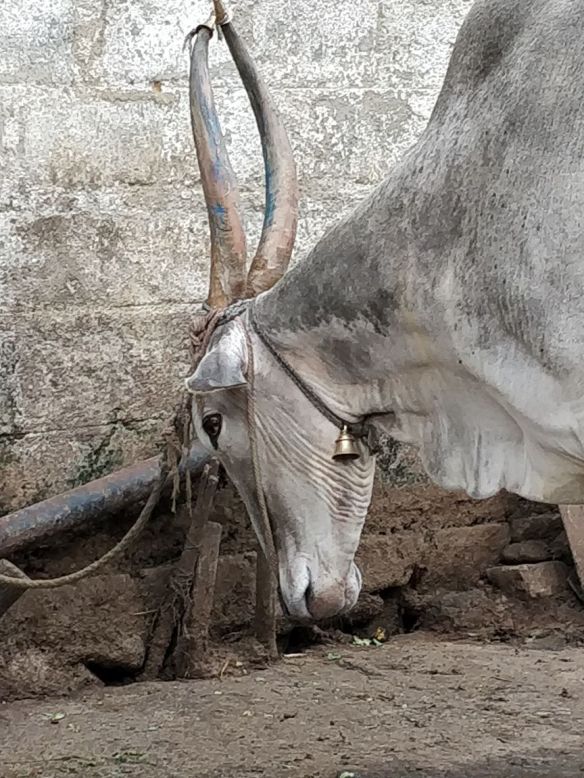
Taken near Lapah in the Great Himalayan National Park in Himachal Pradesh in June of 2015
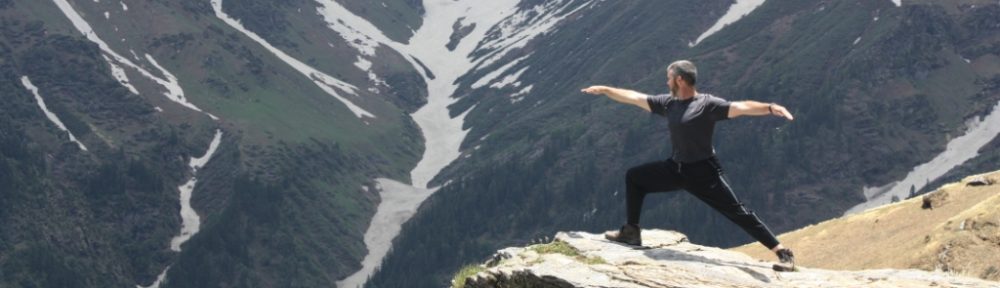

Taken near Lapah in the Great Himalayan National Park in Himachal Pradesh in June of 2015

i can feel my heartbeat
i shouldn’t feel my heart beat
but i’m sharply folded
when i stand and blossom
the warmth rushes through me
and the pins and needles
trickle through my body
subtle the sensation
time attuned sensation
now i know my heartbeat
subtle silent heartbeat
It’s that year-in-review time of year. To clarify: these are the books published in 2017 that most profoundly influenced my thinking. I clarify because I’ll probably do a list of books that I read in 2017 but that were published in previous years.

5.) Norse Mythology by Neil Gaiman: Gaiman’s take on classic tales of Norse Mythology shows that one can bring great value with a fresh look at old art. However, beyond the “steal like an artist” sentiment of not getting locked into building something brand new, these stories show the Norse to be exceptional storytellers. All ancient cultures had a mythology, but not all of them were equal in producing stories that are timeless and work across cultures.
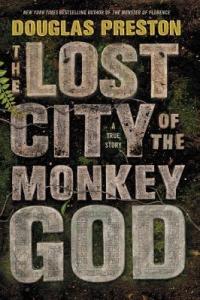
4.) The Lost City of the Monkey God by Douglas Preston: This book taught me two things: First, that there is still much to be discovered right on terra firma. We talk as though the only new vistas of knowledge are to be found in space or places like the Mariana Trench, but the days of terrestrial discovery are not past. Second, there is a lesson of common fates of humanity across time. A lot of this book is about a parasitic disease that infected several of the expeditionary team, as well as speculation about how the same disease might have influenced the civilization that abandoned the titularly referenced city.
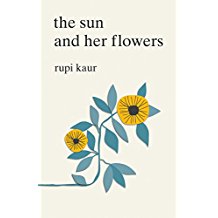
3.) The Sun and Her Flowers by Rupi Kaur: Kaur’s books combine poetry and art. Both are crude but heartfelt and evocative. Both of Kaur’s books have struck a chord with readers, and that resonance seems to be about the candid and bold nature of her art.
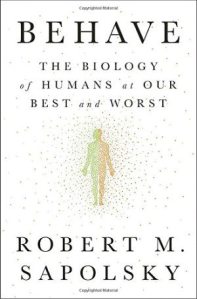
2.) Behave by Robert Sapolsky: Sapolsky tells readers that one can’t look at something as complex and bewildering as human behavior through the lens of any one academic discipline and get a complete and satisfying picture. Sapolsky considers the best and worst human behaviors through the lenses of biology, neuroscience, endocrinology, human evolution, and more.

1.) Stealing Fire by Steven Kotler & Jamie Wheal: The authors of this book examine the various ways people achieve what they call ecstasis. Ecstasis is a state of mind in which one loses one’s sense of self, and all the muddling factors that go with the self, such as self-criticism, fear of failure, and the feeling of working against everyone and everything else.

Taken in December of 2016 in Budapest
 The Silk Road: A Very Short Introduction by James A. Millward
My rating: 4 of 5 stars
Millward’s emphasis is in pointing out that the Silk Road was neither predominantly about silk nor was it the single route that the word “road” implies. While silk was certainly a product that traded on this transportation network, it wasn’t necessarily the most important commodity by value– and certainly wasn’t in terms of its effect on the world. More broadly, the author presents a Silk Road that defies neat delineations and definitions, a Silk Road that is often more of a conceptual bridge than a literal transportation route.
The book consists of six chapters. The first describes the territory serviced by this network, and particularly Central Eurasia which served as the bridge between East and West. This is the Silk Road as connective tissue allowing dispersion of ideas, technologies, products, services, and art between regions separated by vast distances and cultural gulfs.
While chapter one deals in the space of the Silk Road, chapter two explores time periods in which the Silk Road flourished. This begins with Indo-European nomads as far back as 3000 BC / BCE, and proceeds through various eras seeing changes in the route and the products moving along it. Most of these eras, e.g. the classical Silk Road period and the time of the Mongol Empire, are defined by burgeoning use of the network. However, Millward does ask how dead was the period from the 3rd to the 5th AD / CE which is normally considered a dead spot in Silk Road history. It should be noted that modern history is addressed mostly in the last chapter, which considers whether the Silk Road remains relevant in today’s world with its very different transportation and communications infrastructures.
Chapter three is about the biology of the Silk Road. A considerable portion of this chapter is devoted to human dispersion and the legacy of events in Central Asia as seen in human DNA. However, the author also examines the spread of horses, grapes, and dumplings. The approach of focusing on a few key commodities is repeated in chapters four and five. (These three chapters form the core of the book.)
Chapter four reflects on the role of the Silk Road in dispersion of technology. Silk is presented in this chapter, but not so much as pashmina and bolts of cloth, but rather in terms of sericulture—the technology of producing silk. The second product to be evaluated herein is paper, and it’s argued that paper was a more important commodity than was silk. Medicine and military technology are also examined in this chapter as among the biggest global game changers of the Silk Road.
Chapter five is about the spread of art along the Silk Road. One of the most interesting parts of the book, for me personally, was a discussion of stories and myths that spread via the Silk Route, and which can be seen in various cultures along the way. The lute (and stringed instruments that sprung from it) is also considered as a key artistic commodity of trade. There is also an extensive discussion of visual motifs seen along the Silk Road, as well as the blue-and-white porcelain that was a popular product, ultimately becoming widely copied.
As discussed above, the last chapter is about the present and future of the Silk Road. Entitled “Whither the Silk Road,” the author suggests that this trade network didn’t become irrelevant with the rise of transportation by sea and air and new modes of communication—though it has changed considerably.
There are a small number of graphics, including maps as well as photos and pictures that depict examples of commodities and technologies relevant to discussion of Silk Road trade. There are also sections devoted to references, advice on further readings, and a page of relevant websites.
I’d recommend this book for anyone who wants a brief overview of the Silk Road. If you’re a history buff and want to dig deep and see broadly, it seems there are some very well-regarded books of a much more detailed nature. I can’t comment on said books, but I know there is more than one award-winning book on Silk Road trade and cultural interactions. This, as the subtitle suggests, is much more of an outline of the subject. That said, I think the author does a good job of picking a few exemplary commodities, technologies, and arts, and focusing on them. Thus, one does get some of the insights of a book that drills down, just not along as broad of subject matter.
 Love’s Labor’s Lost by William Shakespeare
My rating: 5 of 5 stars
King Ferdinand and three of his attending lords (Berowne, Longaville, and Dumaine) make a pact to devote three years to intense study and self-betterment. During this time they are to study arduously while depriving themselves of certain earthly pleasures. Specifically, they will fast one day a week; they will sleep but three hours a night; and— most controversially— they will give up women altogether. Just as military strategists speak of plans not surviving first contact with the enemy, this pact falls apart with the arrival of the Princess of France and her three attending ladies (Rosaline, Maria, and Katherine.) The men each develop a fancy for one of the women, and the pact unravels when the men, spying on each other, realize the others are intending to woo and pursue.
As it’s a comedy, there are a number of opportunities for confusion and comedic relief. Such comedic elements include mix ups in the delivery of love letters, and disguise schemes that go awry. For a comedy, the play ends on an interesting note. As is expected, there’s a reconciliation of who loves whom. However, there are no weddings to suture up the conclusion, but instead another agreement is entered into in which the men and women will see each other again in one year’s time. This leaves readers to consider the question of whether they think the men can be more diligent students when love backs this pursuit (but provides a distraction) than when it works against it.
This is one of Shakespeare’s earlier works, and it’s more original than some. Still, it deals in some common comedic themes about the disruptive force of love and the effects of failed duplicity.
This play is highly recommended.

Taken on December 3, 2017 in Bangalore

Mobile Dumpsters

Elephant slide

Mural

Temple