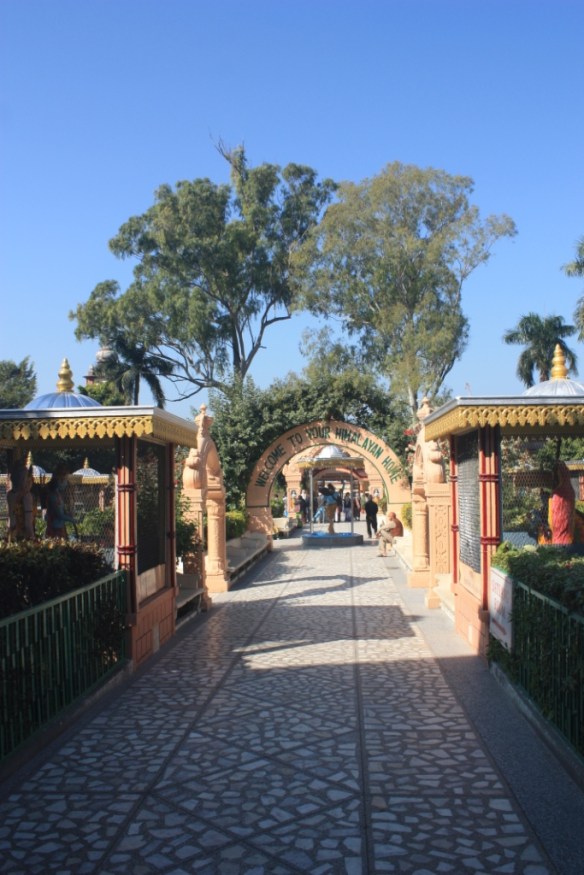
Taken in November 2017 in Rishikesh


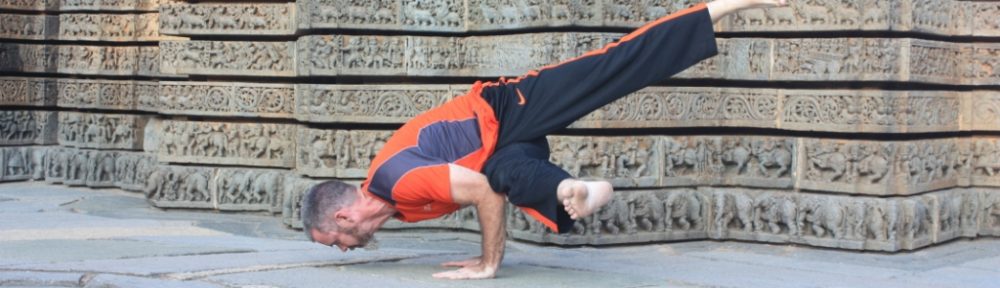


Taken in November of 2017 in Rishikesh


 Two Gentlemen of Verona by William Shakespeare
My rating: 5 of 5 stars
This play uses some of the same plot devices of other Shakespearean comedies. First, there are two friends who fall for the same girl. Second, there is the father who wants said girl to marry someone other than the man she’s interested in marrying. Third, there is a girl who dresses as a man so that she can travel to chase after her beloved (only to be heart-broken.) [Think about that in the context of the theater of the era. The actor would be a dude playing a chick who’s pretending to be a dude.] The fact that there are some repeated themes doesn’t lessen the value of this work. For one thing, this is thought to be the first—not only the first of comedies but the first of Shakespeare’s plays more generally. Also, some of the most humorous dialogue is with secondary characters like Speed and Launce, the man-servants to Valentine and Proteus, respectively.
In the beginning, there are two gentlemen in Verona, Valentine and Proteus. Also in Verona is Julia, who loves Proteus. Proteus loves Julia back while he’s in Verona. However, after Valentine goes off to Milan for character building, Proteus’s father determines that his son should as well. In Milan, Proteus finds that Valentine has fallen for a girl named Sylvia. Unfortunately, Proteus falls for Sylvia as well and–not being a “bro’s before ho’s” kind of chap nor being the kind who can maintain long distance lovin’—he metaphorically stabs Valentine in the back and loses his mind. He could always shuffle back to Julia using the “what happens in Milan, stays in Milan” credo, except that Julia (posing as a boy) is witness to her lover’s unfaithful acts.
Read it, you’ll like it.
 The Lost City of the Monkey God: A True Story by Douglas Preston
My rating: 5 of 5 stars
Preston tells the story of his participation in an expedition into the Mosquitia region of Honduras in search of a lost city, alternately called the White City (i.e. La Ciudad Blanca) or the City of the Monkey God. Preston was acting as a correspondent for National Geographic and was part of a larger team including a photographer, filmmakers, archaeologists, and a team of ex-Spec Ops escorts. It’s not a simple and straightforward tale of Indiana Jones types chasing after the artifacts of a long collapsed civilization (though it does capitalize on that sense of intrigue greatly from the title to the telling of both the historic and contemporary searches for this fabled lost city.) The book tells several stories that occur about and around this search, and they are arguably more interesting.
One of these side stories is the historic accounts of past explorers who searched for the White City. Those were the individuals who more closely corresponded to Indiana Jones–both because they didn’t have an airplane with a state-of-the-art Lidar system (lidar is the light/laser version of radar or sonar), and because they were more likely to engage in tomb-raiding and artifact robbery. This isn’t to say that the expedition that Preston was on didn’t have its share of snakes, quickmud, and other hazards that are the only reason that a huge city from a past civilization would remain undiscovered in the present day. The region in which the expedition took place had not only all the natural hazards of dense jungle, but the human hazards posed by operating in territory controlled by drug cartels. That said, they didn’t have to machete through hundreds of miles of jungle with no idea of where they were likely to find their objective.
One of the most interesting side stories occurred when Preston and many of the members of the expedition came down with leishmaniasis, a nasty tropical disease vectored by sandflies. The disease has a treatment that’s almost as likely to kill one as is the disease. It’s almost impossible to completely get rid of the disease. One can be cured in the sense of being made asymptomatic, but one may remain a potential carrier waiting to be bitten again and to pass the nasty parasite onto another sandfly so they can infect someone else. There are several elements of the disease story that are intriguing. The most interesting is speculation about the role that disease might have played in the sudden evacuation of this lost city. This is informed by a broader discussion of how “Old World” diseases spread through the “New World” with crippling effect. Another is how diseases are neglected when they almost exclusively infect poor and rural people (until a National Geographic correspondent tracks it back to the continental US, that is.)
For those outside of archaeology, one of the least interesting, but still interesting, side stories is that of the intense controversy in the field. Preston is very forthcoming about his talks with scholars who were angered and outraged by the use of terms like “Lost City” which hearken back to a period in which tomb-raiding was the norm and Westerners stole and shipped priceless artifacts back to the West by the ton. These internecine wars of academia reinforce the idea that this isn’t just musty history, but involves questions that many people feel intensely passionate about.
There is a photo section that provides images of both the cast of highly discussed people and a few of the artifacts uncovered. There’s also a section of sources and citations.
I found this book to be fascinating and I’d highly recommend it. Those interested in exploration and adventure tales will find it of obvious interest, but those with a curiosity about public health may find it unexpectedly of interest.
 The Guide by R.K. Narayan
My rating: 5 of 5 stars
Get Speechify to make any book an audiobook
This novel’s lead, Raju, is sitting by a riverside shrine when he’s mistaken for a holy man. In actuality, Raju was just released from prison for forging the signature of a woman with whom he has a complicated relationship. The woman is married to another man but she has a love of dance, and her husband wants her to give up such frivolities. She falls for Raju, who is working for her husband as a travel guide /expediter, because he supports her in the pursuit of dance. [One can see the dual meaning of the title as Raju is a travel guide by trade and becomes a spiritual guide to the villagers of the fictional town of Malgudi.] After experiencing some hard times with the shops left him by his father, Raju finds success by being not only the lover of the dancer but also her Col. Tom Parker (i.e. her promoter /manager.)
The story isn’t told in chronological order, but is easily enough followed and is the more interesting for its nonlinear telling. For example, we learn the details of Raju’s troubles as a confession he makes to the individual who first mistook him for a guru.
The book explores several themes. One is the power of charisma and bumper-sticker wisdom in building a sage. When Raju’s first student hears his confession, the young man is unswayed, following Raju unwaveringly. On a brighter note, one also sees how people’s strong beliefs, ill-founded as they might seem to be, can produce a guru. Ultimately, Raju becomes the teacher that the entire village thought him to be all along.
There’s also the issue of passion versus familial bonds and tradition. While Raju’s mother personally likes the dancer woman, the fact that the girl is of a lower class and caste (not to mention married to another man), creates a tension. Raju must decide between his love of the dancer and that of his mother. We also get to see the hard edge of tradition in the Raju’s uncle who puts all the bias of class and caste in its most explicit form.
I enjoyed this novel. It’s a nice compact story and is very thought-provoking. The character of Raju is well-developed and interesting. The reader finds Raju likable even though at times he’s a bit loathsome in his behavior. There’s more than one comedy of error in the story’s formulation to offer some lightness to contrast the family drama.
I’d highly recommend this book for fiction readers. It was also interesting for me as an ex-pat in India as it offers some insight into the culture. It should be noted that it’s set in a bygone era. But even though it’s dated, one can see the long shadow of cultural proclivities in the story elements.

half a coffee
sits on an oak table
long cold
devil days
a line feeds the train
one way
madman rants
spittle flies in an arc
message lost

Neelkanth Mahadev Mandir; Taken on November 25, 2017


Triveni Ghat Ganga Aarti Site

Trimurti Gurudatt Ashram