
Taken on Sapelo Island in the summer of 2012.
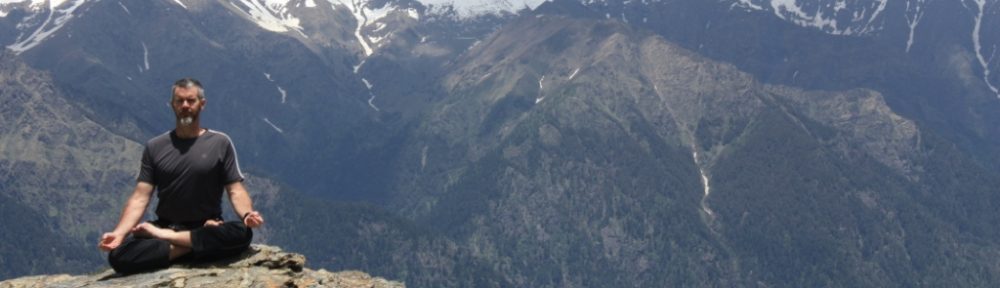

Taken on Sapelo Island in the summer of 2012.
 Dhammapada: a practical guide to right living by Acharya Buddharakkhita
My rating: 4 of 5 stars
The Dhammapada consists of 423 sayings attributed to the Buddha. There seem to be numerous versions of the Dhammapada as translated by Venerable Acharya Buddharakkhita in circulation, so your results may vary for good or bad from what I report here. (Not to mention there are many other translations which may vary tremendously)
The 423 sutras or maxims included in the book are arranged into twenty-six topical chapters. The version I have presents no analysis, it’s just the text of the verse in Pali (i.e. the Roman / English language alphabet spelling out the phonetic Pali words) with an English translation below.
First, the pros of the edition I read: There are some explanatory notes offered as necessary (38 of them,) there are a few graphics (drawings and photos in B&W,) and there are two indexes. The first of the two indexes wouldn’t be of much use to me, but it would be for the Pali literate because it indexes the Pali verse. The second index is in English and is organized by analogies (i.e. analogies employed in the verses,) and that could be a tremendously useful feature. For the Pali literate, having the original phonetic Pali included must be an excellent feature. (There’s also a page in the front matter that shows how the pronunciation works.)
As for the cons of this edition: First, there were a few typos (mostly of the type that wouldn’t be caught by spellcheck – though this translation was pre-spellcheck — so I’m referring to the kind of typos that aren’t easily caught.) Second, while all the verses are translated, there is some text that remains in Romanized Pali [I suspect prayers, but can’t say for sure.]
This is the second translation of the Dhammapada I’ve read, and I found it worthwhile. It’s easily readable, not too flowery, and not bogged down with needless analysis or exposition. I can’t say how it compares among all translations (either in terms of skill of translation or in accurately capturing the Buddha’s meaning,) but it reads pretty fluidly.
 Three Tang Dynasty Poets by Wang Wei
My rating: 5 of 5 stars
This book is in a series put out by Penguin Books entitled “Little Black Classics.” As the series name implies, these are booklets featuring classic works (or fragments, thereof.) This book features a combined 33 poems by three Chinese poets who lived in the eight century.
In the 14 poems by Wang Wei (a.k.a. Wang Youcheng) we see his famed mastery of landscape and nature poems, and we feel the effect of his Cha’an (Zen) Buddhist mindset.
Among the ten poems by Li Po (a.k.a. Li Bai) we are introduced from the beginning to the poet’s legendary proclivity for drink. While it’s not all carousing, human characters do play a more central role in Li Po’s work.
There are nine poems by Tu Fu (or, Du Fu), which share Li Po’s inclination to feature humanity at the heart of each poem, if in a more straight-laced way.
I enjoyed the poems in both their imagery and sound quality. I can’t really speak to how skilled the translation was, i.e. how much better or worse they could have been. The translators were G.W. Robinson and Arthur Cooper, who I know nothing of, but who apparently both translated a considerable amount of classic Chinese literature.
The poems are almost all short form works, so – with one exception – the poems are included in their entirety (i.e. not excerpted.)
The booklet has an appendix that features a two-page prose story entitled “The Story of the Peach Blossom Spring” by Tao Yuanming. The reason for including the story is that it’s the inspiration for the Wang Wei poem that opens the volume.
I enjoyed reading this little booklet of poetry. The translations are easy to follow, and the imagery is appealing. The Zen / Taoist feel that is widespread in these works is pleasant.
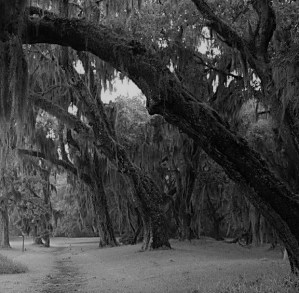 mossy trees
in a foggy forest
eery squared
split oak tree
hollowed by water
chimnified
a lone tree
sits atop a green hill,
solemnly
distant trees
resemble a painting
not a true grove
 A quiet kind of lightening storm
will fire in wild moments of mass,
when thought chunks rush to the center —
the very center — of my mind.
It’s a ten ton pile up of thought
first packed, then crammed, together fiercely.
Just like the thunderless lightening,
no sound escapes that brain tempest.

Taken in Szentendre in the Winter of 2014.
 When she saw a corpse in the snow,
fringed by a clear melt line,
she knew he’d lain there quite a while,
taking his time to die.
What’d you suppose he’d been thinking,
as breath clouds shrank to naught?
Did he wonder if death was better
when it was a fight you fought?
Maybe he was past such concerns,
and in his final hours,
he conjured into his mind a
field of spring wildflowers.
Maybe he’d moved beyond caring,
and just lie, feeling cold,
tuning into the clouds above
watching their shapes unfold.
No one could ever know such things,
so why did she so care?
That someone should, occurred to her,
was only right and fair.


