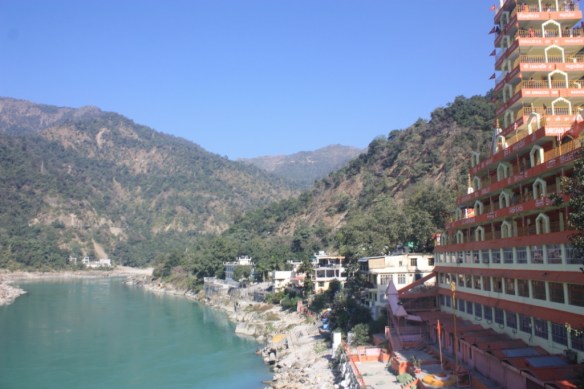
Taken on March 10, 2020 in Amer.

DAILY PHOTO: Sri Siddhi Vinayak Mandir
Reply


Taken on March 10, 2020 in Amer.
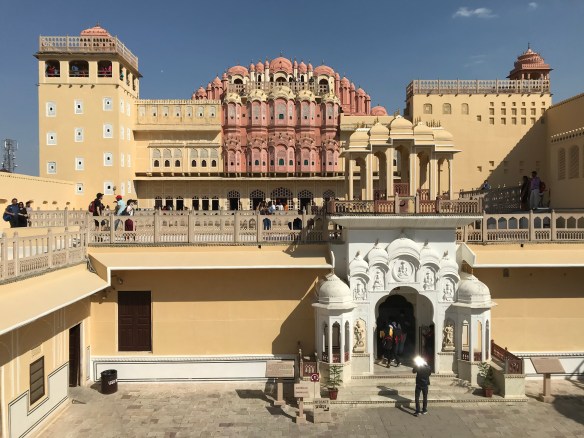
Taken on March 9, 2020 in Jaipur.
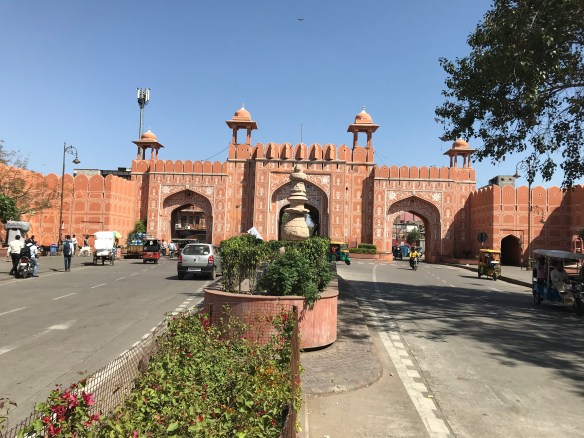
Taken on March 8, 2020 in Jaipur.

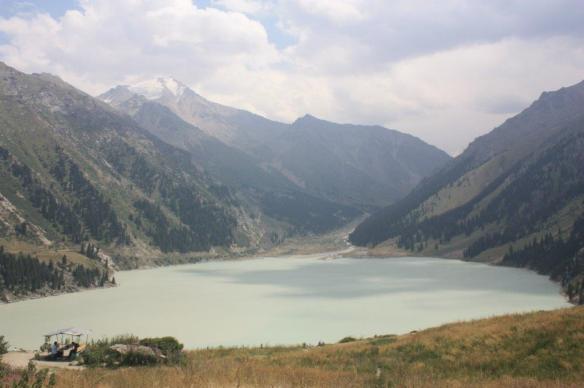
Taken in the summer of 2019 at Big Almaty Lake
 Measure for Measure by William Shakespeare
My rating: 5 of 5 stars
“Measure for Measure” was originally grouped as one of Shakespeare’s comedies (back when there were just three categories: tragedy, comedy, and history,) but more recently it’s been reclassified as one of the three “problem plays” of Shakespeare. Problem plays are neither clearly comedy nor clearly tragedy, but mix elements of both.
Vincentio, the Duke of Vienna, is taking a mysterious trip, and he’s left his deputy, Angelo, in charge. Angelo is a stickler for the law (or, at least, appears to be at first) and one of his first official acts is to sign a death sentence on Claudio. Claudio is a young man who knocked up his girlfriend. While the law calls for death, everyone advises Angelo that the details of the case don’t merit such a sentence. Those details being that the young woman, Juliet, is in love with Claudio, consensually partook of sexual intercourse, and both she and he are eager to marry so that the child will not be born out of wedlock. Angelo is unmoved by petitions from just about everyone to let Claudio live as long as he weds Juliet. When Claudio’s sister, Isabella, who heard the news in the convent where she is a postulant [in training to be a nun, but not yet one,] comes before Angelo seeking leniency for her brother, Angelo’s tune slowly changes, and he betrays himself as the worst form of hypocrite. If Juliet will “consent” [used loosely] to Angelo taking her virginity, he’ll let Claudio go. Obviously, Juliet isn’t at all keen on this arrangement, being a nun wanna-be and having the strict moral values one might expect of one who’s chosen such a life. She goes off preparing to tell her brother that he must die because the only way out is for her to sex up Angelo. Isabella fully expects Claudio will accept this, but Claudio has a moment of weakness in which he shares his terror of death and requests Juliet do the deed with Angelo. However, she won’t do it.
At this point, things look grim for Claudio, but we find out that the Duke is pulling a Henry V, and (far from visiting foreign lands to unknown purpose) is making his way in disguise through Vienna, learning what happens in his absence. The Duke [pretending to be a friar] has various meetings with Isabella, Claudio, the Provost (a warden), and others. The Duke-turned-friar hatches a plot that hinges on a piece of inside information that he holds.
It turns out that the sight of lovely Isabella wasn’t the first cause of Angelo being a jerk, there was a previous incident. Angelo was once betrothed to a woman, but before they could wed the woman’s fortunes changed when a storm sank the boat carrying wealth that included her dowry. Lacking a dowry, Angelo kicked the woman to the curb where she ended up turning tricks in a Viennese brothel because for fortune had sunk — literally.
The Duke / friar’s plan is that Isabella go to Angelo and say that she agrees to his despicable propositions, and that she will do the vile deed on the condition that it be someplace pitch dark so that her lady bits can remain unseen and so she won’t throw up in the lousy face of her rapist. She also insists she be able to bring a servant to the place in question. The plan revolves around getting the wronged ex-fiancé turned prostitute to agree to pull a switch-a-roo, with her engaging in intercourse in the dark with Angelo instead of the virgin Isabella doing so. Angelo having committed the same offense as the man he signed a death warrant for will have to either change his order regarding Claudio or submit himself to the same punishment.
One can see why this play is not easily classified. It contains a lot of dark subject matter. However, it does have numerous lighthearted moments of humor, including Lucio badmouthing the Duke (to the Duke’s friar-disguised face) and the servant of a local brothel’s Madame, Pompey, becoming an assistant to the executioner. As in comedies, everything works out more or less happily for all parties.
I was gripped by this play. It’s among my favorites of the Shakespearean comedies. It has an intense storyline and some fascinating moral conundrums. The Duke works his plot such that more than one character must confront a moral dilemma and choose whether to be a better version of him-, or herself. This is definitely worth reading.
 Why Dylan Matters by Richard F Thomas
My rating: 4 of 5 stars
Obviously, in the annals of popular music, the work of Bob Dylan matters. To make sense of the title and related objective of this book (which might otherwise seem presumptuous and demeaning) one has to know a little about some recent history of the politics of the Nobel Prize for Literature. (No, not the internal scandal that delayed the issuance of the 2018 Prize to 2019.) In 2016, an American hadn’t won since 1993 (Toni Morrison,) and given the relative volume of publications from America this was coming to be seen as a major “screw you” to the nation’s literary community. The Nobel committee claimed it was because American authors didn’t get their works translated and were too insular with respect to the global literary community. Still, the disparity was on the minds of many. Then, Bob Dylan was issued the Prize. While some who were offended by this disparity were placated, many thought it was an even bigger “screw you” than if the Committee again hadn’t issued it to an American – like it was a “you asked for it, you got it; now shut up for at least the next 15 years!” kind of award. I doubt anyone would deny that, as a pop music lyricist, Bob Dylan is brilliant – if not the best — but for many that still just made him a middling poet. (Dylan wrote one piece of prose poetry, “Tarantula” as well as “memoirs” [that were apparently largely an act of creative writing,] but only his lyrics could feasibly merit issue of the award.)
It was with that mess in mind that Thomas delivers this book. It seems to be his objective to not just prove that Dylan matters — generally speaking — but that Dylan’s work matters as literature – presumably, such that he’s at least as deserving of the Nobel Prize as any living American poet, story-writer, or novelist. The thrust of Thomas’s approach is in showing that Dylan’s work is dialed into the global literary canon. As a classicist, Thomas puts particular emphasis on Dylan’s stealing from, and referencing of, Greek and Roman figures like Homer and Ovid. (I mean “stealing” only in the sense that word used by artists, and there is considerable discussion of that subject, herein.) However, he does also show how Dylan uses and references other poets from Shakespeare to an obscure Confederate poet.
So, the logical question is whether Thomas answers his book’s titular question with enough authority to convince the reader that Dylan does matter. Thomas certainly convinces us why Dylan matters enough to have classes taught about him, like the one Thomas teaches a Harvard. However, I can’t say that I was convinced that Dylan is on-par with… for instance, Cormac McCarthy or Salman Rushdie (who resides in the US, as I understand it) as a major literary figure. While Thomas does show that Dylan’s work is literature because Dylan’s work is wrapped up in literature, the only real argument he offers for whether Dylan is at the highest echelon of literature is his intense fan-boy devotion. We see a lot of comments like: “He had all that he needed to write ‘Masters of War,’ the greatest anti-war song ever written.” Not “one of the best,” not “the best, in my opinion,” not “the best rock-n-roll anti-war song,” but a gratuitous presumption that nothing else could be considered in the running enough for there to be a debate. Thomas’s enthusiasm that Dylan is among the biggest artistic geniuses of our time – if not all time – is certainly potent, but not necessarily compelling.
The book is annotated, has a bibliography and a graphic discography.
I enjoyed this book. I learned a lot about the works of Bob Dylan and I found the author’s fervor for Dylan’s songs contagious — if not altogether convincing that it merits Dylan’s inclusion with Hemingway and Faulkner as an American literary icon. [Though I would not in the least challenge his inclusion as an icon of folk, rock, or pop music.] If you’re interested in Dylan, or this question of whether he’s the best American for the job of Literary Nobel Laureate, this book is worth a read.

Taken in September of 2011 in Stone Mountain Park
Last night the drape was thin and billowy.
Dreams seen through the weep of a willow tree.
Shapes without texture, beings without plights.
A curtain of fog, turning days into nights.
I stood on a corner in the land of nod.
One not crossed in maps of men or gods.
And wondered whether I was found or lost.
Waiting in calm for a morrow tempest-tossed.
But morning light brought me no clarity.