Unknown's avatar

About B Gourley

Bernie Gourley is a writer living in Bangalore, India. His poetry collection, Poems of the Introverted Yogi is now available on Amazon. He teaches yoga, with a specialization in pranayama, and holds a RYT500 certification. For most of his adult life, he practiced martial arts, including: Kobudo, Muay Thai, Kalaripayattu, and Taiji. He is a world traveler, having visited more than 40 countries around the globe.

Varanasi [Haibun]

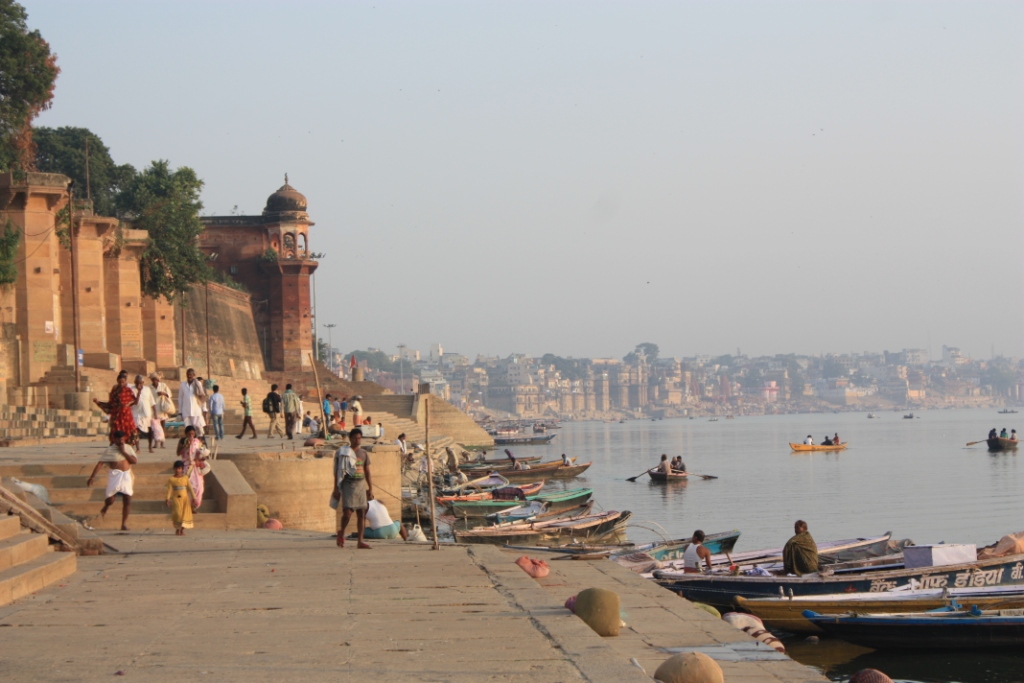
Varanasi smashes up against the Ganga. Note the tightly packed warren of lanes near the ghats, as if the city is compressed there. It's only farther from the river that the city unfolds, gaining breathing room, becoming wide enough for streets and signs that aren't blurred by being too close to one's face. The ubiquitous smoky scent also hints at a collision. Yet more evidence is seen in the barren east bank, a sandbar occupied by lounging cows and cricketers. As if the city refuses to crawl over the river as most cities do. The east bank desolation allows the formation of the "Golden Bridge," a band of orange that spans the glassy waters each morning, the only bridge in sight.   


ramparts loom;
boats glide over
glassy waters

DAILY PHOTO: Colorful Vellore Street Scene

Taken on September 26, 2021 in Vellore

Graveyard [Haiku]

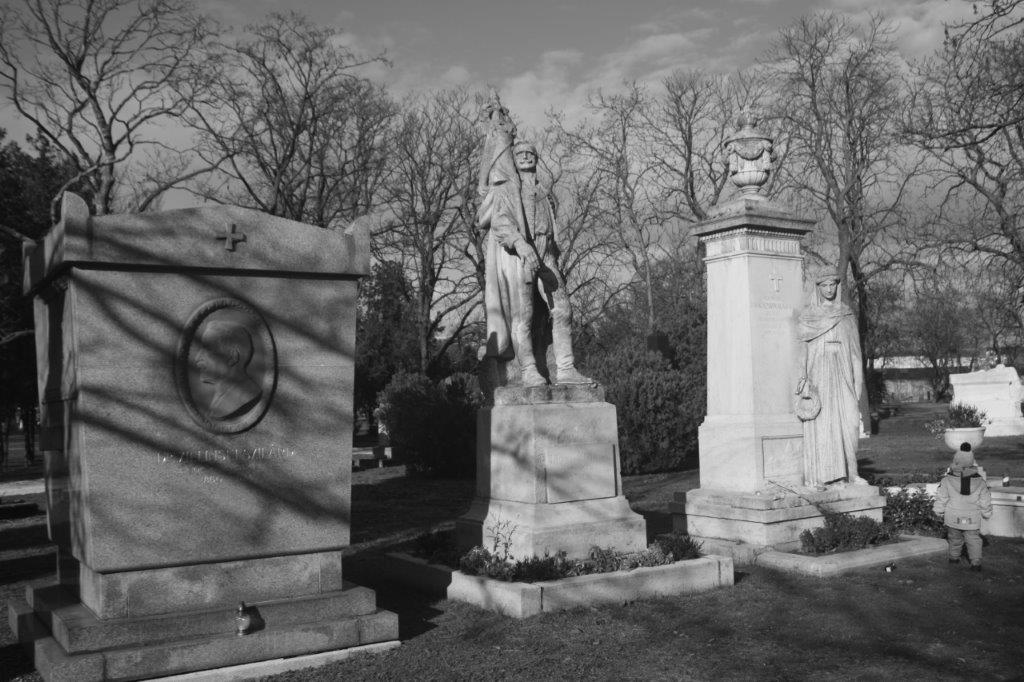
snow accrues
on a marble headstone -
silently

BOOK REVIEW: Justice League vs. Suicide Squad by J. Williamson / R. Williams / T. Seeley

Justice League vs. Suicide SquadJustice League vs. Suicide Squad by Joshua Williamson
My rating: 4 of 5 stars

Amazon.in Page

The premise of this comic book seems a bit ridiculous, like bears versus squirrels. It’s a perennial challenge for DC in writing the Justice League. When you have a team with mega-powered characters like Superman, Wonder Woman, and Green Lanterns, narrative tension is hard to generate. The writers pull some clever tricks via misdirects and character selection to make the story more compelling (and feasible,) but not without inconsistencies and inordinate convenience / serendipity.

This is a fine read if one is in search of some mindless entertainment and doesn’t want to think things through too much. It’s like TV or movie, but in book form: colorful, visually interesting, loaded with action, with the occasional amusing line, but – if one lets the inertia breakdown – there’s a lot of openings for thoughts like “Why didn’t so-and-so do _____?” “That felt easy,” or “Wait, what?”

Overall, I enjoyed this as pure escapism.


View all my reviews

BOOK REVIEW: Symposium by Plato

SymposiumSymposium by Plato
My rating: 5 of 5 stars

Amazon.in Page

Project Gutenberg (FREE)

Symposium is a collection of speeches in praise of Love (the Greek god and the emotional experience) given at a banquet in Ancient Greece. The participants are men of renown, including: a playwright, a physician, a philosopher, a statesman, etc. The narrative is delivered as a secondhand telling after the fact, and isn’t intended as a verbatim transcript of all the speeches.

There are seven speeches, each unique and most playing off the others. Phaedrus starts by emphasizing the underrecognized importance of the unsung god, Eros. Next, Pausanias stresses that there isn’t one kind of love, but two. Eryximachus focuses on the all-pervasive nature of love and, as a physician, mentions the bodily dimension of love. Aristophanes’s speech seems largely in jest, but stresses the fact that people don’t comprehend the power of love. Agathon rebukes the others for emphasizing love as a gift to humans, and, instead, suggests one should focus on praise of the deity. Socrates’s encomium is a departure, as one might expect given his love of questioning and hatred of speechmaking. First, he questions Agathon about whether love is really synonymous with beauty or good, as the youth’s speech had suggested. Second, he recounts his instruction on the subject from Diotima, which is mostly a recounted dialogue between her and he.

The last speech is afield. A drunken Alcibiades wanders in late. [The others decided not to drink because most drank too much the previous day.] Alcibiades gives a speech in praise of Socrates, his once lover, with whom he’s on the outs. From Alcibiades we learn not just about his relationship with Socrates, but also some interesting biographical facts about the philosopher, such as his proclivity to get lost in thought for extended periods and his bravery in combat.

This is an interesting work, and well worth reading.


View all my reviews

DAILY PHOTO: Alareshwarar Sivan Temple Overlooking Vellore

Image

The Emotional Beast [Free Verse]

We laud our rational side

- The Thinking Man -

But we're emotional beasts
to the core.

To use that old
[and disparately applied]
chestnut:

Of emotions, 
better master
than servant.

Poetry is a conduit
to emotional savvy.

That's part of the reason
Plato urged poetic restraint;

he found the emotional
inferior to the rational,
and thought most youngsters 
couldn't behave responsibly
in the face of poetry's 
emotional power.

It's also where Aristotle
found virtue in poetry,
its ability to induce 
catharsis.

Could they both 
be right?

BOOK REVIEW: Zen Buddhism and Its Relation to Art by Arthur Waley

Zen Buddhism and Its Relation to ArtZen Buddhism and Its Relation to Art by Arthur Waley
My rating: 4 of 5 stars

Amazon.in Page

Project Gutenberg (FREE)

This essay reviews the history and key personalities of Zen Buddhism, and then has a quite brief discussion of Zen influenced art. The thin book at its most interesting when it discusses Zen Buddhist teachings by way of the life events and sayings of its historical figures (e.g. Bodhidharma.) It does have some nice straightforward explanations of concepts.

What’s not to like? First, it’s just an essay, so if you’re expecting a full book, you might be displeased. Second, the opening discussion about the sectarian divides of Buddhism is very biased in favor of Mahayana Buddhism and against Theravada. (Of course, if one is reading about a Mahayana sect, e.g. Zen, one probably expects as much.) Finally, the title might lead one to think the book will help one understand the Zen mind’s influence on creativity, but it’s not a great source for that.

If you know what to expect, this little piece has something fine to offer. Waley was a prolific translator and a renowned expert on things Asian (particularly poetry,) and he has an insightful way of communicating difficult concepts.


View all my reviews