Unknown's avatar

About B Gourley

Bernie Gourley is a writer living in Bangalore, India. His poetry collection, Poems of the Introverted Yogi is now available on Amazon. He teaches yoga, with a specialization in pranayama, and holds a RYT500 certification. For most of his adult life, he practiced martial arts, including: Kobudo, Muay Thai, Kalaripayattu, and Taiji. He is a world traveler, having visited more than 40 countries around the globe.

DAILY PHOTO: View from the Palamathi Temple

Taken on September 26, 2021 at the Palamathi Mandir

BOOK REVIEW: Zen Buddhism by Christmas Humphreys

Zen BuddhismZen Buddhism by Christmas Humphreys
My rating: 5 of 5 stars

Amazon.in Page

This overview of Zen Buddhism isn’t so much an instructional guide as a reflection upon Zen as a life philosophy and an artistic influence. While it does have a chapter on technique, it’s mostly a mile-high overview of koan (paradoxes and riddles) and mondo (a Q & A-based practice,) and doesn’t enter into the fundamentals of meditation. If you’re looking for an introduction to Zen practice, this probably isn’t your book. Even the book’s conclusion, which is meant to address pragmatic matters, does so in an abstract and philosophical way. But this isn’t meant to denigrate the book. There are plenty of books that fill that role, and this book has a couple of specialties that set it apart and make it well worth reading.

There are three areas into which this book delves that are sparsely covered in other books. First, there’s a chapter devoted to Zen in English Literature, and throughout the book there’s much discussion of how Zen influences art, more broadly. The Zen in English Literature chapter draws heavily on a work by R.H. Blyth that is hard to find these days. Second, there’s an attempt to relate how ideas of Zen Buddhism can be conveyed to a Western mind. Third, while it’s acknowledged as being futile, the author discusses Satori in great depth.

I found a great deal of food-for-thought in this book. The author draws from many and varied sources to convey his message. Though that can also be a bit problematic. For example, Humphreys sometimes launches into ideas that come from yogic or other Eastern philosophies without a great deal of elaboration. There’s a certain pretentiousness that’s not unexpected from a mid-twentieth century British writer, but the book is by no means a dense read.

If you’re looking for a philosophical look at Zen, or one which discusses Zen as an artistic influence, check out this book.

View all my reviews

BOOK REVIEW: MonsterMind by Alfonso Casas

MonsterMind: Dealing with Anxiety & Self-DoubtMonsterMind: Dealing with Anxiety & Self-Doubt by Alfonso Casas

My rating: 5 of 5 stars

Amazon.in Page

Out: October 12, 2021

This comic offers a clever and insightful look at the voices inside one’s head. The use of cute graphic depictions of fears, doubts, and past traumas – along with lighthearted narrative analogies – allows the reader to explore the subject matter in a manner that is neither dry nor anxiety-inducing, in and of itself. This apparently autobiographical book shows how a comic artist, beleaguered by the monstrous occupants of his own mind, goes from being overwhelmed to learning to manage his mind.

At the end of the book there are a few pages of tips, both for dealing with one’s own anxieties but also for interacting with others who have intense embattled minds. It’s a book that may even be more beneficial for individuals without crippling issues themselves, but who know or love such individuals. The use of graphic depictions and adroit portrayals of anxiety may help individuals who haven’t faced severe issues to gain a better understanding of what goes on in the minds of those who do. Having said that, these “monsters” will be familiar to everyone on some level, though for many that that level doesn’t necessarily interfere with living their lives.

I’d highly recommend this book for anyone looking for a gentle and amusing introduction to the topic of the runaway mind. It’s delightfully drawn and amusingly told.


View all my reviews

DAILY PHOTO: Moat in Monochrome Under Monsoon Skies

Taken on September 25, 2021 in Vellore

Autumnal Reverie [Tanka]

wet yellow leaves
stuck to a rain-slick headstone,
and i'm in a land
not of tropical monsoons,
but which knows autumn

BOOK REVIEW: Anecdotes of the Cynics by Various

Anecdotes of the CynicsAnecdotes of the Cynics by Robert F. Dobbin
My rating: 5 of 5 stars

Amazon.in Page

This is a collection of brief stories and sayings from famous Cynic philosophers – notably, Diogenes of Sinope, Crates of Thebes, Hipparchia, and Bion. It opens with the longest piece, a dialogue [allegedly] by Lucian the Cynic advocating the Cynic’s minimalist approach to life. [Cynics were ascetics who shunned customs and cultural conventions and thus often ran afoul of the conservative societal base / rubbed people the wrong way.] The dialogue uses Socratic method, but also contains prolonged exposition. [Not like the Platonic dialogues in which Socrates tends to ask brief questions and attempts to demand brief answers – granted not always successfully.] However, most of the pieces are just a paragraph or two brief excerpts.

Most of the entries report on what various Cynics said or did, though there are a few that are biased commentaries of non-Cynics about these “dog philosophers” – e.g. there is a Catholic tract denouncing the Cynics while talking up Paul. [It reads as though the early Christian church (which was teaching Jesus’s ideas, including: in part, the virtues of poverty, of simplicity, and of a lack of deference to the world of men) might have been concerned about being outcompeted.]

There’s not a tremendous amount that remains of direct Cynic teachings, and so a book like this is a way to get a taste of the highlights. Just as Buddha found that extreme forms of ascetism didn’t yield the optimal result, Cynicism lost ground to the upstart school Stoicism, which borrowed some Cynic ideas while jettisoning the most extreme aspects of the philosophy.

One can find these stories in old public domain sources such as Diogenes Laertius’ (no relation) “Lives of the Eminent Philosophers,” but this is a good way to get the condensed version without too much extraneous information.

View all my reviews

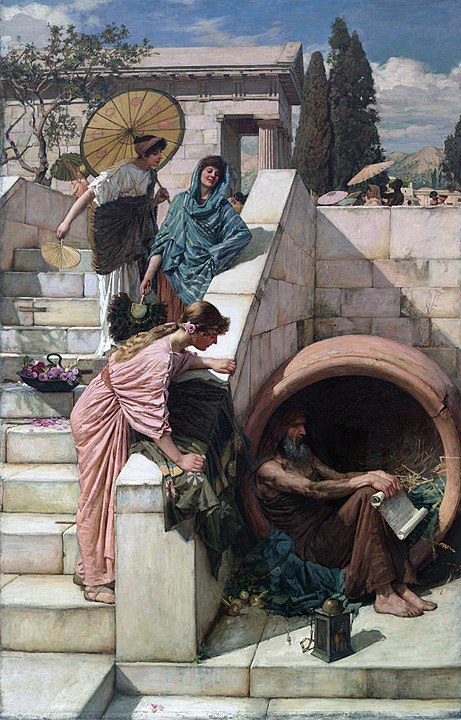
In Praise of Diogenes the Cynic [Free Verse]

Owning only a cloak, 
staff, and satchel,

he broke his bowl
after seeing a child
drink from cupped hands,

feeling the dunce 
for being out-simplified
by a mere child.

When pirates,
eager to sell him off,
asked what skill he had,

he said, "Governing men.

"If you find someone 
interested in buying 
a master,
I'm your man."

He couldn't be driven
away with a stick,
much as the downright-dog,
Antisthenes, tried.

He was expert
at adulterating the currency -
literally and figuratively.

When Alexander the Great
offered him whatever he wished,
A sunbathing Diogenes replied,
"Stand out of my sunlight."

I fear
they don't make 'em like
that anymore.

Samsara & Nirvana [Tanka]

samsara is 
seeing a snake in
an acacia pod;
nirvana is realizing 
there never was a snake

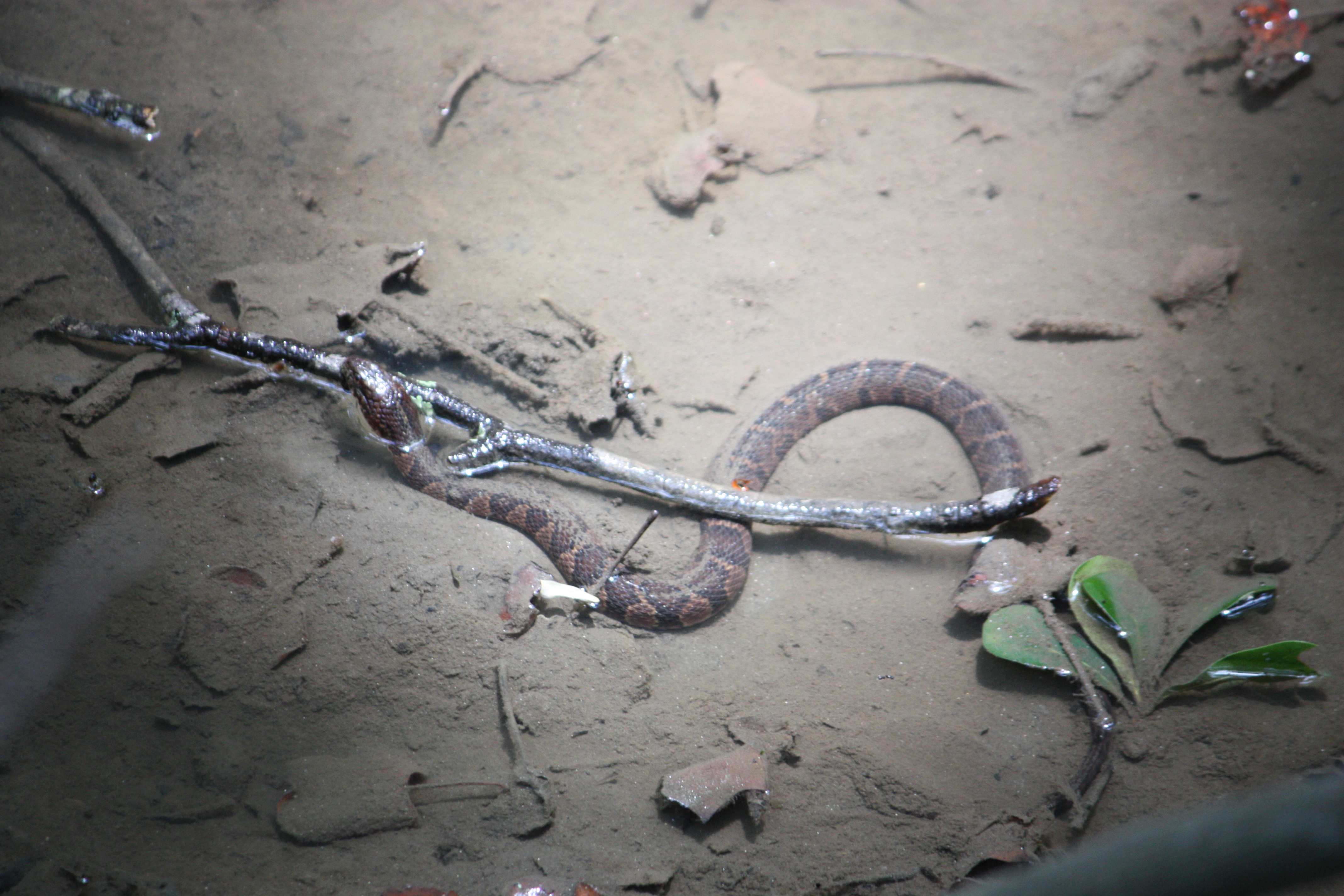
DAILY PHOTO: Curvy

Taken on September 26, 2021 in the Palamathi Hills