I leant upon a coppice gate
When Frost was spectre-grey,
And Winter's dregs made desolate
The weakening eye of day.
The tangled bine-stems scored the sky
Like strings of broken lyres,
And all mankind that haunted nigh
Had sought their household fires.
The land's sharp features seemed to be
The Century's corpse outleant,
His crypt the cloudy canopy,
The wind his death-lament.
The ancient pulse of germ and birth
Was shrunken hard and dry,
And every spirit upon earth
Seemed fervourless as I.
At once a voice arose among
The bleak twigs overhead
In a full-hearted evensong
Of joy illimited;
An aged thrush, frail, gaunt, and small,
In blast-beruffled plume,
Had chosen thus to fling his soul
Upon the growing gloom.
So little cause for carolings
Of such ecstatic sound
Was written in terrestrial things
Afar or nigh around,
That I could think there trembled through
His happy good-night air
Some blessed Hope, whereof he knew
And I was unaware.
Author Archives: B Gourley
PROMPT: Youthful Attachments
I had a guitar, a black and white Fender Stratocaster knock-off. [Actually, technically, I don’t think it was a knock-off, but rather the lowest of low-end mass-produced Strats made by a subsidiary of Fender, Squier.] What happened to it? I realized I was tone deaf and lacked the finger dexterity to be the sequel to Eddie Van Halen. So, ostensibly, it ended up donated or sold in a garage sale. There’s a small chance it’s taking up space in a closet somewhere, but not in my closet.
Not to reveal a pattern, but I also had a yellow and blue BMX bike that I was quite fond of. What happened to it? I learned that I lacked the flight characteristics to be a great BMX racer (or possibly I rode it until it fell apart into its component pieces.) Youth was a long time ago.
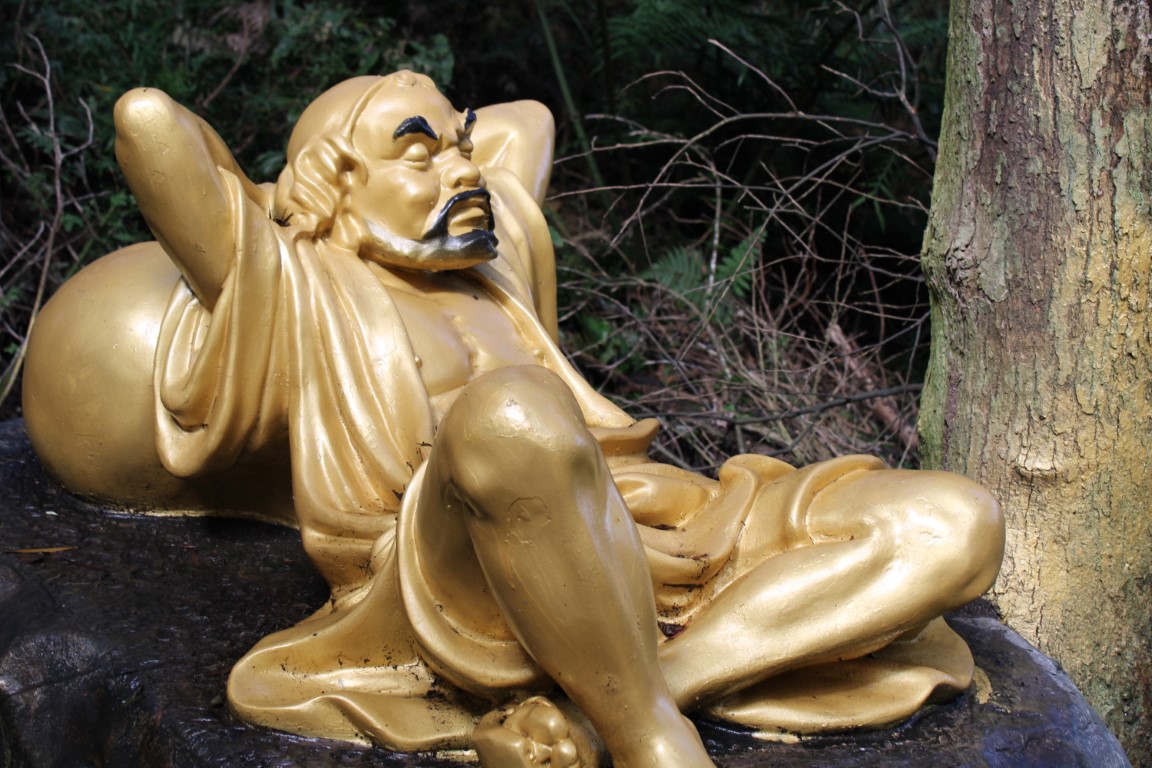
Drunken Immortal [Senryū]
Choosy [Haiku]
DAILY PHOTO: Chiang Kai-Shek Memorial Hall
“A narrow Fellow in the Grass” (1096) by Emily Dickinson [w/ Audio]
A narrow Fellow in the Grass
Occasionally rides --
You may have met him? Did you not
His notice instant is --
The Grass divides as with a Comb,
A spotted Shaft is seen,
And then it closes at your Feet
And opens further on --
He likes a Boggy Acre --
A Floor too cool for Corn --
But when a Boy and Barefoot
I more than once at Noon
Have passed I thought a Whip Lash
Unbraiding in the Sun
When stooping to secure it
It wrinkled And was gone --
Several of Nature's People
I know, and they know me
I feel for them a transport
Of Cordiality
But never met this Fellow
Attended or alone
Without at tighter Breathing
And Zero at the Bone.
PROMPT: Mission
What is your mission?
To be a better version of myself.
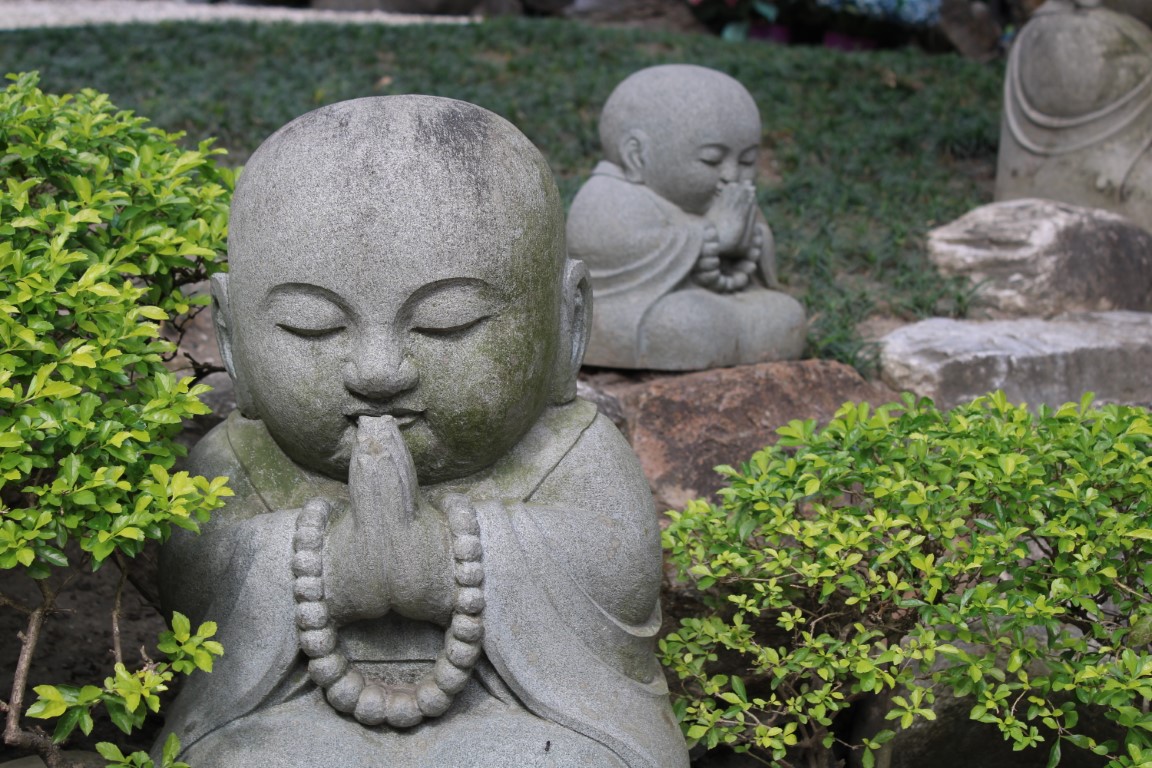
Zen Garden [Lyric Poem]
DAILY PHOTO: Chihkan Tower [Fort Provintia], Tainan
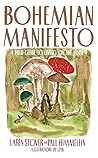
BOOKS: “Bohemian Manifesto” by Laren Stover, Paul Himmelein, and Patrisha Robertson
Bohemian Manifesto: A Field Guide to Living on the Edge by Laren StoverMy rating: 5 of 5 stars
Amazon.in Page
The central premise of this book is that not only does the Bohemian artist live on, but she does so in five distinct varieties: the Beat, the Zen Bohemian, the Dandy, the Folkloric Bohemian, and the Nouveau Bohemian. While the title calls this book a “manifesto,” the term used in the subtitle, i.e. “field guide,” is far more apropos. Like a field guide to birds or mushrooms, it lays out
characteristics and distinctions, the characteristics of Bohemians, generally, and the five flavors thereof, more specifically, and it does so in a way that separates them from the other varieties of human.
One might be wondering, why are these varied categories classed as Bohemian, as it seems they are their own distinct class. One way to understand this is to consider the “Zen Bohemian,” who often bears little resemblance to the “Zen Buddhist” for which one might mistake him. The Zen Buddhist has both a strong connection to and a depth of knowledge of Zen Buddhism, but the Zen Bohemian often rather has a strong connection to a broad hodge-podge of Eastern philosophies and spiritual traditions that he may or may not properly understand the distinctions between.
This book is quite readable, and informative in an easy-going way, but it’s also perplexing. It’s informative in that it clarifies the characteristics of Bohemians across many criteria (e.g. food, clothing, tastes in literature, art, movies, and music, interest in boxing, etc.) It’s perplexing in that it starts with the premise that Bohemians are, at their core, free spirits who refuse to be hemmed in by convention, but then the bulk of the book is about the various tribe-signaling boxes that the Bohemian puts himself within to conform to the norms of the group. It seems that the authors are aware of this and actually produce humor through oddly specific statements such as, “They [Bohemians] still adore Laurie Anderson even though their yuppie brother went to see her.” It feels like they are aware that, to the extent Bohemians are truly free spirits, any description the authors give will be wrong at some level of granularity, and so they lean into it with great (sometimes comedic) specificity.
I enjoyed reading this book and picked up a number of interesting references to other books and whatnot. (I’m currently reading Kliph Nesteroff’s “The Comedians” because of a reference to it in this book.) I did find bits on subjects like wardrobes and astrology to be a bit tedious, but just skimmed through them.
View all my reviews