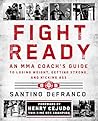
 Fight Ready: An MMA Coach’s Guide to Losing Weight, Getting Strong, and Kicking Ass
 by
Santino DeFranco
My rating:
4 of 5 stars
Publisher site –St. Martin’s
Release Date: May 19, 2026
MMA fighter turned coach, Santino DeFranco, offers an insightful and pragmatic overview of the process of getting one’s body shipshape, including: getting sleep, dealing with injuries, strength and conditioning practices, nutrition, and more. The book attempts to be of broad appeal, not just relevant to MMA and other competitive fighters, but to athletes of other sports and non-athletes as well. It was not clear to me that the book achieves said broad appeal. One of the most fascinating and engaging chapters dealt with the process of cutting weight, an activity that applies to few outside weight-graded combative sports. (And an activity which the author, with the pragmatic approach that makes the book so useful, attempts to dissuade general readers from attempting.) The book does discuss the calories-in-and-calories-out basics of nutrition in a more generally relevant manner, as well. And there is certainly wisdom to be gleaned for the non-fighter, but, overall, I don’t know that this would be a good book to send a person toward if they were a typically unathletic person trying to lose a few pounds and be in better shape. (Though I do acknowledge a sort of aspirational motivation that a book might have for such readers, particularly UFC fans.) [And it’s completely out of my wheelhouse to know how generally applicable strength and conditioning approaches are for completely different sports, but I can’t help but have doubts.]
That said, I did come across many thought-provoking tidbits of wisdom in this book. The author is clearly one prone to look to the science and established best practices and to challenge the fad-laden fitness influencers and not dive headlong into the trend du jour. The book uses stories and anecdotes to increase the book’s readability and relatability. Here I’d say the results are mixed, but the aforementioned Tracy Cortez weight cut story is one example of when it is done very well.
If you’re curious about the training life of professional fighters and are looking for a few health and fitness concepts you might apply in your own life, I’d highly recommend this book.
View all my reviews
Share on Facebook, Twitter, Email, etc.






![Photograph of a statue of a young vagabond taken at Fo Guang Shan [佛光山,] near Kaohsiung, Taiwan.](https://berniegourley.com/wp-content/uploads/2026/03/img_0378.jpg)









 Tiger Riding for Beginners