Unknown's avatar

About B Gourley

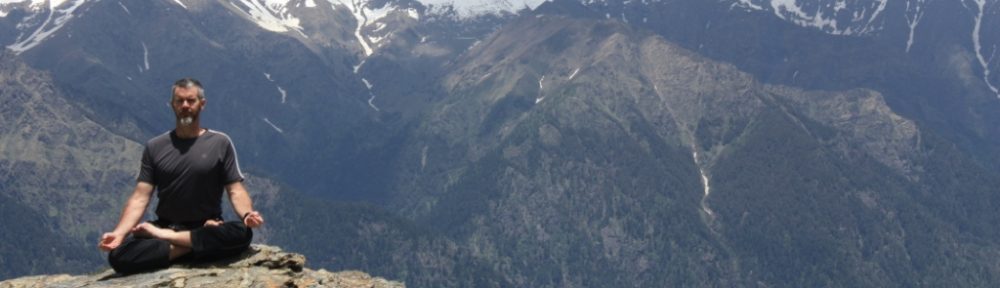
Bernie Gourley is a writer living in Bangalore, India. His poetry collection, Poems of the Introverted Yogi is now available on Amazon. He teaches yoga, with a specialization in pranayama, and holds a RYT500 certification. For most of his adult life, he practiced martial arts, including: Kobudo, Muay Thai, Kalaripayattu, and Taiji. He is a world traveler, having visited more than 40 countries around the globe.

POEM: Truth From Unlikely Places?

matrix_620

I passed a man on the street,

in the brutal noonday heat.

Blending in, but for his Tee.

It read, “Nothing is as it seems.”

I said, “Ain’t that the truth, brother.”

He walked on, like all the others.


A message sent on the sly?

From some watcher in the sky?

How’d he know it’d draw my eye?

And not be taken for a lie?

Maybe my will is not so free,

and what I “know” isn’t reality.


[Later that day…]


Rev. screamed, “We’re living in a simulation!”

“Friends, this ain’t no pre-apocalyptic nation.”

“Aliens watch us on their reality-TV station.”

“All I can offer is a bargain spaceship vacation.”

I distrust those who shout from a box,

and distrust more the joining of flocks.


But the kook’s words rattled in my mind.

Maybe lunatics get things right sometime.

What if the world is just a simulated grind,

and passersby just figments of my mind?

If this world is fake, should I abstain?

Or try much harder to entertain?

DAILY PHOTO: Creepy Fern-Fringed Gnome

Taken in May of 2016 in Lusaka, Zambia

Taken in May of 2016 in Lusaka, Zambia

DAILY PHOTO: Precarious Formations in Bai Tu Long Bay

Taken in December of 2015 in Bai Tu Long Bay, Vietnam

Taken in December of 2015 in Bai Tu Long Bay, Vietnam

IMG_2526 IMG_2341 IMG_2519

You’re So Evolved: Love Poem to a Hominid

Baby, I dig your bipedal ways
You could chase down wounded game for days
And walking around on just two feet
You can forage in the mid-day heat
When it’s too hot for those big ole cats
Who bully their way through our habitat


My dearest, it simply makes me drool
When I see you working with a tool
Thumbs opposable, and shoulders free
I’m awed when you throw stones at me
Just imagine how I shed a tear
When I see you chuck a pointy spear


And that prefrontal cortex, oh my lord
You could plan the move of a nomadic horde
One day you’ll be able to add, and subtract
You’ll think–and paint–in the abstract
You just need vocal cords of greater dexterity
To express yourself with heightened clarity
[not in grunts and stone throwing]


True, you’re not the strongest of the apes
And while tigers race you barely traipse
Monkeys climb, swinging tree to tree
You lack arm strength and dexterity
Still, there’s something about you that I just can’t deny
Though you share sixty percent DNA with a fruit fly
You’re so evolved

DAILY PHOTO: Petronas Towers from KL City Centre Park

Taken in December of 2014 in Kuala Lumpur

Taken in December of 2014 in Kuala Lumpur

BOOK REVIEW: Nutrition: A Very Short Introduction by David A. Bender

Nutrition: A Very Short IntroductionNutrition: A Very Short Introduction by David Bender
My rating: 4 of 5 stars

Amazon page

Do you want to know what percentage of your diet should be carbohydrates because your personal trainer is telling you it’s zero? Do you know whether you need vitamin B12 supplements? How much energy does your huge human brain use? What the hell is Kwashiorkor? If these types of questions are of interest to you, you might be interested in this book.

There’s nothing particularly fancy or exciting about this book, but it’s still a useful book for a couple of reasons. First, it sticks to the science on the subject, and diet and nutrition is one of the most myth and disinformation riddled subjects around because there are so many people trying to shill their fad diets and because there are so many who desperately want to believe that they can cut pounds and still eat a case of Twinkies every week through some scientific loophole [psst, you can’t.] Here and there throughout this book, there are quick deconstructions of these myths and lies. (i.e. I should point out that some of this dietary “wisdom” will result in weight loss—but it won’t necessarily result in a net health gain. e.g. If you cut out carbs, you’ll lose weight—but your brain will also be starved of the glucose that it needs to conduct its business and will have to engage in slow and costly processes to get it from elsewhere.) Second, the book is short and to the point. If you don’t have a lot of time to devote to reading up on nutrition, this may be the book for you.

The book consists of eight chapters:

Chapter 1: Why eat? (deals with appetite and satiety, and not just the less-than-profound question of why a human body needs energy.)

Chapter 2: Energy Nutrition (gives the basics of food as an energy source—as opposed to food as building blocks.)

Chapter 3: Protein Nutrition (teaches one about food as building blocks.)

Chapter 4: Over-nutrition and Problems of Overweight and Obesity (addresses the causes of being overweight as well as explaining how to counteract those causes. One nice feature of this chapter is it gives a quick and dirty summation of the various types of diets, tells which are supported by science, and explains which have undesirable unintended consequences.)

Chapter 5: Diet and Health (explains many of the ways nutrition influences health. Contrary to popular belief, weight isn’t the only way [or, necessarily, the most critical way] in which dietary problems can adversely affect health. In other words, it’s possible to be stocky or curvy and in good overall health, or, alternatively, one can be svelte and running up on death’s door. This chapter also describes first-world ailments that are sometimes called diseases of affluence.)

Chapter 6: Under-nutrition (Marasmus, cachexia, and kwashiorkor. Don’t know what those words mean? Think they are towns in a sword and sorcery fantasy novel? You’ll know after finishing this chapter.)

Chapter 7: Vitamins and Minerals (Most of the dietary suggestions in the book up to this point are put in terms of macro-nutrients [i.e. carbohydrates, fats, and proteins], but this chapter focuses on micro-nutrients. There’s a reason micro-nutrients are addressed so late in the book, and that’s that most people who are getting sufficient macro-nutrients from actual food [as opposed to the “stuff” sold at McDonald’s or in convenience stores] get all they need of micro-nutrients. But there can be issues with micro-nutrients such as iron, calcium, vitamin D, and Vitamin B12 depending upon one’s unique life situation. In other words, unless your doctor tells you that you need a supplement, you probably don’t.)

Chapter 8: Functional Foods, Super Foods, and Supplements (Probiotics, prebiotics, synbiotics, super foods, and supplements. One area that gets short shrift in this book is the importance of one’s gut bacteria—which has become a huge part of the discussion of late. There is a little mention of it in this chapter, but not much.)

There are few graphics in the book, but there are many tables. I didn’t feel anything was missing in terms of graphics. None of these “Very Short Introduction” guides offers much by way of bibliography, and the “Further Reading” section tends to favor textbooks over popular works. This book is no exception in either regard.

I’d recommend this book for anybody who wants a quick low-down on the science of nutrition. As mentioned, the one area I thought it might have delved into in greater depth was the role of gut microbes. However, overall, I think it was well-organized and provided interesting food for thought (pun recognized, but not intended.)

View all my reviews

DAILY PHOTO: Pushkar Camel Fair Market

Taken in November of 2015 near Pushkar

Taken in November of 2015 near Pushkar

IMG_2205

IMG_2202

DAILY PHOTO: African Savanna

IMG_0191

Taken in May of 2016 near Lusaka, Zambia

Taken in May of 2016 near Lusaka, Zambia.

Taken in May of 2016 near Lusaka, Zambia.

BOOK REVIEW: Hormones: A Very Short Introduction by Martin Luck

Hormones: A Very Short IntroductionHormones: A Very Short Introduction by Martin Luck
My rating: 4 of 5 stars

Amazon page

Let’s face it; the word “hormone” is usually reserved for questions of why a male is so horny (e.g. “His hormones were raging.”) or why a female is so moody (e.g. “She’s hormonal.”) Yet, the endocrine system is about much more than horniness and moodiness. It’s the body’s lesser known communication system, transmitting signals more slowly than the nervous system, but over a broader area and with longer-lasting results. Yes, it’s instrumental in sex, but it’s also involved in regulation of almost everything else the body does. Though we associate hormones with sex, when it comes to mass appeal it’s clearly not the sexiest of systems.

Dr. Luck’s book allows one to rectify one’s ignorance of hormones without a major investment of time or money. This is one volume in a series put out by Oxford University Press that’s designed to convey the fundamentals of a subject in about 100 pages or so (in this case it’s more like 130pgs.) I’ve done several reviews of books in this series, and will likely do more. These “Very Short Introductions” are a good way to get the gist of a topic quickly and painlessly, and they are reasonably priced on Amazon Kindle and in hard-copy at my local discount bookseller. (FYI: Your results may vary. i.e. Hard-copies at some bookstores may be pricey for what these books are—i.e. subject summaries that are optimized for concision and not for entertaining reading.)

The book has nine chapters. The first is a history of the science related to hormones and the endocrine system. (It took a while to figure out that there even was a system because of the nature of hormonal action.) The second chapter hits the basics, such as what hormones are and how they work. Chapter three tells us about the role hormones play in reproduction. The next chapter is about how hormones regulate the body’s levels of water and salt (and the effects on blood pressure.) Next, there is a discussion of the calcium cycle and how calcium is banked in bone and borrowed for the purposes of other cells. There’s a chapter that educates one about diabetes and how hormones (notably insulin) regulate blood sugar. Chapter seven is devoted to the thyroid. Chapter eight describes the role of hormones in circadian rhythms and the cycles of the body. The final chapter is about where science is going with its knowledge of hormones and the advances that are being pursued.

There are few graphics in this book. Most of them are chemical diagrams in dialogue boxes that many readers will skip because of their ominous appearance. The lack of graphics isn’t a problem. Luck does use a narrative approach on occasion (such as his telling of the story of the giant William Rice of Sutton Bonington.) This enhances the book’s readability, and is noteworthy because it’s a rarity among books in this series, which—again—are written to shotgun information and not to be entertaining reads.

I’d recommend this book for those who want to learn (or brush up on) the basics of the endocrine system. It does what it’s supposed to do, and does it quickly.

View all my reviews

An Unusual International Yoga Day Post: or, Dream Yoga and Fear Management

"The Sleep of Reason Produces Monsters" by Francisco Goya

“The Sleep of Reason Produces Monsters” by Francisco Goya

I awoke exuberant that I’d achieved lucidity in my dream and that I’d apparently slain a nasty character (picture Hans Gruber on a bad day)–a task that had seemed impossible before my eureka of “I’m lucid!” Only my exuberance was short-lived when I realized that Hans was also me. Do you have the courage to talk it out with your dream world nemesis instead of reacting from fear?

I was thinking that I should do a post on yoga for International Yoga Day (June 21st), but what to write about? My answer came in the wee hours of the morning when I had a minor breakthrough in lucid dreaming–also known as, dream yoga. I know this seems like a stretch because, despite “yoga” being right there in the name, this practice is much more firmly associated with Tibetan Buddhism than Hatha Yoga. But my last couple yoga posts (which were a while back on my experience with RYT300 teacher’s training and teaching a Yoga Kid’s Camp) were fairly conventional, so I’m due one that’s out there. Furthermore, I promise to try to make clear the relevance of dream yoga to my hatha yoga practice. (If you read the aforementioned posts, you’ll see that the theme of freeing oneself by managing one’s fears and anxieties is a recurring theme across all these posts. And that is the crux of the relevance of lucid dreaming to unifying mind, body, and breath [i.e. yoga.])


What is lucid dreaming? It’s becoming aware that one is in a dream as one is dreaming. One can then exert influence over the course of the dream. Maybe half of you have had this experience at some point in your lives, and so what I’m saying will not seem far-fetched. For those who don’t actively practice lucid dreaming, it’s much more common among the young, so maybe you had such dreams as an adolescent but don’t have them anymore.

For the other half, the whole idea may seem like poppy-cock. I could easily have been such a doubter. Without following a practice, I almost never remember dreams–let alone dreaming lucidly. At best, I get disappearing fragments of dreams that are ephemeral and hazy. I’m one of those people who might claim that he virtually never dreams, except that I read the science, which suggests that each of us dreams every night that we sleep long enough to cycle through REM (rapid eye movement) mode (and commonly 4 or 5 times a night.) We just don’t recollect these dreams. [However, I have had lucid dreams on rare occasions, and so my skepticism on the subject was curbed.]


Why do I practice dream yoga? While it wasn’t part of my formal hatha yoga training, dream yoga isn’t as far removed as one might think. I have been trained in yoga nidra (yoga sleep), which is an exercise that takes place in a hypnagogic state (on the edge between waking and falling asleep.) Commonly, yoga nidra is used as a deep relaxation exercise, but it can also help one to access the subconscious (as is reflected in repeating a sankalpa [a resolution] in the yoga nidra state.) Lucid dreaming is another approach to assessing the subconscious in order to see what’s going on in there and to try to make changes as necessary. Curiosity about the subconscious mind and its–largely unseen–influence on my daily life is what drew me to dream yoga. It’s just another aspect of knowing oneself and trying to expand one’s capacities of mind and body.


How does one practice dream yoga? Hardcore practitioners set alarms to wake themselves up when they think they’ll be in REM sleep. This, as I understand it, helps them reconnect with the dream when they drift back and greatly speeds the process. As I sleep with a wife who would clobber me with a brick if I set alarms for random times in the middle of the night, I’m not among those hardcore. My practice consists of three main aspects. First, I make resolutions to remember my dreams and to dream lucidly as I’m drifting off to sleep. Second, when I’m not making said resolutions, I try to just observe the subconsciously generated imagery that pops up as a witness–rather than letting my conscious mind go into its preferred mode of planning for an uncertain future. [One can tell the difference because the subconscious images don’t make a lick of sense, and–for me–are devoid of any verbal/language element–i.e. it’s all imagery.]  Finally, I keep a journal in which I record any dreams or fragments that I can recall–sometimes with drawings to supplement the text (though my artisticness is lacking, to say the least.) The first and last of these are among the most common recommendations one will hear from experts.

I should point out that there are a number of books on the subject by individuals much more qualified than I. Said books give detailed guidance into how one can begin one’s own practice. One that I recently finished reading and would recommend is Charlie Morley’s “Lucid Dreaming: A Beginner’s Guide to Becoming Conscious in Your Dreams.”  At some point, I’ll post a review of that book. Also, there is “Dreaming: A Very Short Introduction” by J. Allan Hobson, which I have reviewed.


As I wrote up the entry in my dream journal, I made a resolution to stop attacking the “bad guys” in my dreams and to try to understand them. Note: I don’t recommend this approach for dealing with real world axe-wielding maniacs, but I highly recommend giving it a try in one’s dreams.


Sweet dreams.