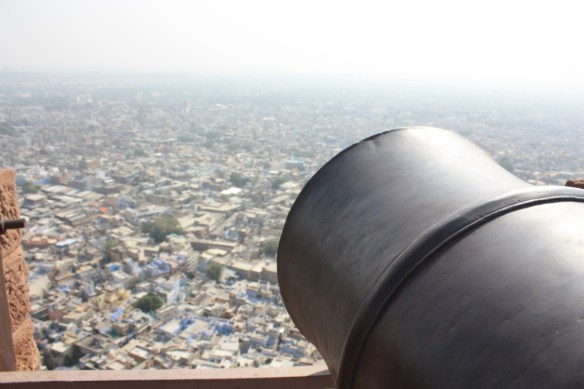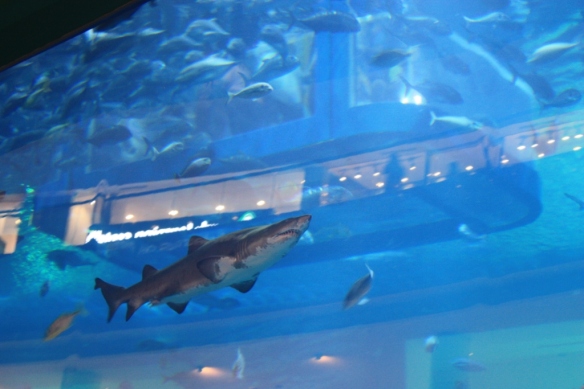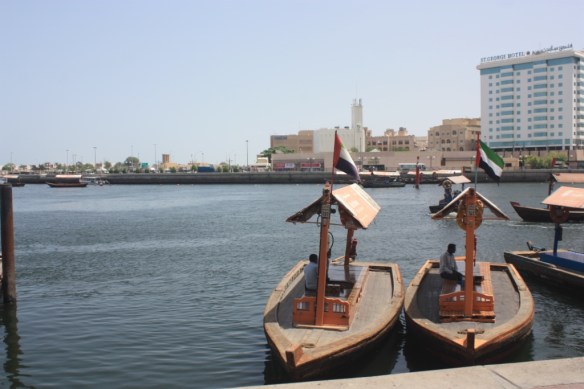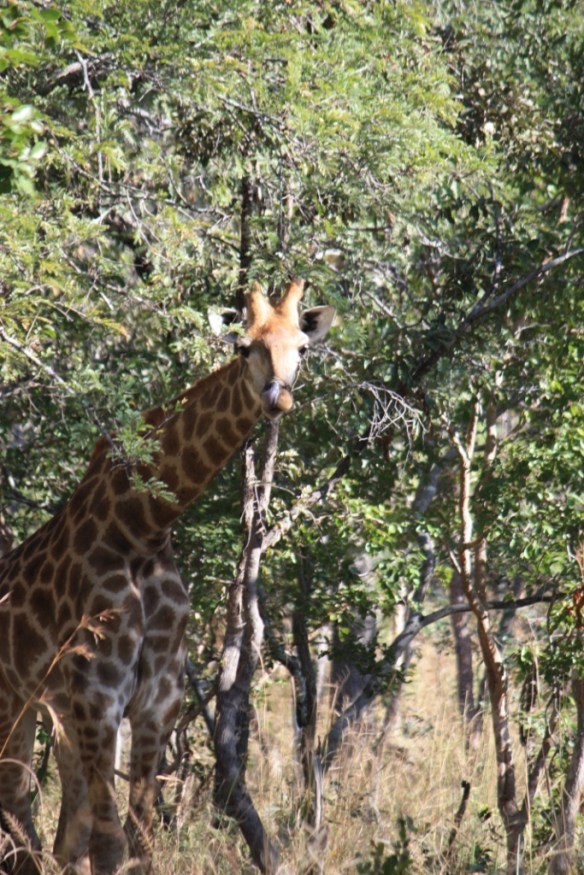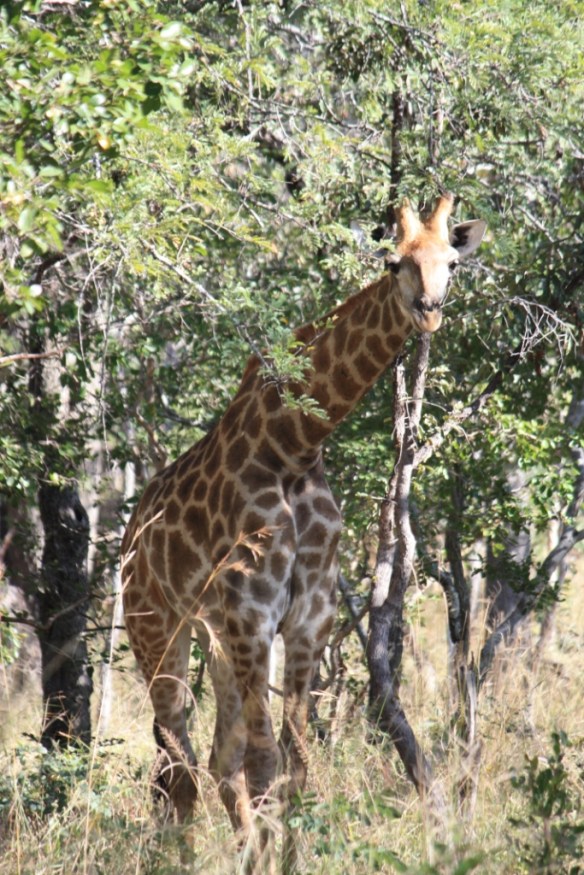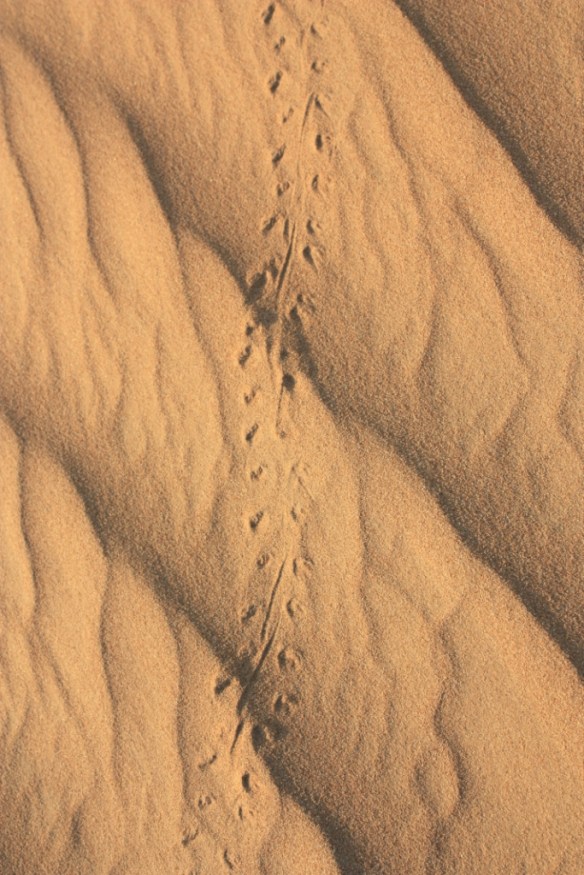
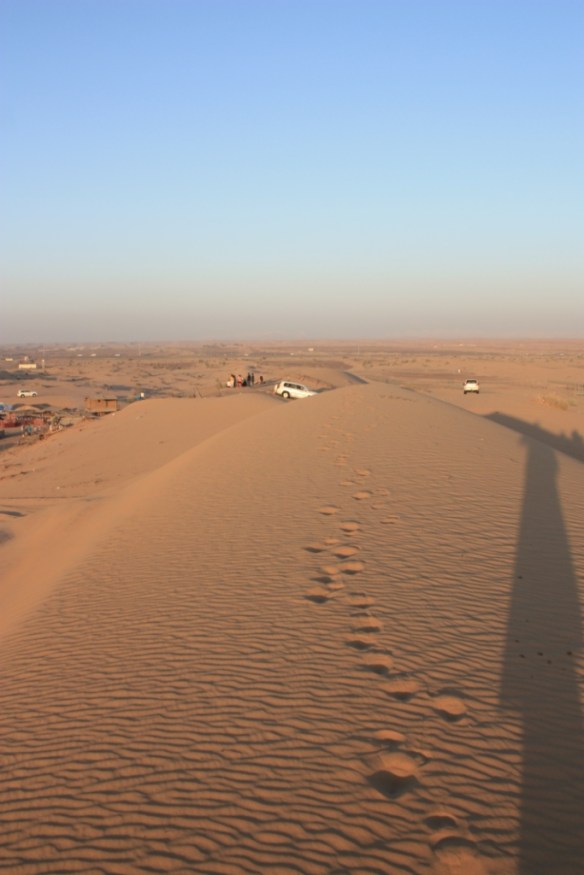
Taken in May of 2016 in the United Arab Emirates
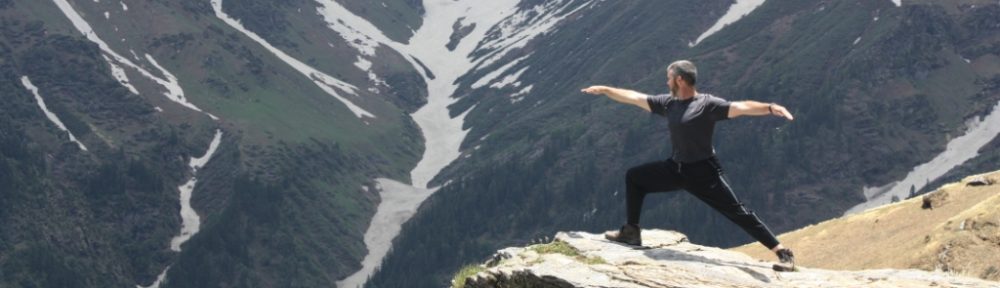

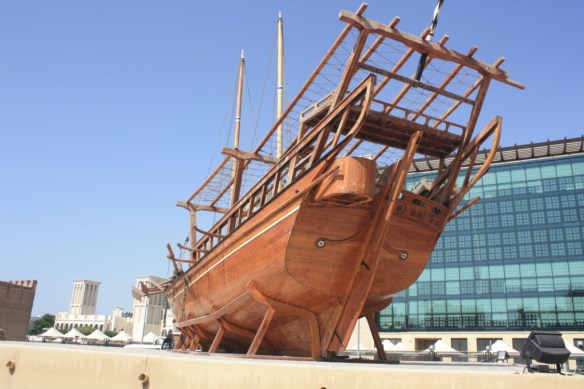
Taken in May of 2016 in Dubai

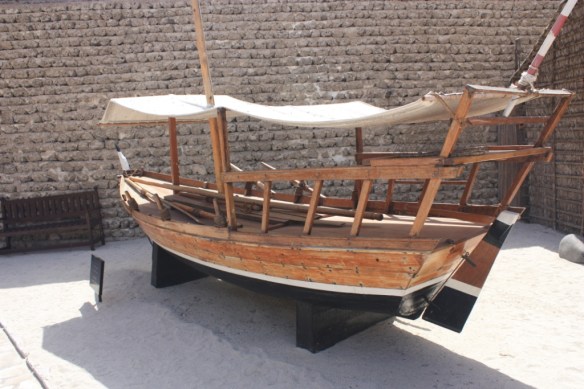
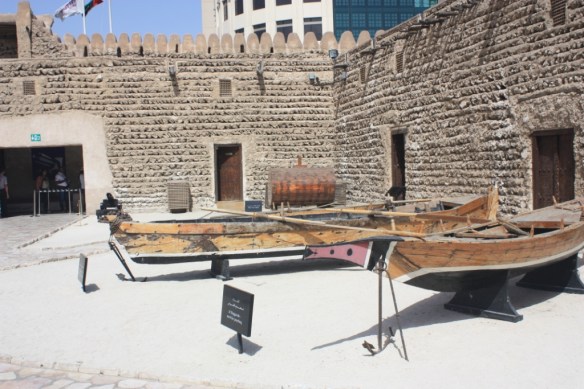
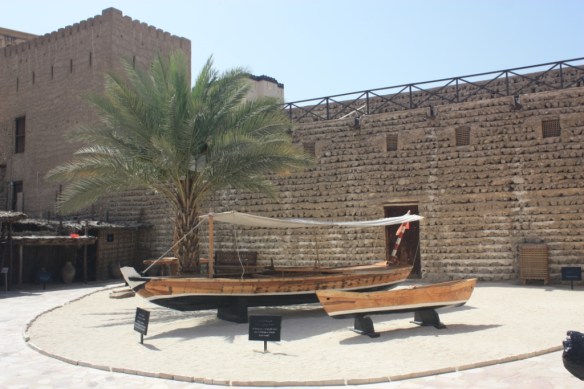
Dubai has an interesting museum that charts the Emirate’s history from fishing village to global transshipment megalopolis. As Dubai’s history is maritime, there are no shortage of boats.
 Budo: Teachings of the Founder of Aikido by Morihei Ueshiba
My rating: 4 of 5 stars
This book is really three separate booklets bound into one. In this case, I believe the three parts work together quite well, and it doesn’t feel like a trick of padding to make a pamphlet into a salable book. I only mention this to point out that the three sections are quite different on several levels (i.e. authorship, subject, and content), and to put the reader on notice of it.
The first part is an “Introduction” by Kisshōmaru Ueshiba. The reason I put introduction in quotes is that it’s really a brief biography of Morihei Ueshiba (often called Ōsensei by practitioners of his art.) At 16 pages, it would be somewhat long for an introduction to the (130pg) book, but it introduces the martial arts master who founded the martial art of aikidō and who wrote the second part of the book nicely. The bio is a good use of space. Morihei Ueshiba wasn’t only an accomplished martial arts master, but he led an interesting life as well. I found this biography to be intriguing, and it made me want to read a full biography of the man. I must point out that there are a couple spots that will trigger the BS-meter of any rational skeptic (i.e. comments about Ueshiba being bulletproof or invincible.) Even though I don’t believe for a minute that the man was either bullet-proof or invincible, I think that most of this biography is true, and even that which isn’t gives one insight into the man as a combat veteran (and it certainly says something that some of his students literally deified him.) In addition to biographical text, this part includes various photos from both inside and outside the dōjō.
The second part is the beating heart of the book. This is a manual on martial arts written by Morihei Ueshiba, himself. It features prose, photos, technique descriptions, and even poems. While the bulk of the section consists of descriptions of techniques along with illustrative photos, there’s some philosophy of martial arts in both the early text and poems at the beginning and ending of the section. This section is almost 50 pages long, and the translator provides explanatory end-notes that help to make sense of the text for non-specialists.
The last section is technically the longest. However, it contains almost no text other than a translator’s introduction and technique names. It’s a series of technique sequence photos. The photos were taken in 1936 and were taken at the behest of the president of Kodansha Ltd. at the time, Seiji Noma—hence, they’re referred to as the “Noma Dōjō Techniques.” The shots of the sequences are tight enough that one can follow the flow of Ueshiba’s movement. For me, this section wasn’t particularly valuable. However, for practitioners of Aikidō, I can imagine how it could be invaluable. In other words, if one is familiar with the techniques, one might spot something that would give one a new insight. For the rest of us, this section just gives a crude taste of the nature of Aikidō.
I found this book to be interesting and informative. I’d recommend it not only for aikidō practitioners, but for those interested in the martial arts more generally. There is certainly insight to be gained from this phenomenal martial arts master.
 Judo by Reay
My rating: 3 of 5 stars
Tony Reay wrote this book when he was both a 6th degree black belt and Development Officer for the British Judō Association. So his qualifications are beyond a doubt. The book is an overview of the sport of judō that covers techniques, etiquette, rules, warm-up exercises, grading approaches, and other specialty topics. It covers the gamut of issues related to the sport of judō, but without going into much detail. It would be a suitable book for a youngster who is considering whether they might want to get involved. I emphasize that it’s about “sport judō” because there are those who consider judō to be an approach to self-defense and others who think of it as a whole-life philosophy. This isn’t the book for those who want to learn more about judō as anything other than a competitive sport.
The eight chapters of the book cover: history, the grading structure, recreational judo, fitness, techniques, competition, the judō instructor, and judō as an art. However, most of the chapters are cursory. The bulk of the book is devoted to showing 69 of the art’s most fundamental techniques, including: 40 throws, 12 holds, 10 chokes, and 7 arm-locks. For each of these techniques there is a line drawing and a brief description. In a few cases there are black and white photos taken of the technique being performed in competition. This overview of techniques is mostly of value for learning names and accounting for what techniques one has (or hasn’t) learned. There’s not enough detail–either graphically or textually–to help a practitioner improve a technique that they’ve learned. (The latter isn’t a point of criticism, but rather to let people know what they are and aren’t getting in the book.) Still, there are tips scattered throughout the book that might help a practitioner improve their techniques in a general sort of way.
There is a glossary of Japanese terms commonly used in judō.
I found this book to be a fine overview of the sport of judō, and would recommend it for that purpose. While I’ve found other books on the art much more useful for my purposes, I think this is a fine book for someone looking to get into the sport from ground zero. I should point out that the book is from the mid-80’s, and so there will probably be details on rules, scoring, and grading that have changed, but the bulk of it will remain of value.
 The Invention of Nature: Alexander von Humboldt’s New World by Andrea Wulf
My rating: 5 of 5 stars
If you’re like me, you had no idea who Alexander von Humboldt was prior to this surprisingly well-received book. So why read a book about him? Well, you’ve surely heard of the people he influenced: e.g. Darwin, Thoreau, Jefferson, Bolivar, Wordsworth, Samuel Taylor Coleridge and John Muir—to name a few.
Humboldt was one of the top scientists of his time, but his influence extended far beyond that aspect of his life. Much of the thrill of this book comes from Humboldt’s expeditions to Latin America and Russia. He faced alligators, electric eels, a capsized ship, and natural disasters. He also made Herculean efforts to arrange a Himalayan expedition, but politics and personalities intervened to delay him until he was too old to make the trip. (It should be noted that when Humboldt summited Mount Chimborazo in Ecuador in the early 1800’s, it was believed to be the highest peak in the world [at 6268m, or 20,600ft.] Needless to say there was a lot unknown about the Himalaya at the time—e.g. Everest is 8848m, or over 29,000ft.) While Humboldt produced specific breakthroughs and discoveries (e.g. inventing isotherms and discovering the magnetic equator), much of the inspiration he provided was in showing the interconnectedness of nature and the potential for unintended consequences.
As a Prussian aristocrat, Humboldt was born into a position to have influence but it was his ideas and his personality that made him so sought after. He could be arrogant, but was humbled in the face of nature. He was charismatic, but did not suffer fools kindly. He was adamantly anti-slavery and strongly opposed efforts of religion to stymie science in order to delay the toppling of their sacred cows.
The book is arranged into 23 chapters, divided among five parts. Part I describes his youth and the time leading up to the American expedition that would make him a legend. Part II describes his experiences gathering specimens and observations in Latin America, with a chapter about his meeting with Thomas Jefferson on his way back to Europe. Part III covers the period he spent in Europe after his expedition to the Americas. It was during this time that he wrote up his observations and hypotheses about nature. It was a productive time, but Humboldt missed nature. Part IV covers two important topics: the expedition through Russia and some of the more important ideas and people Humboldt influenced—e.g. Darwin. By this time he was well-known, and the books that had thus far come out were much in demand. Part V continues the theme of Humboldt’s influence on great thinkers, but with a focus on ideas that were a bit slower to develop.
I enjoyed this book. Interestingly, it follows a chronological format. That may seem a less than profound observation for a biography, but it’s less common to begin with the earlier years of life because those are typically the boring bits and there’s a desire to get into the meat of the story. (To some degree the author does this with a prologue that describes the Chimborazo trek.)
I’d recommend this book for those who are interested in science, ecology, and nature, as well as those interested in what it was like to make a scientific expedition in those days, well before Darwin.