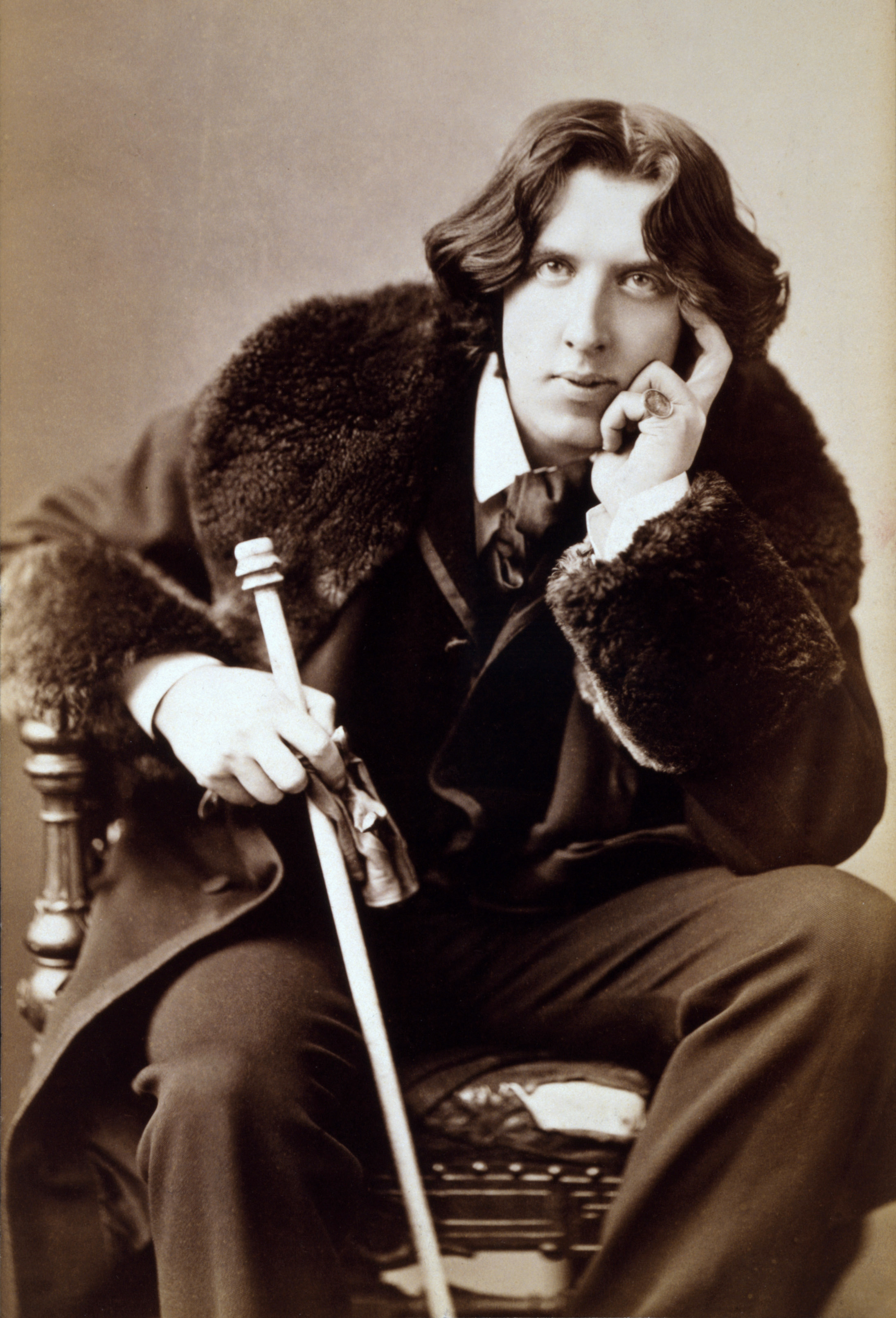
Five Wise Lines from The Picture of Dorian Gray by Oscar Wilde

Nowadays people know the price of everything and the value of nothing.

All art is quite useless.

The books that the world calls immoral are books that show the world its own shame.

A great poet, a really great poet, is the most unpoetical of all creatures. But inferior poets are fascinating.

You will always be fond of me. I represent to you all the sins you never had the courage to commit.

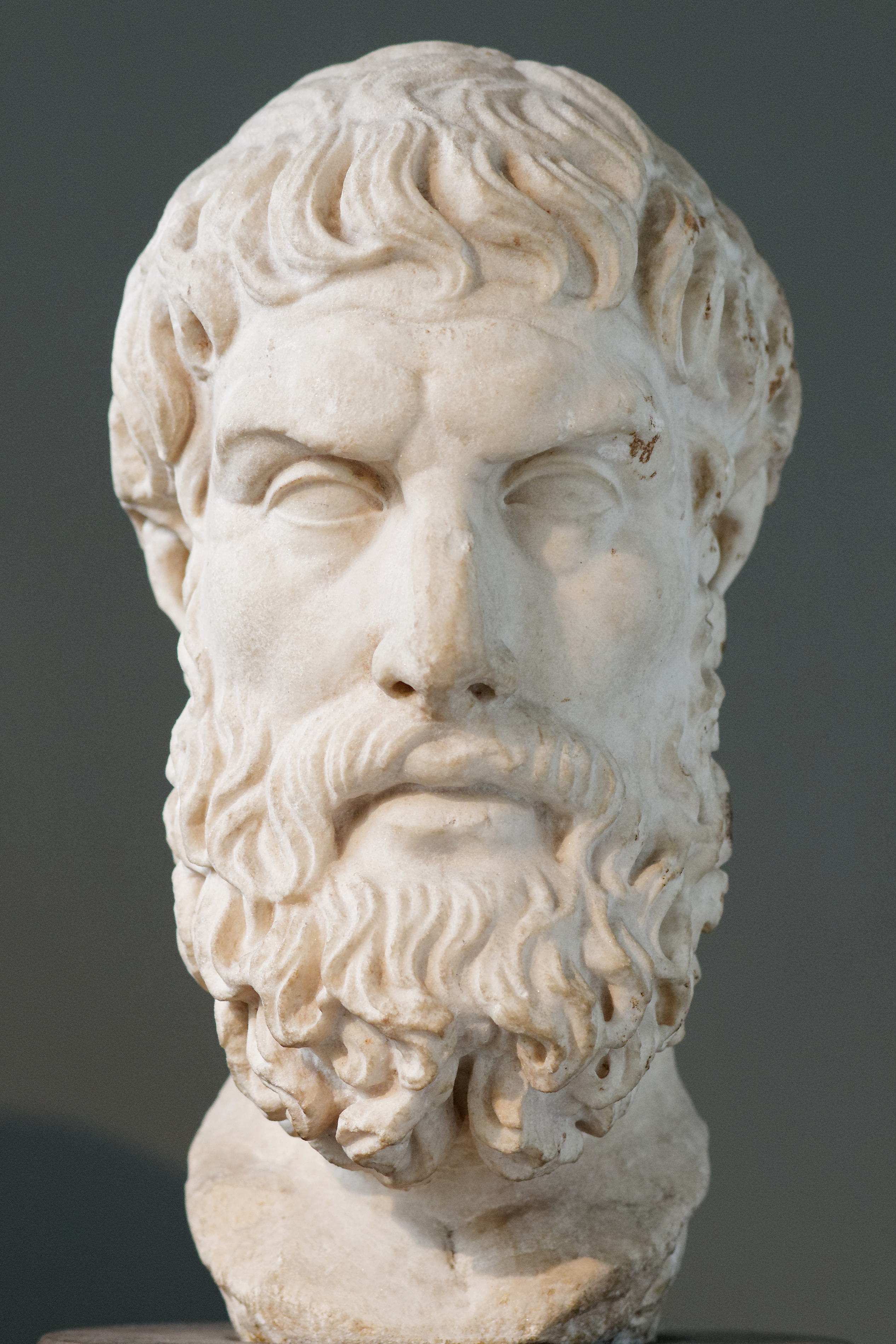
Five Wise Lines from Epicurus

Death is nothing to us, because a body that has been dispersed into elements experiences no sensations, and the absence of sensation is nothing to us.

principal doctrines – No. 2

Nothing is enough to someone for whom what is enough is too little.

Vatican Sayings – No. 68

Of all the means which are procured by wisdom to ensure happiness throughout the whole of life, by far the most important is the acquisition of friends.

Principal Doctrines – No. 27

Don’t spoil what you have by desiring what you don’t have; but remember that what you now have was once among the things only hoped for.

vatican sayings – No. 35

No pleasure is a bad thing in itself, but some pleasures are only obtainable at the cost of excessive troubles.

Principal doctrines – No. 8

And Five Honorable Mentions:

[T]here are an infinite number of worlds, some like this world, others unlike it.

Letter to Herodotus

Dreams have neither a divine nature nor a prophetic power, but they are the result of images that impact upon us.

vatican sayings – No. 24

It is pointless for a person to pray to the gods for that which he has the power to obtain by himself.

vatican sayings – No. 65

But one must not be so much in love with the explanation by a single way as wrongly to reject all others…

Letter to pythocles

Let no one be slow to seek wisdom when he is young nor weary in the search thereof when he is grown old. For no age is too early or too late for the health of the soul.

Letter to Menoeceus

SOURCE: Epicurus. 2021. The Fundamental Books of Epicurus: Principal Doctrines, Vatican Sayings, and Letters. Trans. by: Robert Drew Hicks & R. Medeiros. Independently published on Amazon. 45pp.

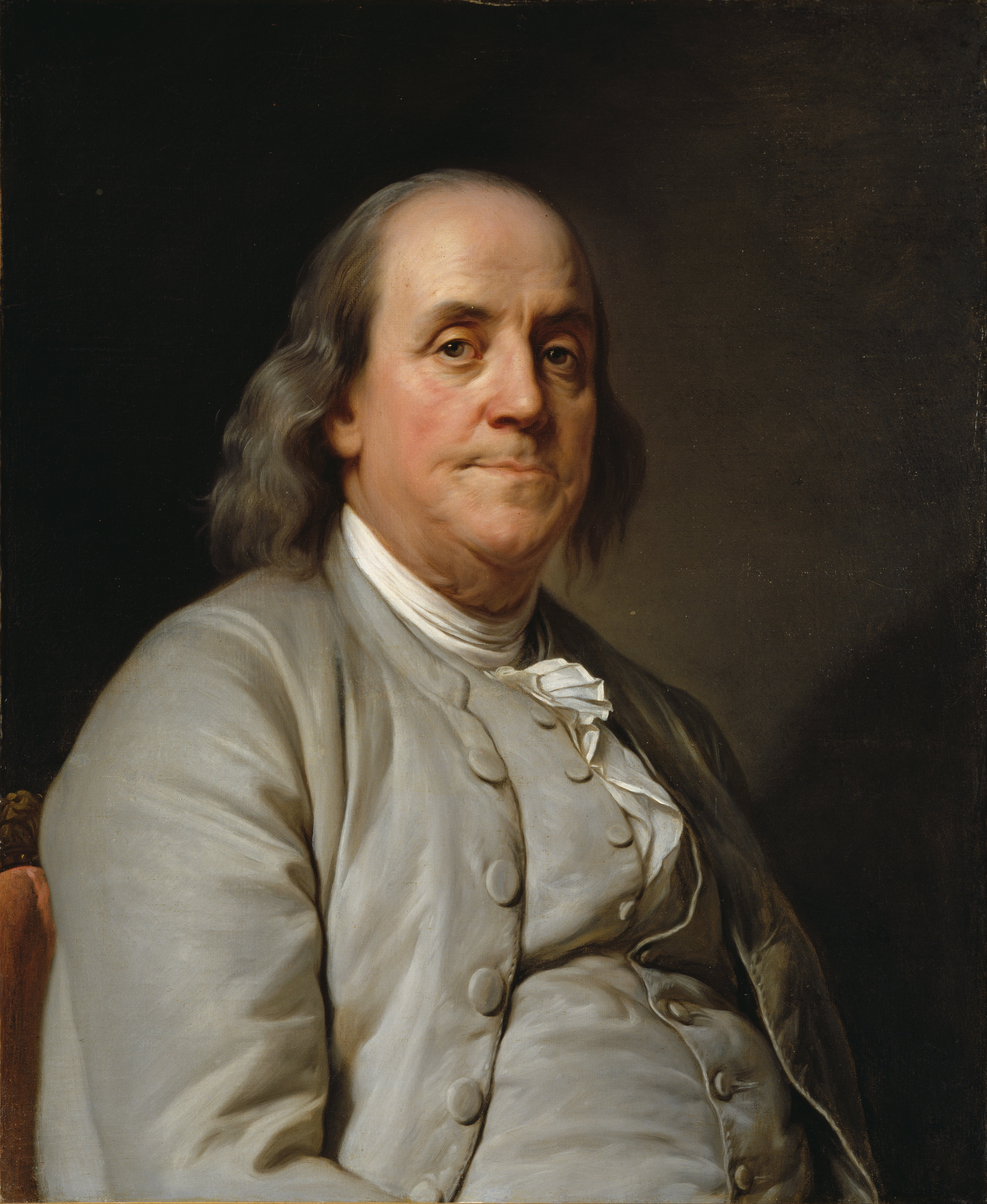
Five Wise Lines from Ben Franklin

Either write something worth reading or do something worth writing.

Never ruin an apology with an excuse.

In wine there is wisdom, in beer there is Freedom, in water there is bacteria.

Many people die at twenty five and aren’t buried until they are seventy five.

Never confuse Motion with Action.

And Five Honorable Mentions:

Three may keep a secret, if two of them are dead.

How many observe Christ’s birthday! How few his precepts!

It is the first responsibility of every citizen to question authority.

If all printers were determined not to print anything till they were sure it would offend nobody, there would be very little printed.

Tis a great confidence in a friend to tell him your faults; greater to tell him his.

Five Wise Lines from Fireflies by Rabindranath Tagore

In the drowsy dark caves of the mind / dreams build their nest with fragments / dropped from day’s caravan.

From the solemn gloom of the temple / children run out to sit in the dust, / God watches them play / and forgets the priest.

The wind tries to take the flame by storm / only to blow it out.

The same sun is newly born in new lands / in a ring of endless dawns.

When death comes and whispers to me, / “Thy days are ended.” / let me say to him, “I have lived in love / and not in mere time.” / He will ask, “Will thy songs remain?” / I shall say, “I know not, but this I know / that often when I sang I found my eternity.

Fireflies by Rabindranath Tagore is in the public domain and can be read at sites such as:

Fireflies is available at PoetryVerse

Five Wise Lines from Macbeth

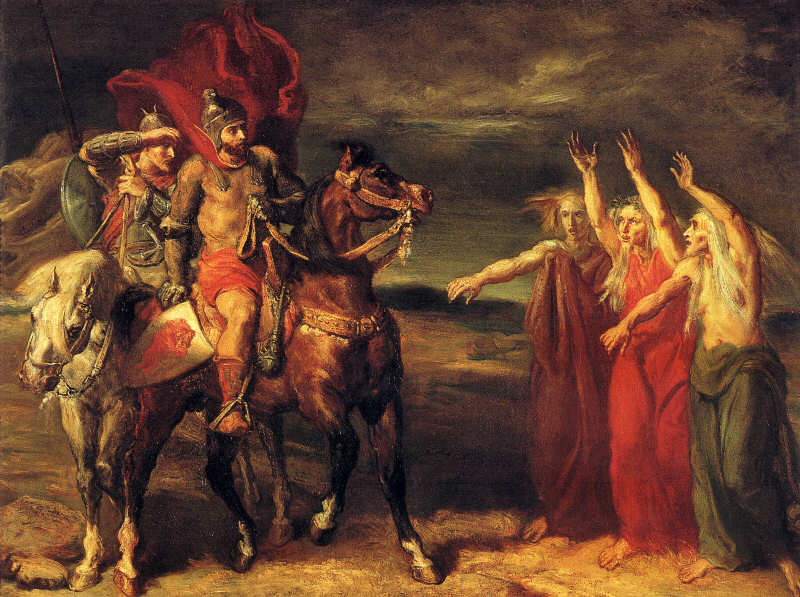
Macbeth & Banquo Encounter the Witches
by Theodore Chasseriau

“There’s no art to find the mind’s construction in the face.”

Duncan in Act I, Scene 4

“Bloody instructions, which, being taught, return to plague the inventor.”

Macbeth in Act I, Scene 7

“when our actions do not, our fears do make us traitors”

Wife of Macduff in Act IV, Scene 2

“Then the liars and swearers are fools, for there are liars and swearers enough to beat up the honest men and hang them up.”

Son of Macduff in Act IV, Scene 2

“Life ‘s but a walking shadow, a poor player, that struts and frets his hour upon the stage and then is heard no more. It is a tale told by an idiot, full of sound and fury signifying nothing.

Macbeth in Act V, Scene 5

Five Wise Lines from Tsurezuregusa by Kenkō

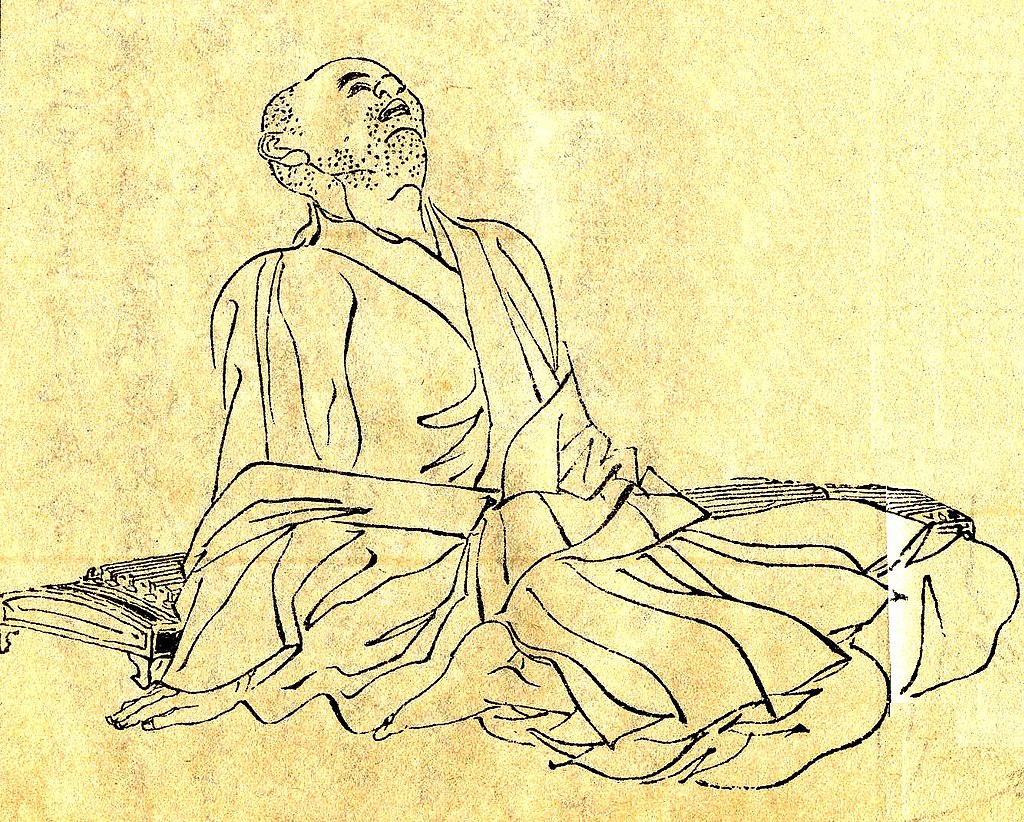
Yoshida Kenkō by Kikuchi Yosai [Date Unknown]

There is much to admire, though, in a dedicated recluse.

Kenkō Yoshida, Essays in Idleness (No. 1)

Going on a journey, whatever the destination, makes you feel suddenly awake and alive to everything.

Kenkō Yoshida, Essays in IdleNess (No. 15)

You can find solace for all things by looking at the moon.

Kenkō Yoshida, Essays in Idleness (no. 21)

Something left not quite finished is very appealing, a gesture toward the future.

Kenkō Yoshida, Essays in Idleness (No. 82)

It’s in easy places that mistakes will always occur.

Kenkō Yoshida, Essays in Idleness (No. 109)

CITATION: Kenkō Yoshida & Kamo no Chōmei. 2013. Kenkō and Chōmei: Essays in Idleness and Hōjōki. London: Penguin. 206pp.

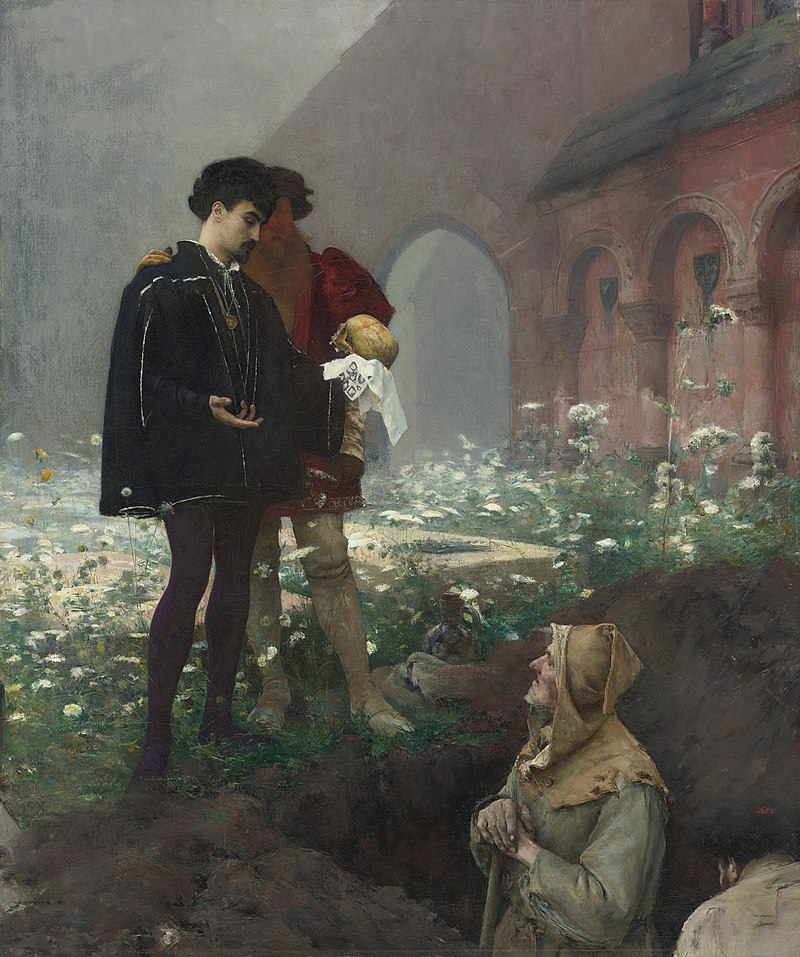
Five Wise Lines from Shakespeare’s Hamlet

We fat all creatures else to fat us and we fat ourselves for maggots… a king may go a progress through the guts of a beggar.”

HamLet to Claudius in Act IV, Sc. 3

One may smile, and smile, and be a villain.

Hamlet to Queen Gertrude in Act I, Sc. 5

I could be bounded in a nutshell and count myself a king of infinite space, were it not that I have bad dreams.

Hamlet to rosencrantz & Guildenstern in Act I, sc. 2

Brevity is the soul of wit.

Polonius to claudius & gertrude in act II, sc. 2

A knavish speech sleeps in a foolish ear.

hamlet to rosencrantz in act IV, Sc. 2

Five Wise Lines from Chōmei’s Hōjōki

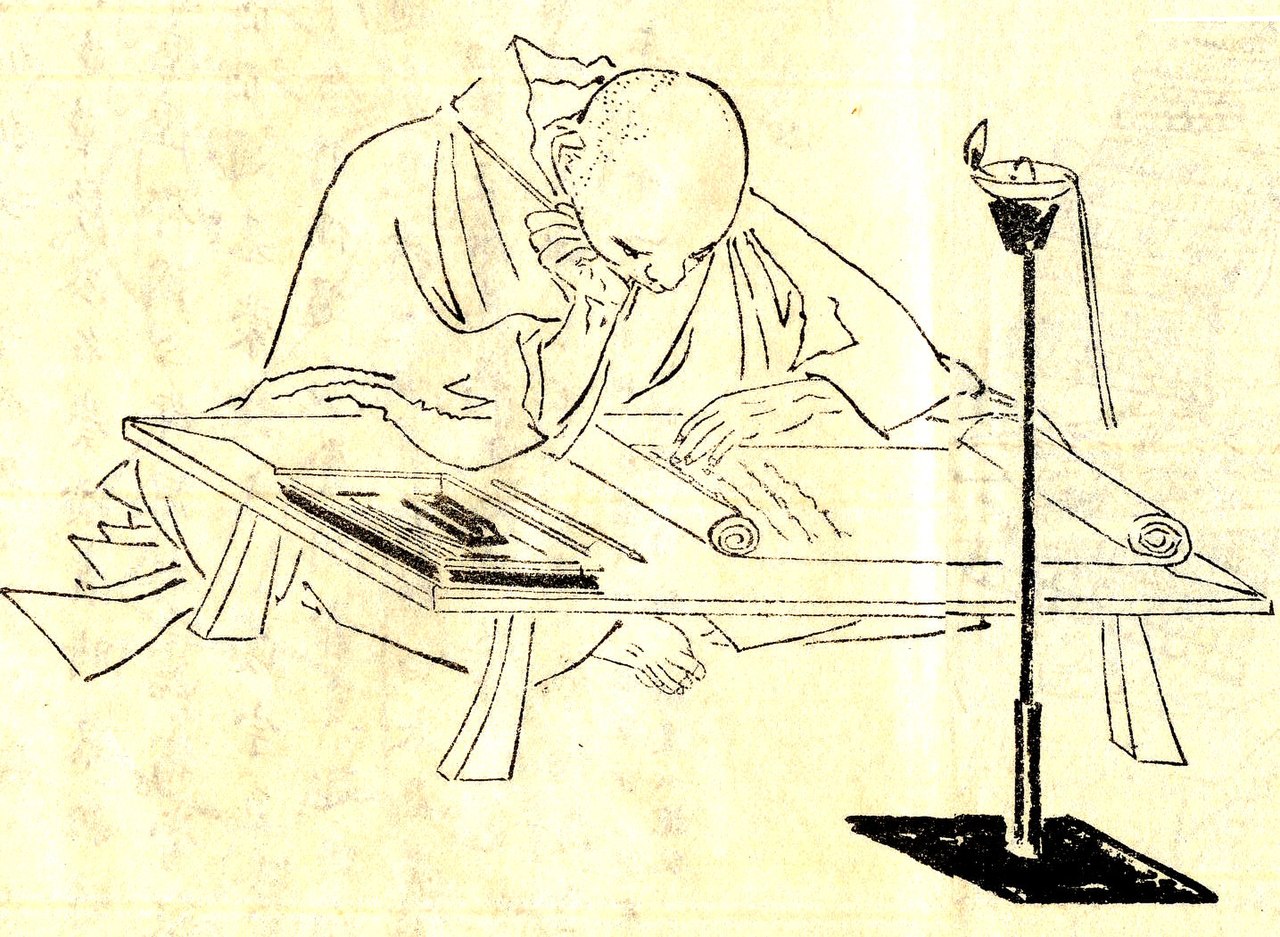
drawing by Kikuchi Yōsai

On flows the river ceaselessly, nor does its water ever stay the same.

 Kamo no Chōmei, Hōjōki

No one owns a splendid view, so nothing prevents the heart’s delight in it.

Kamo no Chōmei, Hōjōki

Knowing what the world holds and its ways, I desire nothing from it, nor chase after its prizes. My one craving is to be at peace; my one pleasure is to live free from troubles.

Kamo no Chōmei, Hōjōki

These days, I divide myself into two uses — these hands are my servants, these feet my transport.

Kamo no Chōmei, Hōjōki

When I chance to go down to the capital, I am ashamed of my lowly beggar status, but once back here again I pity those who chase after the sordid rewards of the world.

Kamo no Chōmei, Hōjōki

Reference: Saigyō Hōshi, Kamo no Chōmei, Yoshida Kenkō. 2021. Three Japanese Buddhist Monks. New York: Penguin Books. 112pp.

Available Here

Spared the Human Curse [Free Verse]

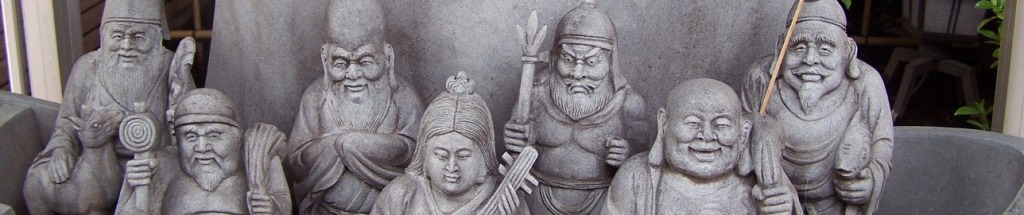
Seven Sages were spared the sickness
 of perceiving the possibility of perfection,
  a "perception" of the patently impossible --
   in truth, just dim and flimsy imaginings of mind,

   and, so, they didn't mind the inevitable
     flaws of the human world. 

Five Great Yarns from Kahlil Gibran’s The Madman

The MadmanThe Madman by Kahlil Gibran
My rating: 5 of 5 stars

Project Gutenberg Page

The Madman is a collection of poems and short fiction (often micro-fiction) of a philosophical nature. The protagonist claims he became a madman when a thief broke into his house and stole his masks, the masks that people wear to fit into society and appear “normal.” Beyond the thread created by this mad character, the entries meander along, each with its own moral and with little discernible overarching plot.

There are many clever stories in this collection, offering food-for-thought on religion, philosophy, and psychology. I’ll discuss five of my favorites:

“The Sleepwalkers” A mother and daughter are both sleepwalkers. When they are somnambulating, they speak to each other in horribly cruel terms, but when they wake up, they display (at least a veneer of) love and affection. Besides demonstrating the nature of the aforementioned masks, the loss of which gets one designated “crazy,” this story encourages the reader to discern the differences between conscious and subconscious mental activity.

“War” This one presents an analogy for war in which a thief breaks into the wrong building, walks into a machine, pokes his own eye out, and then takes the building owner to court seeking “justice” for his lost eye. The craftsman / shop-owner says he can’t lose an eye because he won’t be able to do his work, but he knows a neighboring craftsman who could have his eye removed without great loss of productivity. This story builds upon the well-known “An eye for an eye…” Bible verse with the added absurdity of violence being doled out randomly and without concern for whether the victim had anything to do with the events in question.

“The Wise King” A disgruntled witch poisons a city well with a substance that makes drinkers insane. The King avoids the well water and is spared insanity. However, the townspeople begin to plot against the king because, in their insanity, they believe him (as one who acts differently) to be insane. The king eventually drinks the well water in order to come back into synch with his subjects. This entry speaks to the arbitrary nature of classification of sane and insane, an idea that has been discussed in modern times by mental health experts such as R.D. Laing.

“The Two Cages” A bird is caged next to a lion. The bird’s confidence provides the central lesson, knowing they’re both imprisoned separately, the bird refers to the lion as “fellow prisoner.” The power dynamic has changed from that of the jungle. Perhaps, the bird has even happily exchanged its freedom — either for safety or to tear the lion down a little.

“The Eye” In this story, the other sense organs mock the eye after it comments upon how grand a mountain is. The ear can’t hear the mountain and the skin can’t feel the mountain. Therefore, the other senses assume that the eye is either lying or is delusional. This tale speaks to the risk of denying something based on one’s own limited perception.

This book was originally published in 1918 and is in the public domain (most places.) It’s definitely worth the short time investment required to read it.

View all my reviews