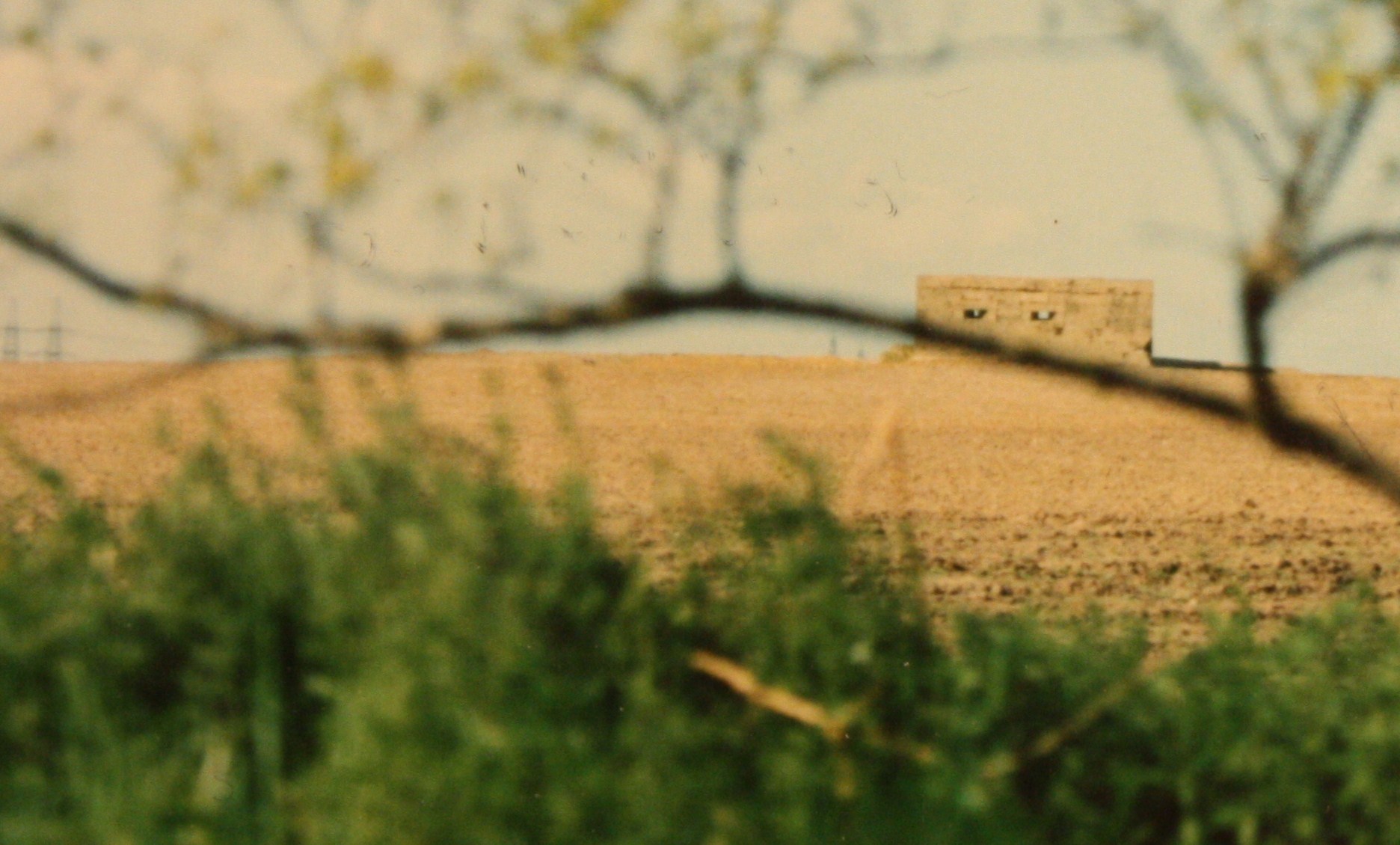
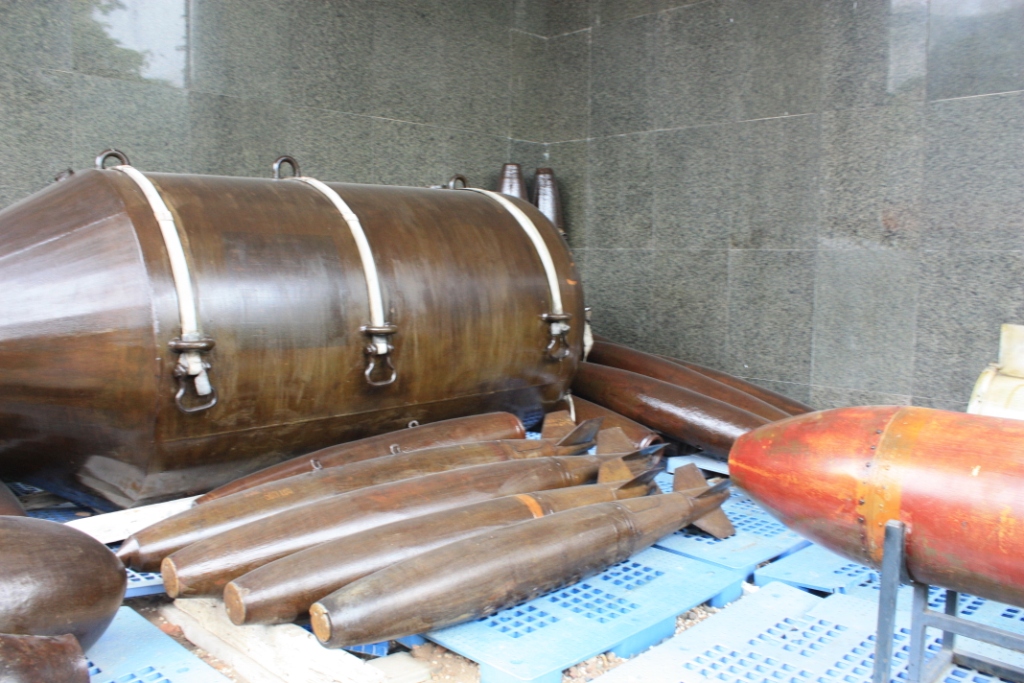
Pillbox Kitsch [Tanka]

what is this place,
 with its defensive bunkers
  on every rise?
 lasting vestiges of war,
  so unlike my childhood home.

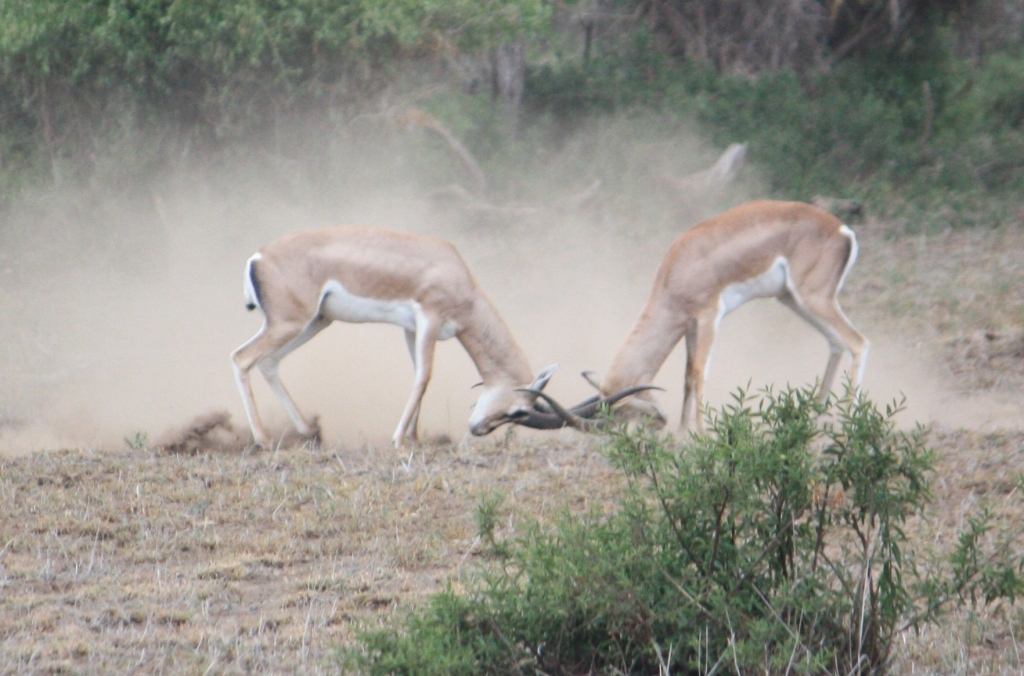
The Futility of War [Haiku]

two young gazelles
 lock horns and head-wrestle, 
  then quit and move on.

Scarecrow [Free Verse]

Scarecrow, n. - that which exists 
                         solely to evoke fear.

There are so many scarecrows:
   global - the end of the world
                    as we know it.
   societal - the end of the tribe
                    as we know it.
   individual - scarecrows of the soul.

Scarecrows lead us into the worst
        versions of ourselves: 
 The one who's stressed, and mean
        because of it.
 The one who imagines conspiracy
        around every corner.
 The one who sees threat in every
        change & in every difference.
 The one who wants an orderly world
        of people just like themselves -
        familiar, cozy, and lacking surprises.

Scarecrows even march us off to war,
        and war should be the scariest state
              imaginable --
        death doled out on a random basis.
 
War should be the scariest, but terrible certainties
         spur less fear than any old uncertainty.

Metaphor & Misnomer [Free Verse]

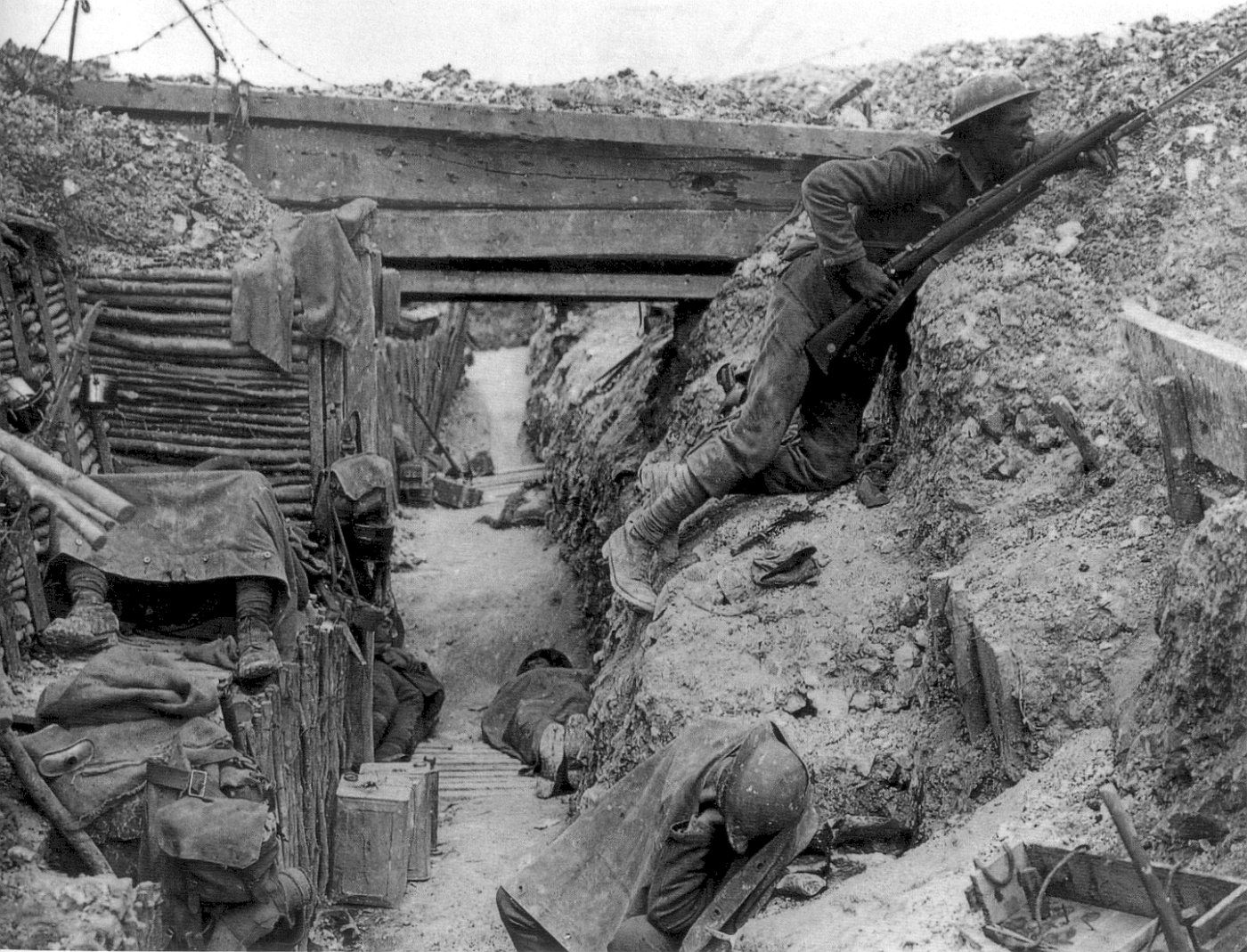
"in the trenches"

what a circuit 
 that phrase has taken:

from the Western Front 
 of World War I, where the trenches 
 were cold, claustrophobic places
 of mud and creeping mustard gas;
 harbor & prison for shell-shocked
 souls at wit's end

to become used by businesspeople &
 politicians to describe metaphorical fights...

but there are no metaphorical fights,
 they should be called metaphorical games

games have winners & losers,
 but not the living & the dead
 & the dying & the disabled &
 the permanently disturbed

it feels like a frivolous bit
 of linguistic creep as fighters
 now stand on cold, wet feet 
 in muddy trenches
 in Eastern Ukraine

talk of salespeople or 
 grassroots political organizers
 as "in the trenches" 
 misses the point that everyone
 in trenches is a soldier --
 be they a salesperson
 in the metaphorical "trenches"
 of calmer days.

Fields of the Dead [Free Verse]

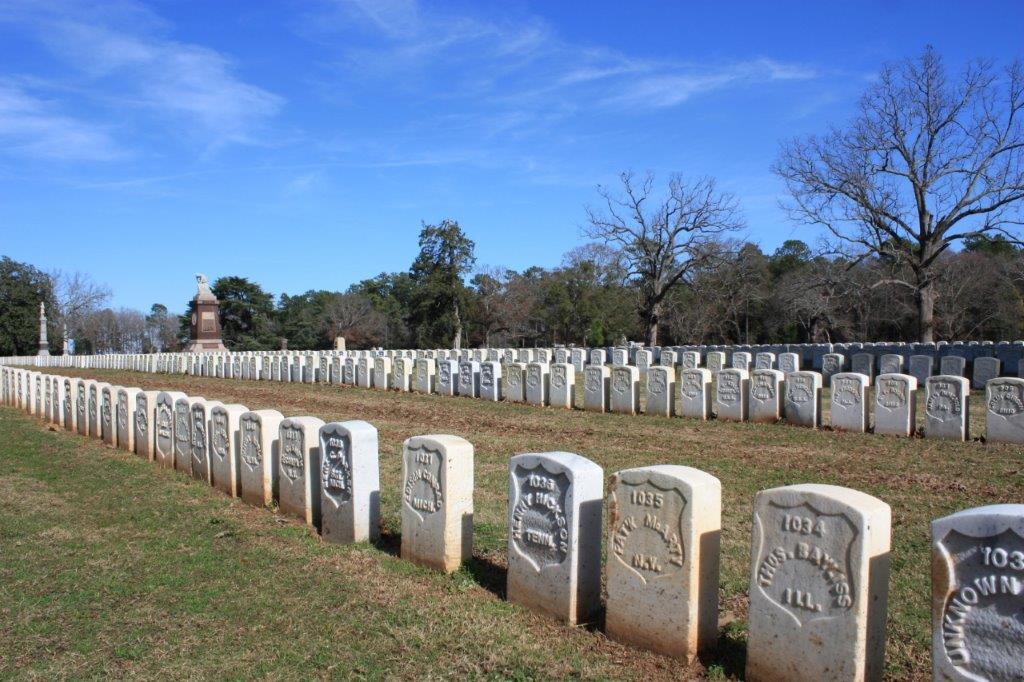
It's a beautiful day
  in the graveyard.

Blue skies.

Cool, but not cold.
 The ideal temperature
   to be an overdressed military man.

Do ghosts amble among the stones
   on days like these?

I imagine most of these men died
   on quite different kinds of days:

Rainy, cold, muddy days.

Muggy, buggy, malarial days.

The kind of day that just won't end,
   but to fold into a sleepless night.

How many died, 
  not from spall or Minié balls,
    but because they just didn't have the will
      to drag themselves through another day?
        from exhaustion?
        from demoralization?

How many died under beautiful blue skies
   on an idyllic autumn day?

I don't know whether 
  there're good days to die,
    and even less whether 
      there're good days to be dead.

Dogs of War [Lyric Poem]

The dogs of war are slipping.
  The ropes they are a ripping.

The palms they are a bleeding,
  as citizens are reading

of risks that led to slippage:
  of quips and of equipage,

and how it wasn't expected,
  and courses were corrected,

but still it all goes wrong.  

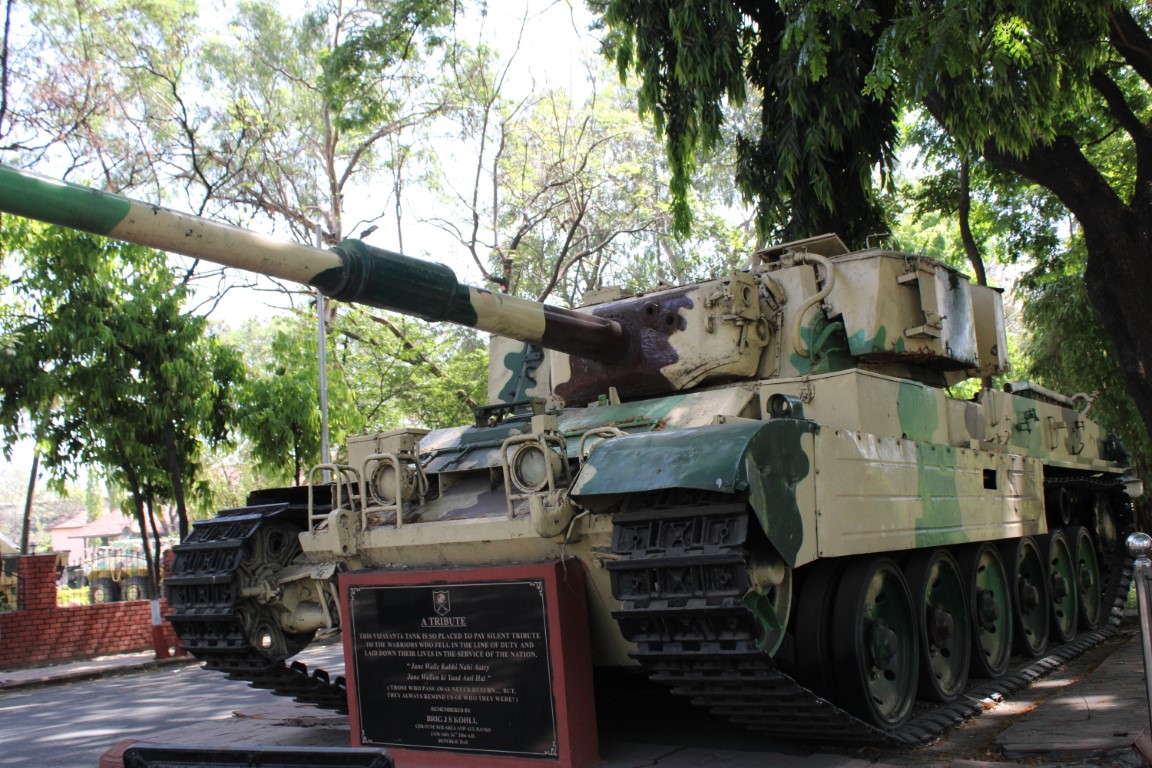
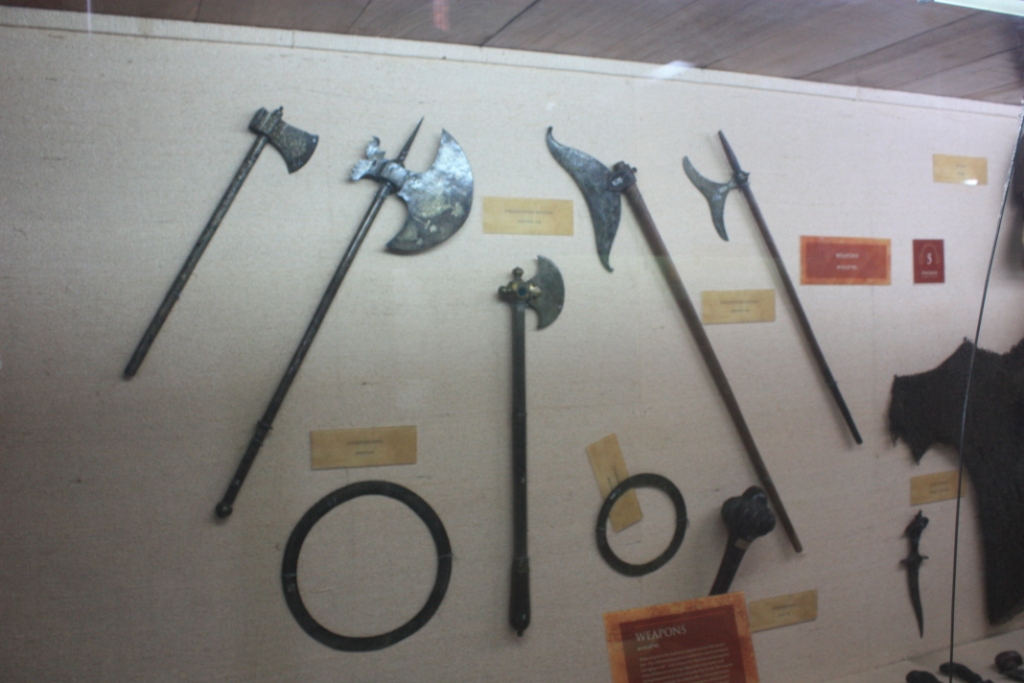
DAILY PHOTO: Indian Weapon Display

Taken in September of 2017 at the Government Museum of Bangalore

BOOK REVIEW: Buddhist Ethics: A Very Short Introduction by Damien Keown

Buddhist Ethics: A Very Short IntroductionBuddhist Ethics: A Very Short Introduction by Damien Keown
My rating: 5 of 5 stars

Amazon.in Page

Most people, if they know anything about Buddhist ethics, have heard of the Eightfold Path (right + view, intention, speech, action, livelihood, effort, mindfulness, and concentration.) However, just knowing that can lead to the impression that Buddhist ethics are blurry and that it’s all a matter of doing as one pleases within one’s personal interpretation of rightness. This concise guide offers an overview of the Buddhist ethics and morality, focusing on issues of global and modern interest (as opposed to those issues only of interest in places where Buddhism is practiced or at the time in which Buddha was teaching – i.e. issues like abortion, vegetarianism, war, suicide, and cloning and not subjects like caste, traditional family roles, etc.)

The first two chapters present a broad overview, and the rest focus on particular ethical issues. I found the second chapter beneficial; it asks how Buddhist ethics fit in the categorization scheme employed by Western Philosophy. I considered it useful even though the answer was that Buddhist ethics aren’t neatly contained by this way of thinking, but rather can be seen as a mix of multiple approaches. (e.g. Buddhism has sets of precepts – ala deontology, has a karmic doctrine that is arguably consequentialist, and, also, has elements similar to the virtue ethics of ancient Greece.)

Chapters three through eight investigate specific issues: animal rights and environmental ethics (ch. 3,) sexuality and gender (ch. 4,) war and violence (ch. 5,) abortion (ch. 6,) suicide / euthanasia (ch. 7,) and upcoming technologies that will change what it means to be alive and conscious (i.e. cloning, artificial intelligence, cryogenics, and CRISPR.) As with chapter two, there’s often no tidy answer. For one thing, the author tries to contend with what is common across various sects, and this is often reflected in the laws of countries, laws which are only partially informed by Buddhist philosophy. Also, it’s not like the Buddha had anything to say on many of these issues, which either weren’t issues (e.g. cloning) or were considered radically differently (e.g. gender.) Still, one does get an idea of how these questions relate to ideas such as karma and dharma, and how contemporary Buddhist thinkers might begin to consider them.

One will note that there are ethical territories that aren’t addressed (e.g. justice / punishment, ethics of governance, business ethics, etc.,) but a brief guide needs filters, and this one chose to focus heavily on modern, individual ethical questions of broad international interest.

If you’re looking to better understand Buddhist ethics, this book is worth reading.


View all my reviews

The War Mangled [Free Verse]

I heard the dead children,
their voices lilting on the wind.

The war-torn twice born
came crawling in under the wire,
bloody and shell-shocked,
but among the living, 

but the rest floated away:
their words
becoming both milder 
& more raucous,
never fully drowned out by
bombs or crossfire chaos.