BOOKS: “Original Tao” by Harold D. Roth

Original Tao: Inward Training (Nei-yeh) and the Foundations of Taoist Mysticism (Translations from the Asian Classics)Original Tao: Inward Training (Nei-yeh) and the Foundations of Taoist Mysticism by Harold D. Roth
My rating: 5 of 5 stars

Publisher site – Columbia University Press

This book is built around a translation of an old Taoist manual called “Inward Training” (i.e. 内业,) and the book serves not only to elaborate the meaning of the twenty-six poems that make up the manual, but also to put this work in a context with respect to its place in early Taoist mysticism — which raises further questions as to what constitutes early Taoism and early Taoist mysticism. (Just as the earliest followers of Jesus didn’t think of themselves as “Christians” – at least not as we understand that term – it’s an open question as to when people started to think of themselves as Taoists and how that start relates to when people began holding a set of proto-beliefs that formed the basis of the school(s) of philosophy.)

“Inward Training” presents breathwork and meditational exercises that Roth calls “inner cultivation” — or what some have called “inner alchemy.” The book does contain the entire manual both in Traditional Chinese and an English translation, as well as a much more extensive elaboration of the teachings of the manual. The latter is necessary because, like many old manuals, sparse description, archaic language, and assumptions about common knowledge du jour make it difficult for the layman to get any depth of understanding from the manual, itself.

This is a scholarly work, which means that its readability isn’t the highest and it does dive into matters that will be arcana for non-expert readers. That said, particularly as works of academic philosophy go, its readability isn’t bad. The book is heavily annotated and offers and extensive bibliography.

If you are interested in Taoist practices of breath, meditation, and alignment, this book is well worth investigating.

View all my reviews

BOOKS: “Best Literary Translations 2024” ed. by Jane Hirschfield, et. al.

Best Literary Translations 2024Best Literary Translations 2024 by Jane Hirshfield
My rating: 5 of 5 stars

Publisher Site

This “best of” annual celebrates the unsung translator. Many of the original works are recent but some are old or even ancient; it is these translations to English that are in all cases recent. Spanish and Arabic translations are well-represented, but with respect to the twenty or so languages included, almost all are the sole representative for that particular source language. Poetry makes up the bulk of the collection (including prose poems,) but there are several pieces of short fiction and a piece of creative nonfiction or two.

Among my favorites were: “Grazing Land” (Greek,) “The Snail’s Spiral” (Spanish,) “The Lion” (Kurdish,) “Deterioration” (Persian,) “Graceless” (Chinese,) “Our Village” (Tigrinya,) and “The Sea Krait” (Tagalog.) But, as one would expect of a carefully curated “best of” collection, there were no stinkers in the batch.

If you enjoy literature in translation, this book is well worth investigating.

View all my reviews

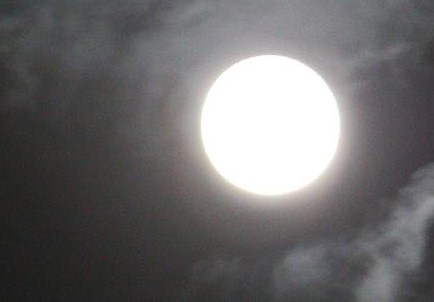
Drinking Alone by Moonlight by Li Bai [w/ Audio]

A pot of wine, under blossoms.
   I drink alone, no friends in sight.
 I raise a cup to lustrous Moon:
   Me, Moon, and Shadow will make three.
 But Moon is a teetotaler.
   And Shadow just skulks at my feet.
 Still, Moon & Shadow are my chums.
   We need a bash before Spring's end.
 But my singing makes Moon recoil.
   And Shadow flops hard when I dance.
 At first, we have a grand old time,
   But we part ways when I drift off.
 We should keep this epic friendship rolling,
   and meet again in the River of Stars.

NOTE: I produced this “translation” / arrangement, using translations by Arthur Waley, Ezra Pound, and that of “The Anchor Book of Chinese Poetry” [ed. by Tony Barnstone and Chou Ping] to get varied takes on the source poem.

BOOKS: The Poet Li Po AD 701-762 Trans. & Ed. by Arthur Waley

The Poet Li Po       A.D. 701-762The Poet Li Po A.D. 701-762 by Arthur Waley
My rating: 5 of 5 stars

Available online at: Project Gutenberg – The Poet Li Po

Li Po, also Romanized “Li Bai,” is one of China’s most famous poets, the prolific Tang Dynasty poet wrote extensively at the nexus of intoxication and the beauty of the natural world. His well-loved and evocative poem, “Drinking Alone by Moonlight,” is a prime example [and is included in this selection.]

The selection consists of a small number of translations by [20th-century Orientalist] Arthur Waley. It’s only 20-some of the 1,000-ish extant poems of Li Bai, but it does offer variety in form and subject matter. It doesn’t include all of Li Bai’s most anthologized poems, which I consider a plus — i.e. Waley didn’t just assemble a greatest hits album.

The Waley translations aren’t as sparse as many that one will read. That offers the advantage of being clearer in meaning while losing some of the feel of the original. That said, I enjoyed this group of translations and didn’t feel they were too verbose – for the most part. It’s a selection well worth reading for those who enjoy poetry.

View all my reviews

BOOK REVIEW: Eastbound Maylis de Kerangal

EastboundEastbound by Maylis de Kerangal
My rating: 5 of 5 stars

Amazon.in Page

Release of Paperback Edition: February 7, 2023

This novella is translated from French but set in Russia. The story is short and simple, yet evocative. It’s about the attempt of its two main characters to conduct very different plans of escape. Aliocha is a soldier who’s traveling by train to a remote assignment in the East when he decides to desert. Aliocha’s desertion plan ends up hinging on the assistance of a foreign woman, Hélène, a French woman who – as it happens – is fleeing a failed relationship. For whatever reason, but perhaps because she knows the intense need to break free, Hélène decides to shelter Aliocha in her cabin until he can make clean getaway.

This is a quick but intense read. The lack of common language between the two escapees makes for an austere telling, one that adds to the emotional tone of the story. I recommend it for readers of literature in translation.


View all my reviews

5 Novels in Translation That You Should Read

Reading translated novels is a good way to gain insight into the culture and history of a country in a way that is both entertaining and that exposes the deep nuances of national character. I’ve selected works that both highlight aspects of culture and / or history and that are pleasant reading–some are humorous and others are adventures, but none are drudgery.  (Includes two Nobel Prize winners and one guy who gets nominated every year only to have the prize handed to folk-rock musicians or the like.)

[The hyperlinks go to my review of said book in GoodReads.]


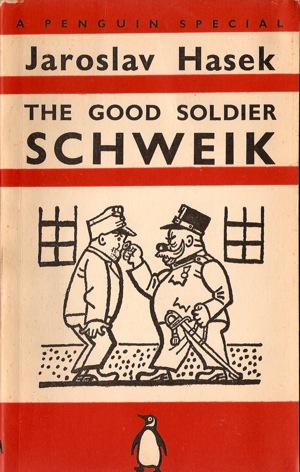
1.) The Good Soldier Švejk by Jaroslav Hašek (Czech): The lead character in this farcical comedy is a bumbling, but likable, idiot who is drawn into military service. The book highlights the fact that in times of war the greatest acts of idiocy are not perpetrated by greatest idiots.

goodsoldiersvejk_en


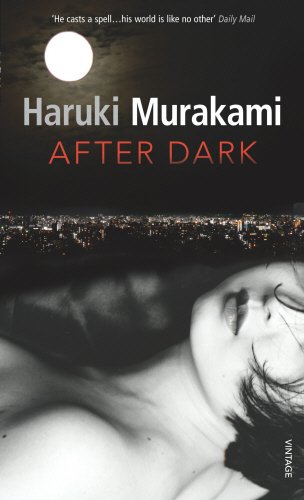
2.) After Dark  by Haruki Murakami (Japan): One can’t go wrong with Murakami. I almost picked Norwegian Wood, which is more a work of realist literary fiction, but this novel about what happens when the trains stop running in Tokyo may shed a little more light on Japan. (anti-pun not intended.)

afterdark_murakami


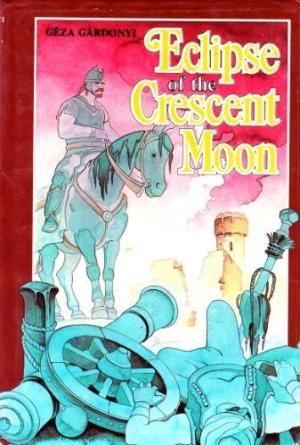
3.) Eclipse of the Crescent Moon by Géza Gárdonyi (Hungary): The story of how a small Hungarian castle village held out against a siege by the Ottoman juggernaut.

eclipseofthecrescentmoon_gardonyi


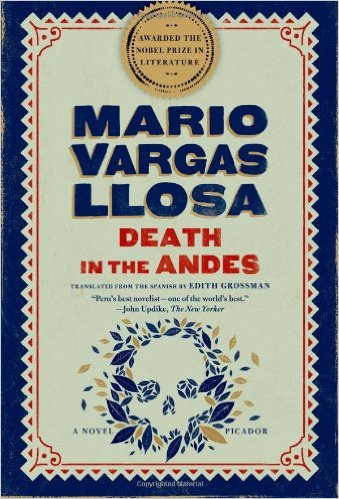
4.) Death in the Andes by Mario Vargas Llosa (Peru): When three men disappear from a small mining village in the Andes, the Army sends a Corporal and his deputy to investigate.

death-in-the-andes_llosa


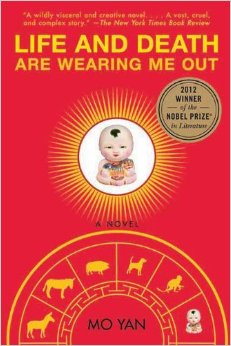
5.) Life and Death are Wearing Me Out by Mo Yan (China): A wealthy land owner is executed during the Communist revolution and must live out several lives as various animals in the service of the family of his [former] beloved hired-hand. The books shows the generational change between when China first became Communist through the reform period that led to a more market-friendly approach.

lifedeath_moyan