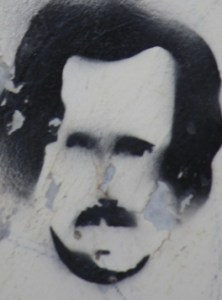
Take this kiss upon the brow!
And, in parting from you now,
Thus much let me avow --
You are not wrong, who deem
That my days have been a dream;
Yet if hope has flown away
In a night, or in a day,
In a vision, or in none,
Is it therefore the less gone?
All that we see or seem
Is but a dream within a dream.
I stand amid the roar
Of a surf-tormented shore,
And I hold within my hand
Grains of the golden sand --
How few! yet how they creep
Through my fingers to the deep,
While I weep -- while I weep!
O God! Can I not grasp
Them with a tighter clasp?
O God! can I not save
One from the pitiless wave?
Is all that we see or seem
But a dream within a dream?
Tag Archives: Sad
“Sad” [Poetry Style #19 (悲慨)] by Sikong Tu [w/ Audio]
Strong winds ripple water;
Forest trees are laid low...
A bitter urge to die --
One can't come; one can't go.
Ten decades flow, stream-like;
Riches are cold, gray ash.
Life 's a death procession --
Unless you're adept and brash,
And can take up the sword
To hasten the anguish...
No rustling dry leaves, or
Leaky roof as you languish.
NOTE: The late Tang Dynasty poet, Sikong Tu (a.k.a. Ssŭ-k‘ung T‘u,) wrote an ars poetica entitled Twenty-Four Styles of Poetry. It presents twenty-four poems that are each in a different tone, reflecting varied concepts from Taoist philosophy and aesthetics. Above is a crude translation of the nineteenth of the twenty-four poems. This poem’s Chinese title is 悲慨, and it has been translated as: “Despondent,” and “Sorrowful.”
Mole Limerick
BOOK REVIEW: 100 Poems to Break Your Heart ed. Edward Hirsch
100 Poems to Break Your Heart by Edward HirschMy rating: 5 of 5 stars
Amazon.in Page
Release Date: January 31, 2023
This anthology (and the accompanying analytical essays by Hirsch) covers over two-hundred years of poetry and works with a large set of translated languages as well as poems of English language origin. Therefore, the poems include an eclectic set of forms and schools of poetry. There are narrative poems and philosophical poems. There are sparse poems and elaborate poems. Besides the fact that they are all short to intermediate length poems (a few pages, at most,) the only thing the included poems have in common is some serious subject matter at each poem’s core. There are elegies and cathartic poems of illness or ended relationships, as well as tales of various types of tragedy (personal, global, and of scales in between.)
That said, not all of the poems feature a dark and melancholic tone. There are several poems that are humorous — in a gallows humor sort of way. Such poems include: Dunya Mikhail’s “The War Works Hard,” Harryette Mullen’s “We Are Not Responsible,” and Stanley Kunitz’s “Halley’s Comet.”
Of course, there are many poems that are as devastatingly sad as the title leads one to expect. Of these, Eavan Boland’s “Quarantine,” the story of a man carrying his illness-ravaged wife in search of survival during a famine in Ireland in 1847 takes the award for saddest. There are poems in this book that are more brutal, encompass vaster scales of suffering, or combine lyrical skill and emotional experience more artfully. But none of those poems socked me in the chest like Boland’s. One thing that struck me during my reading was what an intense force multiplier story is in creating poignant poems. Several others among my favorites told stories that made for visceral reads. These include: “Song” by Brigit Pageen Kelly, “The Race” by Sharon Olds, “Terminus” by Nicholas Christopher (also among the most savage tear-jerkers,) and “The Gas-Poker” by Thom Gunn.
Other favorites include: Langston Hughes’s “Song for a Dark Girl,” Miklós Radnóti’s “The Fifth Eclogue,” Stevie Smith’s “Not Waving but Drowning,” and “Mendocino Rose” by Garrett Hongo.
I’d highly recommend this book for poetry readers.
View all my reviews
5 Melancholic Works of Nonfiction You Should Read
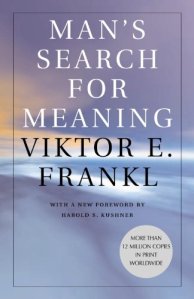
5.) Man’s Search for Meaning by Viktor Frankl: Deep life lessons learned inside a Nazi death camp.
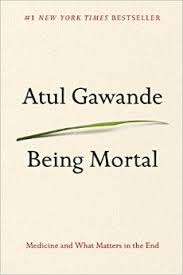
4.) Being Mortal by Atul Gawande: A medical doctor discusses how living longer doesn’t necessarily mean living better, and what that can mean for one’s final years.
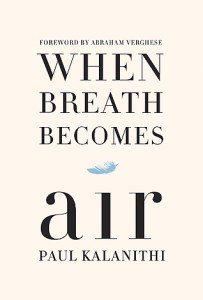
3.) When Breath Becomes Air by Paul Kalanithi: Contemplations on the meaning of life from a doctor who was dying from a terminal illness, and who succumbed before completion of the book.
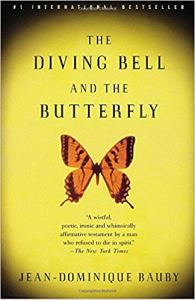
2.) The Diving-Bell and the Butterfly by Jean-Dominique Bauby: The story of a man who developed Locked-In Syndrome in the wake of a severe stroke and couldn’t move a muscle, save one eyelid.
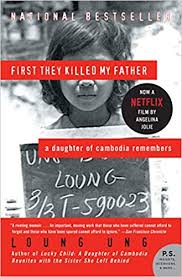
1.) First They Killed My Father by Loung Ung: The title captures the family level tragedy of Pol Pot’s rule, but the book conveys something of the national tragedy as well.
POEM: Too Happy
I’m too happy to be crazy,
but the happy makes me lazy
Not lazy, but lacking focus.
Madness is a creative locus.
A sad gravity weighs one down,
as lip corners into a frown,
but in the pit resides a muse.
People pay to hear the blues.
If you could peer inside my mind,
you’d see stacks of rotting rinds.
The rinds pile up and they ferment.
Maybe to a soulful lament?
Or maybe they just start to sour,
becoming fouler by the hour.
Until you can’t believe the stink,
and every word is wasted ink.