BOOKS: “How to Love in Sanskrit” Trans. by Anusha Rao & Suhas Mahesh

How to Love in SanskritHow to Love in Sanskrit by Anusha Rao
My rating: 4 of 5 stars

Amazon.in Page

As one can tell from the title and cover, this is an anthology of poems translated from Sanskrit to English on the subject of love, relationships, and eroticism. The source poems come from a diverse collection of writings.

The translators made an editorial / translation decision to place the translations in a modern context. By that I mean that the poems, most of which were written hundreds of years ago, have references to cell phones and dating apps, as well as many colloquialisms and expressions du jour. Some readers will love how this makes it readable and relatable in the present-day. Others will find that it distracts and takes one out of the experience of reading classical literature. I’m not saying the decision is good or bad, but it is something of which a potential reader should be aware. The only critical comment I have on the matter is that, if you should be reading the book ten years from now, there will likely be both language and technical references that have not aged well, and which you will probably have to go to your AI historian to figure out. (Some expressions are cliched now.)

I did enjoy how much ground the collection covered. The poems are grouped into categories sticking to the “How To” motif of the book, e.g. “How to Flirt,” “How to Yearn,” etc. I will say I went through a period early in the reading in which it seemed like poem after poem was confusing teeny-bopper lust for love, seemingly celebrating pathologies like jealousy and co-dependence. Throughout this phase of the book there were a number of poems that read like bad schoolboy poetry. However, in later chapters there were more poems that were dignified and reflected a more mature grasp of the subject.

There were some features of the book that I loved. First of all, most of the poems have explanatory notes at the end that can be very helpful both because (as mentioned) most of the poems were written long ago and because I am a foreign reader. Secondly, there is an appendix with romanizations of the original Sanskrit.

Ultimately, I’d say a major factor in whether this anthology is for you will be whether you enjoy the colloquial tone and free verse form or find it off-putting.

View all my reviews

“Now Winter Nights Enlarge” by Thomas Campion [w/ Audio]

Now winter nights enlarge
The number of their hours;
And clouds their storms discharge
Upon the air towers.
Let now the chimneys blaze
And cups o'erflow with wine,
Let well-turned words amaze
With harmony divine.
Now yellow waxen lights
Shall wait on honey love
While youthful revels, masques, and courtly sights
Sleep's leaden spells remove.

This time doth well dispense
With lovers' long discourse;
Much speech hath some defense,
Though beauty no remorse.
All do not all things well;
Some measures comely tread,
Some knotted riddles tell,
Some poems smoothly read.
The summer hath his joys,
And winter his delights;
Though love and all his pleasures are but toys,
They shorten tedious nights.

Mountain Time [Tanka]

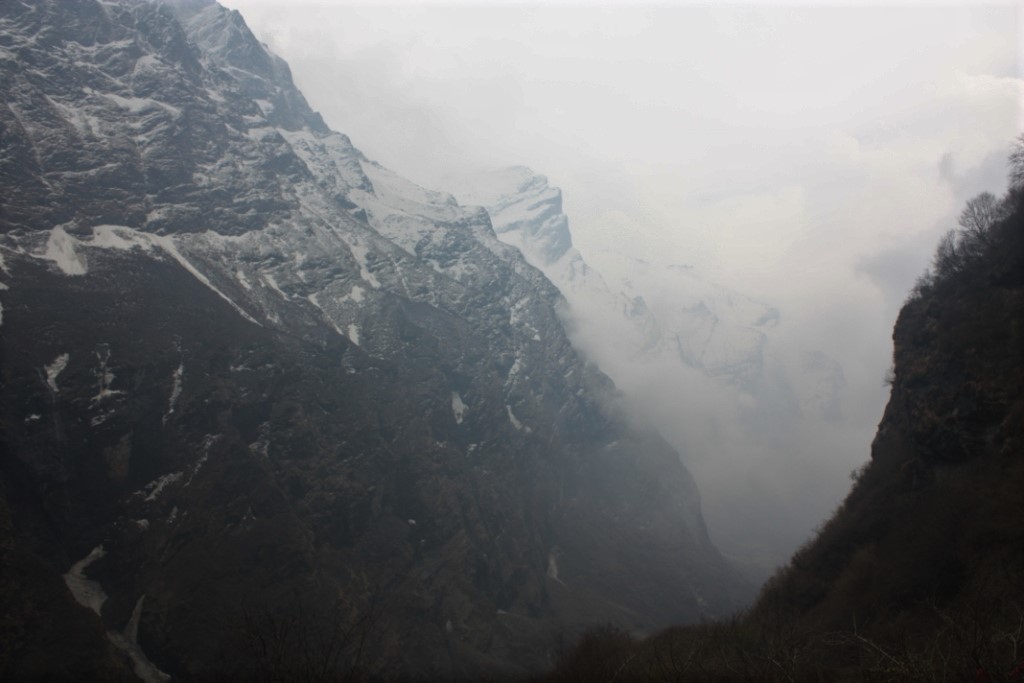
an ancient mountain,
weathered to rubble,
stands background
to a city that's lived
but a blip of mountain time.

Psychoanalyst Limerick

There once was a renowned psychoanalyst
Who found childhood events were always the catalyst.
A patient who lived happily
'Til a recent tragedy,
Learned it all stemmed from thoughts as a neonatalist.

“Sailing to Byzantium” by William Butler Yeats [w/ Audio]

I

That is no country for old men. The young
In one another's arms, birds in the trees,
-- Those dying generations - at their song,
The salmon-falls, the mackerel-crowded seas,
Fish, flesh, or fowl, commend all summer long
Whatever is begotten, born, and dies.
Caught in that sensual music all neglect
Monuments of unageing intellect.

II

An aged man is but a paltry thing,
A tattered coat upon a stick, unless
Soul clap its hands and sing, and louder sing
For every tatter in its mortal dress,
Nor is there singing school but studying
Monuments of its own magnificence;
And therefore I have sailed the seas and come
To the holy city of Byzantium.

III

O sages standing in God's holy fire
As in the gold mosaic of a wall,
Come from the holy fire, perne a gyre,
And be the singing-masters of my soul.
Consume my heart away; sick with desire
And fastened to a dying animal
It knows not what it is; and gather me
Into the artifice of eternity.

IV

Once out of nature I shall never take
My bodily form from any natural thing,
But such a form as Grecian goldsmiths make
Of hammered gold and gold enamelling
To keep a drowsy Emperor awake;
Or set upon a golden bough to sing
To lords and ladies of Byzantium
Of what is past, or passing, or to come.

Cold Mountain [Haiku]

cold mountain:
sound of falling water
iced to silence.

“Refined” [Poetry Style #6] by Sikong Tu [w/ Audio]

Buying fine jade in the springtime,
Enjoying rain song from within a cabin,
A taciturn scholar sits betwixt
Copses of tall, arching bamboo.
Sparse white clouds in a newly clear sky;
Swallows weave 'round trees in pursuit.
Light through leaf casts a green hue on all;
Sound of falling water, thin but near;
Flower petals fall without a sound.
But the man sits unyielding as a mum;
He writes what the scene dictates
To make a pithy book.

NOTE: The late Tang Dynasty poet, Sikong Tu (a.k.a. Ssŭ-k‘ung T‘u,) wrote an ars poetica entitled Twenty-Four Styles of Poetry. It presents twenty-four poems that are each in a different tone, reflecting varied concepts from Taoist philosophy and aesthetics. Above is a translation of the sixth of the twenty-four poems.

Fade to Black [Haiku]

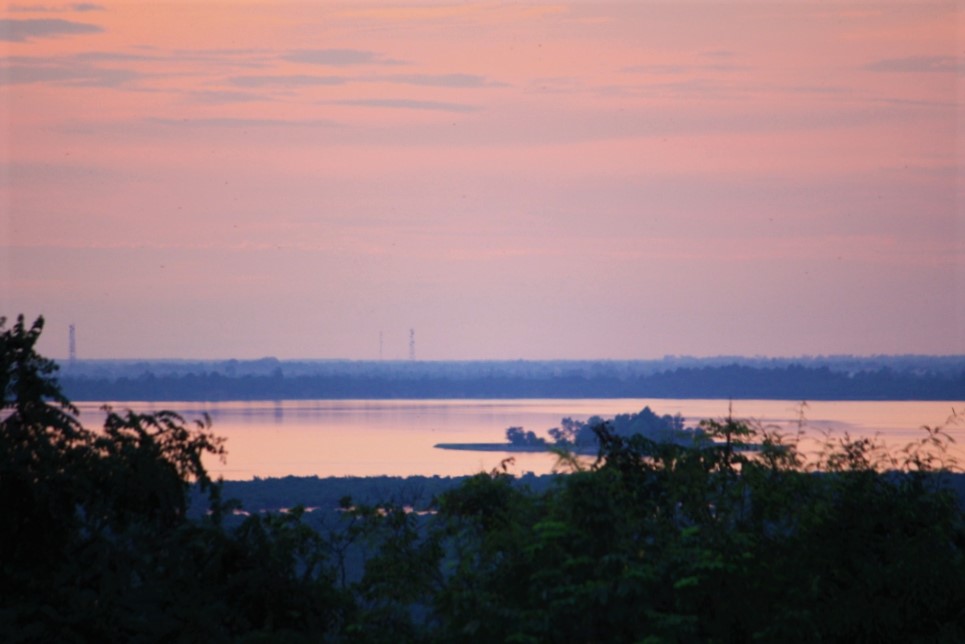
the coral-hued lake
will soon be the inky void
between coastal lights.

Summer Sunset [Senryū]

harsh summer sun sets:
baboon troops exit the woods,
"Yeah, you'd better run!"

“To be, or not to be” [Soliloquy from HAMLET] by William Shakespeare [w/ Audio]

To be, or not to be, that is the question:
Whether 'tis nobler in the mind to suffer
The slings and arrows of outrageous fortune,
Or to take arms against a sea of troubles
And by opposing end them. To die -- to sleep,
No more; and by a sleep to say we end
The heart-ache and the thousand natural shocks
That flesh is heir to: 'tis a consummation
Devoutly to be wish'd. To die, to sleep;
To sleep, perchance to dream -- ay, there's the rub:
For in that sleep of death what dreams may come,
When we have shuffled off this mortal coil,
Must give us pause - there's the respect
That makes calamity of so long life.
For who would bear the whips and scorns of time,
Th' oppressor's wrong, the proud man contumely,
The pangs of dispriz'd love, the law's delay,
The insolence of office, and the spurns
That patient merit of th' unworthy takes,
When he himself might his quietus make
With a bare bodkin? Who would fardels bare,
To grunt and sweat under a weary life,
But that the dread of something after death,
The undiscover'd country, from whose bourn
No traveller returns, puzzles the will,
And makes us rather bear those ills we have
Than fly to others that we know not of?
Thus conscience doth make cowards of us all,
And thus the native hue of resolution
Is sicklied o'er with the pale cast of thought,
And enterprises of great pith and moment
With this regard their currents turn awry
And lose the name of action.