PROMPT: Certainty

Daily writing prompt
List 10 things you know to be absolutely certain.

Every source of information is flawed and / or of limited value as a source of truth.

There is beauty everywhere (but to see it one has to let go of one’s compulsion to attach value judgements to everything.)

People who know more things for certain are wrong about more things.

A better life comes of being content with less than of having more.

There is a force, we’ll call it gravity, that keeps my feet to the floor (or insists that I either fall or expend energy to break the surly bonds.)

With respect to that which one can’t know for certain, it’s closer to truth to remain ignorant than to be deluded.

The world that I perceive isn’t the world, itself.

All else being equal, a diverse group of people is stronger, smarter, better looking, and more effective than a homogenous one.

If the same level of effort were put into fostering emotional intelligence as is put into mental intelligence… what a wonderful world it would be.

One who hands you knowledge but tells you to drop it like a hot rock if it doesn’t stand up to your own experience and rationality is more trustworthy than one who hands you knowledge and insists you hold onto it with white-knuckled intensity.

PROMPT: Security or Adventure?

Daily writing prompt
Are you seeking security or adventure?

Uh, we are all seeking both. That is the fundamental strain of being human — the struggle between a need for novelty and a need for familiarity. We are all both tribesman and traveler — though in varied proportion. I love the traveler more in my own particular self.

PROMPT: Comfort

What strategies do you use to increase comfort in your daily life?

I don’t, but I have a lot of strategies for being more content in the face of various situations and environments — including uncomfortable ones. These include the yogic practice of dispassionate witnessing, minimalism, travel (and specifically minimalist travel to places – the less familiar the better,) and intense physical activity.

I think comfort as a major objective in life is overrated, and virtually insures a discontented life. A life in which one can be content, whatever may come along, is a happy life.

The Abyss [Free Verse]

Nietzsche said:

“And if thou gaze long
   into an abyss,
  the abyss will also
    gaze into thee.”


I must admit
   the first several times
    that I read this quote,
  I couldn’t tell if it was wise,
    or just had the patina of
     wisdom that comes from 
     parallel sentence structure.

Crisscrossing subject and object
    lends a ring of sagacity.

“If you can’t take 
    Mohammad to the mountain,
  the mountain must come to
    Mohammad.”


“Ask not what your country 
    can do for you,
  but what you can do 
     for your country.”


“If you can’t get the carrots 
    out of the refrigerator,
  get the refrigerator 
     out of the carrots.”


Yes, that last one is nonsense, 
    but it’s not nonsense like:

“The banana pirouetted fuchsia
     all over the underside of
      an A-sharp chord.”

The carrot quote probably took
     your mind some time —
      if only milliseconds —
       to relegate to the
        trash heap. 

That’s why this sentence structure 
     is beloved by godmen &
      politicians: because you can 
       sound wise even if you’re 
       kind of an idiot.

So, I was ready to classify Nietzsche’s 
     quote pseudo-wisdom when I realized 
      that my smartphone was the Abyss, 
       and it was certainly staring back at me.

  It stared through all the data collection &
     neuroscientific and psychological
      research designed to keep 
       a person scrolling.

Maybe Nietzsche was on to something
    that even he didn't fully understand. 

PROMPT: Romantic [Or, romantic]

Daily writing prompt
What’s your definition of romantic?

Depends on the context. If I’m thinking about poetry or philosophy (which I often am,) then it pertains to the early nineteenth century movement that counterpoised the Enlightenment. Those “Romantics” disliked what they saw as the cold rationality of Enlightenment thinking; they valued spiritual and mystical experiences, and they believed it was important to not throw out the spiritual “baby” with the bathwater. That is, like many Enlightenment thinkers, they realized that it was necessary to jettison many of religion’s noxious ideas (e.g. the concept of “chosen people”) and also realized that mindlessly following moral dictates that may or may not have made sense in the pre-Christian Levant could be detrimental to their present-day life experience. However, unlike most Enlightenment thinkers, they did find value in spiritual views of the world as well as in the pursuit of mystical experiences. William Blake (even though he is often labeled pre-Romantic) provides an excellent example. His poems are spiritual to the core, and yet explicitly reject a lot of the moralizing and toxic aspects of conventional religion.

Of course, that variety of “Romantic” is usually given a big-R, and so I suspect the question is after a more colloquial definition. With that in mind, I believe “romantic” means “that which facilitates the unity of two (or more, I don’t judge) people in an immersive intimate experience of each other during a common period of time.” I’m not big on trappings. I think people obsess over trappings because it allows them to slack on the physical / cognitive demands of being fully engaged. This is why sex (done well) is such a great tool both for relationship building and for personal development. It makes it relatively easy (i.e. rewarding) to stay fully engaged in a common experience and in the moment, and to not fall into the attentional abyss.

PROMPT: Self-Care

Daily writing prompt
How do you practice self-care?

1.) Move my body often and with vigor. 2.) Eat my veggies. 3.) Rest as though it’s an essential part of the process of living (i.e. not as though it’s goofing off between “doing stuff.”) 4.) Drop anything without value, making personal development as much a process of stripping away as it is of adding to.

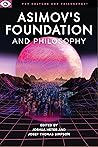
BOOK REVIEW: Asimov’s Foundation and Philosophy ed. by Heter Joshua & Josef Thomas Simpson

Asimov's Foundation and PhilosophyAsimov’s Foundation and Philosophy by Heter Joshua
My rating: 5 of 5 stars

Amazon.in Page

Release Date: August 24, 2023 [Paperback; ebook is out]

When I was a budding social science grad student, I learned that Asimov’s “Foundation” series was impetus for many young nerds of the previous generation to enter fields like Economics and Poli-Sci. The reason? At the heart of the story is a fictional discipline called Psycho-history, a mathematical field that’s premised on the idea that [while one can’t reliably forecast what an individual (or even small groups) will do,] given a large enough population one can make grand over-arching predictions about what will happen to society as a whole. It’s an idea that Asimov drew from his education in Chemistry, a field where one couldn’t say much about individual molecules but you could accurately model collective parameters (e.g. temperature.) It turns out that humans and their interactions are more complicated than gas molecules and so Psycho-history only works as a powerful plot device (a fact that Asimov discovered himself, supposedly driving mid-course corrections in the limited space he had to make them.) Anyhow, the idea that one might predict the unfolding of societal, economic, and international events was a powerful scholarly aphrodisiac for individuals who might otherwise have dismissed study of the social world as hopelessly and absurdly chaotic.

With that background generating curiosity and having read a number of Asimov’s books, I was eager to investigate this book that explores the philosophic underpinnings of Asimov’s fictional world. I was not disappointed. The imaginative “Foundation” series of books provides plenty of situations and ideas to which one can apply the lens of philosophy, from the limitations of reason and symbolic logic as tools to solve humanity’s problems to the morality of manipulation and questions of transparency that follow from it to what kind of free will — if any — can exist in a universe where Psycho-history works. This anthology of essays considers questions of mind, logic, morality, free will, identity, and existence, as well as various ideas from the Philosophies of History, Religion, and Science. The twenty-one essays are grouped into six parts by philosophic subdiscipline.

There are so many of these “pop culture meets philosophy” books out there, but I think this one does better than most because Asimov’s creative mind really offered such a rich assortment of ideas upon which to reflect.

View all my reviews

PROMPT: Good Life

Daily writing prompt
What are the most important things needed to live a good life?

1.) Good company; 2.) studiousness; 3.) a sense of humor, and 4.) the capacity to let go of that which has no value.

PROMPT: Three Books

Daily writing prompt
List three books that have had an impact on you. Why?
Leaves of Grass by Walt Whitman

This poetry collection teaches that most challenging of human skills: how to be insanely confident that you can do anything without being a jerk about it. (Also, how to see beauty beyond the societal consensus of what’s beautiful.)

Zhuangzi by Zhuangzi

The virtues of a carefree, spontaneous, minimalist, and down-to-earth approach to living explained through tiny stories.

The Tragedies of William Shakespeare by William Shakespeare

A master class in things that can turn a life into a tragedy.

Titus Andronicus: Live by the sword = tragedy (An eye for an eye, and everyone dies.)

Romeo & Juliet: Grudges (+ Lust) = tragedy

Julius Caesar: handing your adversary the mic (/ the fickleness of crowds) = tragedy

Hamlet: indecisiveness = tragedy (i.e. On or off the crazy-bus.)

Othello: jealousy = tragedy

Macbeth: excessive ambition = tragedy

King Lear: needing gratuitous signs of affection = tragedy

Timon of Athens: expectations of reciprocity = tragedy

Anthony & Cleopatra: mixing one’s love and work lives = tragedy

Coriolanus: a crotchety old warrior in peace time = tragedy

BOOKS: The Mind of Adi Shankaracharya by Y. Keshava Menon

The Mind of Adi ShankaracharyaThe Mind of Adi Shankaracharya by Y. Keshava Menon
My rating: 4 of 5 stars

Amazon.in Page

This book does a good job of that at which the title hints, offering the reader insight into the philosophy of Adi Shankaracharya. Along the way, Menon presents clear descriptions of Indian philosophical concepts such as Maya, Avidya, Antahkarana, etc., and also compares and contrasts Shankaracharya’s philosophy with those of other philosophers (from both the East and West) as a means to clarify ideas that can be subtle and complex.

That said, what the book isn’t is an unbiased and objective look at Shankaracharya’s ideas. While Menon doesn’t go as far as to support the supernatural myths of Shankaracharya’s life (which are only discussed in the Appendix,) and he skirts that 800-pound gorilla of Hindu philosophic controversy, caste, he does present the philosophy as an advocate for Shankaracharya rather than as an indifferent scholar who merely wishes to deliver arguments and ideas while inviting thought among his readers.

While the book deals with epistemology, ethics, and various aspects of metaphysics, the biggest single subject is Self. I found the explanation of this topic to be fascinating. I had previously understood that among the major differences between Shankaracharya and Buddha was on this question. While I still find the Buddhist approach to Self (or, more properly, lack of Self — i.e. Anatta) to be the more compelling and parsimonious explanation, I feel that I was provided with about as clear an explanation of the Hindu (generally) and Shankaracharyan (specifically) views on Self as one could wish for.

I’d recommend this book. If you’ve come away from reading about subjects like “Maya” (Is it illusion? Is it NOT illusion?) this book can definitely help offer clarification, and (as books on philosophy go) it’s readable and not too jargon-laden. That said, if one is looking for a book that is not advocating a philosophy but, rather, objectively providing ideas and contrasting explanations, this book may bias your views.

View all my reviews