“Song of the Open Road” (3 of 15) by Walt Whitman [w/ Audio]

You air that serves me with breath to speak!
You objects that call from diffusion my
meanings and give them shape!
You light that wraps me and all things in
delicate equable showers!
You paths worn in the irregular hollows by
the roadsides!
I believe you are latent with unseen
existences, you are so dear to me.

You flagg'd walks of the cities! you strong
curbs at the edges!
You ferries! you planks and posts of wharves!
you timber-lined sides! you distant ships!

You rows of houses! you window-pierc'd
façades! you roofs!
You porches and entrances! you copings and
iron guards!
You windows whose transparent shells
might expose so much!
You doors and ascending steps! you arches!
You gray stones of interminable pavements!
you trodden crossings!
From all that has touch'd you I believe you
have imparted to yourselves, and now
would impart the same secretly to me,
From the living and the dead you have
peopled your impassive surfaces, and the
spirits thereof would be evident and
amicable with me.

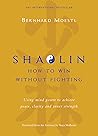
BOOKS: “Shaolin: How to win without fighting” by Bernhard Moestl

Shaolin: How to win without fightingShaolin: How to win without fighting by Bernhard Moestl
My rating: 4 of 5 stars

Publisher Site

This is a self-help book that nominally draws on the philosophy of Shaolin Kung fu and its Chan Buddhist underpinnings, but – more broadly – employs quotes and examples from many, mostly Eastern, sources. For example, the ideas and stories of Miyamoto Musashi are perhaps as common as any source (Musashi was Japanese, not Chinese, and was not noted for being Buddhist. In his own words, he respected the gods and buddhas, but didn’t expect their help.)

The book offers a fine discussion of Eastern philosophic thought in action, particularly that which arose from warrior sources, but it isn’t particularly ground-breaking in any way. For those who like homework, the book does include many exercises to make the reading a more interactive experience.

I enjoyed reading this book well enough, but it didn’t distinguish itself and will soon fall into the mind-space of a fuzzy amalgamation of similar books I’ve read over the years.

View all my reviews

“Song of the Open Road” (2 of 15) by Walt Whitman [w/ Audio]

You road I enter upon and look around, I
believe you are not all that is here,
I believe that much unseen is also here.

Here the profound lesson of reception, nor
preference nor denial,
The black with his wooly head, the felon,
the diseas'd, the illiterate person, are not
denied;
The birth, the hasting after the physician,
the beggar's tramp, the drunkard's stagger,
the laughing party of mechanics,
The escaped youth, the rich person's
carriage, the fop, the eloping couple,

The early market-man, the hearse, the
moving of furniture into the town, the
return back from the town,
They pass, I also pass, any thing passes,
none can be interdicted,
None but are accepted, none but shall be
dear to me.

“Song of the Open Road” (1 of 15) by Walt Whitman [w/ Audio]

Afoot and light-hearted I take to the open 
road,
Healthy, free, the world before me,
The long brown path before me leading
wherever I choose.

Henceforth I ask not good-fortune, I myself
am good-fortune,
Henceforth I whimper no more, postpone
no more, need nothing,
Done with indoor complaints, libraries,
querulous criticisms,
Strong and content I travel the open road.

The earth, that is sufficient,
I do not want the constellations any nearer,
I know they are very well where they are,
I know they suffice for those who belong to
them.

(Still here I carry my old delicious burdens,
I carry them, men and women, I carry them
with me wherever I go,
I swear it is impossible for me to get rid of
them,
I am fill'd with them, and I will fill them in
return.)

“Some keep the Sabbath going to Church –” (236) by Emily Dickinson [w/ Audio]

Some keep the Sabbath going to Church --
I keep it, staying at Home --
With a Bobolink for a Chorister --
And an Orchard, for a Dome --

Some keep the Sabbath in Surplice --
I, just wear my Wings --
And instead of tolling the Bell, for Church,
Our little Sexton -- sings.

God preaches, a noted Clergyman --
And the sermon is never long,
So instead of getting to Heaven, at last --
I'm going, all along.

PROMPT: A Year Ago

Is your life today what you pictured a year ago?

I make no predictions. Forecasting is a sucker’s game.

“Without desire everything is sufficient” by Ryōkan Taigu

Without desire everything is sufficient.
With seeking myriad things are impoverished.
Plain vegetables can soothe hunger.
A patched robe is enough to cover this bent old body.
Alone I hike with a deer.
Cheerfully I sing with village children.
The stream under the cliff cleanses my ears.
The pine on the mountain top fits my heart.

Translation by Kazuaki Tanahashi and Daniel Leighton in Essential Zen (1994) HarperSanFrancisco.

“A Passage to India” by Walt Whitman [w/ Audio]

Passage O soul to India!
Eclaircise the myths Asiatic, the primitive
fables.

Not you alone, proud truths of the
world,
Nor you alone, ye facts of modern
science,
But myths and fables of eld, Asia's, Africa's
fables,
The far-darting beams of the spirit, the
unloos'd dreams,
The deep diving bibles and legends,
The daring plots of the poets, the elder
religions;
O you temples fairer than lilies, pour'd over
by the rising sun!
O you fables, spurning the known, eluding
the hold of the known, mounting to
heaven!
You lofty and dazzling towers, pinnacled,
red as roses, burnish'd with gold!
Towers of fables immortal, fashion'd from
mortal dreams!
You too I welcome, and fully, the same as
the rest!
You too with joy I sing.

Passage to India!
Lo, soul! seest thou not God's purpose from
the first?
The earth to be spann'd, connected by
network,
The races, neighbors, to marry and be given
in marriage,
The oceans to be cross'd, the distant
brought near,
The lands to be welded together.

A worship new I sing,
You captains, voyagers, explorers,
yours,
You engineers, you architects, machinists,
yours,
You, not for trade or transportation only,
But in God's name, and for thy sake, O
soul.

FIVE WISE LINES [December 2024]

Today as in ancient times
it’s hard to write a simple poem.

Mei Yaochen in Poets’ Jade Splinters

To be undefeated lies with oneself;
to be victorious lies with the enemy.

Sunzi in The ART of War (孙子兵法)

A buddha is an idle person.
He doesn’t run around after fortune and fame.
What good are such things in the end?

Bodhidharma; Bloodstream Sermon

Not what we have, but what we enjoy, constitutes our abundance.

Epicurus

Take more time, cover less ground.

Thomas Merton

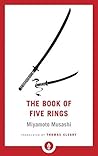
BOOKS: “The Book of Five Rings” by Miyamoto Musashi [trans. by Thomas Cleary] [w/ Yagyu Munenori’s “Book of Family Traditions”]

The Book of Five Rings: A Classic Text on the Japanese Way of the Sword (Shambhala Pocket Library)The Book of Five Rings: A Classic Text on the Japanese Way of the Sword by Miyamoto Musashi
My rating: 5 of 5 stars

Publisher Site – Shambhala Publications

This edition, i.e. The Shambhala Pocket Library edition, contains two guides to strategy, tactics, and philosophy of combat by famous early Edo Period swordsmen. The titular work is Miyamoto Musashi’s The Book of Five Rings, but the volume also contains Yagyu Munenori’s The Book of Family Traditions. The naming of the book is meant to capitalize on the continuing popularity of Musashi, who remains well-known to this day not only because of his own works and legend, but because of an afterlife in pop culture that ranges from Eiji Yoshikawa’s novel to a recent Netflix animated series. That said, one shouldn’t conclude Yagyu Munenori was some sort of slouch. He was, in fact, a martial arts teacher to the Shogun’s son, and he founded a branch of his family’s martial arts school that continues to this day.

It is interesting to see these two guides back-to-back, being by authors whose lifespans largely overlapped, though – in other ways – their lives were quite different. While there is some conceptual overlap in these guides, the two definitely show two very different minds at work, Musashi the pragmatic eccentric and Yagyu the Zen philosopher of noble standing.

Miyamoto Musashi is probably the most famous swordsman in Japan’s history. Oddly enough, he’s not known for his experience in battle (he lived at the tail end of the Warring States period and was only in a couple battles), but – rather – for his 62 duels. The Book of Five Rings and other works he left behind are certainly important factors in his continuing fame. Musashi was a bit of a renaissance man: painter, poet, and sculptor in addition to a swordsman. He also left behind a school of swordsmanship, Niten Ichi-ryū.

The Book of Five Rings is divided into five parts: earth scroll, water scroll, fire scroll, wind scroll, and void scroll.

The earth scroll provides an overview of martial science and an introduction to Musashi’s school, which is noted for its simultaneous use of both the large and short sword. A section is devoted the rhythm of martial arts, a crucial topic. It also includes what might be considered Musashi’s 9-point budō kun (a list of warrior precepts.)It’s worth mentioning a couple of these:
#7 Become aware of what is not obvious.
#9 Do not do anything useless.

The Water scroll describes Musashi’s approach to swordsmanship. It covers a range of elements of a martial art including footwork, the focus of one’s eyes, physical posture, mental posture, techniques, and approaches to cutting and thrusting.

The Fire scroll deals with the strategic or interactive aspects of the battle.

The Wind scroll explores other martial arts. Musashi discusses martial arts that use an unusually long sword, an atypically short sword, that focus on powerful strikes, and those that focus on many rapid strikes. He contrasts other martial arts with his own on subjects such as their focus with the eyes and their footwork.

The void scroll deals with, well, emptiness. It’s actually a short wrap-up.

Yagyu’s guide is much more philosophical and mind-centric. It’s not that Musashi doesn’t deal with such topics, but he also devotes considerable space to more practical nuts and bolts of swordsmanship and strategy. It’s also true that Yagyu gets into technical considerations such as control of distancing (if in a bit more poetic way than Musashi.) One can get a feel for the nature of Yagyu’s Book of Family Traditions [on the Art of War] by seeing how it is organized into three parts: “The Killing Sword,” “The Life-Giving Sword,” and “No Sword.” The latter two indicating the author’s belief in the importance of not equating warrior and killer (nor winning with killing) as well as not fixating on the sword.

These two men had great insight into strategy and the tactics of swordsmanship, their guides are worth being read and reread. And the two authors do offer two intriguingly different approaches to a similar subject.

View all my reviews