BOOK REVIEW: Mindfulness in Wild Swimming by Tessa Wardley

Mindfulness in Wild Swimming: Meditations on Nature & Flow (Mindfulness series)Mindfulness in Wild Swimming: Meditations on Nature & Flow by Tessa Wardley
My rating: 4 of 5 stars

Amazon.in Page

Release Date: June 13, 2023

As the title suggests, this is a book about combining mindfulness and swimming in natural bodies of water. It’s part of a large series of “Mindfulness and …” books, and this particular volume is a re-release of a title that came out a couple years back.

While the book does provide an overview the basic methods and considerations for both mindfulness meditation and wild swimming, it’s largely a peptalk or enticement to take up wild swimming as a means to improve awareness (as well as to bolster physical health and mental well-being.) That said, some of this peptalk is artfully, almost poetically, written, and the book is a pleasure to read.

The book discusses solo swims versus those in a group, and it even explores using onshore experiences to bolster mindfulness — e.g. using the sensory experience of the water as a focal point for practicing awareness. The around- (v. in-) water discussions are probably in part because the book uses seasons as a secondary mode of organization, and long and leisurely winter swims in lakes and rivers aren’t an option for people in many parts of the world.

I picked up some interesting food-for-thought in the book, and — as I say — it made for enjoyable reading.

View all my reviews

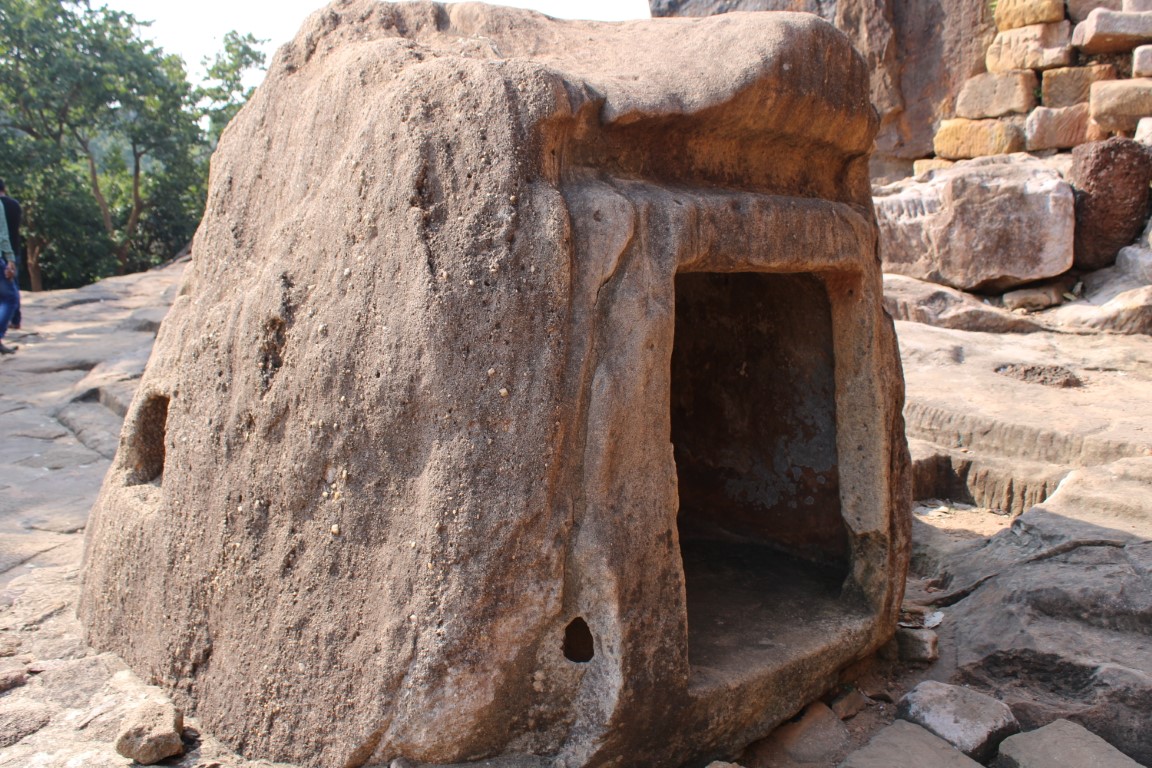
Cave Days [Haiku]

in the cave,
 surrounded by stone,
  no sight; no sound.

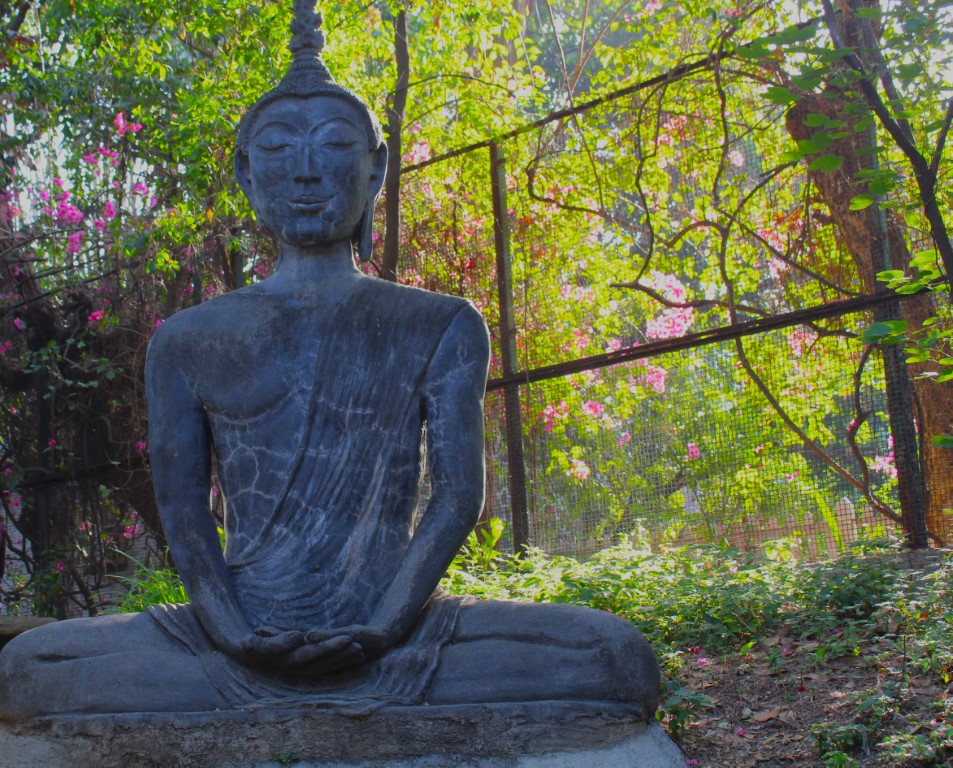
Plays No Favorites [Haiku]

sunlight breaks into
 the forest -- not favoring
  the tranquil yogi.

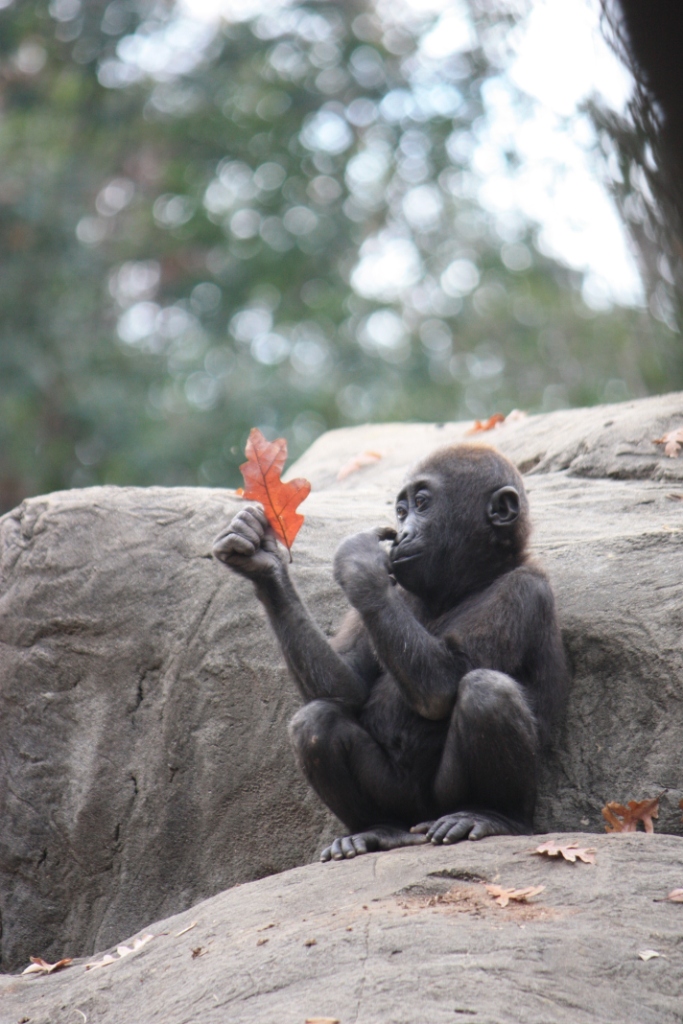
Leaf Enlightened [Common Meter]

I stared, and stared, into a leaf
  until my vision changed.
 And I could see the whole, wide world
   so artfully arranged.

The leaf, it mapped my universe
   from atom to the sprawl.
 Compressed, layer-on-layer, there
    was one and, at once, all. 

But before I could grasp all that
   this vision truly meant,
  a gust of wind did catch that leaf,
     and fluttering it went.

Meditation Chamber [Common Meter]

He sat and stilled his weary mind,
and his thoughts slowed their flow.
Until he was a ceaseless void
with nowhere left to go. 

BOOK REVIEW: Breathe! You are Alive [i.e. Anapanasati Sutta] Trans. & Commentary by Thich Nhat Hanh

Breathe! You Are Alive: Sutra on the Full Awareness of BreathingBreathe! You Are Alive: Sutra on the Full Awareness of Breathing by Thich Nhat Hanh
My rating: 5 of 5 stars

Amazon.in Page

One evening at the end of a rainy season in Shravasti (present-day Uttar Pradesh near the Nepali border,) the Buddha taught a practice using awareness of breath to quiet the mind. This is a translation with commentary by the Vietnamese Zen monk, Thich Nhat Hanh [RIP, FYI – he passed away on January 22nd.] (To clarify: Annabel Laity translated the book from Vietnamese to English, Thich Nhat Hanh translated versions of the sutra from Pali and Chinese.) The teaching is called the Anapanasati Sutta (i.e. “Sutra on the Full Awareness of Breathing.”) It consists of sixteen variations on the theme of “Breathing in, I know I’m breathing in. Breathing out, I know I’m breathing out.”

The sutra itself is only a few pages long, leaving commentaries and appendices to stretch the book to its barely one-hundred-pages. This isn’t a criticism; the commentary is beneficial because the sutra is bare bones. Even being somewhat aware of basic Buddhist concepts (e.g. impermanence, emptiness, liberation, etc.) I still found that the commentary offered some valuable insight about how to understand these ideas as well as how they relate to the practice. The Appendices consist of a variation on the practice and a translation of Chinese version of the sutra. The latter is a bit redundant, but one can also see little differences in translation that may be informative for some.

Besides presenting the practice, the book explains how it relates to (and is built around the principles from) the “Sutra on the Four Establishments of Mindfulness.” This book outlines the Four Establishments clearly enough to see how the Anapanasati practice is shaped by them. However, it’s worth noting that Thich Nhat Hanh also produced a translation and commentary on the Four Establishments that is entitled “Transformation & Healing.”

As someone who has found breath practices to be among the most effective tools for improving the mind, I benefited from this book tremendously. Besides its discussion of the practice and variations, I learned a lot from the philosophical elaborations that were made. I’d highly recommend this book.

View all my reviews

Calming Chaos [Haiku]

water swirls
around smooth, wet rocks,
entrancing me

Snake Country [Haiku]

wading through tall grass
in snake country
each step is now

BOOK REVIEW: Pain: Considering Complementary Approaches by NCCIH

Pain: Considering Complementary ApproachesPain: Considering Complementary Approaches by National Center for Complementary and Alternative Medicine
My rating: 4 of 5 stars

Online here


The National Center for Complementary and Integrative Health (NCCIH) has put out a new edition (dated 2019) of its pamphlet (about 50 pages) about how useful various complementary practices are in helping patients reduce, or cope with, pain. The NCCIH is a center in the National Institutes of Health (NIH) that serves as a clearinghouse for information about how alternative and complementary practices perform in treatment of various ailments. While alternative (instead of mainstream medicine) and complementary (in conjunction with mainstream medicine) are quite different, in almost all cases this work herein is reporting on the latter basis. The complementary practices in question include: yoga, taiji, meditation and mindfulness, massage, acupuncture, chiropractic manipulation, relaxation methods, and others.

Complementary approaches to treatment of pain is a particularly salient topic these days as the mainstream medical approach (giving patients pills to gobble down) has resulted in what many have called a “crisis” of opiate addiction. So, if it’s possible to reduce the grip of pain with practices that at best have numerous other health benefits and at worst do no harm, than that’s a pretty good outcome.

Chapters three through eleven form the pamphlet’s core, and all but the last of those look at one complementary practice each, including (in order): acupuncture, massage, meditation, relaxation techniques, spinal manipulation, taiji (a.k.a. tai chi, or tai chi chuan), yoga, and dietary supplements and herbs. Chapter 11 discusses a few additional (less popular) practices. These chapters follow a three-prong approach: 1.) is it safe? 2.) does it help mitigate pain? and 3.) where can I find more information? [Spoiler alert: In almost all cases the answer to #1 is roughly “Yes, for most people, but possibly not for you. Check with your doctor,” and to #2 is usually something like: “there is some preliminary evidence that in certain cases certain people may have benefited.”] The chapters before (ch. 1 & 2) and after (ch. 12 to 14) provide background context and additional information.

On the positive side, it’s great that this information has been gathered together and packaged into a readable format with pictures and easy to read text.

On the down side, this was clearly a document put together by a committee of bureaucrats in consultation with lawyers. It is so laden with qualifiers and spongy speak that it’s impossible to discern how strong the evidence is for the various practices or how one compares to another. I felt that they could have given the same information in a three-column table in which the first column is the practice, the second column is “can’t hurt to try*” [*provided your physician concurs,] and the third column would be “nah, this stuff is fake.” [Spoiler alert: almost everything besides homeopathy would have the first column checked, but the consensus seems to be that homeopathy is pseudo-scientific quackery designed to sell water at medicinal prices.]

This booklet is available on the web for free, so if you’re interested, check it out. But don’t expect to come away with any profound insights. It’s not that kind of booklet.

View all my reviews

POEM: Confessions of Mindfulness Pimp

It’s disconcerting, discovering one is a pimp.

Don’t get me wrong;

-I’ve never slapped a ho’

-I’ve never even called anyone a ho’

-To the best of my recollection,

I’ve not even thought anyone a ho’

I’m empathetic to honest work reviled.


But I’ve known the hard-handed hustle of a product that’s felt about in much different terms than it’s talked about — felt an act of masochism but called “working late.”

-a product the customer wishes — with every fiber of his being — he didn’t need.

-a product around which distractions grow like weeds through the cracks of a post-apocalyptic sidewalk.

-a product the customer wishes he could fast-forward to the end-bliss, escaping the awkward preliminaries.

-a skill that the customer tells himself he’s good at, knowing if he had skills, monetary transactions wouldn’t be necessary.

I’ve dealt virtue like it was a vice.

“Psst, Buddy, want some clarity?

“I won’t tell a soul you’re out here looking.”

I’ve pimped mindfulness and wellness — unrepentantly.