“My Life had stood — a Loaded Gun” (764) by Emily Dickinson [w/ Audio]

My Life had stood - a Loaded Gun -
In Corners - till a Day
The Owner passed - identified -
And carried Me away -

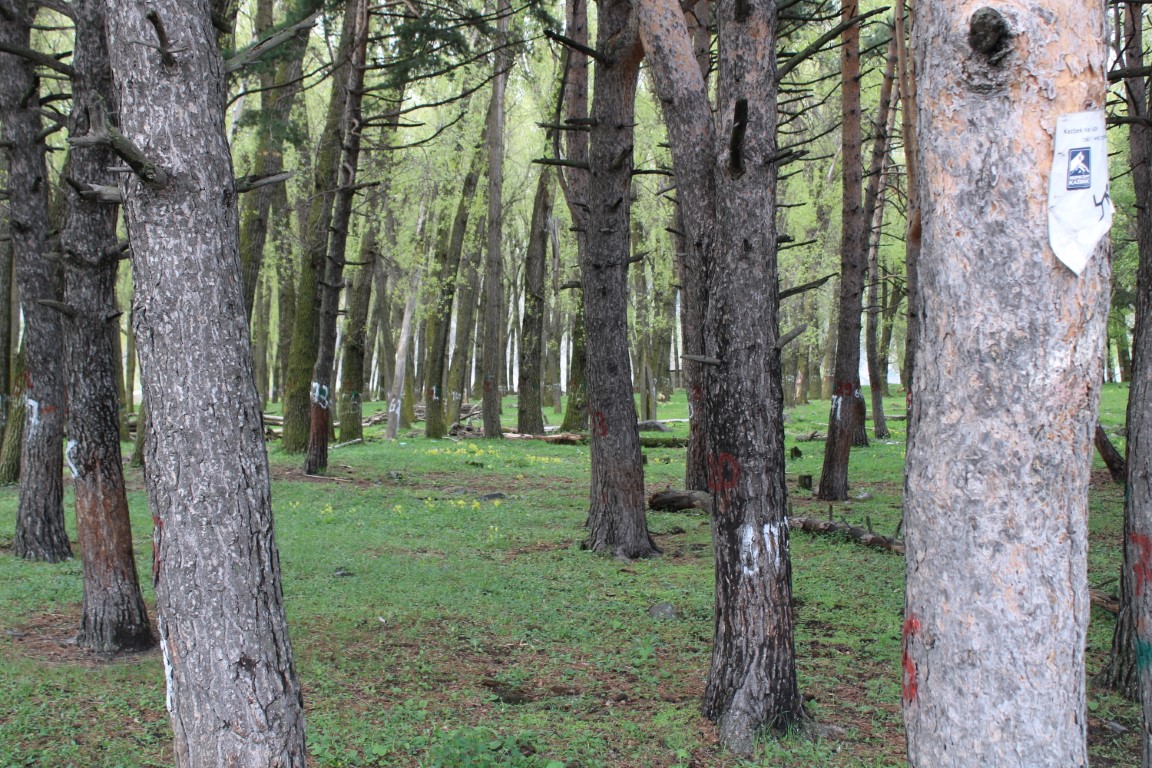
And now We roam in Sovreign Woods -
And now We hunt the Doe -
And every time I speak for Him
The Mountains straight reply -

And do I smile, such cordial light
Opon the Valley glow -
It is as a Vesuvian face
Had let it's pleasure through -

And when at Night - Our good Day done -
I guard My Master's Head -
'Tis better than the Elder Duck's
Deep Pillow - to have shared -

To foe of His - I'm deadly foe -
None stir the second time -
On whom I lay a Yellow Eye -
Or an emphatic Thumb -

Though I than He - may longer live
He longer must - than I -
For I have but the power to kill,
Without - the power to die -

BOOKS: “A Dome of Many-Coloured Glass” by Amy Lowell

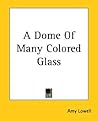
A Dome Of Many Colored GlassA Dome Of Many Colored Glass by Amy Lowell
My rating: 5 of 5 stars

Project Gutenberg Page

This was Lowell’s first published collection (1912,) and my 5-stars notwithstanding, it is not everyone’s cup of tea. I think I understand why this is. If you read some of Lowell’s more popular and highly anthologized poems, you might find that this collection is unlike them in several ways. Many of those popular poems are highly imagist, emulate East Asian sparseness, and are free verse. These poems are by and large metered and rhymed verse and I would not be the first to say that they often feel conventional and pedestrian. As I was reading the final section, “Verses for Children,” I figured out what other key feature of Lowell’s poetry was largely missing from the lyric poetry and sonnets that preceded these Children’s poems — playfulness. [Fortunately, it’s on display in the kid’s poems.]
.
With all that said, there are some spectacularly evocative images presented within these poems. I particularly enjoyed poems like: “New York at Night” and “A Japanese Wood-Carving.” As I don’t have the aversion to metered verse that many poetry readers seem to have today, I wasn’t as dismayed by the collection as some readers seem to be. Though I will admit that the collection doesn’t just play it safe with form, it also infects the tone and content of the poems.

Still, I found the collection readable and pleasant reading. (But maybe this is because I like a good scavenger hunt for golden nuggets of beautiful verse.)

View all my reviews

“Broadminded” [Poetry Style #23 (旷达)] by Sikong Tu [w/ Audio]

One may live a century --
Short span though it may be:
Joys are bitterly brief
And sorrows are many.
You may take a wine jug
On your wisteria rounds:
See flowers grow to the eves
As sparse rains wet the grounds.
And when the wine is gone,
One strolls with cane and croons.
We become wizened with age;
South Mount, fair through countless moons.

NOTE: The late Tang Dynasty poet, Sikong Tu (a.k.a. Ssŭ-k‘ung T‘u,) wrote an ars poetica entitled Twenty-Four Styles of Poetry (二十四诗品.) It presents twenty-four poems that are each in a different tone, reflecting varied concepts from Taoist philosophy and aesthetics. Above is a crude translation of the twenty-third of the twenty-four poems. This poem’s Chinese title is 旷达, which has been translated as: “Illumed” [Giles,] “Big-hearted and Expansive [Barnstone and Ping,] “Expansive,” and “Open-minded.”

“Stanzas for Music” by Lord Byron [w/ Audio]

There be none of Beauty's daughters
With a magic like thee;
And like music on the waters
Is thy sweet voice to me:
When, as if its sound were causing
The charmed ocean's pausing,
The waves lie still and gleaming,
And the lull'd winds seem dreaming:

And the midnight moon is weaving
Her bright chain o'er the deep;
Whose breast is gently heaving,
As an infant's asleep;
So the spirit bows before thee,
To listen and adore thee;
With a full but soft emotion,
Like the swell of Summer's ocean.

“I felt a Funeral, in my Brain” (340) by Emily Dickinson [w/ Audio]

I felt a Funeral, in my Brain,
And Mourners to and fro
Kept treading -- treading -- till it seemed
That Sense was breaking through --

And when they all were seated,
A Service, like a Drum --
Kept beating -- beating -- till I thought
My mind was going numb --

And then I heard them lift a Box
And creak across my Soul
With those same Boots of Lead, again,
Then Space -- began to toll,

As all the Heavens were a Bell,
And Being, but an Ear,
And I, and Silence, some strange Race,
Wrecked, solitary, here --

And then a Plank in Reason, broke,
And I dropped down and down --
And hit a World, at every plunge,
And Finished knowing -- then --

“Gathering Leaves” by Robert Frost [w/ Audio]

Spades take up leaves
No better than spoons,
And bags full of leaves
Are light as balloons.

I make a great noise
Of rustling all day
Like rabbit and deer
Running away.

But the mountains I raise
Elude my embrace,
Flowing over my arms
And into my face.

I may load and unload
Again and again
Till I fill the whole shed,
And what have I then?

Next to nothing for weight,
And since they grew duller
From contact with the earth,
Next to nothing for color.

Next to nothing for use,
But a crop is a crop,
And who's to say where
The harvest shall stop?

“Sad” [Poetry Style #19 (悲慨)] by Sikong Tu [w/ Audio]

Strong winds ripple water;
Forest trees are laid low...
A bitter urge to die --
One can't come; one can't go.
Ten decades flow, stream-like;
Riches are cold, gray ash.
Life 's a death procession --
Unless you're adept and brash,
And can take up the sword
To hasten the anguish...
No rustling dry leaves, or
Leaky roof as you languish.

NOTE: The late Tang Dynasty poet, Sikong Tu (a.k.a. Ssŭ-k‘ung T‘u,) wrote an ars poetica entitled Twenty-Four Styles of Poetry. It presents twenty-four poems that are each in a different tone, reflecting varied concepts from Taoist philosophy and aesthetics. Above is a crude translation of the nineteenth of the twenty-four poems. This poem’s Chinese title is 悲慨, and it has been translated as: “Despondent,” and “Sorrowful.”

“Surgeons must be very careful” (156) by Emily Dickinson [w/ Audio]

Surgeons must be very careful
When they take the knife!
Underneath their fine incisions
Stirs the Culprit -- Life!

“‘Faith’ is a fine invention” (202) by Emily Dickinson [w/ Audio]

"Faith" is a fine invention
For Gentlemen who see!
But Microscopes are prudent
In an Emergency!

“There’s a certain Slant of light” (320) by Emily Dickinson [w/ Audio]

There's a certain slant of light,
Winter Afternoons --
That oppresses, like the Heft
Of Cathedral Tunes --

Heavenly Hurt, it gives us --
We can find no scar,
But internal difference --
Where the Meanings, are --

Non may teach it -- Any --
'Tis the seal Despair --
An imperial affliction
Sent us of the Air --

When it comes, the Landscape listens --
Shadows -- hold their breath --
When it goes, 'tis like the Distance
On the look of Death --