'Twas brillig, and the slithy toves
Did gyre and gimble in the wabe:
All mimsy were the borogoves,
And the mome raths outgrabe.
"Beware the Jabberwock, my son!
The jaws that bite, the claws that catch!
Beware the Jubjub bird, and shun
The frumious Bandersnatch!"
He took his vorpal sword in hand:
Long time the manxome foe he sought --
So rested he by the Tumtum tree,
And stood awhile in thought.
And as in uffish thought he stood,
The Jabberwock, with eyes of flame,
Came whiffling through the tulgey wood,
And burbled as it came!
One, two! One, two! And through and through
The vorpal blade went snicker-snack!
He left it dead, and with its head
He went galumphing back.
"And hast thou slain the Jabberwock?
Come to my arms, my beamish boy!
O frabjous day! Callooh! Callay!"
He chortled in his joy.
'Twas brillig, and the slithy toves
Did gyre and gimble in the wabe:
All mimsy were the borogoves,
And the mome raths outgrabe.
Tag Archives: literature
O Captain! My Captain by Walt Whitman [w/ Audio]
O Captain! my Captain! our fearful trip is done,
The ship has weather'd every rack, the prize we sought is won,
The port is near, the bells I hear, the people all exulting,
While follow eyes the steady keel, the vessel grim and daring;
But O heart! heart! heart!
O the bleeding drops of red!
Where on the deck my Captain lies,
Fallen cold and dead.
O Captain! my Captain! rise up and hear the bells;
Rise up -- for you the flag is flung -- for you the bugle trills,
For you bouquets and ribbon'd wreaths -- for you the shores a-crowding,
For you they call, the swaying mass, their eager faces turning;
Here, Captain! dear father!
This arm beneath your head!
It is some dream that one the deck
You've fallen cold and dead.
My Captain does not answer, his lips are pale and still,
My father does not feel my arm, he has no pulse nor will;
The ship is anchor'd safe and sound, its voyage closed and done,
From fearful trip the victor ship comes in with object won;
Exult, O shores! and sing, O bells!
But I, with mournful tread,
Walk the deck my Captain lies,
Fallen cold and dead.
In Flanders Fields by John McCrae
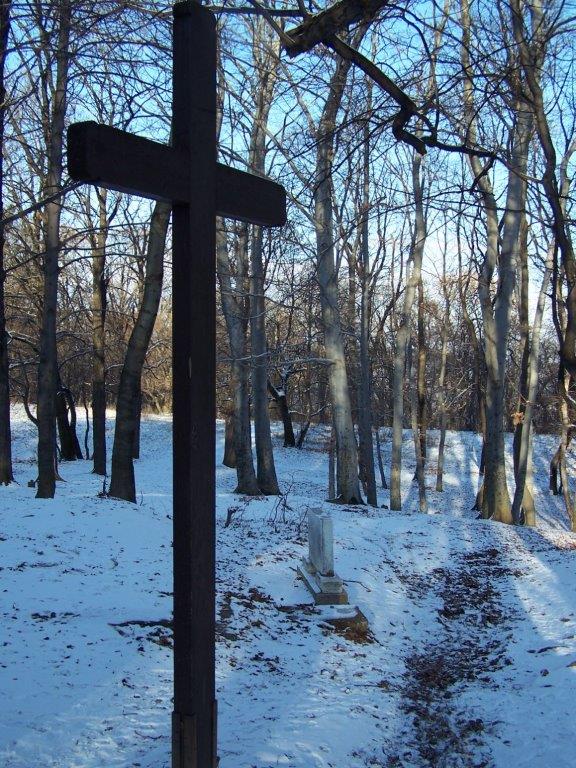
In Flanders fields the poppies blow
Between the crosses, row on row,
That mark our place; and in the sky
The larks, still bravely singing, fly
Scarce heard amid the guns below.
We are the Dead. Short days ago
We lived, felt dawn, saw sunset glow,
Loved and were loved, and now we lie,
In Flanders fields.
Take up our quarrel with the foe:
To you from failing hands we throw
The torch; be yours to hold it high.
If ye break faith with us who die
We shall not sleep, though poppies grow
In Flanders fields.
Stopping by Woods on a Snowy Evening by Robert Frost [w/ Audio]
Whose woods these are I think I know. His house is in the village though; He will not see me stopping here To watch his woods fill up with snow. My little horse must think it queer To stop without a farmhouse near Between the woods and frozen lake The darkest evening of the year. He gives his harness bells a shake To ask if there is some mistake. The only other sound's the sweep Of easy wind and downy flake. The woods are lovely, dark and deep. But I have promises to keep, And miles to go before I sleep, And miles to go before I sleep.
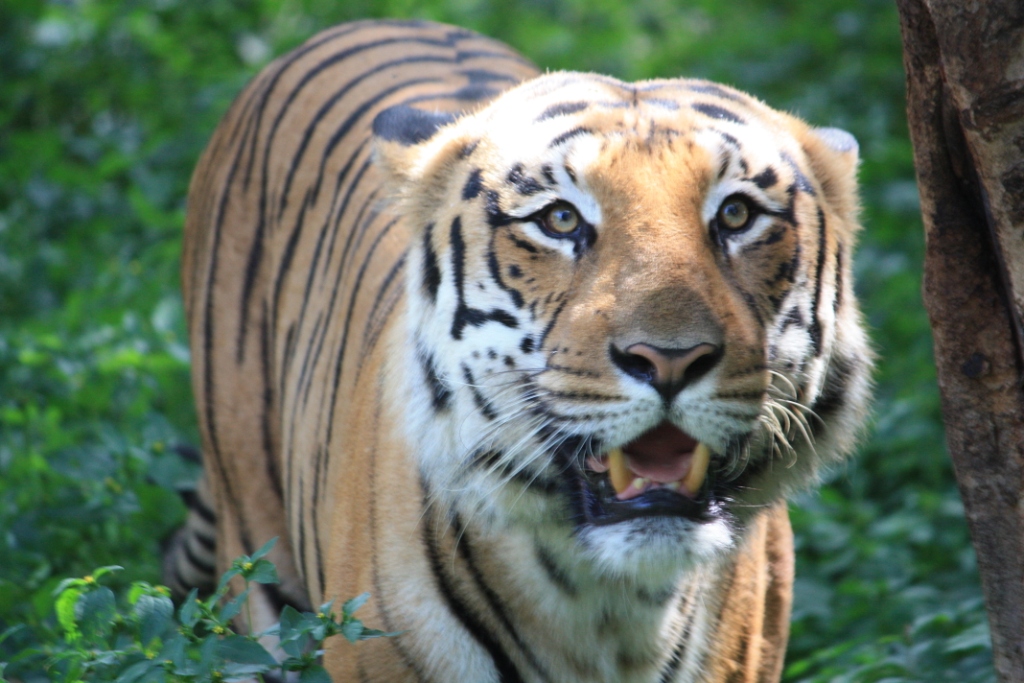
The Tiger by William Blake [w/ Audio]
Tiger, tiger, burning bright In the forests of the night, What immortal hand or eye Could frame thy fearful symmetry? In what distant deeps or skies Burnt the fire of thine eyes? On what wings dare he aspire? What the hand dare seize the fire? And what shoulder and what art Could twist the sinews of thy heart? And, when thy heart began to beat, What dread hand? and what dread feet? What the hammer? What the chain? In what furnace was thy brain? What the anvil? What dread grasp Dare its deadly terrors clasp? When the stars threw down their spears, And watered heaven with their tears, Did he smile his work to see? Did he who made the lamb make thee? Tiger, tiger, burning bright In the forests of the night, What immortal hand or eye Dare frame thy fearful symmetry?
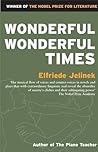
BOOKS: Wonderful Wonderful Times by Elfriede Jelinek
Wonderful, Wonderful Times by Elfriede JelinekMy rating: 5 of 5 stars
Amazon.in Page
If I said this book was A Clockwork Orange meets A Midsummer Night’s Dream it would be in some ways deceptive but in other ways, accurate. The book has none of the otherworldliness of those other stories and, instead, is set in a realistic 1950’s Vienna. Furthermore, those comparisons might confuse readers into not realizing this book is unambiguously a tragedy.
The book is set around four kids (Rainer, Anna, Hans, and Sophie) who like to beat up and rob adults, usually using a kind of catfishing scheme where they trick a middle-aged man into thinking he is about to have a getting lucky with Lolita moment before the other three gang up on the man in a moment of shock and awe. Here lies the “Clockwork Orange” comparison: youths enamored of violence as a means to combat the boredom and meaninglessness of their lives — possibly while passing on the abuse they receive in their own lives.
The “Midsummer Night’s Dream” part comes in with the book’s love geometry. Like that Shakespearean play, there are two boys and two girls and both boys are in love with the same girl (Sophie,) leaving the other girl (Anna) in a sad unrequited territory.
The book won’t be everyone’s cup of tea, and not only because it deals heavily in sex and violence. There are a couple factors that make the book feel strange. First of all, it is written in present tense. Secondly, it spends a lot of time in the minds of the characters and relatively little time with the action. Thirdly, the pacing of the conclusion and resolution of the book is abrupt and might feel forced — like the author was 245 pages in when the publisher told her that she had 250 pages, maximum, and that she’d better be wrapping it up. I didn’t find any of these factors to be problematic, but I can see how they would rub some readers the wrong way.
If the premise intrigues, you should definitely read this book – particularly if the previous paragraph’s warning didn’t turn you off.
View all my reviews
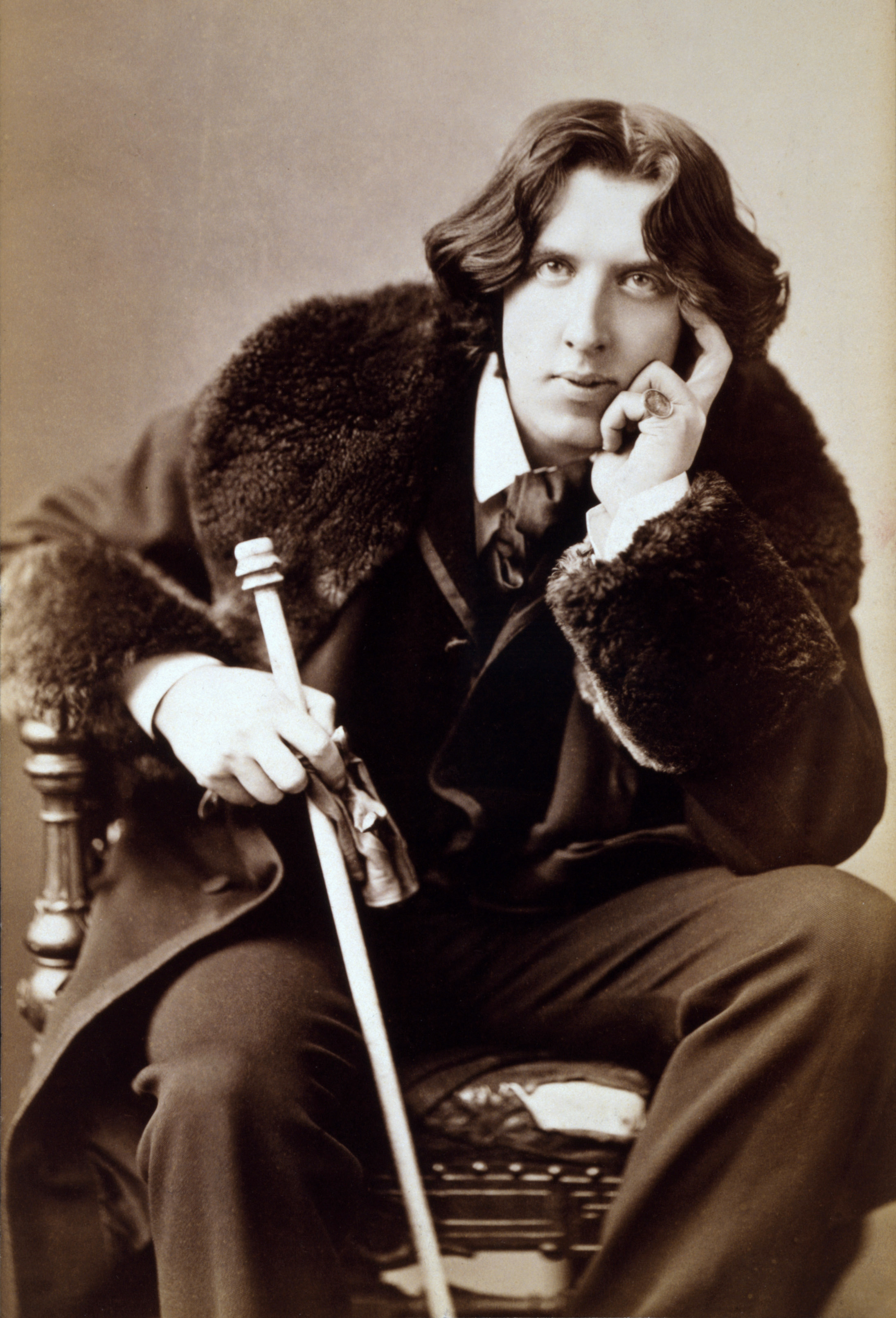
BOOKS: The Picture of Dorian Gray by Oscar Wilde
The Picture of Dorian Gray by Oscar WildeMy rating: 5 of 5 stars
Amazon.in Page
This is a book about what happens when you hollow out a person of all the complexity of the human condition and idealize them. At the beginning of the story, Dorian Gray is young, attractive, and preternaturally likable in a naïvely innocent kind of way. Almost to the novel’s end, through the magic of a wish made upon a portrait, Gray is still young and beautiful, though that naive innocence cracks under the strain of the impossible bifurcation of man and his soul. The artist, Basil Hallward, and Lord Henry (a man who will become a mutual friend of Gray and Hallward) cannot see Gray as a fully formed human being, but rather see him as an emblem of youth and beauty. But this unnatural ideal cannot hold, and a string of tragic deaths will be left in its wake.
The book is full of clever witticisms, albeit often of a nihilistic nature. These are almost all spoken by Lord Henry, who is the Polonius of the story – but a hipper kind of Polonius than Hamlet‘s. That said, it’s telling that toward the end of the book Gray does some of this epigrammatic philosophizing. (e.g. Such as when Gray tells Hallward, “Each of us has heaven and hell in him…”) One might dismiss this as Gray parroting Lord Henry, but I think that life has defrocked him of his naïveté, and he begins to think in ways that were impossible in his [true] youth.
This is a must-read. It’s interesting, thought-provoking, and well worth the time.
View all my reviews
BOOKS: The Poet Li Po AD 701-762 Trans. & Ed. by Arthur Waley
The Poet Li Po A.D. 701-762 by Arthur WaleyMy rating: 5 of 5 stars
Available online at: Project Gutenberg – The Poet Li Po
Li Po, also Romanized “Li Bai,” is one of China’s most famous poets, the prolific Tang Dynasty poet wrote extensively at the nexus of intoxication and the beauty of the natural world. His well-loved and evocative poem, “Drinking Alone by Moonlight,” is a prime example [and is included in this selection.]
The selection consists of a small number of translations by [20th-century Orientalist] Arthur Waley. It’s only 20-some of the 1,000-ish extant poems of Li Bai, but it does offer variety in form and subject matter. It doesn’t include all of Li Bai’s most anthologized poems, which I consider a plus — i.e. Waley didn’t just assemble a greatest hits album.
The Waley translations aren’t as sparse as many that one will read. That offers the advantage of being clearer in meaning while losing some of the feel of the original. That said, I enjoyed this group of translations and didn’t feel they were too verbose – for the most part. It’s a selection well worth reading for those who enjoy poetry.
View all my reviews
Five Wise Lines from The Picture of Dorian Gray by Oscar Wilde
Nowadays people know the price of everything and the value of nothing.
All art is quite useless.
The books that the world calls immoral are books that show the world its own shame.
A great poet, a really great poet, is the most unpoetical of all creatures. But inferior poets are fascinating.
You will always be fond of me. I represent to you all the sins you never had the courage to commit.
PROMPT: Cultural Heritage
It’s not something that I’ve thought of much. In my youth, I was attracted to most every culture but that of my own ancestry. In my late teens and early twenties, I visited Liverpool two or three times (just across the Irish Sea from my ancestral homeland,) but (sadly) never made it to Ireland. I’ve been to over 40 countries, but not yet my ancestral homeland. I think that’s not so uncommon to come around to an interest in such things later in life.
But the answer to the question is certainly to be found in the literature. Yeats is among my favorite twentieth century poets (if not my favorite,) and Seamus Heaney is certainly in the running. Of late, I’ve gotten on an Oscar Wilde kick, and his work definitely appeals to my ornery yet thoughtful nature. Even Joyce, who I had trouble getting into in his role as novelist, is a writer whose use of language I love.