What is the biggest challenge you will face in the next six months?
I couldn’t possibly say. I make no claims to clairvoyance. Life happens. Sometimes the complicated things go smoothly and the simple things frustrate.

What is the biggest challenge you will face in the next six months?
I couldn’t possibly say. I make no claims to clairvoyance. Life happens. Sometimes the complicated things go smoothly and the simple things frustrate.
Eat more veggies, mind your joints, beauty is everywhere, all is impermanence, and very few things in life actually matter (see item 4.)
Do you need a break? From what?
I travel for a break from the ordinary. I spend time at home (wherever that might be) for a break from novelty.
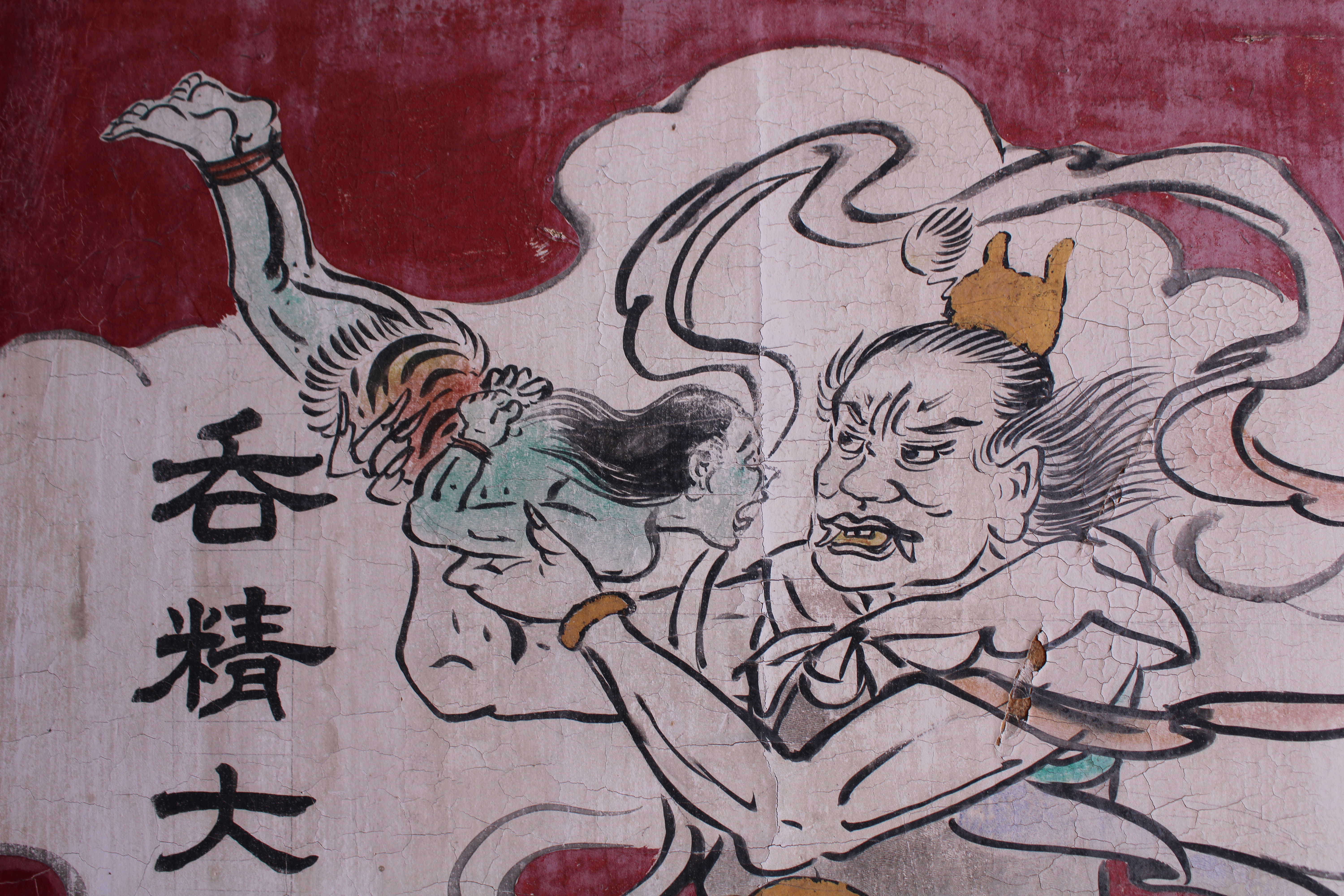
I see so many of these life experience quizzes, and – mostly – they all seem the same. So, I decided to go bigger for all those souls who are maxxed out on the questionnaires that deal in questions like: “Have you ever been married?” and “Have you ever ridden a horse?”
So, give yourself one point for each yes answer (or partial points as described) tally up your points, and be sure to see the scoring guide at the bottom. Best of luck! [Also, please do NOT post your score in the comments section. I do not want any legal / moral hassles.]
[WARNING: Maybe distressing to: a.) those who’ve suffered trauma; or b.) those who are easily traumatized.]
1.) Have you ever plotted a coup? [Give yourself ½ point if it was only a workplace coup – unless your workplace is / was a military (or another part of the national security complex,) then it’s definitely a full point.]
2.) Has anyone ever died while having sex with you? [Give yourself a ½ point if you were a tertiary participant in an orgy or ménage à trois at the time.]
3.) Have you ever hired an expert in the removal of bloodstains?
4.) Have you ever been mauled by a bear or any other mammal heavier than a badger?
5.) Have you ever poisoned anyone? [Give yourself ½ point if it was entirely by accident.]
6.) Have you ever been hunted for sport? [Note: that does NOT say “been hunting” – i.e. have you ever been chased around by one or more armed persons who intended you harm?]
7.) Have you ever eaten human flesh? [Give yourself a full point even if you were not aware of what you were eating beforehand.]
8.) Have you ever participated in a mutiny? [A full point for mutiny both on the high sea and on the low sea, but only a ½ point if it was on a cruise ship.]
9.) Have you ever been on a private island that took full advantage of the fact that no national laws applied there?
10.) Have you ever forgotten the name of someone you are related to by blood or marriage for more than two minutes? [If you have dementia or Alzheimer’s, you should not be completing this survey.]
11.) Have you ever helped someone dispose of a package that you have reason to believe was once a human body? [Give yourself a 1/2 point if you were completely oblivious to the possibility until after the fact – e.g. you really and truly believed you were dumping some rolled up carpets until you saw the news story about the disappearance of your best friend’s nemesis. FYI – If your best friend has someone in his or her life who can legitimately be called a “nemesis,” you should be less gullible – and should reevaluate your friendships.]
12.) Have you ever woken up in a country where you didn’t speak the language, having no recollection of how you got there?
13.) Have you ever had a scare whereby you thought one or more of your organs had been harvested?
14.) Have you ever thought you were abducted by aliens, only to piece together what truly happened from memory scraps and witness testimony over subsequent days, and then earnestly wished you had been abducted by aliens?
15.) Have you ever been trapped under rubble?
16.) Have you ever engaged in a bare-knuckle cage fight in which there was neither a cage nor protective equipment of any kind? [Zero points for light sparring at local gym or dojo.]
17.) Have you ever fallen through a portal to another dimension only to later realize you consumed (or licked) something that was not safe for human consumption?
18.) Have you ever slid or fallen down a mountain into a tree or rock devoid of a sled, skis, a snowboard, a bobsled, or any other means of downhill conveyance?
19.) Have you ever been a hostage? [Zero points if other people would call it an “intervention” or being institutionalized for not being of sound mind. On second thought, give yourself a 1/2 point for being institutionalized for not being of sound mind.]
20.) Have you ever unwittingly joined a cult?
SCORING GUIDE:
15 – 20 points: Congratulations, you may have lived one of the most interesting – not to mention, luck-filled – lives of any living human. You should definitely sell your memiors to Random House. Alternatively, you are a compulsive liar and should seek therapy. Also, if you are not a compulsive liar, seek therapy anyway. [Your advance will more than cover it.]
10 – 14 points: Congratulations, you have made — oh so — many poor life decisions and lived to tell the tale. If you are not institutionalized, you soon will be.
5 – 9 points: You, too, have made a number of poor life choices, but not necessarily with the nine lives of a cat or the people with scores above you. Be careful, you probably occupy the most dangerous scoring segment.
1 – 4 point(s): I’m going to take a wild swing and say that you slipped and fell down (or off) a mountain, or you nodded “yes” and briefly ended up in a cult — but you got away before they extracted all your worldly possessions [or maybe both of the above.] Your memory may be slipping, and quite possibly your definition of a mountain is in question, but you’re probably going to be okay.
0 points: Congratulations on a nice safe life… but maybe you should get out more?
Something on your “to-do list” that never gets done.
Write a to-do list.

when I was a child,
 roosters aggressively charged;
 now: they flee, clucking.

Don't be downcast, soon the night will come,
 When we can see the cool moon laughing in secret
 Over the faint countryside,
 And we rest, hand in hand.

Don't be downcast, the time will soon come
 When we can have rest. Our small crosses will stand
 On the bright edge of the road together,
 And rain fall, and snow fall,
 And the winds come and go.
James Wright Translation
I had a guitar, a black and white Fender Stratocaster knock-off. [Actually, technically, I don’t think it was a knock-off, but rather the lowest of low-end mass-produced Strats made by a subsidiary of Fender, Squier.] What happened to it? I realized I was tone deaf and lacked the finger dexterity to be the sequel to Eddie Van Halen. So, ostensibly, it ended up donated or sold in a garage sale. There’s a small chance it’s taking up space in a closet somewhere, but not in my closet.
Not to reveal a pattern, but I also had a yellow and blue BMX bike that I was quite fond of. What happened to it? I learned that I lacked the flight characteristics to be a great BMX racer (or possibly I rode it until it fell apart into its component pieces.) Youth was a long time ago.
What are your thoughts on the concept of living a very long life?
As long as I’m of sound mind and capable body, I’m fine with it, but not at any cost. I’d rather shuffle off this mortal coil than drag out the suffering of immobility and / or dementia.
I think Atul Gawande’s “Being Mortal” is good required reading. Among other things, he talks about the smoke and mirrors of our species’s increased lifespan. (i.e. increased lifespan, yes, but too often at the cost of diminished quality of life through those additional years.)
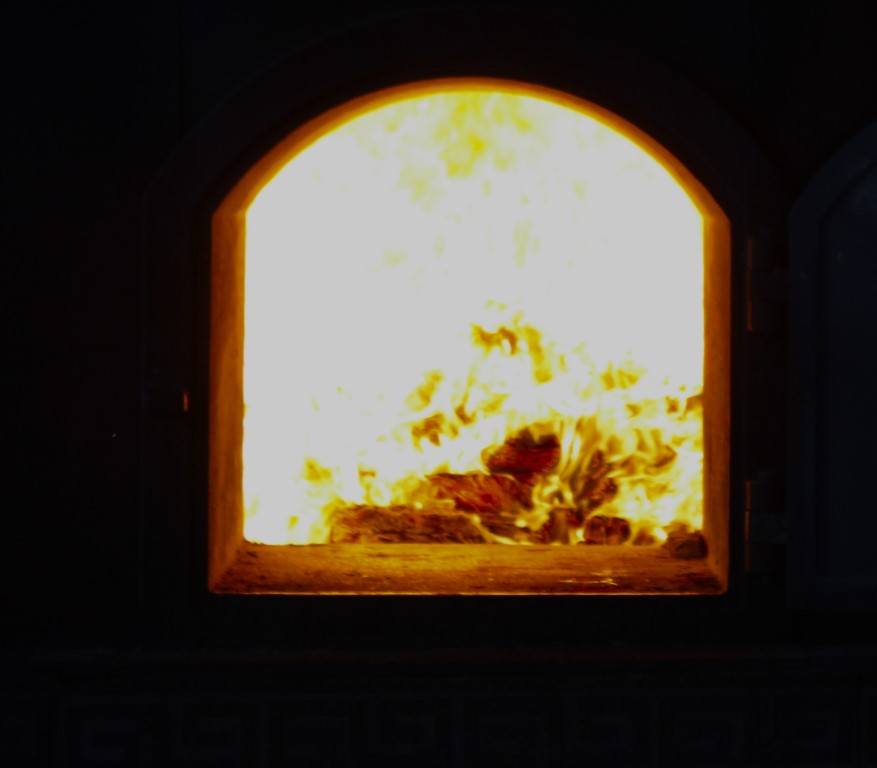
It was a dreary winter day;
 The world was cold, monotone gray.
 But then, I caught a hint of heat:
 Felt on my face, not on my feet.

A furnace burned in a dark place.
 I felt it flush my frigid face --
 Frigid once, but not any more
 I stood inside that foundry's door.

The orange glow danced on my face.
 It must have shown demon's disgrace.
 Like a poor creature lit on fire,
 Or the living dead on a pyre.

Cold as the day and my feet were,
 I heard a voice - just a whisper.
 "You must flee now, or you'll jump in,
 and they'll not find a fleck of shin."


