PROMPT: Meat

What are your feelings about eating meat?

The condensed version is, I’m fine with it. As a traveler, I try to eat mostly things locals eat. While I don’t go to great effort or expense to sample the most rare and exotic foods, I’ve eaten snake in China, croc in Zambia, horse in Kyrgyzstan, and guinea pig in Peru. Anything that regular people eat where I’m visiting is fair game. [That is part of the process of breaking down the invisible barriers between us’s and them’s so as to not enter into the interaction with a feeling of superiority because: “my arbitrary cultural conventions are better than your arbitrary cultural conventions.”]

I do believe that everyone would be better off if they were closer to [i.e. more intimately familiar with] the source of their food. I feel this of myself as well, though I did have the benefit of growing up on a small farm and seeing at close range the origins of food and how life moves on to being food. (By different mechanisms [hopefully — #SoylentGreenIsPeople,] it’s a process that I am fully aware will apply to me, as well. Ultimately, nothing living gets out of this world without being transformed through a process of being food. In my case –probably — I’ll be food to bacteria and fungi, but if I have a good run and am eaten by a tiger or wild dogs, I’d not begrudge them the meal.)

In fact, as I’ve learned more about how plants and trees live, e.g. sending warning pheromone signals to neighboring trees when under attack by insects, I’ve come to see the logic by which people determine what life is edible and what isn’t as mere species-chauvinism and anthropomorphizing. It is true that there are excellent points about the environmental benefits of some form of vegetarian diet. However, when one starts to talk to environmental vegetarians about eating insects (one of the most sustainable protein sources available, supposedly,) many will shove their fingers in their ears and sing, “La-la-La-la, I don’t want to hear this.”

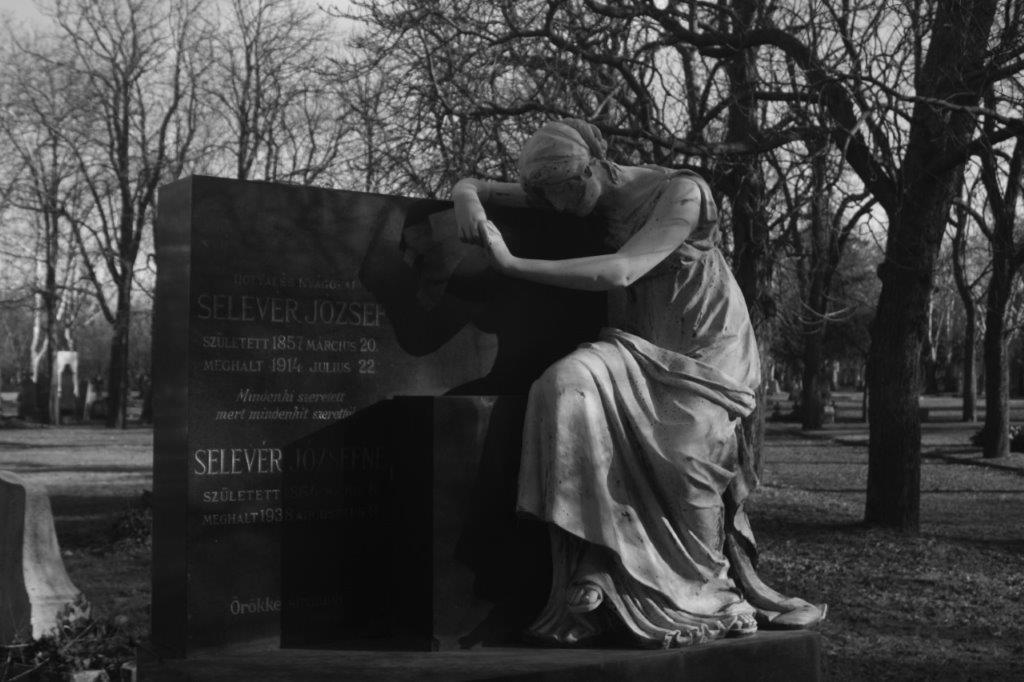
Do Not Go Gentle into That Good Night by Dylan Thomas [w/ Audio]

Do not go gentle into that good night,
Old age should burn and rave at close of day;
Rage, rage against the dying of the light.

Though wise men at their end know dark is right,
Because their words had forked no lightning they
Do not go gentle into that good night.

Good men, the last wave by, crying how bright
Their frail deeds might have danced in a green bay,
Rage, rage against the dying of the light.

Wild men who caught and sang the sun in flight,
And learn, too late, they grieved it on its way,
Do not go gentle into that good night.

Grave men, near death, who see with blinding sight
Blind eyes could blaze like meteors and be gay,
Rage, rage against the dying of the light.

And you, my father, there on the sad height,
Curse, bless, me now with your fierce tears, I pray.
Do not go gentle into that good night.
Rage, rage against the dying of the light.

Fugu Death [Free Verse]

What a moment!
   When you realize 
     that your lips had been more numb
     than from Szechwan peppercorns,
   and that numbness
     has slid into paralysis.

You are dying:
   death by Fugu --
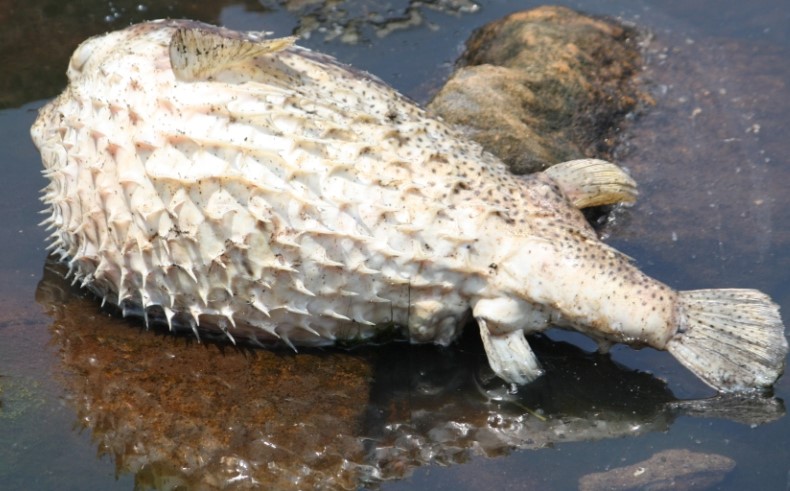
     poison blowfish.

Your heart will stop.
   You will keel over,
     falling from your stool
     at the sushi counter.

A booth-dweller, 
   seeing you bounce off 
     an adjacent patron,
     wonders why you don't 
     bring your arms up to catch yourself,
     but - of course - they're dangling 
   uselessly,
     and so you land face first.

The booth-dweller cringes.
     
There's nothing to be done for you.

You had the nerve
   to try the Fugu!

But, while Fugu life is exhilarating;
   Fugu death is inglorious.

Last Dance [Octave]

I'm wired and amped; my feet know the last dance.
   What's a poor old end-run death dog to do 
 But surrender to music's honeyed trance,
   Waltzing to it like dreams that seem cuckoo?
 But nothing 's crazy at last dance juncture --
   Just before the call for all to get lost:
 When sanity stretches but won't rupture,
   And one can see crystalizing hoarfrost.

Rivers of the Dead [Free Verse]

So many cultures
make their dead
cross a river.

The Greeks' Styx.
The Hindus' Vaitarna.
The Norse Gjȍll.
The Gnostic's Hiṭpon.
The Japanese Sanzu-no-Kawa.
The Mesopotamians' Hubur.
Taoists cross Naihe Bridge --
over what (I'm not sure,
but) is probably a river.

No rest for the dead?
It seems kind of rude.

Grave Reviews [Free Verse]

I click on Google Maps;
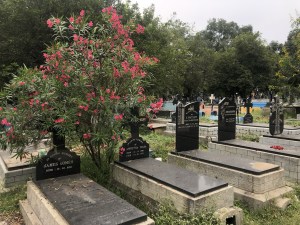
 a pin highlights for a cemetery,
  and, here, I stumble upon 
   graveyard reviews.

These reviews intrigue me because
 it seems to me that if one is capable 
  of writing a cemetery review,
    then one is unqualified.

And, if one is qualified to comment
 on the caliber of an eternal resting place,
  then one is unlikely to be capable of 
   posting a review.

I read one of the one-star reviews
 and see that the reviewer's principal complaint
 is an overabundance of "pocong."

"What is a 'Pocong?'" you may ask.
 It is a Javanese ghost that takes up
  occupancy in death shrouds.

Why is there a Javanese ghost
 infestation in a cemetery 4000 kilometers
  from Java, and -- as near as I can tell --
   with zero Javanese occupants?

The review does not say,
 but I love that someone panned 
  a cemetery based on the presence 
   of foreign ghosts

[and not because it is simultaneously
 phasmophobic and xenophobic.]

But because it shows an unbridled commitment 
 to one's imagination that is usually 
  only seen among children. 

Cemetery Math [Free Verse]

i walk through the graveyard,
subtracting birth from death dates
to determine age at death.

there’s a correlation between
speed of calculation &
the degree of tragedy.

the faster i can determine an age,
the more disconcerting the death:
like the girl — 1990 to 2008.

the 89 year old man who survived WWII
service in the Burmese jungle
doesn’t raise as many questions.

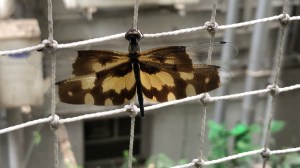
Deceptive Dragonfly [Haiku]

a still dragonfly 
looks perched & ready,
but then falls dead.

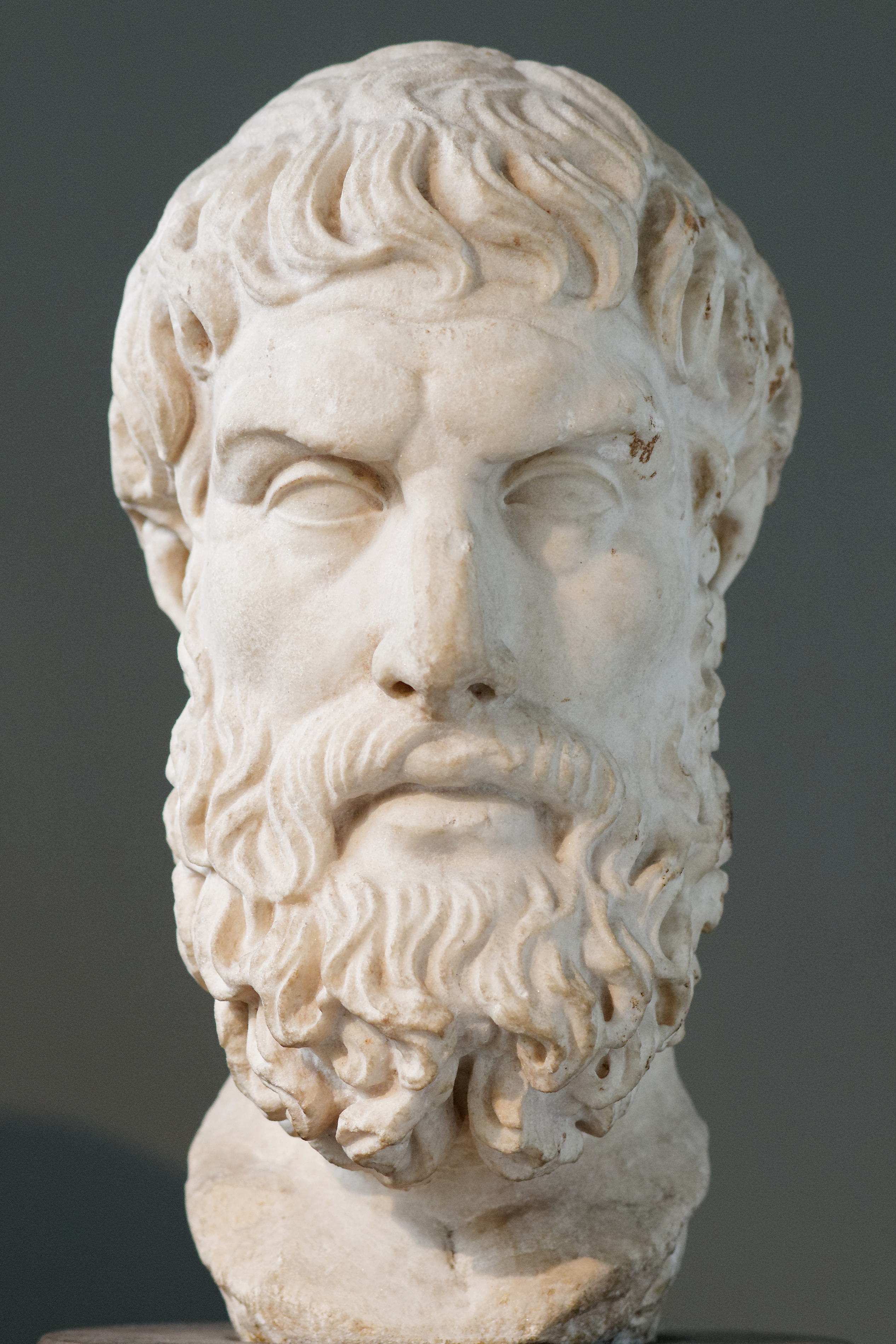
Five Wise Lines from Epicurus

Death is nothing to us, because a body that has been dispersed into elements experiences no sensations, and the absence of sensation is nothing to us.

principal doctrines – No. 2

Nothing is enough to someone for whom what is enough is too little.

Vatican Sayings – No. 68

Of all the means which are procured by wisdom to ensure happiness throughout the whole of life, by far the most important is the acquisition of friends.

Principal Doctrines – No. 27

Don’t spoil what you have by desiring what you don’t have; but remember that what you now have was once among the things only hoped for.

vatican sayings – No. 35

No pleasure is a bad thing in itself, but some pleasures are only obtainable at the cost of excessive troubles.

Principal doctrines – No. 8

And Five Honorable Mentions:

[T]here are an infinite number of worlds, some like this world, others unlike it.

Letter to Herodotus

Dreams have neither a divine nature nor a prophetic power, but they are the result of images that impact upon us.

vatican sayings – No. 24

It is pointless for a person to pray to the gods for that which he has the power to obtain by himself.

vatican sayings – No. 65

But one must not be so much in love with the explanation by a single way as wrongly to reject all others…

Letter to pythocles

Let no one be slow to seek wisdom when he is young nor weary in the search thereof when he is grown old. For no age is too early or too late for the health of the soul.

Letter to Menoeceus

SOURCE: Epicurus. 2021. The Fundamental Books of Epicurus: Principal Doctrines, Vatican Sayings, and Letters. Trans. by: Robert Drew Hicks & R. Medeiros. Independently published on Amazon. 45pp.

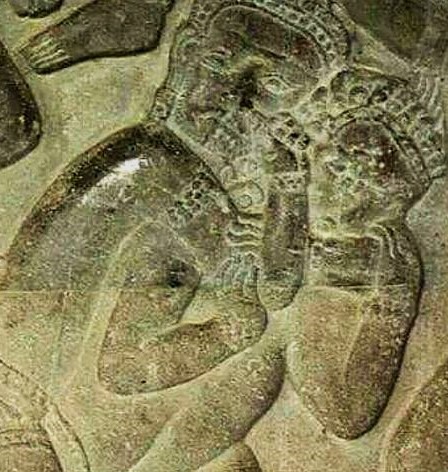
Chokehold [Lyric Poem]

Source: Wikipedia; cropped & modified; Khmeri chokehold
dying by the second
   from a starving brain;
 each new panicked moment
   narrows down the frame.

now, my world is dwindling,
   shrinking to a dot:
 like TV's used to do
    when you shut them off.

Now, this poem is done.
   there's nothing past one pel --
 except for oblivion:
    no sight, no sound, no smell.