Wen Fu 10 “Originality” [文赋十] by Lu Ji [陆机] [w/Audio]

Splendid thoughts arise from joined words --
Lucidity is awakened:
Luminous like adorned brocade,
Doleful as a string serenade.
But if crib suspicions aren't killed,
It'll be just one more pulp piece.
Though you may be these word's weaver--
Some ancestor, the prime conceiver.
You must be just and rise above,
Though it kills words you've grown to love.

The original lines in Simplified Chinese:

或藻思绮合,清丽千眠。
炳若缛绣,凄若繁弦。
必所拟之不殊,乃暗合乎曩篇。
虽杼轴于予怀,怵佗人之我先。
苟伤廉而愆义,亦虽爱而必捐。

“In Search of the Taoist, Chang” [寻南溪常道士] by Liu Changqing 刘长卿

I walk the narrow path,
Clogs divoting the moss.
White clouds over the shore;
Gate obscured by Spring grass.
Post-rain, I see the pines,
Follow stream to its source.
Flower-mind, then Zen Mind --
Arrived! Words have no force.

This is poem #136 of the 300 Tang Poems [唐诗三百首.] The original in Simplified Chinese goes:

一路经行处, 莓苔见屐痕。
白云依静渚, 春草闭闲门。
过雨看松色, 随山到水源。
溪花与禅意, 相对亦忘言。

“Little Echoed Hills” [小重山] by Yue Fei [岳飞] [w/ Audio]

Last night chirps resounded in the cold,
Through witching hour no sleep occurred.
I rose and slowly walked, alone.
Moonlight window glow, but no one stirred.

I've grayed in service and search of fame.
On hills, back home, the pines have grown old.
That's the story I'd let my lute tell,
If a string weren't broken &
there was someone to be told.

“Impromptu Lines Written on a Spring Day” [春日偶成] by Cheng Hao [程颢]

Towards noon fleecy clouds waft in the gentle breeze;
I cross the stream amid flowers and willow trees.
What do the worldlings know about my hearty pleasure?
They'd only take me for a truant fond of leisure.

Note: This is the joint translation of Xu Yuanchong and Xu Ming found in the edition of Golden Treasury of Quatrains and Octaves on which they collaborated (i.e. China Publishing Group: Beijing (2008.))

“The Taoist Temple Revisited” [再游玄都观] by Liu Yuxi [刘禹锡]

In half of the wide courtyard only mosses grow;
Peach blossoms all fallen, only rape flowers blow.
Where is the Taoist planting peach trees in this place?
Only I come again after my new disgrace.

Note: This is the joint translation of Xu Yuanchong and Xu Ming found in the edition of <em>Golden Treasury of Quatrains and Octaves</em> on which they collaborated (i.e. China Publishing Group: Beijing (2008.))

The “new disgrace” referenced was Liu Yuxi’s second exile.

Mount Zhongnan [终南山] by Wang Wei [王维] [w/ Audio]

Taiyi stretches toward heaven;
Linked mountains reach into the sea.
Looking back, white clouds coalesce;
In the mist, the mist can't be seen.
A ridge is a boundary of worlds:
Cloudy or clear; with - or sans - tree.
In need of lodging for the night,
I ask the woodsman cross river from me.

This is poem #118 of the 300 Tang Poems [唐诗三百首.] The original in Simplified Chinese is:

太乙近天都, 连山接海隅。
白云回望合, 青霭入看无。
分野中峰变, 阴晴众壑殊。
欲投人处宿, 隔水问樵夫。

Lament 4 [感遇四] by Zhang Jiuling [张九龄] [w/ Audio]

South of Yangtze, stands of red tangerine
Can endure winter while remaining green.
Is it that the weather there is so warm?
No. Their nature 's to bear a winter storm.
What might well serve the joyful traveler
Will be loathsome peril to passengers.
Fate factors in chance and situation --
Not playing around in cyclic rotation.
You may cultivate crops however you please,
But should heed shade thrown by mountains & trees.

This is the fourth poem in 300 Tang Poems [唐诗三百首] and the final poem of a quartet that opens that collection. The original in Simplified Chinese is:

江南有丹橘, 经冬犹绿林;
岂伊地气暖? 自有岁寒心。
可以荐嘉客, 奈何阻重深!
运命惟所遇, 循环不可寻。
徒言树桃李, 此木岂无阴?

Wen Fu 9 [文赋九] “The Whip” by Lu Ji [陆机] [w/ Audio]

Language can be complex, reason may sprawl,
And words don't always seem to point the way.
Extremes aren't always clear and distinct.
Overhauls are not always an upgrade.
The gist may dwell in a key phrase or two --
Those words the whip that make it race or stay.
Though multitudinous words are in place
They must do more than roar, hiss, or bray.
Overuse of the whip exhausts the horse --
Keep the impulse to whip too much at bay.

The original lines in Simplified Chinese are:

或文繁理富,    而意不指适。
极无两致, 尽不可益。
立片言而居要,乃一篇之警策。
虽众辞之有条,必待兹而效绩。
亮功多而累寡,故取足而不易。

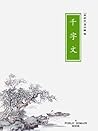
BOOKS: 千字文 [Thousand Character Essay] by 周兴嗣 [Zhou Xingsi]

千字文千字文 by 周兴嗣
My rating: 4 of 5 stars

A version with English commentary can be found at the IFA Gallery

This short work, consisting of just one-thousand characters, is first and foremost a teaching tool for children. While it presents a thousand of the most important Chinese characters, it also delivers lessons on history, ethics, philosophy, and culture by way of short sayings.

It’s arranged into 250 4-character phrases (125 sentences) and reads as a lyric poem, though because it dates to the Sixth Century, the degree to which the rhyme scheme holds varies depending upon the which spoken language one speaks (e.g. Mandarin, Cantonese, or Hakka.)

There have been different versions of this work over the centuries.

This is a much beloved work of literature among Chinese, though its sayings do not necessarily hold up as well as works like Sunzi’s Art of War or Laozi’s Daodejing. Some do, but most are much less relevant than when written.

As someone learning Chinese, I’d highly recommend this work as a way to expose oneself to language while gaining insight into Chinese culture.

View all my reviews

Lament 3 [感遇三] by Zhang Jiuling [张九龄] [w/ Audio]

Alone, the hermit returns home to sleep.
He's cleansed of cares by way of solitude.
He gives thanks and praise to the geese on high
For lifting feelings to grand altitude.
Day or night, his mind holds no intentions,
Who can sense his energy, so subdued?
His flight and submergence self-limited,
Where can he find calm, and still be renewed?

This is the third poem in 300 Tang Poems [唐诗三百首] as well as the third of a quartet of poems entitled Gǎn Yù [感遇] that open the collection. The original in Simplified Chinese is:

幽人归独卧, 滞虑洗孤清。
持此谢高鸟, 因之传远情。
日夕怀空意, 人谁感至精?
飞沉理自隔, 何所慰吾诚?