“Sailing to Byzantium” by William Butler Yeats [w/ Audio]

I

That is no country for old men. The young
In one another's arms, birds in the trees,
-- Those dying generations - at their song,
The salmon-falls, the mackerel-crowded seas,
Fish, flesh, or fowl, commend all summer long
Whatever is begotten, born, and dies.
Caught in that sensual music all neglect
Monuments of unageing intellect.

II

An aged man is but a paltry thing,
A tattered coat upon a stick, unless
Soul clap its hands and sing, and louder sing
For every tatter in its mortal dress,
Nor is there singing school but studying
Monuments of its own magnificence;
And therefore I have sailed the seas and come
To the holy city of Byzantium.

III

O sages standing in God's holy fire
As in the gold mosaic of a wall,
Come from the holy fire, perne a gyre,
And be the singing-masters of my soul.
Consume my heart away; sick with desire
And fastened to a dying animal
It knows not what it is; and gather me
Into the artifice of eternity.

IV

Once out of nature I shall never take
My bodily form from any natural thing,
But such a form as Grecian goldsmiths make
Of hammered gold and gold enamelling
To keep a drowsy Emperor awake;
Or set upon a golden bough to sing
To lords and ladies of Byzantium
Of what is past, or passing, or to come.

PROMPT: 100-year-old

Write a letter to your 100-year-old self.

Dear Sir,

Of late, we find your kungfu lacks vigor and precision. We can no longer, in good conscience, keep you in the vanguard against invading Mongolian hordes.

Try to look on the bright side.

Sincerely,

Sumwun U. Yoostahno

“When You Are Old” by W. B. Yeats [w/ Audio]

When you are old and grey and full of sleep,
And nodding by the fire, take down this book,
And slowly read, and dream of the soft look
Your eyes had once, and of their shadows deep;

How many loved your moments of glad grace,
And loved your beauty with love false or true,
But one man loved the pilgrim soul in you,
And loved the sorrows of your changing face;

And bending down beside the glowing bars,
Murmur, a little sadly, how Love fled
And paced upon the mountains overhead
And hid his face amid a crowd of stars.

BOOKS: Travels with Epicurus by Daniel Klein

Travels with Epicurus: A Journey to a Greek Island in Search of a Fulfilled LifeTravels with Epicurus: A Journey to a Greek Island in Search of a Fulfilled Life by Daniel Klein
My rating: 5 of 5 stars

Amazon.in Page

With the wave of renewed interest in Philosophies of Life lately, it’s nice to see a book that puts Epicurus at the fore. In a number of ways, I believe Epicurus was the most advanced of Ancient Greek philosophers, and yet he doesn’t get much attention compared to Plato, Aristotle, and the Stoics. (In part this is because the vast majority of Epicurus’s writings were lost, and in part it’s because little-“e” epicureanism [i.e. being culinarily hedonistic] has become much more familiar to people than big-“E” Epicureanism [i.e. a materialist philosophy that values pleasure, but not in so hedonistic way as to lose sight of virtue and the countervailing costs of pursing pleasure.] While adjectival forms have done a number on Cynicism and Stoicism as well, the former is – for all intents and purposes – dead and the latter has become much more well-known to present-day people from a pile of podcasts, books, and vlogs.)

I should point out that Klein doesn’t solely focus on the philosophy of Epicurus, he also tells readers what other schools of philosophy teach us about how to age well (and to not turn into a curmudgeon) — most notably: Buddhism, Stoicism, and Existentialism. That said, it’s fair to call Epicureanism the backbone of this book.

One who reads the title might wonder whether this is a pop philosophy book on aging or a travelogue. It’s definitely both, but the philosophy part dominates. I would call it 70/30 pop philosophy to travelogue (maybe 65/35.) The book uses the individuals Klein interacts with on Hydra (and elsewhere in Greece) as examples of how people age well, and in the process shows the reader [textually] a beautiful part of the world. But the core of the book is about philosophy as it pertains to such topics as play, perception of time, idleness, and changing views of spirituality.

I will warn the reader that, while the book offers many great thoughts for a philosophy of aging well, I didn’t agree with everything in the book. Klein contrasts his philosophy for living well into old age and for adapting one’s life to changing roles to the people he calls the “forever young” crowd. I wouldn’t put myself in the “forever young” category as I don’t believe I’m grasping at youth and all its blessings and pains. However, I suspect Klein would put me in that group because I work out intensely, watch what I eat / manage my vices, and am trying to work things so that my heart explodes while I’m still physically and mentally capable — i.e. before I become decrepit or senile. My point is, I’m not sure Klein’s dichotomy is that useful or reflective of reality, and that being health-conscious should necessarily be contrasted with enjoying the pleasures of age. [Truth be told, I’d say the biggest driver for people being more health-conscious into old age is seeing earlier generations live longer, but with a decreased quality of life through that period of increased longevity — See: Being Mortal by Atul Gawande.]

Still, overall, the book is quite readable and offers much excellent food for thought, and I’d recommend it for anyone who is interested in moving into advanced age in a way that isn’t misery filled.

View all my reviews

PROMPT: Better w/ Age

Daily writing prompt
What do you think gets better with age?

As far as life experiences, I find just about everything gets better with age. It’s probably to do with the dawning realization that most of the shit one has gotten worked up about over the years wasn’t worth it (as well as the realization that one has fewer years ahead than behind and so one had better get on with it in an aware kind of way.) As icing on the cake, I’m virtually certain to be long gone before the oceans boil or the robots rise up and massacre humanity.

If the question is what kind of things get better with age… certainly not french fries.

Gold & Ripe [Haiku]

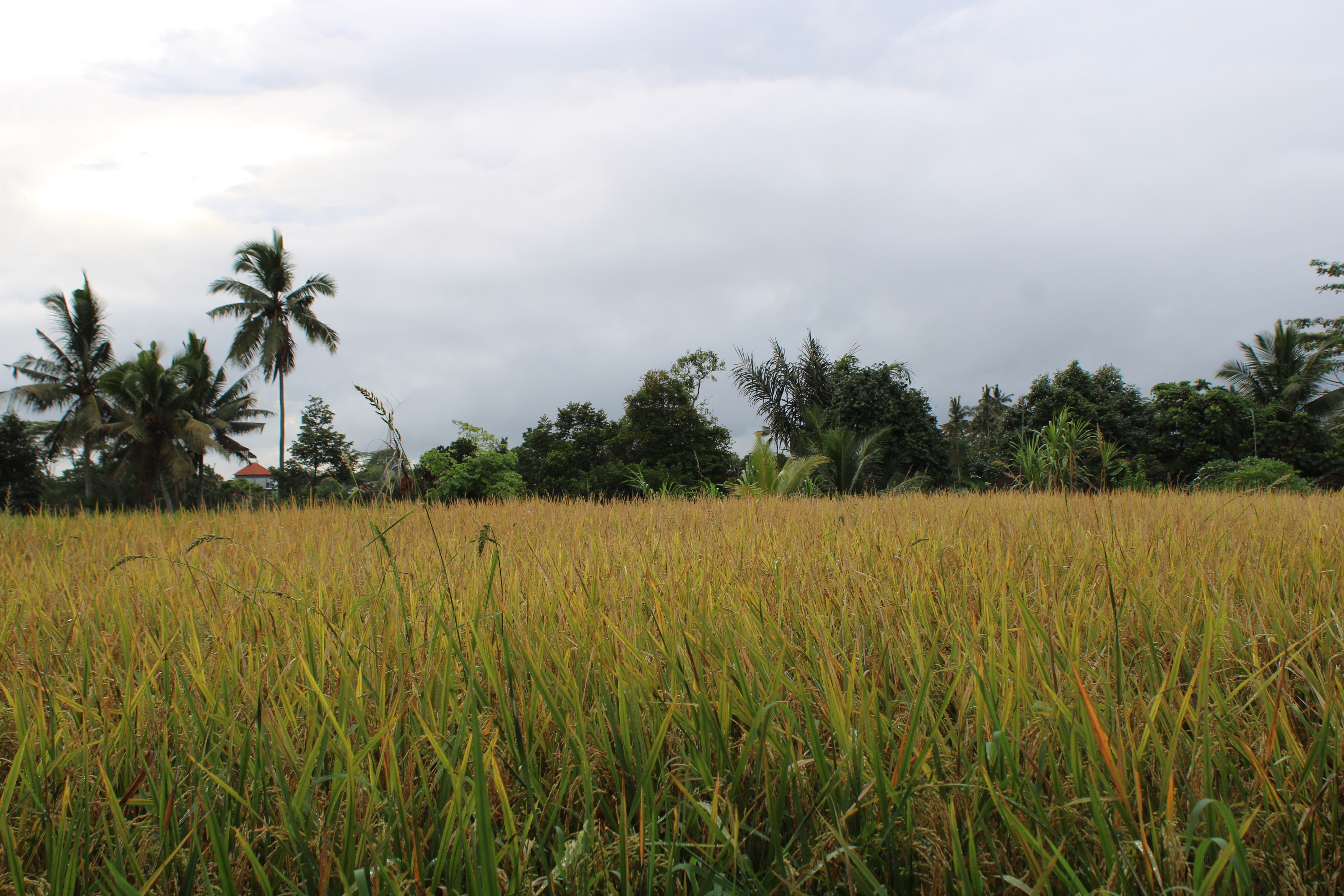
ripe grain turns gold,
the year has matured like a
person going gray

The Melt [Common Meter]

Our lives are blobs that melt away.
You may not sense the drips.
It happens slowly; you may never
hear burbled blips. 

You may not feel that it's lighter,
or that it's lost some girth.
Because you've shed it gently each
and every day since birth.

And when you feel the withering,
will you take it as loss?
A good loss like becoming lean --
a skimming of the dross?

Or like a vicious theft of the
best parts of one's being: 
like time has grabbed the valuables
and taken to fleeing?

The melt will continue onward
until there is no more.
So, think yourself experience rich
though you are time poor.

BOOK REVIEW: Introducing Epigenetics by Cath Ennis

Introducing Epigenetics: A Graphic Guide (Introducing...)Introducing Epigenetics: A Graphic Guide by Cath Ennis
My rating: 4 of 5 stars

Amazon.in Page

Get Speechify to make any book an audiobook

I’m old enough to remember when the human gene sequence was first being decoded, and there was a widespread belief that it was going to end genetic diseases in one fell swoop. It didn’t do that, and – in fact – seemed to result in whole new levels of confusion. It’s fascinating to me that now Epigenetics, a subject that grew out of that confusion, is also being seen as the ticket to ending disease. Epigenetics investigates what traits are expressed and why, given that a specific gene sequence has a vast array of potential for various traits to be (or not to be) expressed.

For those familiar with this series (the “A Graphic Guide” series,) this book is more difficult to digest than most titles, certainly than any of the several others that I’ve read. To be fair, the subject matter is more technical than most, leading to it being more jargon- and acronym-intensive. In addition, the subject isn’t cut up into as small of pieces as most of the books. This one has far fewer and longer chapters than the others that I’ve read.

That said, while it reads technically for the general reader, there are a few concepts (methylation, demethylation, and histone modification) that are frequently revisited throughout the book, and so one can get a basic grasp of those concepts. The book also explores some issues that are more readily understood by the lay reader, such as: nature v. nurture in gene expression, the role of twin studies, and how pseudo-scientific individuals and organizations have made fraudulent claims involving Epigenetics.

If you want to learn about the fundamentals of Epigenetics, you may want to look into this book — but keep in mind that it’s not a smooth read.

View all my reviews

BOOK REVIEW: Methuselah’s Zoo by Steven N. Austad

Methuselah's Zoo: What Nature Can Teach Us about Living Longer, Healthier LivesMethuselah’s Zoo: What Nature Can Teach Us about Living Longer, Healthier Lives by Steven N. Austad
My rating: 5 of 5 stars

Amazon.in Page

Release Date: August 16, 2022

This book offers a fascinating look at which animals are long-lived, and – to the extent that it’s known – why. It’s not so much, as the subtitle suggests, a book about how humans can live longer by applying understanding of other creatures of longevity. The advice for living longer would include tips such as: be a relatively large species, be a species that flies [of its own devices,] be ectothermic, be a cold-water aquatic creature, mature slowly, live underground, etc. This kind of knowledge, while interesting, isn’t really applicable to humans. Other takeaways are relevant to humanity, but still don’t change the calculus– e.g. have a relatively big brain. So, if one’s entire interest in this book is based on learning about how humans can live longer by applying ideas from other species, there is little to be gleaned, e.g. a brief discussion of antioxidants, free radicals, and metabolism. That said, it’s an excellent overview of long-lived animals and the evidence for why said creatures (including humans) live so long.

The book is divided into four parts, animals of the air, land, sea, and humans – respectively.

If you’re interested in nature and biology, I’d highly recommend this book. I learned a tremendous amount and the discussions of bats and Greenland Sharks were among the most illuminating — not to mention learning about creatures like clams and ant queens that I had no idea could live so long. Again, my only proviso would be that if you are interested in a book about what humans can do to live longer, there won’t be a great deal of information available [though, as mentioned, the last section does talk about longevity in humans, specifically, but not so much in a blue zone (this is what you should do) kind of way.] It’s more an argument for why more research is needed into animal longevity than it is a book about how to exploit the knowledge that already exists.


View all my reviews

BOOK REVIEW: Ageless Intensity by Pete McCall

Ageless Intensity: Effective Workouts to Slow the Aging ProcessAgeless Intensity: Effective Workouts to Slow the Aging Process by Pete McCall
My rating: 4 of 5 stars

Amazon.in Page

Know thyself. If you’re getting up there in years but have maintained a high level of fitness via a well-rounded fitness program throughout your adult life, this book is an excellent reference and you should definitely give it a look. However, if you kind of let yourself go a bit during your working years and – approaching retirement – want to increase your quality-of-life and lifespan through fitness activities you never had / took time for when you had a full-house and were climbing the corporate ladder, this isn’t a good starting point and probably won’t work for you. McCall successfully argues that older people can (and should) safely do high-intensity fitness activities, but the book doesn’t offer much in the way of modifications and adaptations to transition people who might have limited range of motion, bone density issues, or atrophied muscles. It presents a lot of solid information on aging, exercise, and the confluence between them, but the workout guidance is largely the same as would be offered to a twenty-something athlete.

The organization of the book is typical of workout manuals: background information (including on aging), chapters describing exercises for various types of high-intensity workouts, a chapter on sequencing, and a chapter about various approaches to building a routine (i.e. home v. gym, etc.) [I will say the book’s approach isn’t minimalist / cheapskate friendly, and presumes access to a wide range of weights, machines, and gear. (As one whose fitness regimen is built around three items – 1.) a pair of running shoes; 2.) a single pull-up bar / dip apparatus; and 3.) a yoga mat – it was more complicated / expensive than I go for; but I understand most have other preferences.) It does offer some guidance for budget exercisers, but not many of the exercises discussed use bodyweight.)

As I say, know thyself.

View all my reviews