
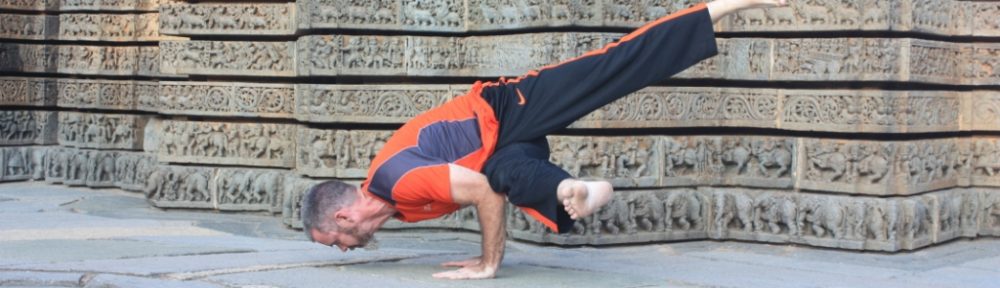
Taken in April of 2017 in Shillong

 Eats More, Shoots & Leaves: Why, All Punctuation Marks Matter! by Lynne Truss
My rating: 4 of 5 stars
Coming out: October 22, 2019
This children’s book shows kids what can go awry for want of properly placed punctuation. Lynne Truss’s popular and humorous grammar guide has spun off a cottage industry of books designed to shift perception of grammar studies from brutally dull to witty and fun.
The book is simple and easy to use. Throughout most of the book, each page consists of two pictures, each captioned with a sentence that describes said picture. The captioning sentences consist of the same words in the same order, but differently punctuated. Often, one of the plates is punctuated to make a perfectly logical picture; whereas, the other is absurd. However, other times both meanings are reasonable, but substantially different. Some of the sentences are grammatical oldies but goodies (e.g. “Eat here and get gas.”) but most are more original. There are a few pages upon which a larger multi-part picture is drawn with three or four captions.
The book’s only other feature is a sentence that explains the difference between the captions. Said sentence is written upside-down in small print below each plate, and is presumably a cheat code for parents who haven’t brushed up on “Strunk & White” in a while. Besides missing Oxford commas (i.e. the titular problem,) the book demonstrates miscommunications based on missing or misplaced apostrophes, semi-colons, parentheses, and exclamation marks.
The only surprise was finding “dog’s” used as a contraction for “dog is.” I was under the impression that that apostrophization could only be a possessive (i.e. “dog’s bone” is a bone that belongs to a dog) and only specified pronouns got apostrophe-“s” as a contraction. Don’t get me wrong, I employ such contractions all the time in poetry — mostly to preserve meter — but poets love to infuriate grammarians.
Though it’s intended for kids, I enjoyed reading this book, and found it to be a nice review of punctuation that didn’t require getting too cerebral. I’d recommend it for parents, and for those who want to hit the highlights of punctuation in less than a half an hour (it’s only about 30 pages.)

Garden of the strange, you’ve grown quite a crop.
I look up, feel my heart thrum, and dead stop.
Surrounded by a thousand eyes and feet,
I feel a prickle of nerves more than of heat.
It’s madness to halt before this army
who are armed with stance, and grins etched smarmy.
Fine. You say I’ve read too much King and Poe,
but I’m backing out of your horror show.

Taken in June of 2015 in Manali

5.) Po’s Wu Wei: In his fight against Tai Lung at the end of the first film, Po takes a hard hit from his Snow Leopard nemesis, and through ripples of undulating flab returns a devastating strike that sends Tai Lung flying. While I wouldn’t recommend one try it at home as demonstrated in animated form, the idea of not resisting, but rather redirecting forces is an old school approach. It also reflects the ancient Taoist wisdom of wu wei, effortless action.
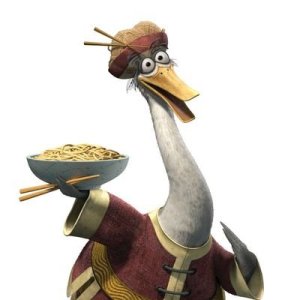
4.) “But I realized having you in Po’s life doesn’t mean less for me. It means more for Po.” In the third movie, there’s a scene in which Mr. Ping (Po’s avian dad by adoption) explains to Po’s panda dad, Li, how he came to grips with Li’s presence (which at first made Mr. Ping insecure and envious.) The lesson is to be careful in assigning a situation zero-sum status (one person’s gain requires another’s loss) without having reason to believe it reflects the reality of the situation.

3.) “There is just news. There is no good or bad.” This bit reflects an old Taoist story about a farmer and his neighbor. One day the neighbor sees the farmer has a beautiful new horse. The farmer tells the neighbor that it’s a wild horse that the farmer found at the back of his property. The neighbor says, “That’s good news.” The farmer says, “Good news? Bad news? Who’s to say?” The next day when the neighbor stops by the farmer tells him how his son got a broken arm trying to break in the wild horse. “That’s bad news,” says the neighbor. “Good news? Bad news? Who’s to say?” The next day the army comes by, conscripting young men, but the farmer’s son is not forced to go to war because the young man has a broken arm. The story goes on like that.

2.) “If you only do what you can do, you’ll never be more than you are.” In the third movie, after Master Shifu explains to Po how he knew that Po would fail on his first day as a teacher, the Master utters this bit of wisdom. It’s a warning to avoid loitering in one’s comfort zone.
1.) “The secret ingredient of my secret ingredient soup…. The secret ingredient is … nothing… To make something special you just have to believe it’s special.”: For some reason, people love to get attached to trappings and secret wisdom, even to the point of losing sight of what’s important.
It reminds me of a story about Dr. Herbert Benson. Benson famously wrote a book entitled, “The Relaxation Response“ about the effects of relaxation on health. Back in the sixties, students of the Maharishi Mahesh Yogi (famously, the Beatles’ guru) asked Benson to do a study of the health effects of their teacher’s system of meditation. The Maharishi taught transcendental meditation, an approach in which students focused on mentally repeating a mantra that is “given” to them personally by the teacher. (I put the word “given” in quotes because the Maharishi actually charged a significant amount of money for these mantras.) Anyhow, after much badgering, Benson agreed to do the study. One has to realize that, while today such a study would be considered quite respectable, in those days a study of the effect of meditation on health would have been akin to a study of voodoo.
So, Benson conducted the study and — lo and behold — he found that patients who practice meditation do have better recoveries and less ill effects. The Maharishi and his people now love Herbert Benson. They sing his praises. But Benson is interested in science and couldn’t care less whether any particular guru’s system of meditation is validated. So he repeats the study with all participants using the word “one” as their mantra, and he gets the same result. Subsequently, other forms of meditation are studied, and with similar outcomes. Needless to say, the transcendentalists love affair with Dr. Benson was short-lived.

Taken in December of 2017 in Manila

Taken in August of 2018 in Chicago
sitting in a Thai food joint,
couched in the atrium of a Bavarian-themed mall
in Bangalore, India
I smelt a scent —
obviously not fish sauce or coconut curry —
rather some kind of plastic, maybe in the menu lamination,
that transported me back to elementary school,
a parochial school in the Midwest in the 1970’s,
it was a plastic I’d have guessed had long ago ceased being made,
given the lack of such spontaneous dislocation,
I squeezed my eyes shut because travel is expensive,
but olfactory teleportation is free.


