
Taken in December of 2016 in Vienna


If “tourist” and “traveler,” sound like synonyms, you — my friend — are a tourist [or possibly a homebody.] The distinction is evident to travelers, and if you want to enjoy travel, you need to become a traveler. Otherwise, travel is just an ordeal to get through so you can check some boxes and take some obligatory photos.

5.) Travel is miserable for those who are attached to having their food and beverages just so. The food will not be as you are used to. [If this is part of the beauty of travel for you — congratulations, you’re probably a traveler.] Foods and beverages that you consider staples will be completely unheard of, and foods you find bizarre and of dubious edibility will be ubiquitous.
This may sound self-evident, but travelers know what I’m talking about. For they have witnessed the woman at a beachfront cafe in coastal Cambodia send back her milk tea three times with explicit instructions because “it just doesn’t taste the same as in Bristol.” They have heard the rant of a Philadelphian who wonders aloud why he can’t get a decent cheeseburger in Rishikesh.

4.) A traveler must be ready to throw out an itinerary and wing it on a moment’s notice. While traveling in Peru many years ago, my wife and I were booked on a bus from Arequipa to Cusco to catch our flight back to the United States. The problem was that a spur of the moment transportation strike made the road to Cusco impassable until the day after our flight home.
After indulging in a bit of a tourist-like tirade about how this doesn’t happen in other countries, we exchanged our tickets to Cusco for tickets to Lima and caught our flight at its layover.
Travel often doesn’t go as expected. While it often feels reassuring to have every hotel night, bus, train, and ferry ride booked ahead of time, sometimes it pays to have some strategic flexibility built into an itinerary. [This isn’t to suggest that one shouldn’t book anything ahead of time. Some people do that, and it’s the mark of the vagabond — an especially flexible variety of traveler — but it’s not without its risk of being stuck somewhere one doesn’t want to be for longer than one wants to be there.]
Here is what I realized: While it can be stressful to have weather, strikes, coups, or industrial-scale accidents mess up your plans, that’s where one gets one’s good stories and learns the high art of adaptability. If that idea mortifies you, you still have work to do. If you can nod your head in appreciation, you’re probably a traveler.

3.) Everywhere you go, most people are pretty normal. I realize “normal” is a loaded term that could be taken in all sorts of wrong ways. I’m just saying that the run-of-the-mill people you’ll run across will be polite and share the same kind views about what is appropriate behavior (in a broad sense) as do you. (And, the more one’s mind gets stuck on the fine differences to the contrary, the more likely one is a tourist.)
One mistake that keeps many people from traveling (and makes others book their travel such that they have almost no interaction with the actual foreign population or culture –e.g. cruises and group tours) is selection bias. Tourists overestimate the dangers of places and people because their only exposure to such locales and individuals is via the news, and one never sees “Fruit vendor gives tourist a free rambutan, film at 11” on the nightly news.
Furthermore, people are startlingly bad at geography and often compare what’s going on in other countries, regions, and (famously in the case of Africa) even continents with what’s happening in the area covered by their local newspaper. We’ve had friends express concerns about events happening — not only in another country — but roughly the distance between Orlando and Chicago away from us.

2.) Speaking of selection bias, where the tourists hang out in droves is also where you’ll find all the pickpockets, con-artists, and others up to no good (not that there are massive numbers of them) — because that’s where the money and naiveté are most densely packed. So, before you go spouting off about how such-and-such a city was a “crap-hole lined with pure evil,” get away from the tourist areas in order to see how regular folk generally behave.
Ex-pats, often after having experienced many horror stories dealing with tuk-tuk drivers and cabbies, usually find that — out of target-rich environments — it often doesn’t even occur to drivers to try to stick it to foreign passengers.

1.) Learning who is trying to manipulate you and who is just interested in you as a foreigner is a skill that can be learned safely and relatively quickly. However, it requires movable shields. Many people, being out of their element, instinctively put up “shields” — a combination of nonverbal communication and impulsive, preemptive “no” responses to any approaching individual. As an introvert, this is something I’ve particularly had to learn to be cognizant of because it tends to be my impulse to strangers approaching me — anywhere. (On top of that, my few years as a cop and many years in the martial arts made me prone to error to an irrational degree on the side of safety and security. Which isn’t to say that one should ever lose awareness or forget about security, but saying, “Move it along, Missy,” to a grandmother who’s asking about the weather in Tennessee because her granddaughter is studying Chemical Engineering at Vanderbilt is a tad… rude.)
Make appropriate eye contact, be aware of who else has taken an interest in you, and — of course — never go anywhere with a stranger (including drivers who approach you,) but it’s not necessary to shut everyone down impulsively (although introverts like me may still do so when drained of energy.)
And another thing, just because you’re in Berlin, Budapest, or some other city you’ve seen in James Bond or Jason Bourne movies doesn’t mean you’re likely to get approached by a secret agent or to be drawn into international intrigue or covert smuggling operations. I, for one, have yet to be.
If you’re still unclear where you fall, here are a few brief parting hints:

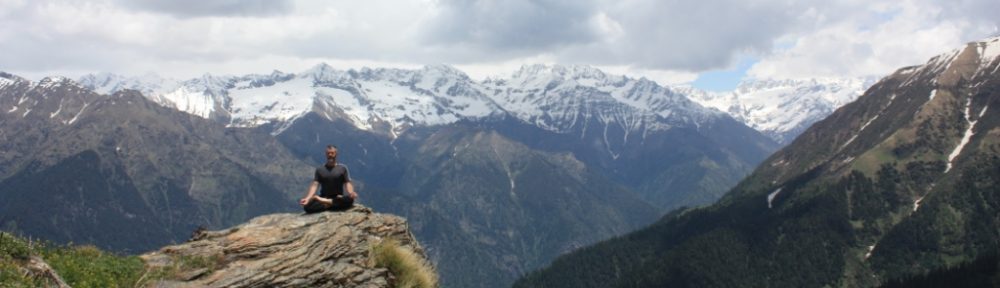
Taken in May of 2018 at Annapurna Base Camp
 The Penguin Book of Japanese Short Stories by Jay Rubin
My rating: 5 of 5 stars
This book contains 35 short stories by many of the most prominent Japanese writers (at least among authors whose works are translated into English,) including: Jun’ichiro Tanizaki, Natsume Soseki, Yukio Mishima, Banana Yoshimoto, Yoko Ogawa, Akutagawa Ryunosuke, and Haruki Murakami (who contributes the book’s Introduction as well as two stories.)
The stories are arranged into seven sections that are apropos for modern Japanese literature: “Japan and the West” (3 stories,) “Loyal Warriors” (2 stories,) “Men and Women” (6 stories,) “Nature and Memory” (5 stories), “Modern Life and Other Nonsense” (5 stories,) “Dread” (3 stories,) and “Disasters, Natural and Man-made” (11 stories.) This organization scheme, which might seem random applied to most literature, offers some insight into the Japanese mind and experience.
“Japan and the West” reflects a Japan in the vanguard among non-Western nations entering into developed nation status. For a time, Japan sat in the unique situation of being the only rich nation that wasn’t majority Caucasian, and the uneasy balancing act that many Japanese felt is reflected in these three stories. “Loyal Warriors” reflects the long shadow of the feudal samurai era, and – in particular – the custom of ritual suicide. It’s true that “Men and Women” has a certain universality to it, though the individual stories speak to the Japanese experience and history. The section entitled “Nature and Memory” is really more about the latter than the former, and the stories all reflect a concern about remembering, forgetting, and the imperfection of memory. “Modern Life and Other Nonsense” explores the modern corporate existence. “Dread” are the horror stories, a genre that has a lengthy history in Japan. “Disasters, Natural and Man-Made” reflects Japan’s experience with many devastating earthquakes and two atomic bombs.
In the interest of brevity, I’ll not describe or comment upon all the stories. Instead, I’ll pick out a few that I found particularly moving. This doesn’t mean that there aren’t many gems among the others. But my intention is merely to give the reader a taste of what is in this volume.
– “The Story of Tomode and Matsunaga” by Tanizaki Jun’ichiro: A writer receives a letter from a woman whose husband has a history of pulling extended disappearing acts. She asks for the writer’s help because she believes he may know her husband. The writer makes a connection to an acquaintance he has frequently socialized with in bars. The writer notices the man’s appearance in town seems to line up with the dates the woman gave for her husband’s disappearances. It might seem like a mystery solved, but the two men look nothing alike.
– “Patriotism” by Yukio Mishima: A junior military officer comes home and tells his wife that he has been put in the untenable position of having to arrest his comrades. Deciding that there is no honorable path, he decides to commit seppuku (ritual suicide,) and – given societal norms – this means his wife, too, will be expected to end her own life.
– “Smile of the Mountain Witch” by Ohba Minako: A mythical mountain witch is transposed into a modern urban setting.
– “Peaches” by Abe Akira: A man revisits a memory from his youth involving his mother and a cart of peaches, realizing that events couldn’t have happened as he remembers, he reconstructs events as he re-imagines his story.
– “Mr. English” by Keita Genji: We meet an office worker who seems like a bit of a jerk, but as we get to know his story, he is humanized.
– “Hell Screen” by Akutagawa Ryunosuke: A prima donna artist painting a hellish artwork for his Lord insists that he must have seen scenes to accurately depict them, and thus he is drawn into the hellishness of his work.
– “Filling Up with Sugar” by Suwanishi Yuten: A woman’s mother has a rare and incurable disease in which the body slowly turns into sugar.
– “Hiroshima, City of Doom” by Ota Yoko: As the title suggests, this is a story of the devastation of Hiroshima by atomic bomb at the end of the Second World War.
– “Weather-Watching Hill” Saeki Kazumi: This description of the 2011 earthquake and tsunami reads a bit like a journalistic account.
– “Same as Always” by Sato Yuya: This is a chilling tale of a mother who uses the release of radiation as a result of the Fukushima Dai-Ichi nuclear plant melt-down as a pretext for murdering her baby in a way that won’t look like murder. It’s so wrong in so many ways, but extremely evocative.
I enjoyed this collection immensely. The stories are great, and I would highly recommend it for readers of short fiction – particularly if one enjoys the cultural insight that comes from reading translated literature.

Taken in January of 2019 near Vang Vieng, Laos
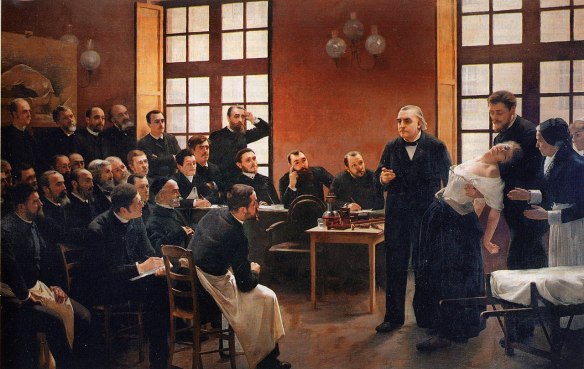
Une_leçon_clinique_à_la_Salpêtrière; Source: Wikipedia
Welcome to the fourth post on my experiences with altered states of consciousness. This past weekend, I completed the contact hours for the Level I course in Cognitive Hypnotic Coaching and Psychotherapy (CHCP) conducted by the Institute of Clinical Hypnosis & Related Sciences (ICHARS.) Over the course of three days, I had several opportunities to be hypnotized as well as to hypnotize classmates, and while it was sometimes a fumbling learning experience for me, I did gain some insight into trance states. The course focused on teaching a few methods of hypnotic induction, how to deepen a trance state, as well as the basics of how to use hypnosis for coaching or therapy. Last year, I took a quick class on self-hypnosis, but this was my first experience with hetero-hypnosis (trance induced by a hypnotist), and – unlike last month’s topic of meditation, for which I had a substantial background – this was a subject for which I was a babe in the woods.
Hypnosis is probably the most misunderstood territory I’ll travel over the course of this project (psilocybin is the only other that comes close.) Because the realm of consciousness involves subjective experiences, there’s always room for misunderstanding. Plenty of people leave their first experience with meditation thinking, “That isn’t at all what I expected it to be.” However, hypnosis presents added layers of confusion.
First, if a person has ever witnessed hypnosis, more often than not, they’ve done so via stage hypnosis. Stage hypnosis conjures images of cape-wearing Mesmerists forcing subjects to cluck like a chicken, but this isn’t at all a typical experience of hypnosis. [Achieving a deep trance usually takes much longer, people will only do what they are willing to, and the ease of trance and what kinds of suggestions will be honored varies radically from person to person.] In stage shows, subjects go through a twin-pronged selection process. The first part of the selection is via “convincers” (e.g. rubber band fingers, raising arm, stuck eyelids, etc.) which themselves serve a dual purpose: for one, they allow for audience participation and reduce the crowd’s overall level of skepticism, and, also, they allow the hypnotist or his crew to see which audience members are most susceptible to hypnotically-induced trance. The second part selects for gregariousness, and often this can be done by merely asking for volunteers. People who are more comfortable getting up on stage will be less resistant to acting the clown for the audience’s amusement. The rule of thumb is that a hypnotist can probably get a subject to do something they wouldn’t ordinarily do through suggestion, but he or she won’t be able to make a person do anything they don’t want to do. Therefore, the stage hypnotist wants outgoing people on stage rather than shy participants because people who like to clown around are more willing to do a wide range of activities in front of complete strangers.
Second, even the experts don’t agree on what hypnosis is (or even if it is – meaning some experts on the mind don’t believe a trance state is a unique state of consciousness and some even believe that suggestibility is more or less “playing along” or faking. However, it’s been well-documented that many surgeries – including limb amputations – have been conducted with only hypnosis as an analgesic, so if you believe a soldier in the Civil War (or a patient of Dr. Esdaile in India) could “play along,” faking a calm detachment, as a bone-saw ripped through his femur, I’ve got some lovely beachfront property to sell you.)
At any rate, there is wide disparity in beliefs about hypnosis, even among psychologists. For example, many clinicians, particularly followers of Milton Erickson, believe that all willing subjects can be hypnotized. (They base this belief on the fact that everyone seems to move in and out of trance states, unprompted, in daily life.) However, scientific researchers in the field find that about 10 to 15% of subjects cannot be hypnotically induced into a trance. [Note: Erickson was a controversial figure, but I can’t say whether that’s because he one-upped his professional colleagues or because he engaged in dubious practices both with respect to patient ethics and reporting of results.] I also don’t have much of a dog in the fight about whether all willing people can be induced into a trance through hypnosis. However, – in general — I favor peer-reviewed research over logical statements that seem sound, but which may not reflect the whole picture. (I’m once bitten twice shy from statements like, “You should eat what cavemen ate because that’s the diet your body is evolutionarily optimized toward.” [Sounds reasonable, but scientific studies show it to be wrong on several fronts.]) And all this controversy is without even getting into the claims of the hypnotic imperialist lunatic fringe, meaning this is more-or-less the mainstream disagreeing.
So what was my experience? I found it very relaxing, and, yes, when given suggestions that I wouldn’t be able to open my eyes or that my arm would raise, my eyes wouldn’t open and my arm would raise, respectively. And, no, I wasn’t playing along, at least if playing along means my conscious mind was voluntarily directing the lack of movement or movement, as the case may be. Does that mean the hypnotist had complete control of my mind? No. I feel pretty confident that I could have snapped my mind out of the state, if I had any compelling reason to do so. And, no, I wouldn’t have clucked like a chicken, though the suggestion might have resulted in uncontrolled giggling as (like one sometimes experiences in meditation) there can be feelings of euphoria in these highly relaxed states that are almost akin to intoxication. As I believed I mentioned in the post about my psilocybin mushroom experience, there’s a very subtle state-switching process that goes on all the time without one’s conscious awareness. If the researchers’ bell curve is correct (i.e. 10-15% can’t be hypnotized, 10-15% are super susceptible to trance and suggestions, and the rest are at various points on the middle ground,) I’m somewhere in that meaty middle. I haven’t experienced trance amnesia, and remain aware of what happens throughout the process, even if I go pretty deep, but physical suggestions take eventually.
This is a skill I’d like to continue to develop. During the workshop, it was hard to observe the signs of depth of trance because – having not yet memorized the scripts – I had to frequently refer to the script. Mind and eyes can’t be two places at once, at least not productively so. I also have a lot to learn about voice modulation, which seems to be an art unto itself, but which is also difficult to master while one is working on just getting sequences down and trying to avoid pitfalls that may snap the subject out of trance prematurely.
All in all, I feel I developed a better understanding of the mind during this course, and believe I’d like to continue to build the skill as there is much more to learn that can only be learned through practice.
Next month I’ll be returning to meditation as my altered state, but with a technological twist. I’ll be using an EEG headset to see whether the ability to visualize brain wave states can help me to better control my mind.

Taken in June of 2017 in Chobe National Park, Botswana

Taken in September of 2017 in Ahmedabad

Taken in November of 2015 in Jodhpur


