BOOK REVIEW: The Medea by Euripides [Trans. Gilbert Murray]

The Medea of EuripidesThe Medea of Euripides by Gilbert Murray
My rating: 5 of 5 stars

Amazon.in Page

Project Gutenberg

This tragedy follows up the myth of “The Golden Fleece.” That hero’s journey culminated in three trials which Jason (of Jason and the Argonauts) must complete in order to acquire the golden MacGuffin. Jason succeeds in large part because (arguably, entirely because) Medea, daughter of the fleece’s owner, i.e. King Aeetes, gives Jason some potions to make the trials a cinch. She does this in exchange for Jason’s everlasting love.

And, herein, lies the heart of this play’s conflict. Jason – like many heroes of Greek Mythology – is kind of a jerk. In flashing forward to the beginning of this play, we find Jason has traded Medea in for a younger and higher stature wife (i.e. a princess whose father doesn’t despise and disown her). [Note: Technically, Medea may not be married to Jason because of legalities, but she did bear him two boys.] To add insult to injury, Jason’s new father-in-law (King Creon) insists that Medea and her two boys be exiled, effective immediately.

What makes this play so fascinating is that we have sympathy for Medea’s plight, but then her inner monologue turns to the nuclear option she will employ – killing Jason’s new princess-wife and, more disconcertingly, her own children. Medea goes back and forth about her plan, showing reluctance to kill her boys, at least. So, the reader (viewer) ends up finding Jason loathsome because he steadfastly refuses to accept any blame for how poorly things have gone, but – on the other hand – he’s being more reasonable. (i.e. He talks kindly and isn’t murdering anyone.) It’s a fascinating reflection on the battle between rationality and passion.

I’d highly recommend this play. It’s a short and straightforward story, but it does present a great deal of food-for-thought.


View all my reviews

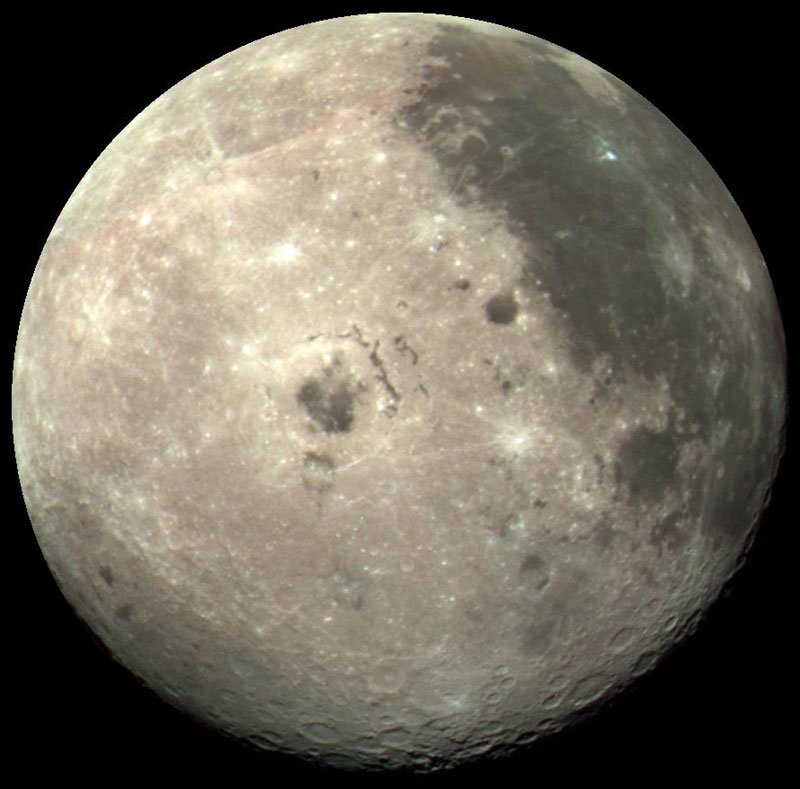
Retort to “Arise, fair sun…” [Poem]

Arise, fair sun, and kill the envious moon,

Romeo & juliet: act 2, scene 2

Oh, moon, slip cautiously across the night.
They whispered to the sun to murder you.
So, slink way down before the sun takes flight,
 'fore that proud body can make much ado.

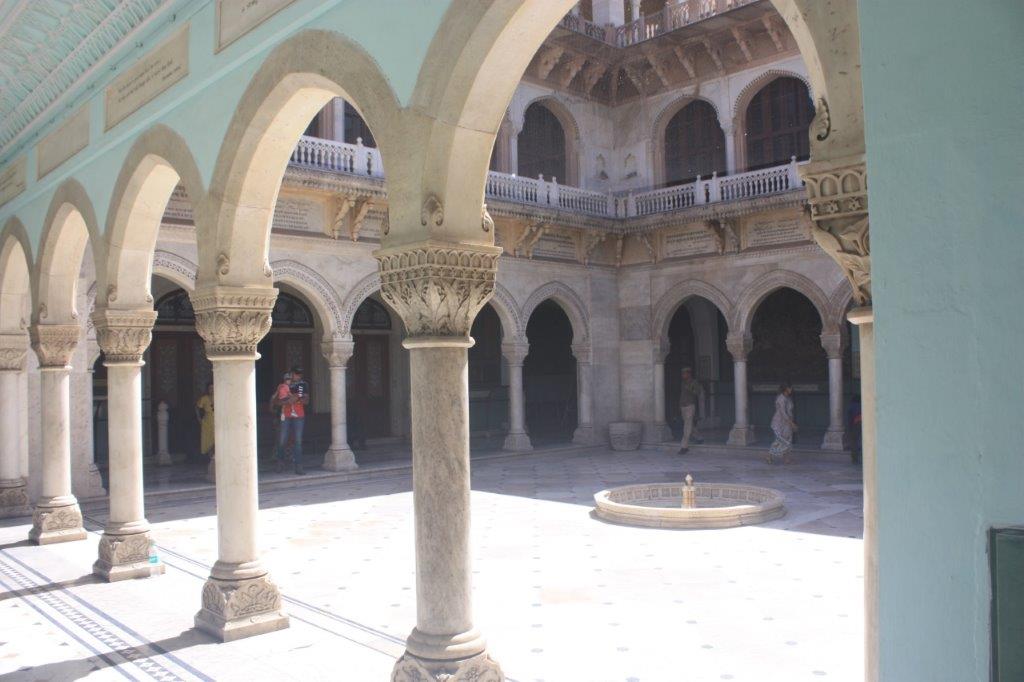
DAILY PHOTO: Indo-Saracenic Arches

Taken in March of 2020 at Albert Hall Museum, Jaipur

BOOK REVIEW: Miracles: A Very Short Introduction by Yujin Nagasawa

Miracles: A Very Short IntroductionMiracles: A Very Short Introduction by Yujin Nagasawa
My rating: 5 of 5 stars

Amazon.in Page

This concise guide to miracles is built around the intriguing observation that, according to polls, a majority of people believe in miracles, and yet we don’t witness supernatural events [at least not ones that can be confirmed by objective investigation.] There are coincidences (boosted in salience by selection bias and / or a lack of intuitive grasp of probability,) there are patterns that our minds turn into significant images (e.g. the Madonna on a taco shell,) and there are cases of spontaneous remission in which a serious medical condition disappears where treatments haven’t worked or weren’t tried (experienced by the devoutly religious, the marginally religious, the agnostic, and the atheistic, alike.) But those events can be explained more simply without resorting to the supernatural (i.e. probability, the human brain’s great skill at pattern recognition [re: which is so good that it often becomes pattern creation,] and the fact that under the right circumstances the human body’s immune system does a bang-up job of self-repair.)

The five chapters of this book are built around five questions. First, what are miracles – i.e. what criteria should be used, and what events that people call miracles fail to meet these criteria? Second, what are the categories of miracles seen among the various religious traditions [note: the book uses examples from both Eastern and Western religions, though generally sticks to the major world religions?] Third, how can one explain the fact that so many believe despite a lack of evidence? This chapter presents hypotheses suggesting we’re neurologically wired to believe. Fourth, is it rational to believe? Here, philosophers’ arguments (most notably and extensively, that of Hume) are discussed and critiqued. The last chapter asks whether non-supernatural events can (or should) be regarded as miraculous, specifically acts of altruism in which someone sacrificed their life for strangers.

I found this book to be incredibly thought-provoking, and it changed my way of thinking about the subject. I’d highly recommend it.


View all my reviews

Trotting Bull [Haiku]

the bull starts to trot
down the middle of the road,
and the road clears

BOOK REVIEW: How to Live Like the Little Prince by Stéphane Garnier

How to Live Like the Little Prince: A Grown-Up's Guide to Rediscovering Imagination, Adventure, and AweHow to Live Like the Little Prince: A Grown-Up’s Guide to Rediscovering Imagination, Adventure, and Awe by Stéphane Garnier
My rating: 4 of 5 stars

Amazon.in Page

Out: April 12, 2022

Given my reading of this book, I’m clearly a huge fan of Saint-Exupéry’s “The Little Prince,” and yet I had lukewarm regard for this book and found it a slog to read – despite its short page count and readable style. Don’t get me wrong; the writing is fine and the book raises some interesting points, but still I came away unsure that this book has a reason to exist. Ultimately, I figured out what bothered me is that it’s a little bit like going to hear your favorite comedian and then spending twice as long listening to someone else explain and elaborate upon their jokes. “The Little Prince” is brilliant, but it’s a simple book with a simple theme and simple lessons, and I don’t know what value is added by even a skillfully crafted self-help elaboration upon the book. As far as stars go, I give the book the benefit of the doubt based on the fact [full disclosure] that I almost never like self-help books, and exceptions to that rule only come about if the book can teach me something about which I had no idea or if it is in itself so clever or beautiful of language that I’m moved.

If you liked “The Little Prince” (and, note: you’ll have to have read it for the references in the book to make much sense,) and you like self-help books, this will probably be right up your alley. But if you like “The Little Prince” and aren’t a self-help fan, then just read the original story again.


View all my reviews

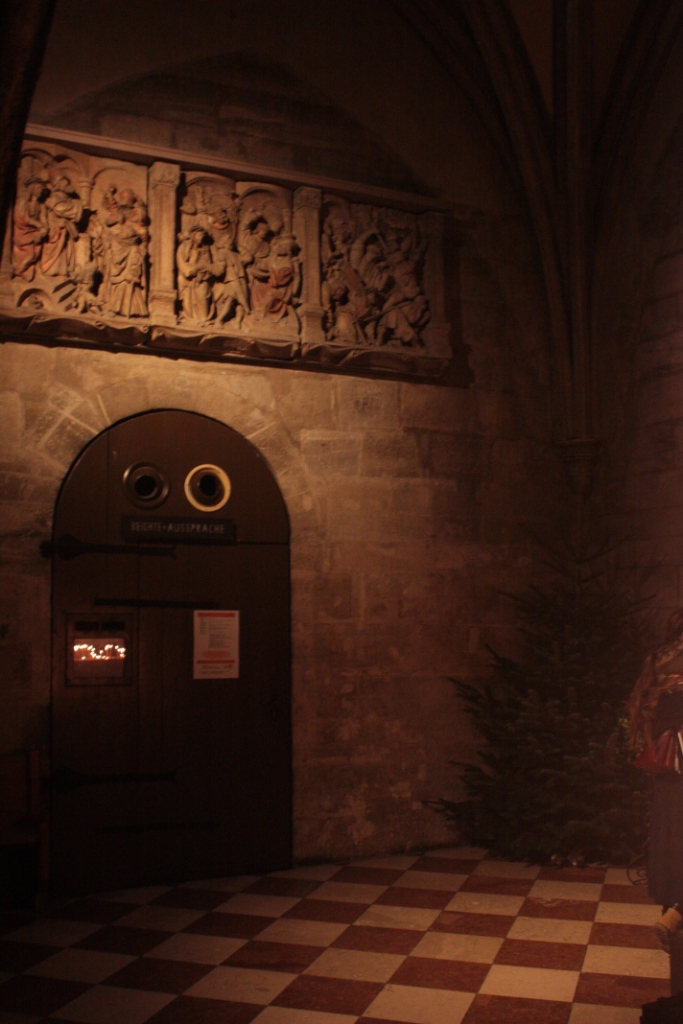
DAILY PHOTO: Confessional in St. Stephen’s

Inside St. Stephen’s Cathedral in Vienna in December of 2016

BOOK REVIEW: Introducing Jung: A Graphic Guide by Maggie Hyde

Introducing Jung: A Graphic Guide (Introducing...)Introducing Jung: A Graphic Guide by Maggie Hyde
My rating: 4 of 5 stars

Amazon.in Page

I find Jung’s ideas fascinating. Don’t get me wrong; I don’t believe most of said ideas have scholarly merit, but they’re brilliantly creative and eccentric. Some will say this would’ve been a radically different book if it’d been written by a psychologist or the like (rather than by an astrologer.) I don’t disagree. It’d likely have focused more on his work in personality types and on the unconscious mind (i.e. the work that people in psychology still talk about, whether they like it or not,) and also probably would’ve barely footnoted his ideas about “the uncanny,” synchronicity, and astrology. In short, its priorities would’ve been reversed, and it’d be a book that’s more boring but more relevant to those who are interested in Jung’s long-run influence on psychiatry / psychoanalysis.

For my purposes, I prefer the book as it is. I shouldn’t give the false impression that the author only addresses Jung’s mysticism, or that she completely avoids pointing out where Jung’s ideas were controversial and what critiques were leveled against him. The book comes across as a serious description of Jung’s work (albeit focusing relatively intensely on dream analysis, collective consciousness, and the more out-there aspects of his work.) I will say, I’ve read a few books from this series now, and Hyde does seem more a cheerleader (less a dispassionate scholar) than most of the other authors. It’s fascinating to read about Jung’s criticism of Freud. Don’t get me wrong, I’d agree that Freud was sex-obsessed, but Jung’s accusations of Freud being too concerned with one ill-supported idea does create a bit of a pot / kettle situation.

I enjoyed this book. I found the descriptions of Jung’s ideas compelling, if unpersuasive. However, I’d argue that if you specifically want to know about what ideas are still being talked about in classrooms (mainstream, not the New Age-y ones,) there’re probably better books. However, if you’re curious about Jung the mystic, this is a great place to start.


View all my reviews

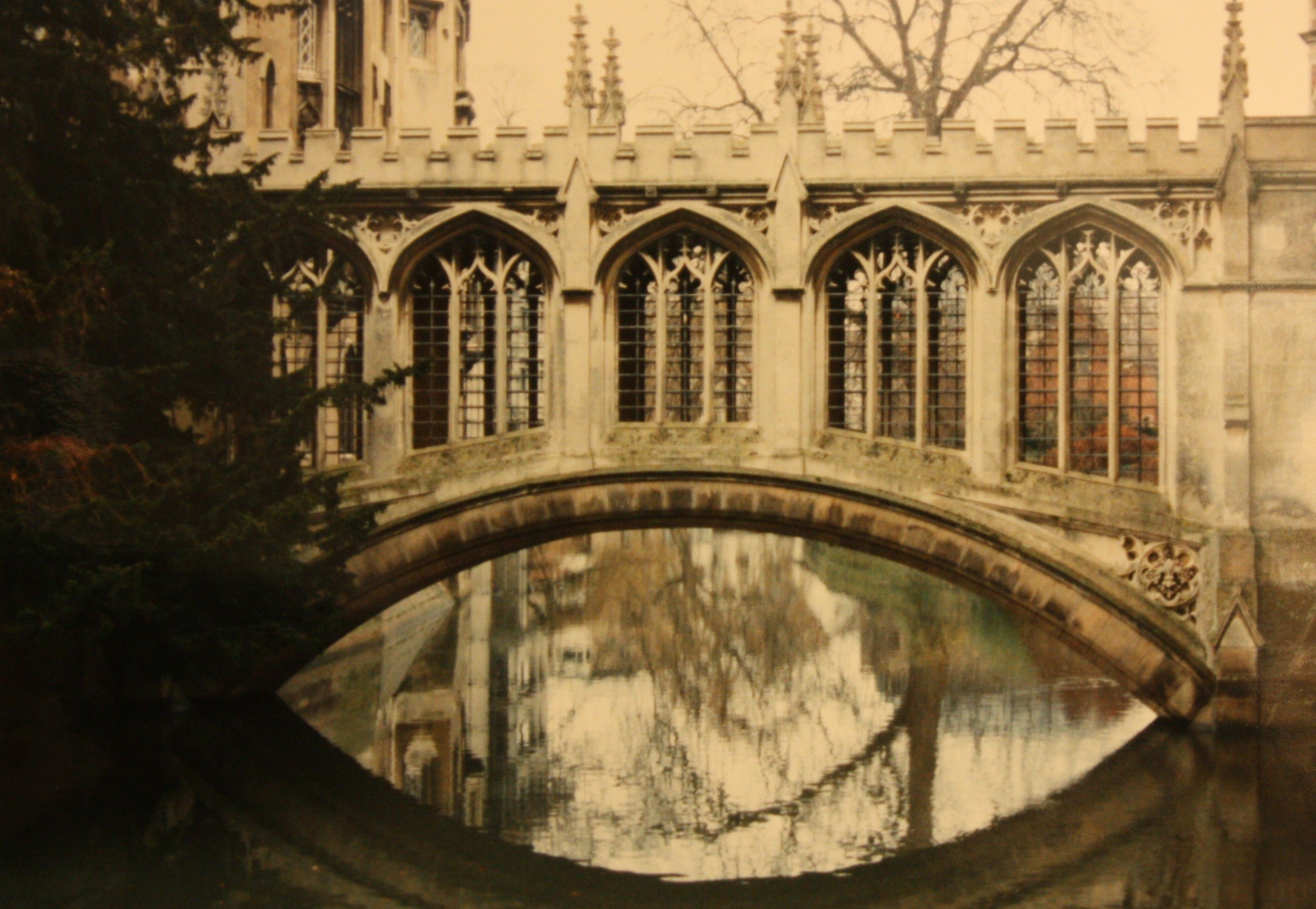
Cambridge Limerick

There was an outlandish student of Cambridge
who only had space for the tiniest fridge.
It all had to go -
milk and meat in the snow.
Turns out he liked his gin chilled just a smidge.

DAILY PHOTO: Rhododendrons & Ridges, Appalachia

Taken in November of 2021 in North Carolina