DAILY PHOTO: Ramakrishna Math

Taken September 30, 2013 in Bangalore

Taken September 30, 2013 in Bangalore

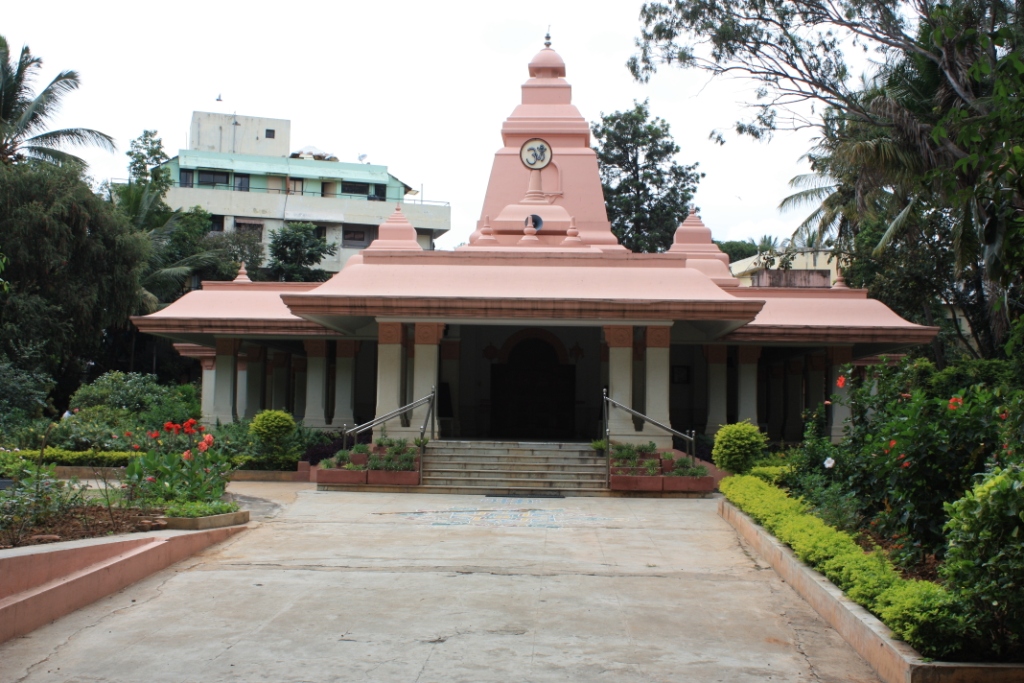
This small campus of buildings in the Halasuru neighborhood of Bangalore is dedicated to the teachings of Sri Ramakrishna. Ramakrishna was a holy man from Bengal who lived from 1836 to 1886. The Bangalore chapter is one of several associated with this non-secular monastic order. The order was actually begun by Ramakrishna’s lead disciple, Swami Vivekanada. Vivekanada is most well-known as the individual who introduced Yoga to the West, and particularly the US, back in the 19th century.

With a motto of “Liberation of oneself and service to mankind,” the order both facilitates personal growth through yoga classes and meditation sessions, and also has a major philanthropic thrust.

DAILY PHOTO: Trio of Street Dogs

Taken in September of 2013 in Nandi Hills, India.

Taken in September of 2013 in Nandi Hills, India.

India has a lot of street dogs. While there are many that are in a tragic state, others look like they’re someone’s pet. They tend to cluster together in places like parks where they have prospects for both food and to not be run over by rampaging autorickshaw drivers.

My First Tibetan Buddhist Meditation & Lecture

Having settled into life in India over the past month, I’m now getting around to some of the self-enrichment activities I’ve planned on taking advantage of here in Bangalore. Today I attended a meditation session and discussion/lecture at the Thubten Lekshey Ling Tibetan Buddhist Meditation Center. I’ve read a few books on Buddhism and even one or two specific to Tibetan Buddhism, but this was my first time attending such a session. Also, while I’ve done several kinds of secular meditation, both in a group and individually, this was my first exposure to guided meditation in the Tibetan Buddhist tradition.

The title of the session was As the Clouds Drift by… The first hour was the meditation portion and the following two hours were the lecture / discussion portion. The session opened with a few prayers that were chanted in what I believe was Sanskrit, but there was an English translation for newbies such as myself to follow along with the meaning. Then we did a few short meditations that were much like others that I’ve done: meditation on breath and meditation on bodily awareness. Then there was a visualization as we read a sutra in English.

Transitioning into the discussion and lecture portion, we first discussed the meaning of life. No, I’m not making that up. While it might seem like a hackneyed question, some intriguing points were raised. We were directed to think of the question as having two alternative meanings. First, why am I here? Second, what is my purpose? The conversation gravitated to the latter topic. I’m not sure if this was because there was a consensus that the question “why am I here?” is meaningless, or if the question of purpose was just more intriguing. There were various opinions about whether there was a purpose, and–if so–whether it is universal or individual-specific.

After a brief tea break, the remainder of the session involved readings from The Way of Bodhisattva followed by analysis and prompted discussion. Much of the discussion revolved around the issue of how compassion is expressed and the difficulty (or ease) of being a Bodhisattva. (A Bodhisattva is one who seeks enlightenment out of compassion for all sentient beings.)

I found the session to be thought-provoking and beneficial, and thought the atmosphere was conducive to growth. Emphasis was placed on discussion rather than straight lecturing. I will no doubt be back to visit in the future.

I did learn something interesting about myself through the process of the class, and that’s that I need to learn to be still for more than two hours. While there was no prohibition on moving around–particularly beyond the meditation portion– in an effort to not be a distraction, I tried to keep fairly still. I practically ran home afterwords. I had all this pent-up energy. I would have thought myself better than average at sitting in a contemplative state. I’m a writer for goodness sake. I spend entire days at my computer. However, in truth, I rarely sit more than an hour without getting up and stretching or doing some sort of movement to limber up my body and get the blood flowing. I was raised Catholic, and so I’m not new to sitting quietly for long periods of time. Though that was a long time ago. I also have three college degrees and have spent more than my fair share of time in classrooms, but the wandering mind is not discouraged in that environment–in a way it’s encouraged.

DAILY PHOTO: MG Road at Barton Center

Taken in September of 2013 in Bangalore

Taken in September of 2013 in Bangalore

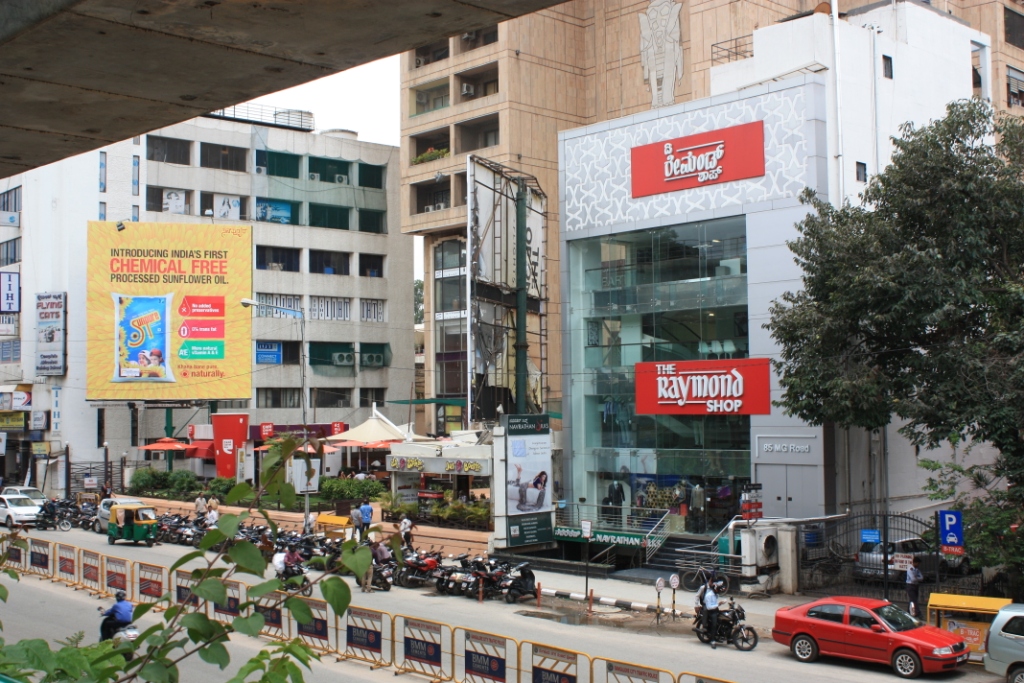
MG Road (short for Mahatma Gandhi Rd.) is the main drag in Bangalore. It’s lined with shops, malls, and office buildings.

DAILY PHOTO: Bangalore Literature Festival

Taken September 27, 2013

Taken September 27, 2013

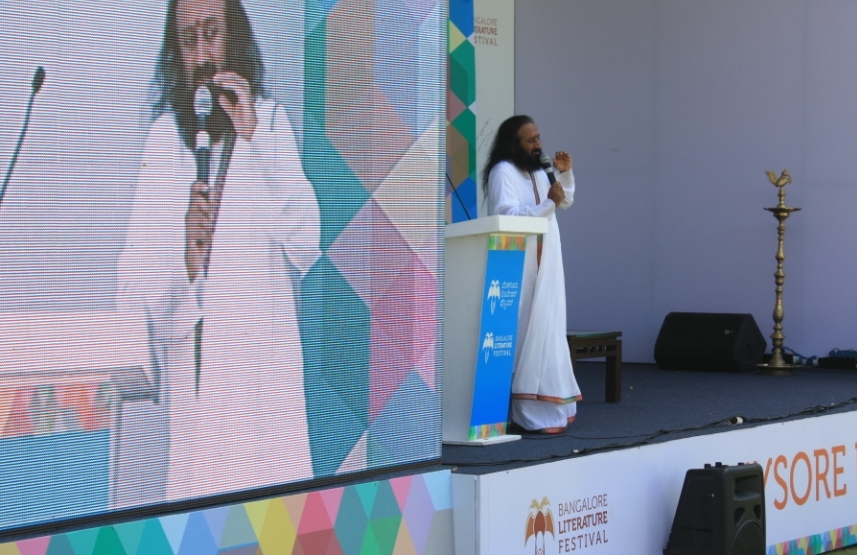
I spent Friday September 27th at the Bangalore Literature Festival. This was the second year of the event, and the first day of this year’s festival. Pictured onstage here is Sri Sri Ravi Shankar, a world-famous guru and charitable foundation leader who is headquartered in Bangalore. He drew the biggest crowd that I saw, although the rest of the talks I went to were on a secondary stage called Lawn Bagh. (“Mysore Park” was the name of the main stage.)

I went to a panel entitled “Vision for India” that featured a politician, a retired General, and a well-known pundit. The panel solicited the three men’s opinions on the future of India. It was fascinating to the international affairs / economist trained part of me. There were some political and economic reforms all of them seemed to agree on, but, great for this type of panel, there was some controversy as well.

I also went to panels on crime fiction, geographic-centric poetry, and the coexistence of literary and commercial fiction in the publishing space.

I was impressed with the festival. The caliber of speakers and authors was high. They had to contend with something that no other literary festival that I’ve been to had to, and that is that there are many written languages  in India–and at least one French and  German writer each that I saw. While English was the lingua franca of the festival, I heard poetry in Tamil, French, and other languages as well.

The campus it was held on, Velankani Park, was sparkling clean held a lot of interesting plant life.  This was my first trip out to Electronic City. It seemed odd that they held the festival so far from the city center, but I can see why in a way. As one of the speakers said during the “Visions” panel, it’s a first world oasis in a third world country. The little I saw, verified that. That said, if they wish to grow, they may need to put it closer to the city center. (Of course, as the metro comes on-line and people start using it, this may become a moot point.)

They did have trouble controlling the schedule. By the end of the day they were about 45 minutes behind. This is something that they’ll have to control if they wish the festival to grow beyond three stages. In terms of quality, this was very much like a scaled down version of my previous home city’s literary festival, the Decatur Book Festival. However, DBF has about 20 stages and a much bigger vendor space. This means the DBF has to have “stage Nazi’s” that will crack the whip. Even with a compact three-stage campus, they probably need to build defined break space into the schedule.

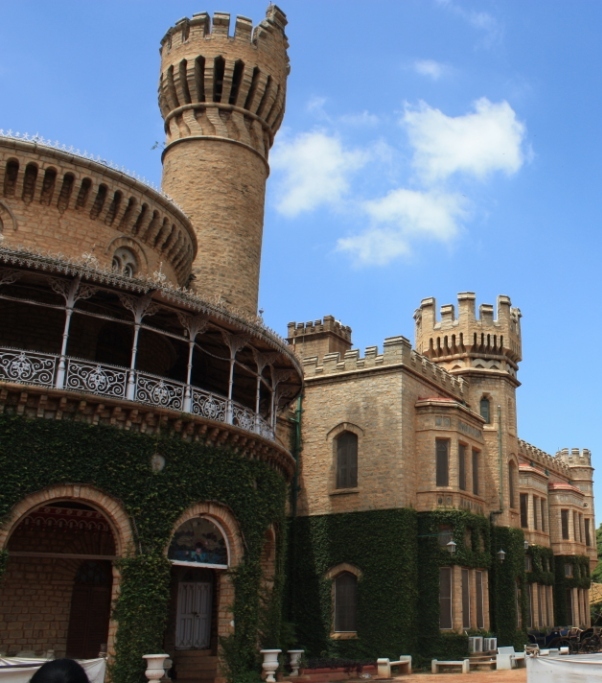
DAILY PHOTO: Bangalore Palace

Taken in September of 2013

Taken in September of 2013

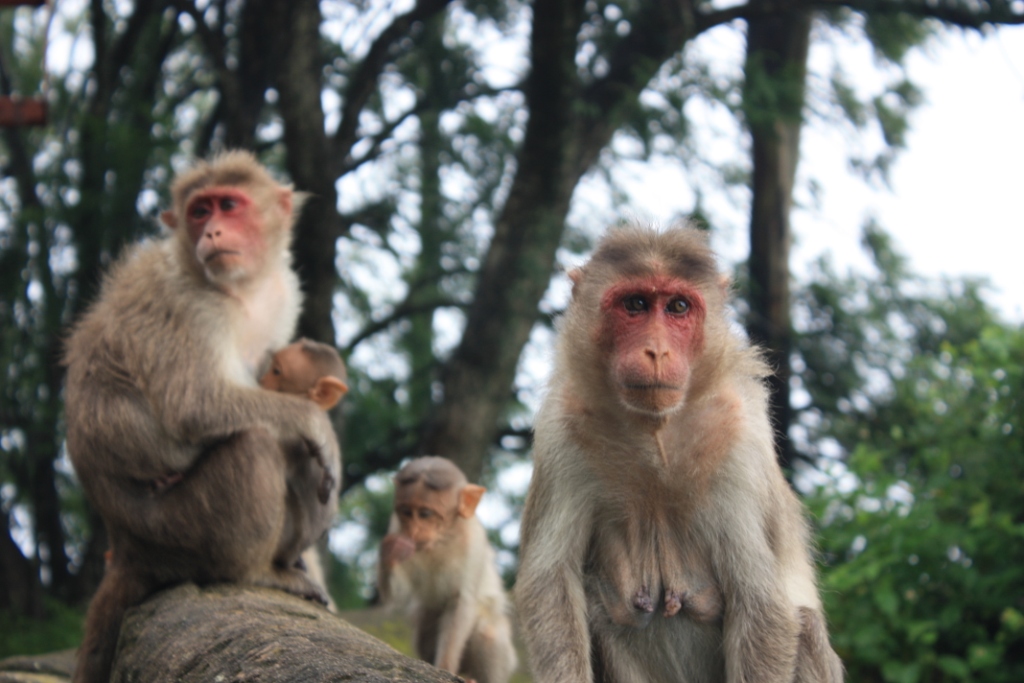
POEM: Monkeys Make Me Smile

Monkeys always make me smile

Some have hair in human styles

Oh the vanity  their locks betray

Can you spot the one with a toupee?

IMG_0507

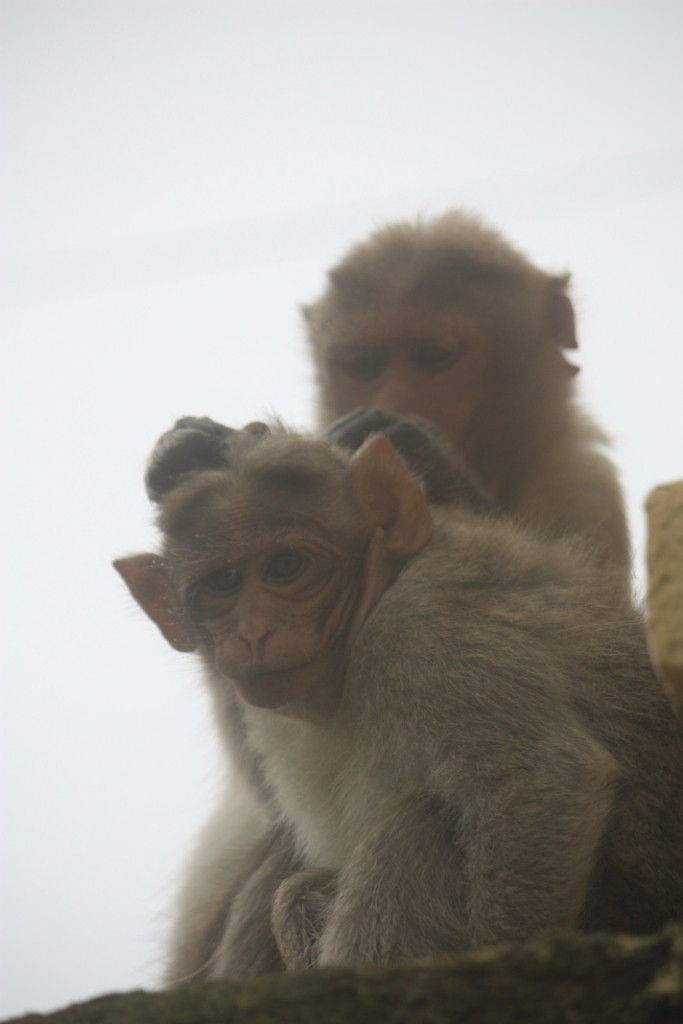
Faces so reminiscent of our kind

Eyes suggesting intelligent minds

Into their faces they’ll one day grow

but the youngsters all look like H. Ross Perot

IMG_0389

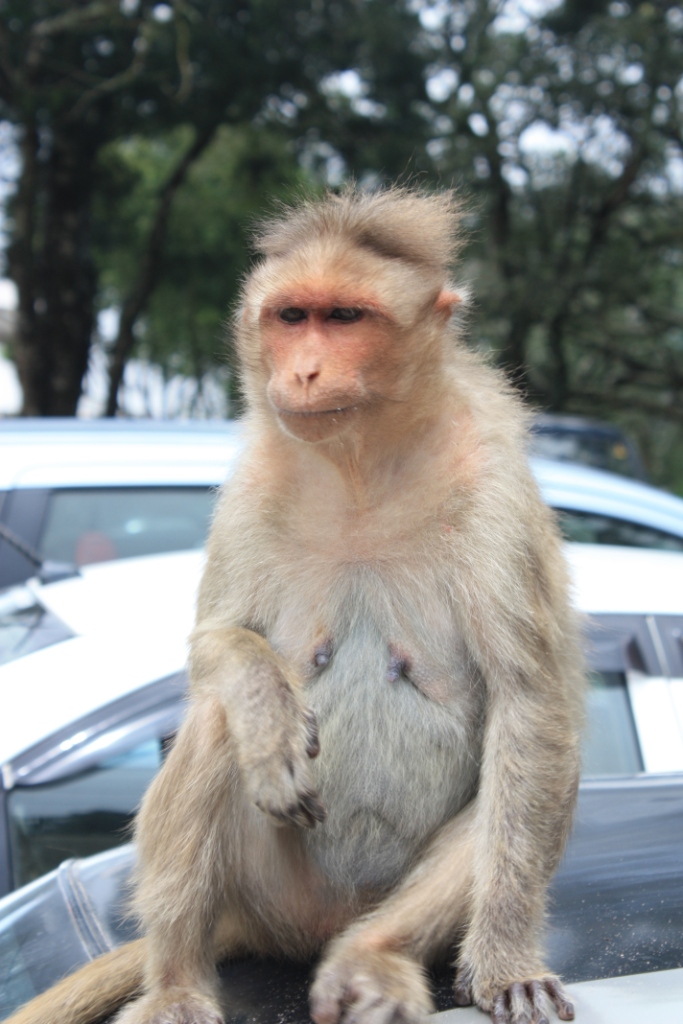
They’ll sit on your car like they just don’t care

And screw the haters who stop and stare

Have you the courage to leave your mark

on the windshield of one who double parks

IMG_0734

It amuses us that they sling their poo

So we banish them to the city zoo

But what of our words so vitriolic

We’re evolved to sling poo symbolic

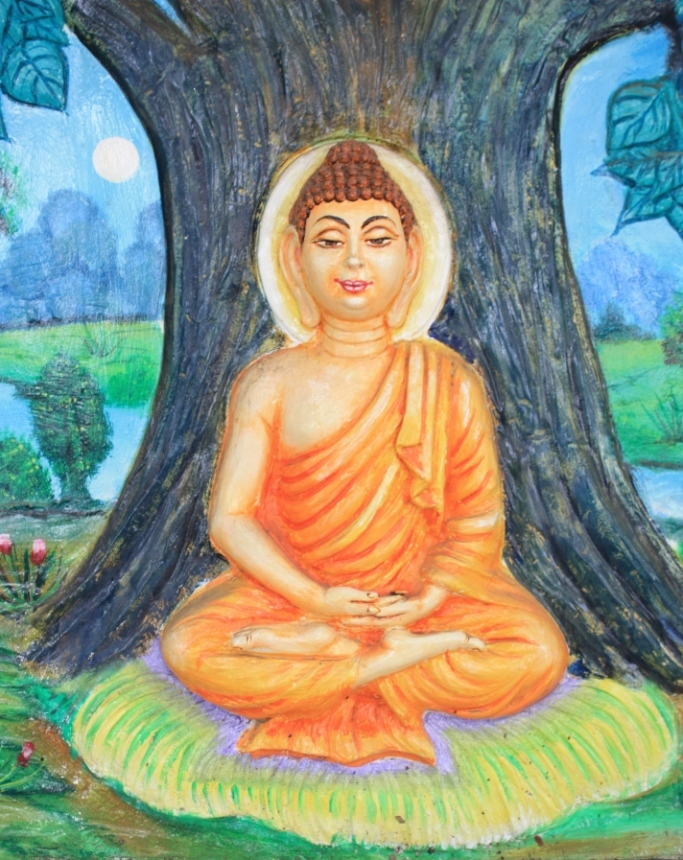
DAILY PHOTO: Buddha Under the Bodhi Tree

Taken September 24, 2013 at the Mahabodhi Society Temple in Bangalore

Taken September 24, 2013 at the Maha- Bodhi Society Temple in Bangalore

There are a whole series of these brightly colored bas-reliefs in recesses in the exterior wall at the Mahabodhi Loka Shanti Buddha Vihara, which is a temple run by the Maha-Bodhi Society. This society was founded by a Sri Lankan monk with the intention of bringing Buddhism back to India. While Buddhism was founded in India, there had been a long period of decline of individuals self-identifying as Buddhists.

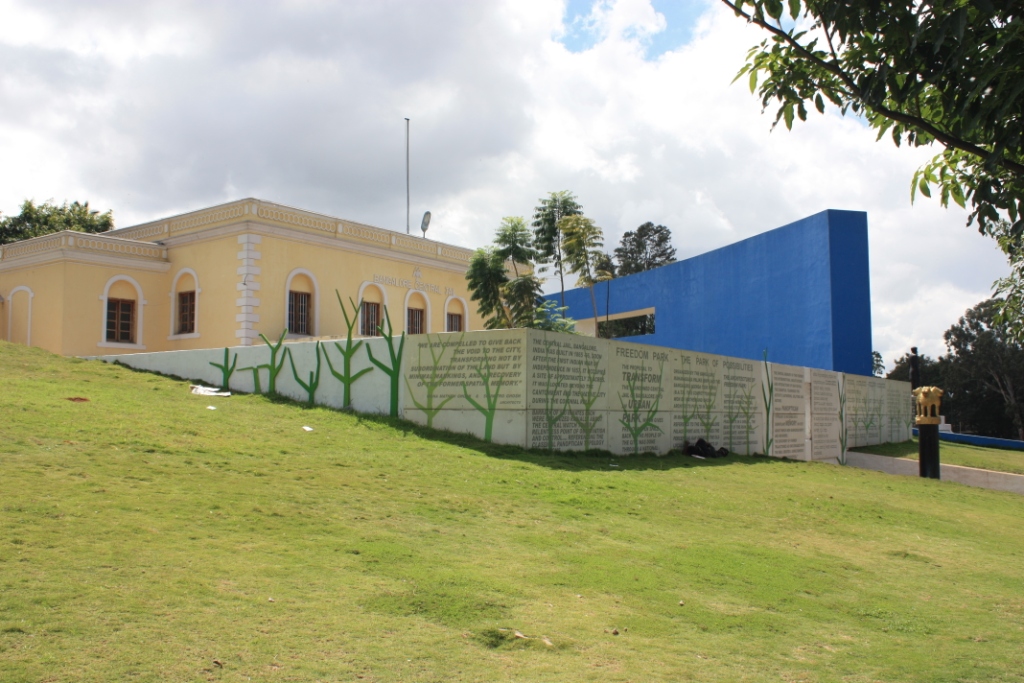
DAILY PHOTO: Bangalore Central Jail

Taken September 24, 2013

Taken September 24, 2013

While parks like Cubbon and Lal Bagh Gardens are more famous, Freedom Park may be the most pristine city block in all of Bangalore. The park sits on what was the grounds of the Bangalore Central Jail. Built in 1866 in the wake of the First Indian War of Independence, the Central Jail was constructed to hold rebels and revolutionaries opposing British rule. The first war didn’t succeed in achieving independence, that didn’t come until 1947. The first war did succeed in changing the ruling power from the British East India Company to the British Empire proper, a distinction without a difference in the eyes of Indians I suspect.

Picture Your Unhappiness in its Underwear

I was writing some six-words on Smith Magazine the other day. I do this now and again as an exercise to get the creative juices flowing. There are a series of themes, and I try to write in as many of them as I can in less than 20 minutes, writing in a free form, stream of consciousness style.

When I got to the category HAPPINESS the first six-word to jump to mind was: “Picture your unhappiness in its underwear.” This one drew a nice response, which began me thinking about whether this advice might have actual merit–as opposed to being a non-nonsensical statement that might at best function as a Zen koan.

As I thought about it, three legs of the stool came to mind.

1.) Have a sense of humor. Anger and sadness have a hard time taking hold if one can manage a good laugh. I’ve found that being able to dance personal tragedy into comedy has been a great coping mechanism. One does have to be conscientious about not becoming a snarky person. One risks beginning to see the world through a crap-colored lens just as a means to comic fodder (or from a martyrdom complex.)

Perhaps even if one can’t formulate humor, one can still use laughter. There’s a system called laughter yoga that is based on the belief that you can create the same range of physiological responses from “forced” laughter as one does from spontaneous laughter. It’s a sort of chuckle pranayama (breathing exercises.)  While I don’t know much about the system, I can believe that it has merit based on what I’ve read about human emotions.

2.) Lay the source of your unhappiness bare. This sounds simple enough. One must know what is making one unhappy in order to turn that frown up-side-down.

That being said, human beings have an astounding ability to attribute all negative happenings in their lives to external factors. Like politicians, we like to take responsibility for what is going right (regardless of whether we are responsible or not), and we love to place the blame for failure firmly elsewhere (even it it’s mostly our fault.) This may be an evolutionarily-hardwired coping mechanism, but it can keep one in the doldrums.  If one continually says, “He makes me so mad” or even, “His actions make me so mad,” then you’re forfeiting control over your emotional state. Jerks and bitches might be an intermediary cause of unhappiness, but ultimately one’s own perceptions and responses lead to the negative emotional state.

This is where the hard work of mind training comes into play. Instead of being swamped by negative thoughts, one has to recognize them early, find the root cause, and recognize that our desire to for things to be a certain way is ultimately what makes us unhappy. We may want people to think we are smart or beautiful, and intimations to the contrary (whether intended or not) make us fume.

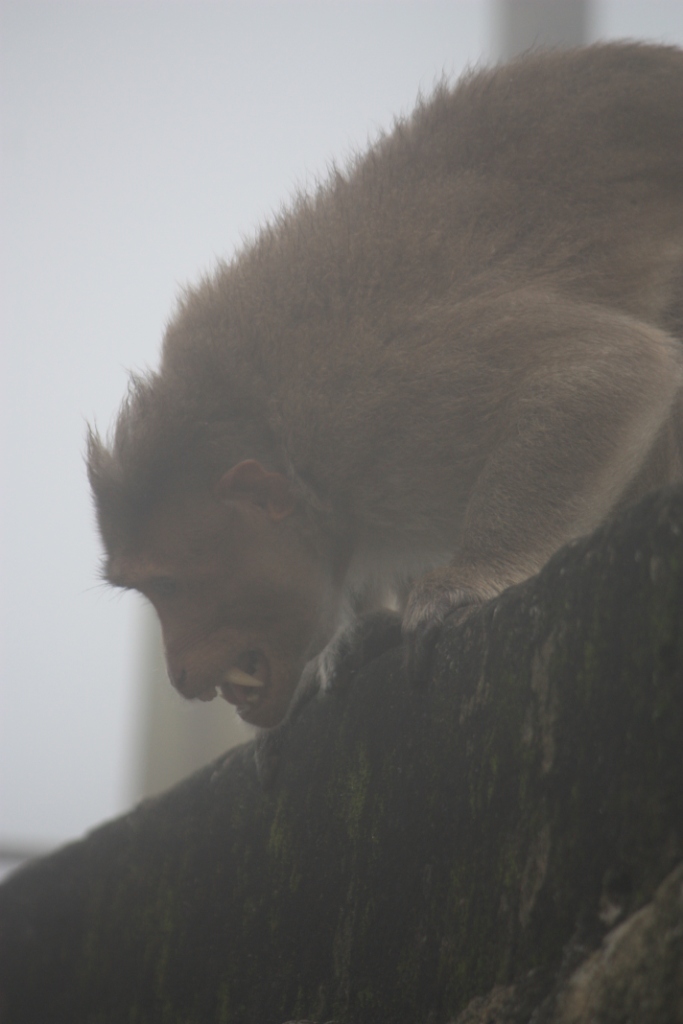
Don't be an angry monkey!

Don’t be an angry monkey!

One of the few things I remember explicitly learning in high school was about what our psychology teacher called a “gestalt of expectations.” Like most ideas one remembers though only taught once, I remember it because it had a memorable story attached to it. The story goes like this: “A man is driving through the desert in the American southwest. Now, out in the southwest, gas stations can be few and far between. So the man runs out of gas, and realizes that the station he passed 20 miles back is his safest bet because–contrary to what he had thought– the next one going forward might be another 50 miles.  So he starts walking. It’s hot. He’s hungry. He’s thirsty, and only has some lukewarm water that’s getting hotter by the minute. The backs of his hands and his face are getting sunburned. He starts thinking about how the little two-pump gas station is going to gouge him. He realizes he’s desperate, and so he figures the attendant is probably going to sell him gas at $6 a gallon, a bottle of cold water for $8, and don’t forget the jerrycan at $20.  These thoughts and the heat keep making him madder and madder. Finally, he gets to the station, and the attendant comes out and say, ‘Oh my, Mister, you must have had a horrible time.’ And so the man on the verge of heat-stroke punches out the attendant, a kid who only wanted to help him out.” Once one starts attributing one’s unhappiness to external sources, one can easily mis-attribute unhappiness because one thinks one knows what is in the minds of others, when really one doesn’t.

3.) Unhappiness, like standing around in one’s underwear, is–at most–a temporary state. As Taoists have been known to suggest, one’s darkest hour is a time to rejoice, for surely it will  get better from there. The only way one can remain in a perpetually unhappy state is to carry it with one long past its time. Just like the only way that can always be rained on is if one carries around a complicated mechanism with a showerhead and tank and keeps refilling that tank so that the shower never runs out. Otherwise, the dry season will come eventually.