DAILY PHOTO: St. John in the Wilderness

Taken June 23, 2015 in McLeodganj

Taken June 23, 2015 in McLeodganj

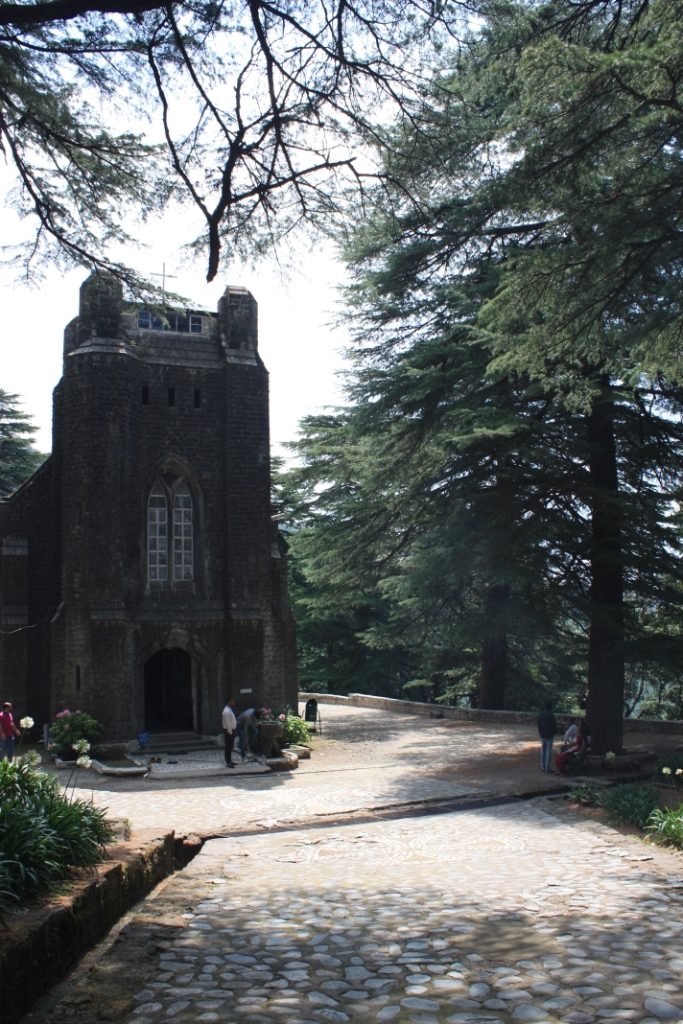
This Anglican church dates to 1852 and was built for British troops stationed here back when Dharamsala was a British garrison town. (FYI: Dharamsala retains a large military base to this day and thus is still a military town in a sense, though I doubt there is a significant number of Anglicans among the officers or enlisted troops these days.)

This hand-cut granite structure was said to be one of the few that survived a major earthquake in 1905.  It features a bell that has survived damage and attempted thievery.

DAILY PHOTO: Snow Pockets

Taken on June 10, 2015 in Great Himalayan National Park

Taken on June 10, 2015 in Great Himalayan National Park

IMG_1339 IMG_1350

Most of the snow that we saw during our trek last month was well above us, but we did have one day in which we had to cross through pockets of snow many times as we rounded a mountain at about 4,000 meters.

IMG_1260

The Jujutsu Murders, Plus Some Brain Science

Jujutsu

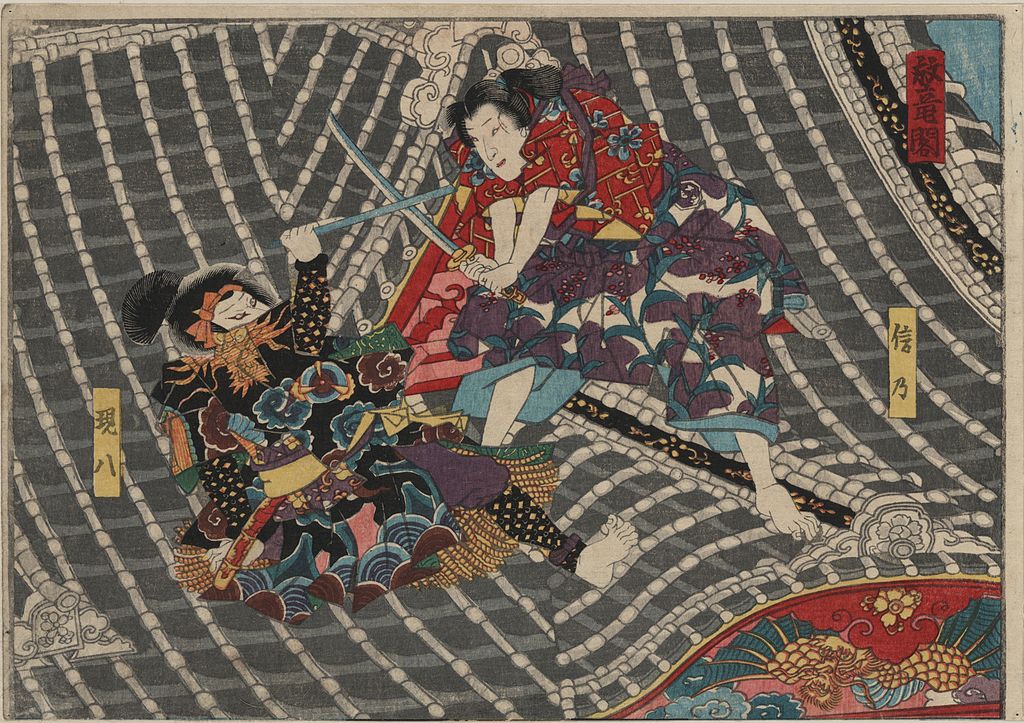
Imagine you’re a detective in Edo Period Japan (1603-1868), and you’re told to investigate a case in which three highly-trained practitioners of one of the most well-respected jujutsu schools have been stabbed to death. Each of the three bodies has only one mark on it–the lethal stab wound. The wound is on the right side of the abdomen in all three cases. There are no signs of a prolonged struggle, despite the fact that each of the three had many years of training and none of the men was an easy victim. The stabbings happened independently, and there were no witnesses to any of the killings. So, who or what killed these three experts in jujutsu?


Nobody knows who killed them, but a rigid approach to training contributed to what killed them. As you may have guessed, the killer took advantage of knowledge of the school’s techniques, i.e. their “go-to” defense / counter-attack for a given attack. It’s believed that the attacker held his scabbard overhead in his right hand, and his weapon point forward in a subdued manner in his left. All three of the defenders must have instinctively responded to the feigned downward attack as the killer stabbed upward from below with the unseen blade.


It’s a true story. I read this account first in Jeffrey Mann’s When Buddhists Attack. That book offers insight into the question of what drew some of the world’s deadliest warriors (specifically, Japan’s samurai) to one of the world’s most pacifistic religions (i.e. Buddhism–specifically Zen Buddhism.)  Mann cites Trevor Leggett’s Zen and the Ways as the source of the story, and Leggett’s account is slightly more detailed.


This story intrigues because it turns the usual cautionary tale on its head. Normally, the moral of the story would be: “drill, drill, drill…”


Allow me to drop some brain science. First, there’s no time for the conscious mind to react to a surprise attack. The conscious mind may later believe it was instrumental, but that’s because it put together what happened after the fact and was ignorant of the subconscious actors involved. (If you’re interested in the science of the conscious mind’s stealing credit ex post facto [like a thieving co-worker], I refer you to David Eagleman’s Incognito.)  Second, our evolutionary hardwired response to surprise is extremely swift, but lacks the sophistication to deal with something as challenging as a premeditated attack by a scheming human. Our “fight or flight” mechanism (more properly, the “freeze, flight, fight, or fright” mechanism) can be outsmarted because it was designed to help us survive encounters with predatory animals who were themselves operating at an instinctual level. (If you’re interested in the science of how our fearful reactions sometimes lead us astray when we have to deal with more complex modern-day threats, I refer you to Jeff Wise’s Extreme Fear. Incidentally, if you’re like, “Dude, I don’t have time to read all these books about science and the martial arts, I just need one book on science as it pertains to martial arts,” I just so happen to be writing said book… but you’ll have to wait for it.)


So where do the two points of the preceding paragraph leave one?  They leave one with the traditional advice to train responses to a range of attacks into one’s body through intense repetition. Drill defenses and attacks over and over again until the action is habitual. This is what most martial artists spend most of their training effort doing. A martial art gives one a set of pre-established attacks or defenses, and it facilitates drilling them into one’s nervous system.


Of course, the astute reader will point out that the three jujutsu practitioners who were killed had done just what was suggested in the preceding paragraph, and not only didn’t it help them but–arguably–it got them killed. I should first point out that the story of the three murder victims shouldn’t be taken as a warning against drilling the fundamentals. As far as their training went, it served them well.  However, there’s a benefit to going beyond the kata approach to martial arts. One would like to be able to achieve a state of mind that once would have been called Zen mind, but–in keeping with our theme of modern science–we’ll call transient hypo-frontality, or just “the flow.” This state of mind is associated with heightened creativity at the speed of instinct. (If you’re interested in the science of how extreme athletes have used the flow to make great breakthroughs in their sports, I’d highly recommend Steven Kotler’s The Rise of Superman.) Practicing kata won’t help you in this domain, but I believe randori (free-form or sparring practice) can–if the approach is right.

DAILY PHOTO: Drying Oats

Taken on June 15, 2015 in Himachal Pradesh

Taken on June 15, 2015 in Himachal Pradesh

In June, the oat harvest was taking up nearly every square foot of covered space.

DAILY PHOTO: Lotus in the Mountains

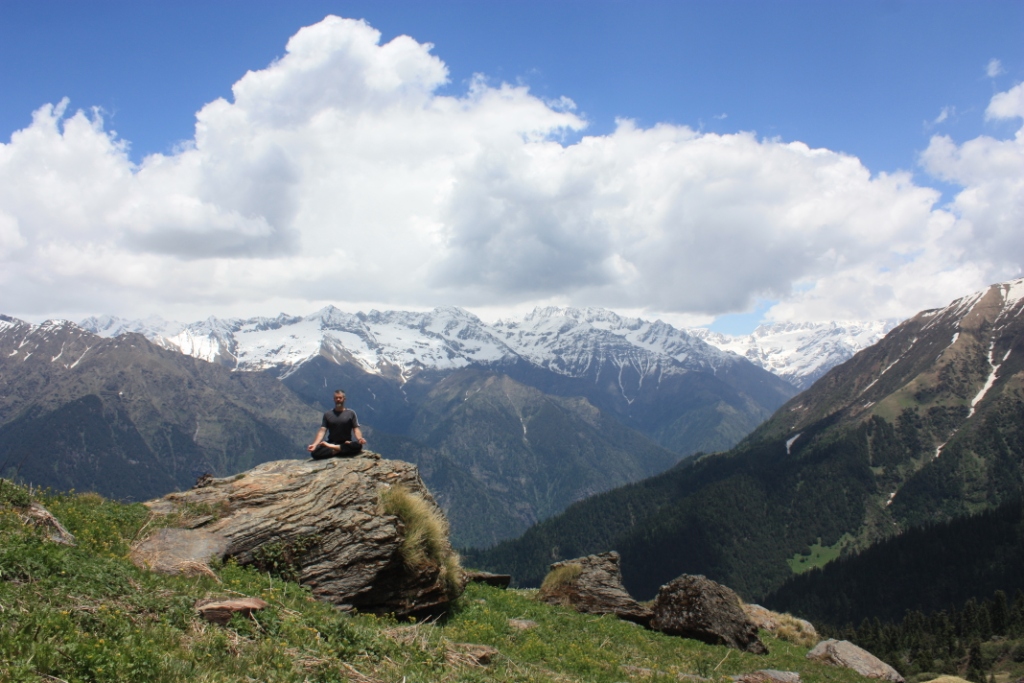
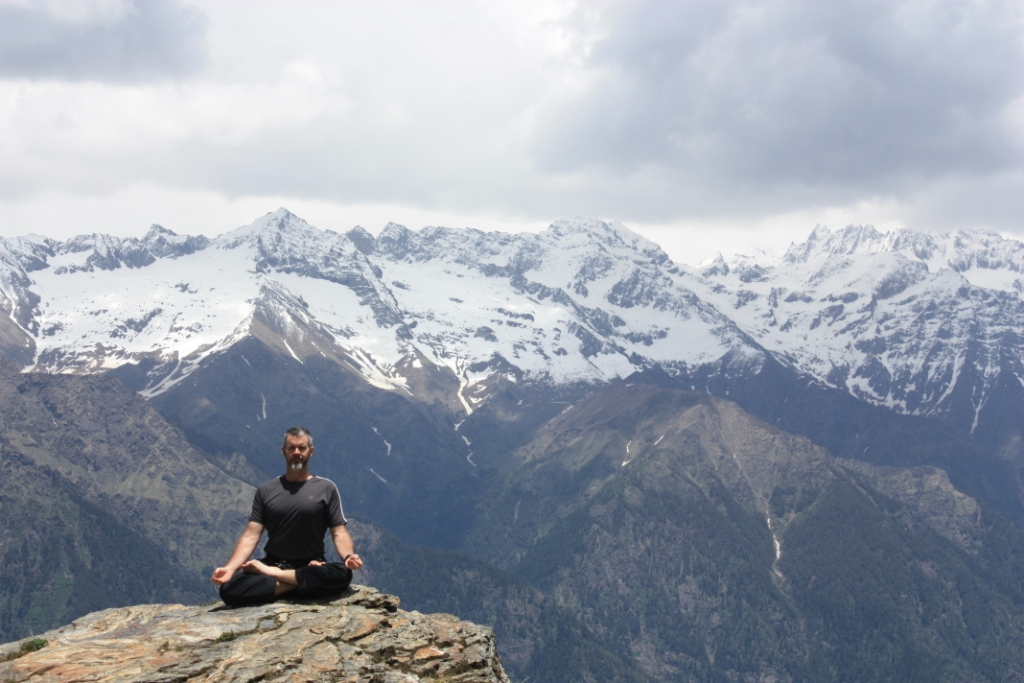
Taken on June 11, 2015. Taken by my wife as I'm in the photo.

Taken on June 11, 2015. Taken by my wife as I’m in the photo.

IMG_1882

BOOK REVIEW: After Dark by Haruki Murakami

After DarkAfter Dark by Haruki Murakami

My rating: 5 of 5 stars

Amazon page

[Note to readers unfamiliar with Tokyo: There are a couple of facts about the city that one must understand for this book to make sense. First, while Tokyo is a city that’s always moving, the trains don’t run between roughly midnight and five am (your results may vary by station.) Second, because many people live far out in the suburbs and the cost of living is high, taxis aren’t an option for much of the population. These two facts add up to a slew of business for those industries that cater to the population caught out “after dark” (i.e. after the trains stop running–not after sundown) including: all-night diners, love hotels, c-stores, bars, pachinko parlors, bowling alleys, and manga bookstores.]

This novel takes place in Tokyo during the wee hours of a single night. Murakami satisfies a form of voyeuristic impulse by giving us a peek into the lives of a few of the people out and about while the masses are home slumbering, or—at least–whiling away insomnia-ridden hours in the privacy of their own homes.

The protagonist is a young college student named Mari. As she sits in a 24-hour Denny’s reading, Mari immediately triggers curiosity. She isn’t typical of the disheveled, boozy, or garish crowd out “after dark.” In a post-witching hour world of drunken salaryman, micro-miniskirted hostesses, tattooed yakuza gangsters, and nightlife-savvy travelers, the bookish young woman stands out. We soon learn that Mari didn’t miss the last train on accident, but rather is staying out all night on purpose to be out of the house. This further raises the level of intrigue.

In the Denny’s, Mari is approached by a gregarious young man named Takahashi who is grabbing a quick snack before going back to his nighttime hobby of jamming in a jazz band. Takahashi introduces himself as someone who already knows Mari from a party. He’s a couple years older than the young woman, and was a classmate of Mari’s sister, Eri. The party at which he met Mari was mostly attended by kids the age of Eri and himself, and Mari was just along for the ride with her more popular sister.

Eri is another major character in the book, although her mysterious presence is mostly in a sleeping state. Eri, unlike the plain Mari, is drop dead gorgeous, and has been doing modeling jobs since she was a child. Takahashi is but one of the young men infatuated with Eri—though we get the feeling that Takahashi realizes that Eri isn’t in his league. He’s a pragmatist—if begrudgingly so. The rest of the book hinges on this chance encounter between Mari and Takahashi.

Suspicions that the grim hours of circadian disruption are the domain of crime and vice are confirmed when a bulky former female wrestler turned love hotel manager, named Kaoru, rushes into the Denny’s seeking Mari. Kaoru is an acquaintance of Takahashi (who has since left the diner to play jazz) and she is seeking Mari because Takahashi told her that Mari spoke fluent Chinese. A Chinese prostitute was beaten up at the love hotel, the Alphaville, and Kaoru needs to talk to the foreign woman to get to the bottom of the matter. Kaoru’s investigation is in part driven by the fact that the Chinese hooker’s John dashed on the hotel bill, but the former wrestler also has a soft spot for the beaten girl and wants to do the right thing by her—though Kaoru knows the police can’t be involved because the Chinese working girl will, at a minimum, be deported by the authorities, or, worse, be punished by the Chinese mafia who pimp her.

As with a few of Murakami’s other books, this book might be labeled “slipstream.” Slipstream is a genre that blends mainstream literary fiction with supernatural elements / speculative fiction. However, the scenes that aren’t realist generally involve the sleeping Eri in her room by herself. So, it may be that Murakami is just conveying the hazy and illusory world of sleep and life at the edge of sleep. I’ll leave it to the reader to make their own interpretations of this. There are also coincidences that could strain credulity, but this may just be an attempt to convey that the world of Tokyo “after dark” is a small pond.

I’d highly recommend this novel. Murakami gives us likable characters and one can see why said characters are draw to each other despite their very different existences. Then he puts them into situations that demand resolution. It’s a short, readable, and interesting novel.

View all my reviews

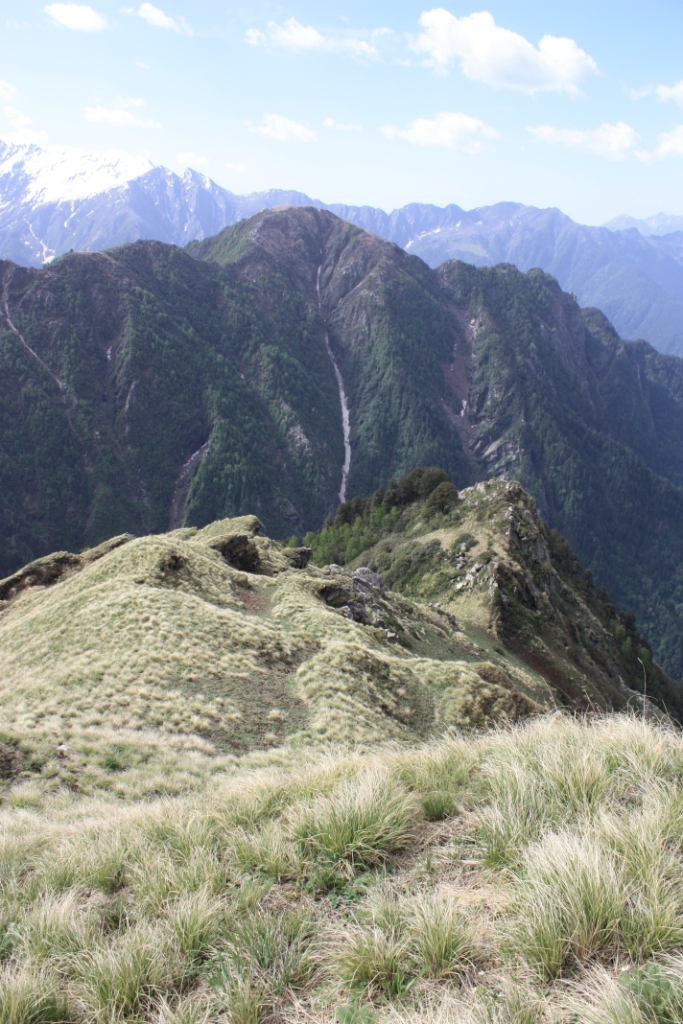
DAILY PHOTO: Grassy Ridgeline in the Himalayas

Taken on June 10, 2015 in Great Himalayan National Park (GHNP)

Taken on June 10, 2015 in Great Himalayan National Park (GHNP)

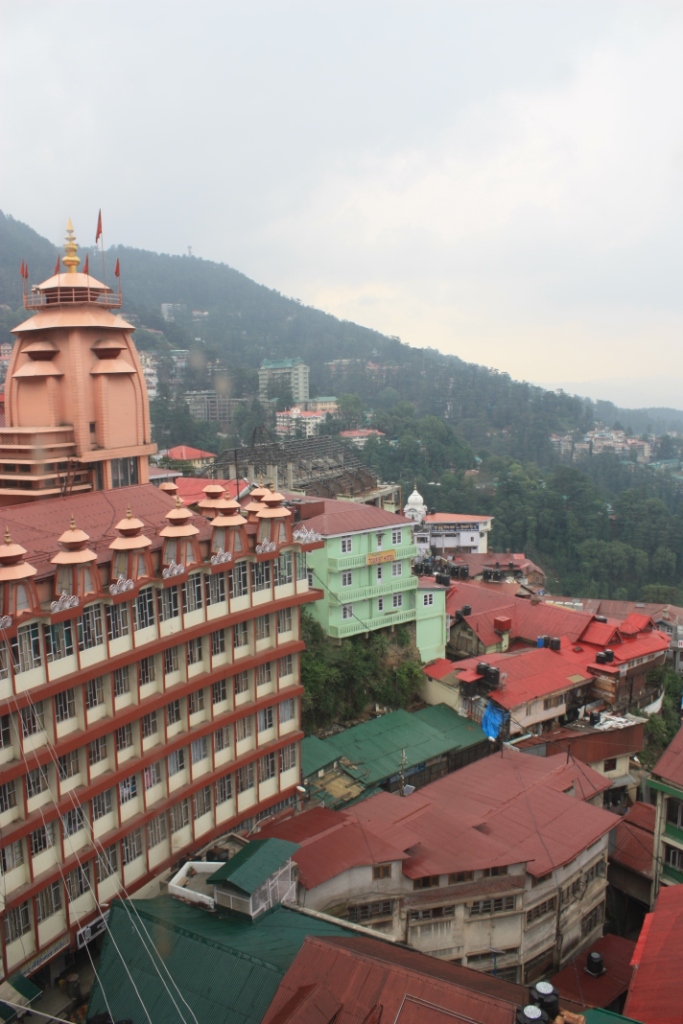
DAILY PHOTO: Shimla Rooftop View Featuring Ram Mandir

Taken on June 24, 2015 in Shimla

Taken on June 24, 2015 in Shimla

Ram Mandir is the Hindu temple to the left of the frame.

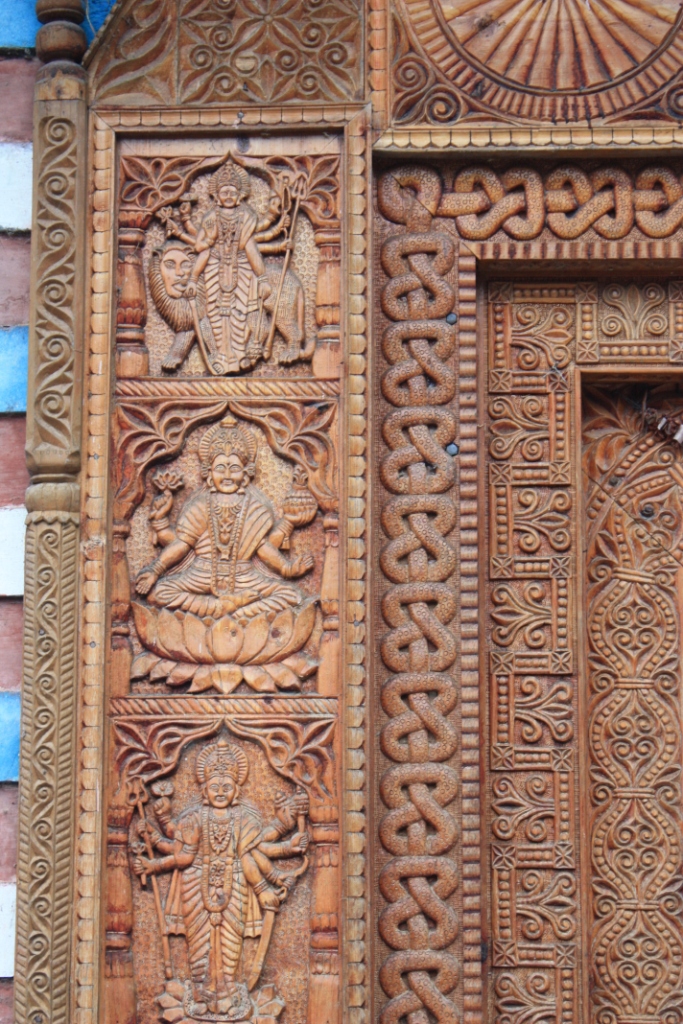
DAILY PHOTO: Himachal Pradesh Village Shrine

Taken June 14, 2015 in the GHNP Ecozone

Taken June 14, 2015 in the GHNP Ecozone

IMG_2232 IMG_2234

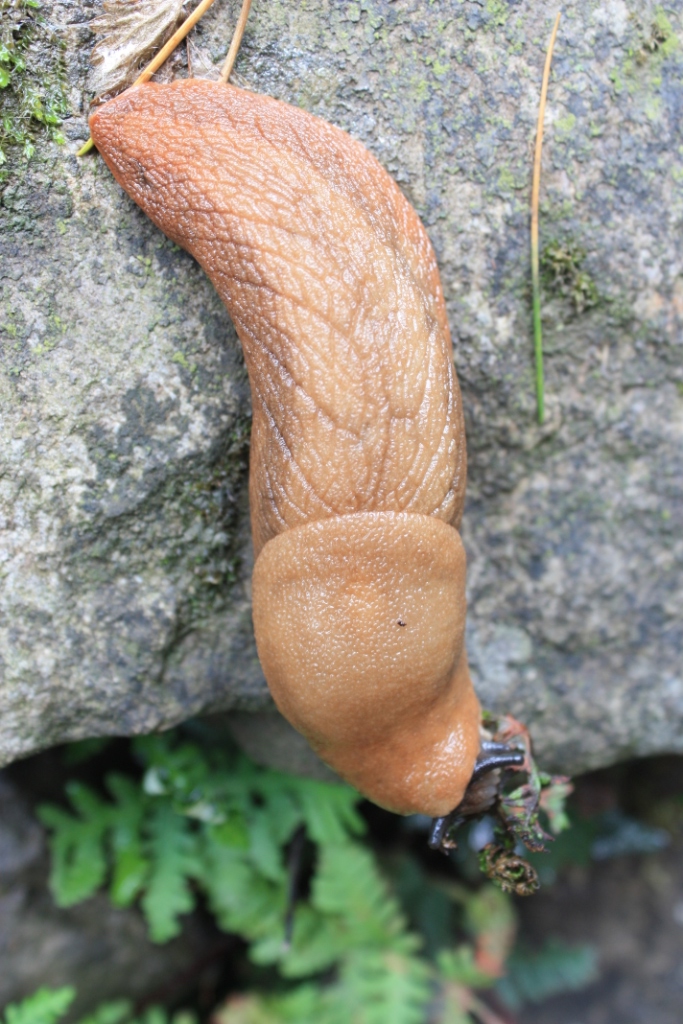
DAILY PHOTO: Garden Slugs of McLeodganj

Taken in McLeodganj on June 22, 2015

Taken in McLeodganj on June 22, 2015

IMG_2602

These critters were all over the roads in the McLeodganj / Dharamsala area (Kangra Valley in Himachal Pradesh.)