Oh so many things. My epistemological stance is that one should be ready to drop any belief like a hot rock in the face of better information or better means to understanding.
One of the most fundamental changes is that I used to take for granted that there was a god. Now I’m agnostic about whether there is one, and am virtually certain that – in the unlikely event there is a god – it (she? they? he?) bears no resemblance to any of the tribally derived deities of the various world religions.
I used to think introversion was something that could be, and should be, overcome. Now, I believe the healthy approach is in accepting it and managing one’s life so that it’s not a problem. Truth be told, in my youth, I had a lot of grandiose ideas about what was possible with regards to the mind, ideas which I have jettisoned in favor of one’s that better match the empirical evidence.
What personality trait in people raises a red flag with you?
When a “grown man” makes life / wellbeing decisions based on what others will think of him, one of the words in quotation marks is in question. So, I guess… conformity.
Amazon.in Page
This book offers Rick Rubin’s philosophy of creativity and art. For those unfamiliar with Rubin, he’s a ZZ Top-looking music producer who contributed to a lot of successful albums, ranging from hip hop to the rock-n-roll of Tom Petty. He was a major player behind the Run DMC cover of Aerosmith’s “Walk This Way” that blew peoples’ minds in the 80’s. Interestingly, Rubin is neither a musician nor a technologist, and I heard him say in an interview that his great value-added was having an extremely high level of confidence in knowing what he liked. Rubin has a persona that is as much guru as music producer, and this book reflects this broad insight and wisdom.
In the book, Rubin lays out his view of the creative process and the mistakes people make with it, but along the way he offers insight into such interesting questions as why some artists only seem to have one major work in them. While Rubin’s experience is mostly with music (though he also worked with comedian Andrew Dice Clay on Clay’s albums,) his book is broadly targeted towards all artists, and he seems to use as many examples from literature and graphic arts as he does from music.
Rubin does sound a bit woo woo here and there, but I found that many statements — e.g. those that spoke of the universe’s role in artistry — could be interpreted in a way that wasn’t necessarily superstitious. While woo woo sounding statements often get on my nerves, I felt Rubin’s use was poetic and spoke to a broader truth.
I’d highly recommend this book for artists and creative types, regardless of field.
I have a daily practice of FEELING gratitude for this awesome life and all that contributes to said awesomeness. I don’t place much emphasis on EXPRESSING emotion beyond the usual social protocols and niceties. Quite frankly, I think expression of gratitude is overrated. It binds the process up with ego and desire for reciprocity, and the next thing you know you’ve lost all touch with the experience of gratitude and the powerful influence it has on fostering a positive outlook.
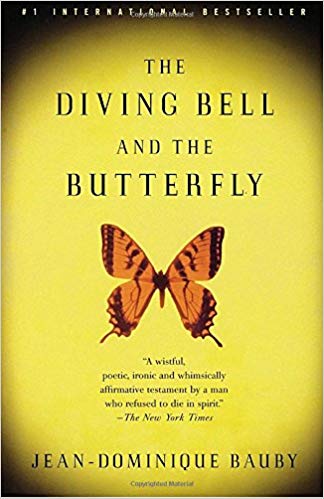
Furthermore, when one emphasizes expression, one tends to develop a blind-spot, thinking that the only entities worthy of consideration of gratefulness are other intelligent beings (or constructs attributed intelligence — e.g. gods.) I begin (though do not end) my practice of gratitude with my body (/ mind) and its systems. I’ve been told many people have trouble fostering gratitude when they focus on their body, but I don’t think one really understands gratitude if one can’t feel deep gratitude for one’s body and mind (literal warts and all.) For the body is the means by which one experiences everything, and one can only be unconditionally grateful for it. [For those who have trouble being grateful for body and mind, I’d recommend the book, “The Diving Bell and the Butterfly” by Jean-Dominique Bauby. It’s a short read because it was dictated using eye-blinks by a man who developed “Locked-in Syndrome,” a condition that left its author only with conscious control of an eyelid.]
How is being hit by a hard word
different from being hit by
a brick or a bat?
To burn, the spark of a hard word
must find some kindling inside
the recipient, elsewise it can't ignite.
If someone points at me and screams:
"YOU ARE SUBPAR AT ALGEBRA!"
I remain unwounded.
[I'd like to say that it doesn't burn
simply because it's true,
but the truth or falsity of hard words
is -- perhaps sadly -- not a major
ignition factor.
The kindling is a thing that sits inside one --
something that makes one care,
probably a complex mélange of factors.
The truth of hard words?
That is an outside factor.]
Even if I were to discover that,
to the person who issued the insult,
there is no greater disparagement
than to cast aspersions upon a
person's middle school-level
mathematics competency,
I would remain unwounded.
If I were to feel any sort of way
about uncovering that knowledge,
it would be to feel sort of bad
for the person who issued the taunt.
Now, how to burnproof one's soul,
that is the question?
A Psych teacher told us a story of what he called “a gestalt of expectations.” A man from a city in the East is driving out West, and he passes a gas station – despite being low on fuel. (He’s used to gas stations being everywhere.) Anyhow, he runs out of fuel. He can’t see anything around except desolate desert bisected by a line of asphalt. He decides to walk back to the gas station he passed ten miles back. There is no one traveling on this remote stretch of desert road. As he’s walking in the intense heat, it comes to his mind that the employee at the service station is really going to gouge him on the price of gas and a jerry can. As he walks and walks, skin prickling with the heat, he keeps thinking about how he’s going to get screwed by the gas station attendant and also how he’ll be chided and ridiculed for running out of gas in the middle of the desert. He imagines it in great detail. Finally, bedraggled and with heaving breaths, he arrives at the station. The gas station attendant rushes out to help this poor man, and the man punches the attendant square in the nose (for all the offenses taking place solely in the man’s mind.)
In a broader formulation, I think this is the most important lesson any human can learn. Our personal perception of what we experience is not equal to what it is that we experience (the exterior world.) This is why some people dealt a crappy hand can turn it into a wonderful life, and also why some people who seem to have it all commit suicide in the prime of life.
I could be angered or dismayed that the single most important lesson I learned in secondary school was via off-curriculum ramblings during an elective class, but I choose not to. Instead, I’ve been trying all my life to make that bit of knowledge into wisdom.