Vanishing [Haiku]

Photograph of a streambed and cloudy mountains take on the Annapurna Sactuary Trek in Nepal.
moving up valley,
fog thickens until there
is only the step.

Mountain Blue [Haiku]

Photograph of blue skies over a small roadside stop in the Andes between Cuzco and Puno.
mountain skies:
fade to a blue so deep
it chills the bones.

This Is Not My World [Free Verse]

Photograph taken on Siquijor Island of the Philippines at sunset as low clouds reflected on the Bohol Sea.
Every once in a while,
you see a sight
that makes you say,

"This cannot be
the world I know!"

Monster Toes [Free Verse]

Photograph of a thorny tree taken in the Gardens by the Bay in Singapore.
tree trunk studded by thorns
that look like
mean monster toenails
with gnarly green cuticles,

even tree-huggers stay at
arm’s length.

Wake [Haiku]

Photograph of the Danube River as it flows through Bratislava, Slovakia.
boat chugs upriver,
slipping from sight, but for
its wake's arrow.

BOOK: “Angel at the Earth’s Extremes” by Chūya Nakahara [trans. & ed. by Jeffrey Angles]

Angel at the Earth's Extreme: Collected PoemsAngel at the Earth’s Extreme: Collected Poems by Nakahara Chuya
My rating: 5 of 5 stars

Publisher Site — Penguin Classics

Release date: August 4, 2026

Chūya Nakahara was a Japanese poet who lived in the early twentieth century and who wrote in both classic Japanese forms (notably Tanka) as well a modern Western-influenced styles, particularly from the French avant-garde movement — e.g. Dadaism. Though he lived only to the age of thirty, Chūya left a substantial body of poems. He only published one collection during his lifetime, and had edited a second that came out posthumously, but the volume under review includes many previously uncollected poems as well.)

While only the Tanka poems early in the book are of classical Japanese form, Japanese literary influence shows up throughout, such as via seasonality. I took particular note of a focus on Autumn, followed [not chronologically, but in terms of volume,] by Winter, which may give insight into the tone of the volume. Of course, I didn’t count season words, so it might be a reflection of what resonated in my reading. But there is also a certain haiku-esque feel that appears in the author’s descriptions and juxtapositionings.

I enjoyed the language of these poems, particularly in description of sensory experience, which I presume owes both to Chūya and to the translator, Jeffrey Angles. Some examples include: “moonlight makes no sound // as it pools on the grass…”; “Rustling like rice husks, // Rough and dry as a loofa“; “dark against the night sky, // fig leaves stir in the wind // through the gaps, sky appears // –a beautiful woman // missing her front tooth, // standing gracefully // under the nighttime sky.

I’d highly recommend this book for poetry readers.

View all my reviews

The Quiet Hour [Senryū]

Photograph of Patong Beach on Phuket Island in the early morning hours after sunrise.
deserted beach:
during the brief window
when partier's sleep.

Perspective [Lyric Poem]

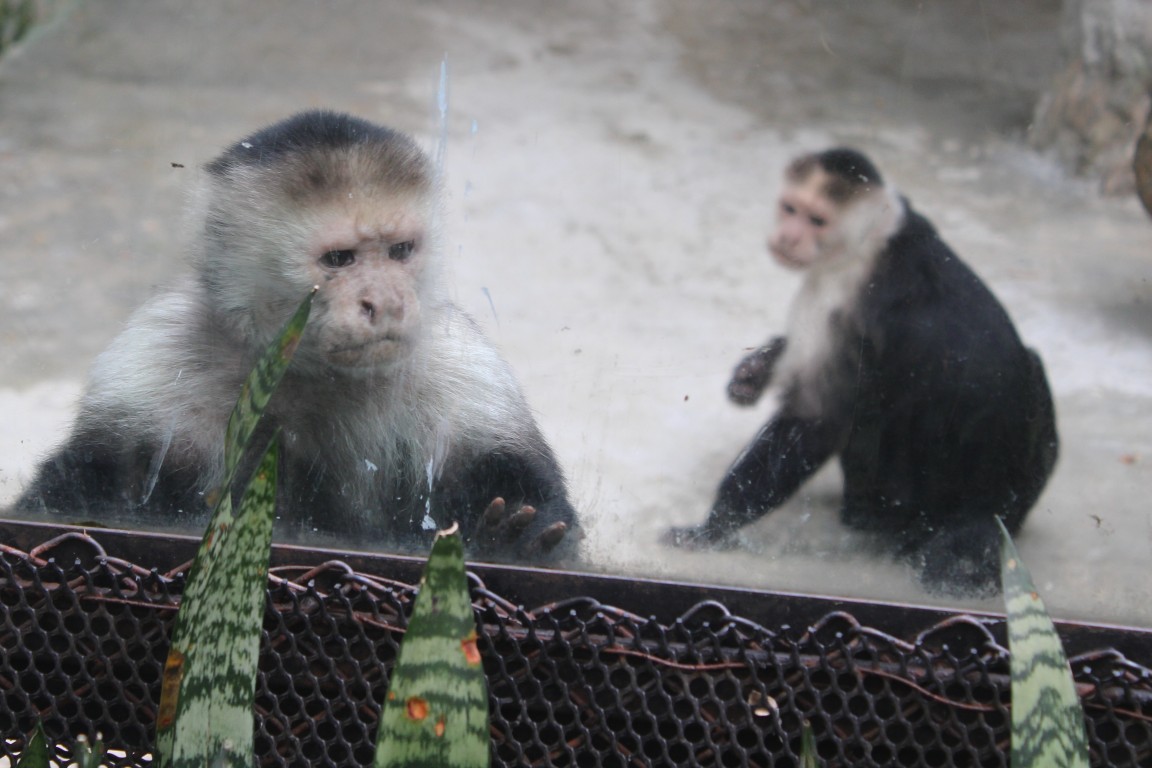
Photograph of a monkey looking sideways through the bars at a temple in Lopburi, Thailand.
Perhaps, you cannot change your jail,
And you can't choose the lumps and scars --
No matter how you scream or wail --
But you pick your view through the bars.

BOOK: “Falling Up” by Shel Silverstein

Falling UpFalling Up by Shel Silverstein
My rating: 5 of 5 stars

Publisher – HarperCollins Children’s Books

This is the third and final (not inclusive of posthumous greatest hits collections) poetry collection of Shel Silverstein. The collection is considered children’s poetry and has the usual features of such (rhyming verse and doggerel, moral lessons, and occasional grossness.) The poems are generally written in a suspensive form with a twist, i.e. a punchline but aimed more at silly than humorous.

The collection bounces between whimsical and absurd and is highly entertaining to read.

The book has pencil drawings of matching tone for most of the poems.

If you like silliness and rhyming verse, this is fun read.

View all my reviews

Slow Burn [Senryū]

Photograph of an overgrown scale model of Dutch Square. The model is located on Bukit Cina (Chinese Hill.)
bedraggled buildings:
nature digests what it eats
ever so slowly.