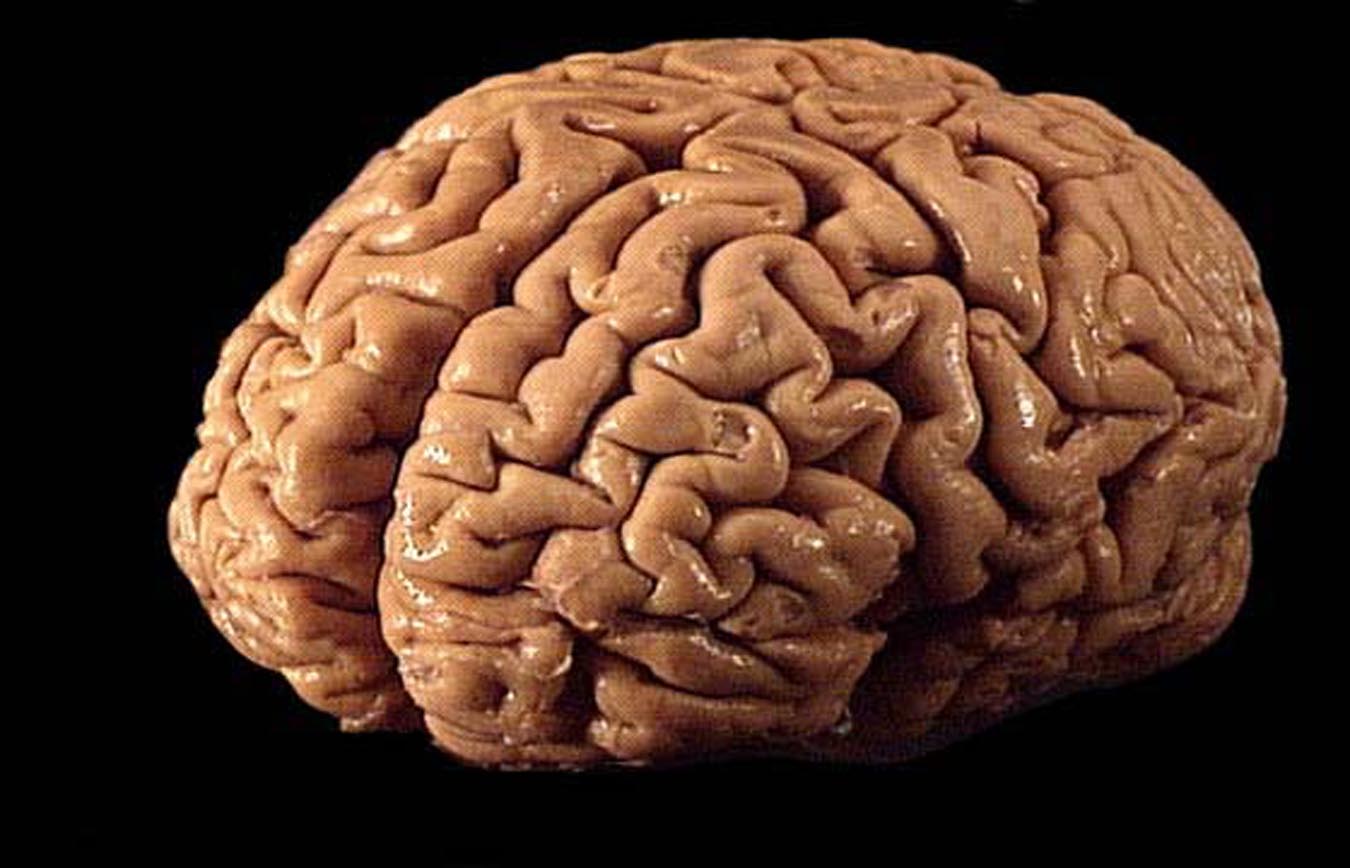
Dreaming is one of the most interesting and ill-understood activities of human existence. Many of us don’t remember most of our dreams—to the extent that a number of people don’t think they even have dreams (while not completely conclusive, the scientific evidence suggests that all of us dream every night—except people who live on RedBull and 2 hours / night until they tragically die young.) However, when we do remember a dream, it’s often a vivid and profound experience. Some people dream lucidly (are aware they are inside a dream as it occurs), and a few people have lucid dreams on a regular basis. This has led people to draw all sorts of conclusions about dreams existing in a realm beyond the physical, and what not.
While there remains a lot that we still don’t know about dreams, a great deal of science has been advanced in recent decades—enough to take dreamland out of the realm of spiritual mumbo-jumbo and even away from the weak (and largely wrong) science of Freud, and into the realm of legitimate science. This book summarizes much of that science in a concise package. The “A Very Short Introduction” (VSI) series from Oxford University Press offers this type of guide for many subjects. They’re usually about 100 pages long, and give a quick and gritty rundown of the subject at hand.
This book is organized into eleven chapters covering: What is dreaming? Why the Freudian approach (and earlier dream interpretation schemes) failed? How the brain is activated during sleep? What is happening at the level of neurochemistry? Why we dream? What can go wrong with dreams? (i.e. sleepwalking, night-terrors, etc.), How dreaming relates to delirium and mental illness? (i.e. it is, after all, a state of hallucination in which we take often bizarre imagery for granted.) There’s a discussion of the new psychology of dreaming which is based in neuroscience and not on an Austrian with a pipe suggesting that it all comes down to penises and vaginas. (Hobson isn’t anti-Freud, though he does want to make clear that the psychology pioneer was quite wrong on this subject.) There’s a discussion of how learning and memory can (and can’t) be advanced through sleep. Hobson discusses the interaction of consciousness and dreams, e.g. lucid dreaming. And there’s a discussion of interpretation of dreams that is rooted in more modern thought.
An interesting feature of this guide is that the author uses his own dream diary entries as case studies to make points clear. That helps make this VSI guide a little less dry than they tend to be by their nature.
I do enjoy the VSI series. I’ve read quite a few of them, and find they are a good way to study up on a subject with a minimal of effort or pain. I also enjoyed this volume specifically. It’s certainly one of the most fascinating topics on which I’ve read a VSI, and the author doesn’t disappoint in bringing interesting facts and anecdotes to the table.
I’d recommend this book if you want to get up to speed on dreaming in a little over a hundred pages.
Tibetan Buddhists believe Sakyong Mipham is the reincarnation of a great teacher from late 19th century Tibet. He’s also completed many marathons—nine at the time of this book’s publication. He’s certainly qualified to comment on meditation, running, and the nexus of the two–if there is such a thing. However, it may not be clear that the topics are particularly connected. Readers may have an intuitive sense that they are closely connected, but without sufficient understanding of both elements to draw sound conclusions.
The author, himself, proposes that one should recognize the points of contrast as well as comparisons between the two activities. A couple quotes make this clear:
“People sometimes say, ‘Running is my meditation’… in reality, running is running and meditation is meditation… It would be just as inaccurate to say, ‘Meditation is my exercise.’”
“The body benefits from movement, and the mind benefits from stillness.”
Later in the book, the author suggests that the apparent clarity after running usually has more to do with the “wild horse” of the mind being tired, rather than it being tamed. (Taming the mind being the objective of meditation.) That said, Mipham Rinpoche clearly believes that there are benefits to be had from an interaction between these two activities.
The book is divided into six parts. The first part gives background on basics like base-building, breath, what meditation is, and the challenge of starting to build a regime (either of running, meditation, or both.) The rest of the book is organized by way of a Tibetan Buddhist conception about how new skills are learned. This schema relies on animal symbolism. The first level is that of the tiger, and this is when one works on attentively and conscientiously building one’s technique. The lion level follows the tiger. The lion phase is a joyful one because a base capacity and fundamentals have been built and the initial struggle is in the past. The next phase is represented by the Garuda (a mythical eagle-like creature that features in Hindu as well as Buddhist mythology), and it’s expressed by challenging oneself to more demanding practice. The final phase is the dragon, and it involves moving beyond doing the activity for oneself to doing it for others. There’s a final part, entitled the windhorse, that is based on the notion of an energy that Tibetan Buddhists believe accumulates when one follows the aforementioned 4 phase path. This last part is a description of events that might be seen as the culmination of the author’s running career.
Within the aforementioned six parts, there are 40 chapters—most of which are only a few pages and deal with a specific aspect (or pitfall) of that phase of training.
I found this book interesting. Learning about the four phases (tiger, lion, garuda, and dragon) of skill development was illuminating, and I found myself thinking about how this idea could be more widely applied. It’s a handy conception with broad utility. The author uses stories from his own experience to add credibility as well as light-heartedness to the philosophy lessons being taught. While the book may seem ethereal, much of the discussion is on down-to-earth subjects like dealing with pain and injury. It should be noted that the introductory and tiger parts make up a little more than half the book—suggesting the importance of fundamentals. There’s a lot of valuable information on fear, confidence, and how to view pain.
I’d recommend this book, especially for runners and meditators—but not exclusively so. Many people who are interested in mind / body interaction will be able to draw useful lessons from the book, even if running isn’t your thing.
Herrigel’s book is part autobiography of his experience learning Japanese archery (kyudo) from the distinguished master archer Kenzo Awa (and through archery, Zen,) and it’s part philosophical treatise on how archery can help one achieve a Zen state of mind.
The book is less than one hundred pages and has a Zen feel itself. Exemplary of this, the book’s divisions aren’t labeled or numbered into chapters—i.e. there’s a general trimming away of the extraneous features of a book. That said, there’s a clear organization to the book, and most of it follows the chronology by which the author (and others) progress in developing deep insight into the mind through the practice of archery.
There are nine sections:
The first section helps the reader understand why one might consider Zen and archery in the same thought–something that will by no means be obvious (even to many Zen Buddhists.)
The second section explains why Herrigel took up Zen and decided to use archery as his vehicle to understand it.
Section three describes the early learning process, and focuses heavily on the importance of breath.
Section four takes place after Herrigel has been practicing about a year, and the theme of purposeless action is at the fore. This idea is one of the recurring central ideas in the book.
Section five is Herrigel’s introduction to withdrawing from attachments, and—in particular—letting go of the ego. It’s not the point at which Herrigel masters this difficult practice, but he’s made aware of it.
The next section is one of the longer chapters and in it Master Awa tries to teach Herrigel the importance of letting “it shoot” rather than making the shot. This is clearly a challenging idea.
In the seventh section, Herrigel has been practicing for five years and Master Awa recommends that he take a test to help him move on to the next stage in his practice.
Section eight is a brief elucidation as to why kyudo is still relevant and how its relevance has long been tied to what it teaches about the mind.
The final section shifts gears into the relation between Zen and swordsmanship. There have been many works written on this subject, and Herrigel’s purpose may have been to convince the reader that kyudo isn’t uniquely a vehicle for Zen. One can engage in many activities (arguably any activity) with the mind of Zen, be it flower arranging, tea ceremony, calligraphy, or spearmanship.
I’d recommend this book for those interested in the mind / body connection. It’s short, readable, filled with food for thought, and is a classic on the subject.
This is a guidebook that explains how to sit for meditation—particularly in the Rinzai style. It describes all the fundamentals one needs to begin Zen sitting including: posture, breathing, where to look, what to do with one’s hands, and even how to get up after a long session. It also provides background information about what to look for in a teacher, what differentiates Rinzai from Soto Zen, and what the objective of practice is (and why it is sought after.) This makes it sound like a dry, technical manual, and to some degree it’s unavoidably so. However, the author does include stories here and there to make the book more engaging and palatable. Overall, though, it’s written as a manual for students.
The book is arranged into 7 chapters, but it’s only the first five of these that are the author’s introduction to Zen meditation. These five chapters are logically arranged to cover the ground from why one should practice to what effects it will have with consideration of the aims, technique, and pitfalls covered in between. The last two chapters are commentaries on (including text from) a couple of the key documents of Zen Buddhism: “A Song of Zen” (Zazen Wazen) and “The Ten Oxherding Pictures.”
There are black and white graphics. First, there are line drawings used to convey information about posture and the physical body in meditation. Second, there are a few photographs of the author, including his dōjō and in the practice of swordsmanship. The author was a skilled swordsman; hence my tagging of this book in “martial arts,” as there may be some interest among martial artists in the author’s take as one who straddled the two worlds of Zen and budō. Finally, there are also copies of the ten ox herding pictures that go with the verse.
I think this book is well-organized and provides a beginner an excellent introduction to the practice of Zen. I didn’t really note any major deficiencies, and will thus recommend it as a good resource for anyone considering taking up a Zen practice or wanting to learn more about doing so. I should point out that the book does also get into the philosophical aspects of Zen, but if one isn’t looking for information about how to practice then there may be books more oriented toward one’s needs. Despite the fact that the book is a translation, it’s clear and readable. As I said, it includes stories—including those about Japanese warriors as well as Zen masters—and that helps to break up the dryness of what is at its core an instructional manual.
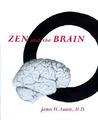
Dr. Austin’s 900-page book looks at what the brain does during (and as a result of) the practice of Zen, and is a great resource for those interested in the science of meditative practices. It’s easy to sum up the strength and weakness of this book. With respect to the book’s greatest strength, it’s that the author—like the book—straddles two widely divergent worlds. He is at once a scientist and a practitioner of Zen. This gives him rare insight into both halves of the equation. This isn’t one of those books written by a spiritual seeker who uses the word “science” and “scientific” very loosely (and in a manner that shows a lack of understanding of the central premise of science.) On the other hand, it’s not one of those books by a scientist who got all of his understanding of meditation from other books.
As for the weakness, it’s that the book was written in the late 1990’s. Ordinarily, I would say that wouldn’t matter much, but concerning our understanding of the brain, it might as well have been the Stone Age—hyperbole duly noted. One doesn’t put together a book of almost 1000 pages overnight, and so much of the references for “Zen and the Brain” are actually from papers from the 1980’s and earlier. The fMRI (functional Magnetic Resonance Imaging) machine didn’t even come out until the early 1990’s, but—of course—it took a while for the studies featuring this powerful technology to reach publication.
The book is arranged into a whopping 158 chapters divided amongst 8 parts. Some of the chapters are pure neuroscience, and there are detailed descriptions of the brain and the functions of its various parts. Other chapters are designed to give one an insight into the practice of Zen and aren’t technical at all. The author has a reasonably engaging writing style when he’s not conveying the minutiae of brain science. He tells stories of his experience as a practitioner of Zen, and passes on the wisdom of past Zen masters.
I have an unconventional recommendation for this book, which I got so much out of. I recommend you first check out the book “Zen-Brain Horizons” put out by the same author and press (MIT Press) in 2014. While I haven’t yet read that book, it seems to hold three advantages. First, it’s only one-third as long and seems to cover similar material. Obviously, it goes into far less detail. (But you may find that a plus.) Second, the 2014 book is reasonably priced. “Zen and the Brain” is one of the most expensive books I’ve bought in recent years. I’m not saying I regret paying as much as I did, because it was a useful book, but cheaper would be better. Finally, the 2014 has the benefit of access to a lot of great research from the past couple decades. If you read the 2014 book and think you need more detail about the brain, then—by all means—get this book.
The good news is that yoga can help one lose weight. The bad news is that the mechanism by which this occurs isn’t what most people expect, and it involves the mind a great deal more than the muscles.
While many people hope for a secret to weight loss, there’s no secret. Weight loss is a function of calories eaten being less than calories burned. This simple formula means that one can either eat less or exercise more. Both the diet and exercise matter for good health, but the eating part is more important to cutting weight. This statement may be controversial and seemingly gratuitous—particularly for people who think exercise is going to single-handedly shed excess pounds–and so I’ll take some time to try to make my point.
The first thing one should know is that our voluntary activity only accounts for about one-third of calories consumed. The other two-thirds are used whether we move a muscle or not. Between 20 and 25% of our energy consumption is devoted to our brain, and much of the rest is used to keep us at 37°C (98.6°F) because we are, after all, mammals. This means that increasing the intensity or amount of exercise—while it has tremendous health benefits—will achieve only a marginal increase in calories burned. From the Mayo Clinic website, I learned that a 109kg (240lb) individual will burn about 273 calories doing a typical hata yoga class or about 436 calories with Power Yoga. (Compare this to about 327 calories / hr. for tai chi or 654 calories / hr. for hiking.) So your hour of yoga has maybe knocked off a 32oz soft drink or one medium size French fries. Most people have trouble finding more than one hour of time and energy for exercise per day. And as someone who sometimes spends more than an hour a day exercising, I can attest that there is a point of diminishing marginal returns. So while exercise is an important part of weight loss, one can’t go hog-wild in eating just because one exercises.
[One should also note that many yoga practitioners experience a reduced basal metabolic rate (BMR) because of the calming aspect of the practice. A lower BMR means that you burn fewer calories just living and maintaining your metabolism. All things being equal, this makes cutting weight all the more challenging—though the effect is certainly counterweighted by the stress reduction aspect of the practice that will be discussed below.]
To summarize: unless you’re an elite athlete in training for something like the Olympics, the idea that you can eat whatever you please and cut / maintain a healthy weight is likely to result in disappointment. A common piece of dietary advice for elite athletes is to daily eat one gram of protein for every pound of ideal bodyweight and eight fist-sized servings of vegetables. Beyond that, they can pretty much eat what they want. But with that much slowly digesting material, they’re probably not going to go overboard—even if they weren’t already, almost by definition, very disciplined people.
So if an hour of yoga a day doesn’t even make up for having a Mars bar, what good is it? For one thing, the yoga student has the opportunity to become more attuned to his or her body and, in doing so, to learn to differentiate physiological hunger from the many other permutations of hunger that overtime merge into a multi-headed hydra of craving. What are these other hungers? First and foremost, there’s psychological hunger, or the use of food as therapy. People use food to reward themselves, to medicate themselves, to take their minds off of their woes. Secondly, there’s sensory hunger in which we have no real need to eat but the food looks or smells too good to avoid.
One of the forms of hunger that often remains hidden is social hunger. That is, one eats to be part of the in-group and to bond. For example, imagine you’ve just eaten, are not hungry, and someone offers you food. Depending upon who it is and what your relationship is that person, you may feel compelled to eat even if you don’t need it. The double whammy is that eating as socializing is so deeply engrained and that we humans—contrary to popular belief—are dismal at multitasking. We can’t converse and be aware of what we are eating, and thus one may overeat because one is so engrossed in the distraction of socializing. This isn’t to say that there is anything inherently wrong with social eating. We all have to do it to some degree or another. One just needs to recognize that if it becomes a habit to be distracted from one’s food, one may have problems.
Relating back to the idea of psychological hunger, yoga helps one destress. Stress can be a perfectly healthy phenomenon, but when it’s prolonged it can have many adverse consequences. One such consequence is having cortisol levels remain too high, and this has the effect of ramping up the appetite. Your body has been pressed into fight or flight mode, it expects that you’re hauling ass away from a sabretooth tiger or an angry woolly mammoth mamma, and that you’ll soon need to replenish depleted energy stores. Your endocrine system doesn’t know that you’re curled up on the couch with a pint of ice cream… yeah, let’s call it a “pint.” As a form of exercise, yoga helps reduce this problem. However, beyond exercise, yoga offers many relaxation techniques such as yoga nidra, kaya sthairyam, restorative postures, and some forms of pranayama(breathing exercises) that can help you turn off the “fight or flight” and turn on the “rest and digest”—what Herbert Benson called the “relaxation response.” Sometimes you might delve into an intense practice like Ashtanga Vinyasa or Power Yoga, and other times restorative yoga might be just what the doctor ordered. [Disclaimer: “What the doctor ordered” is a figure of speech. I’m not a doctor, and I haven’t even played one on TV.]
There is yet another way in which yoga can help. Yoga helps one dispassionately observe one’s drives and this way one can slowly, over time, rewire one’s attitudes toward food. One can begin to think of hunger pangs as a sensation, rather than projecting a negative connotation onto them. In this way, one can learn to begin to watch the sensation and learn from it rather than running for the food.
Finally, an important benefit of yoga is in teaching one to be contented with oneself, even if one isn’t content to live with one’s present health or physical capability. Santosa is one of the niyama, and it teaches one to be content with who one is–perhaps even while one is simultaneously practicing the austerities of tapas (another niyama) in pursuit of personal development. If one isn’t contented with oneself, one can fall into a shame spiral that may create the kind of persistent stress that I warned about above. Also, if one is at a healthy weight, but has some deep-seated drive toward “perfection,” the lessons of santosa can inform you as well.
A brain injury patient simultaneously becomes demented and develops a previously unwitnessed artistic talent. Another patient’s brain lights up identically when seeing another person being poked as it does when he, himself, is prodded. An amputee brushed on a specific area of the cheek has a sensation in a specific area of the lost limb—i.e. phantom limb sensations can be mapped to points on the face. A stroke victim develops “metaphor blindness,” and suddenly “the 800 pound gorilla” becomes an actual gorilla. A test subject’s right angular gyrus has an electrical charge delivered to it through an electrode and the person has an instantaneous out-of-body experience. There are temporal lobe epilepsy patients who literally feel one with other people—or, in some cases, the natural world in general. These are just a few of the fascinating cases that Dr. Ramachandran presents in “The Tell-Tale Brain.” Many of these phenomena would have once been attributed to purely psychological or spiritual causes, but now their biological origins in the brain are being revealed.
Dr. Ramachandran is a neuroscientist whose claim to fame is making a noteworthy contribution to our understanding of the brain using mostly low-tech and non-invasive experiments with subjects who have brain abnormalities or injuries. Before there was EEG (electroencephalogram) and fMRI (functional Magnetic Resonance Imaging) machines, much of what scientists learned about the brain came from determining what capabilities were lost (or, occasionally, gained) by patients who had specific brain damage. In this way, we gained a great deal of insight into what areas of the brain are responsible for what tasks and we’ve learned that many aspects of the mind that were largely thought to be beyond biology are—in fact–not. It’s fascinating to see what bizarre effects can result from brain damage or abnormalities, from people who think they are dead to others who want to have a limb amputated because it doesn’t feel like it belongs to them to yet others who think their loved ones are imposters.
The central question addressed by this book is best summarized by a quote from the book’s introduction: “Are we merely chimps with a software upgrade?” Ramachandran proposes that any answer to this question that can be scientifically investigated must reside in the brain. Most of our organs and our general structure are not that different from those of our primate brethren. But our brains are infinitely more capable than those of other species. In responding to the question, Ramachandran considers the brain’s role in topics like language, aesthetics, and belief that are the sole domain of Homo sapiens. One of the most interesting discussions is how our brains fill in the blanks and a give meaning to what we see, such that we sometimes find signs in random data streams. The final chapter deals with introspection and how we come to define ourselves by what we think and what we feel and here Ramachandran gets into some of the most fascinating conditions mentioned in the book, such as Cotard Syndrome in which subjects firmly believe that they don’t exist.
There are a few topics that he delves into in particularly deep detail. One of these topics is that of mirror neurons. These neurons are integral to our relationships with others and are essential to our ability to learn. They fire in mimicry of movement (e.g. facial expressions) we see others perform. The author also uses his work with phantom limbs and synesthesia to illuminate the workings of the brain. Phantom limbs occur when an amputee can still feel sensations in the amputated limb. While phantom limbs were at one time believed to be residue of the soul or the like, studies have offered insights into its origins in the brain. Synesthesia is when the brain is mis-wired such that there is a blending of the senses. As an example, a person might see a different color associated with each musical note or with each number. Synesthesia was once considered a delusion and people were institutionalized for this cross-wiring of the brain. Autism is also addressed in a chapter, and-in particular—the theory that this affliction may be linked to the mirror neurons.
I found this book to be fascinating and insightful. While it delves into our tremendously complex brains, it does so in a readable and comprehensible manner. The fact that Ramachandran’s focus is largely on low-tech and relatively simple experiments means that one can readily understand them in a manner that one might not with studies based on fMRIs or EEGs.
I’d recommend this book for anyone interested in the magnificent human brain.
1.) 10%: As this story goes, we humans only use about 10 percent of our brain’s capacity. This long-debunked myth is so well ensconced that there was a film built around the premise as recently as 2014. That movie, “Lucy”, features a titular character who accidentally ingests an overdose of a drug that allows one to exploit increased levels of one’s mental capacity. Admittedly, by the movie’s end the 10% myth is one of the lesser violations of reality because as Lucy gets closer to 100% of mental capacity all the laws of physics dissolve in her presence.
I’ll give a reference at the bottom of this paragraph from which one can learn about all the evidence of the folly of this belief. I’ll just lay out part of the evolutionary argument. The fundamental rule of the biological world is that mother nature doesn’t over-engineer. Once there is no longer any benefit to be gained in terms of enhanced likelihood of survival, we don’t evolve new and costly capacities. We don’t see people who can run 500 miles per hour or jump 50 feet vertically from a standstill. Those capacities weren’t necessary to survive the beasts that preyed upon us. Our brains are very costly, they consume 20 to 25% of our energy intake. [For the science, see: Beyerstein, Barry L.1999. “Whence Cometh the Myth that We Only Use 10% of our Brains?”. in Mind Myths: Exploring Popular Assumptions About the Mind and Brain. ed. by Sergio Della Sala. Hoboken, NJ: Wiley. pp. 3–24.]
Why does this myth get so much play? There are two likely reasons. One is wishful thinking. We’d all like to think there is much more available to us. And lucid moments of meditation or flow, we may even feel that we have tapped into a vast dormant capability. (In both the aforementioned cases, it’s interesting that the enhanced performance we may experience is a function of parts of the brain shutting down and not increased capacity ramping up.) The other reason is that people see savants of various sorts, but they don’t account for the full picture. There are people who can carry out activities with their brains that seem supernatural. However, it should also be noted that savants who can memorize phone books or tell you the day of the week for a random date hundreds of years ago [or in the future] often suffer corresponding downsides with respect to their brain activity. Of course, there are people who are just geniuses. Geniuses are endowed with more intelligence than most of us. They have a bigger pie; they aren’t just eating a bigger slice.
2.) Left and Right Brained: The myth is that some people use one of the hemispheres of their brain much more than the other, and that this explains why some people are creative and artsy and others are logical and mathematical. We must be careful about the nature of the myth and separating it from reality. The science is NOT saying that there aren’t some people inclined to be “artsy” and some inclined to Spock-like rationality. Clearly, these personality types exist. The science is also not suggesting that there aren’t some functions that are carried out exclusively in one hemisphere–e.g. language is a left brain function. The myth says that predominant use of one hemisphere is the cause of these extremes of personality type. This myth has had–and continues to have–a great following, but it’s not supported by the studies that use the latest brain imaging technology to see exactly where the brain is being active.
For the science, see: Nielsen JA, Zielinski BA, Ferguson MA, Lainhart JE, Anderson JS. 2013. “An Evaluation of the Left-Brain vs. Right-Brain Hypothesis with Resting State Functional Connectivity Magnetic Resonance Imaging.” PLoS ONE. 8(8): e71275.
Why is this a persistent myth? First of all, we all know people who fit neatly into one of the boxes, either “artsy” or “logical.” The left-brained / right-brained explanation is as good a way as any to explain these differences in the absence of evidence. It may have also been a way for people to attribute their weaknesses to an uncontrollable cause (always a popular endeavor among humans.) Secondly, once this idea caught on, a lot of people built the idea into their teachings, businesses, and academic ideas. Yogis used the notion to support ideas about imbalances in the “nadi” (channels.) Psychologists used it in their personality testing and profiles. In short, many people had a vested notion continuing false belief. Thirdly (maybe), there could be something to the issue of how we notice differences versus similarities. (e.g. A person says, “Hey, look Jimi Hendrix is playing a left-handed guitar. Lefties are creative.” The next thing one knows people are disproportionately noticing the left-handed individuals in the arts [and failing to notice the many (more) righties.])
3.) The Conscious Mind Makes All Our Decisions: We all have a conscious mind that we think is our ultimate decision-maker. The evidence, on the other hand, suggest that this is wrong. It turns out that it’s entirely possible for an entity to think it has decision-making authority, when–in fact–it’s finding out about the done deal decisions after the fact. Like the left / right brain myth, this is an idea that was firmly affixed right up until brain imaging technology became sufficiently sophisticated to see what parts of our brain were firing and when. In the wake of such imaging studies, we could see that the subconscious mind does its work first, and this has led to the widespread (though perhaps not consensus view) that decisions are made subconsciously before they filter up to our conscious minds.
There are many sources of information on this idea, but one popular book that is built around the idea is David Eagleman’s “Incognito“, a book that devotes itself to the part of our neural load iceberg that goes on below the waterline (i.e. subconsciously.) Scientists often compare consciousness to the CEO of a large and complex corporation. The CEO doesn’t personally make every decision. Instead, the CEO sets an agenda and the strategy, and–if all goes as planned–the decisions that are made are consistent with those overarching ideas.
It’s easy to see why this myth is persistent. First, if part of a process is buried from view, as subconscious thought has been (and–to a large extent–continues to be) then it’s easy to see how humanity would develop a story that excludes it and fills in from the visible parts. Second, there is immense vested interest in protecting all sorts of views of consciousness that are embedded in religions and quasi-scientific undertakings.
Thirdly, people have a deep-seated need to feel in control, and reducing the role of consciousness to long-term strategist and rationalizer of decisions would seem to make free will illusory. A number of scientists and scholars (e.g. Sam Harris) do argue that free will is an illusion. However, it should be noted that there are others who suggest otherwise (e.g. Daniel Dennett and Michael Gazziniga.) These “compatibilist” scholars aren’t necessarily arguing that the conscious mind is the immediate decision maker in contradiction of the scientific evidence. What they are arguing is that through learning, thinking, and agenda-setting, people can influence the course of future decisions–perhaps imperfectly, as when one eats a sleeve of Oreos after contemplating what one has learned about how that’s not good for you. (This goes back to mother nature not over-engineering. The conscious mind must have some role in facilitating survival or it–being incredibly costly–wouldn’t have evolved. If it can’t influence our path, it can’t enhance or likelihood of survival.)
I’ll attach this video by Alfred Mele that contradicts the notion that free will has been proven an illusion. This isn’t to suggest that I’m convinced Mele is right, but he does lay out the issues nicely and more clearly than most.
4.) The Sleeping Brain Shuts Down: I won’t spend a lot of time on this one because: a.) in a sense it’s a continuation of the consciousness myth (i.e. we lose track of this time as far as our conscious mind goes, and so we think nothing is happening because our conscious experience = what we believe our world to be.) and, b.) it’s not as ingrained a myth as some of the others. Perhaps this is because it began to be debunked with electroencephalogram (EEG) studies which began decades ago–in the 1950’s–well before the functional Magnetic Resonance Imaging (fMRI) that has been providing many of our most recent insights into the brain. (The EEG measures brainwaves and the fMRI blood flow.)
The NIH (National Institutes of Health) offers a quick and clear overview of this science that can be viewed here.
Our bodies go from a very relaxed to completely paralyzed state over the course of a night’s sleep. The paralyzed state occurs with Rapid Eye Movement (REM) sleep and may be an adaptation that kept our ancestors from fleeing out of trees or cliff-side caves during their dreams. If the body is essentially immobile, it’s not a far stretch to imagine the brain is as well. However, the brain is like a refrigerator–always humming in the background (part of the reason it uses between 1/5th to 1/4th of our energy.)
5.) Adults Can’t Generate New Brain Cells: This was the prevailing thought until quite recently. It was believed that one’s endowment of cells–at least as far as the Central Nervous System (CNS) is concerned–didn’t change / replenish once one reached adulthood. It turns out that, at least for the hippocampus, there is now evidence to support the idea of CNS neurogenesis (the production of new nerve cells.)
There’s a Ted Talk by Sandrine Thuret that explains the current state of understanding on this topic, including what activities and behaviors facilitate neurogenesis. (Long-story short: Exercise and certain healthy foods are good, and stress and sleep deprivation are bad.)
What is the basis of this myth? First, one must recognize that the studies don’t show that any and all CNS nerve cells are regenerated. That means there is an element of truth to this myth, or–alternatively stated–a more precise way of stating the idea would produce a statement of the best current understanding of medical science. Of course, telling teenagers that every beer they drink kills 20,000 brain cells irrevocably has probably proved a popular–if ineffective–reason for the continuation of this myth. (Note: at least heavy drinking is definitely damaging to the brain, though by damaging / interfering with dendrites and not by “killing brain cells.” It’s also not believed to be irreversible.)
6.) Emotion and Reason Are Forever at Odds: Most people have had the experience of boiling over with emotion. That is, they’ve experienced instances during which they believed a particular emotion didn’t serve them and they didn’t want to be caught up in it, and yet they couldn’t help themselves. It’s clear that there’s an ability to inhibit or suppress emotions; recent findings have suggest that the neural pathways involved with voluntary suppression are different from those used when one is persuaded to suppress the emotion.
Of course, there’s also evidence that continually suppressing emotion can have a downside. While it remains an unclear correlation, it’s commonly believed that suppression of emotion is related to untimely deaths from certain diseases–e.g. cancer, and there has been some evidence to support this.
Still other evidence supports the notion that there are healthy ways of regulating one’s emotional life rather than the ineffective and counterproductive process of just suppressing emotions. The key may lie in changing one’s way of perceiving events rather than telling oneself to not show emotions. Rather than one’s conscious mind wrestling with the emotion, activities like breath control have shown effective in regulating exposure to stressful situations.
The brain is an organ we all possess, and we intuitively think we’ve got a grasp of it. Yet brain science is one of the scientific disciplines in which we have the most to learn.
Sleights of Mind explains magic tricks by telling one about the shortcuts, limits, and programming of brain (and attendant sensory systems) that facilitate such tricks. The reader needn’t be concerned that the book will spoil all the illusionists’ secrets for one. The authors carefully demarcate the beginnings and endings of spoiler sections that explicitly explain tricks. This allows a reader to skip over such sections if one doesn’t want to know the trick. I suspect few readers do skip the spoiler sections because that’s where the rubber meets the road in terms of the neuroscientific concepts being discussed. The spoiler sections are an attempt to comply with the magician’s code (the neuroscientist authors became magicians themselves) and to maintain a good relationships with the many magicians (some, like Teller or the Amaz!ng Randi, quite famous) who cooperated in the writing of the book.
Over 12 chapters, the authors explain the neuroscience of how various classes of illusion work. Most of the chapters address a specific class or subclass of illusion. The first few chapters deal with visual illusions. We look at the world in what seems like crystal clarity (at least with glasses on or contacts in), but there are many limitations and gaps in our visual processing system. While it seems like we are directly seeing the world around us, in point of fact, our visual experience is a product of the brain reconstructing information that the eyes take in—and it doesn’t do it as perfectly as our brain tricks us into believing. As the authors state it, “The spooky truth is that your brain constructs reality, visual and otherwise.” Chapter 3, deals with illusion in art, which is little outside the theme of the book, but it offers an opportunity to explain some intriguing facts about how the brain and eyes work in concert.
The next couple chapters (Ch. 4 and 5) deal with cognitive illusions. Just like our visual system, our conscious minds save energy by engaging in short-cuts that disguise the mind’s limits while offering the possibility of manipulation. The brain also works hard to reconcile what appear to be inconsistencies, and often this reconciliation leads us astray. Misdirection is discussed in detail. Our minds are primed to let certain actions and sensory inputs draw its attention, and humans are awful at paying attention to more than one input stream at a time. Teller explains that, “Action is motion with a purpose.” So, if one can give one’s movement a purpose (even scratching one’s chin) it will be ignored while movements seemingly without purpose are anomalous and draw attention. The authors introduce the reader to mirror neurons—the part of our brains that take observations of another’s actions and makes forecasts about that person’s intent. This system is highly hackable by magicians.
Chapter 5 informs us that we aren’t as good at multitasking as we think—which is to say we completely stink at it but tend to think we are awesome multi-taskers. The gorilla experiment is offered as a prime example of this situation. In the gorilla experiment, about half-a-dozen people, moving around randomly, pass a ball / balls among themselves. The subject is asked to count the number of passes. In the middle of this activity a man in a gorilla suit walks through the middle of the rapidly moving passers. When asked whether they saw the gorilla, most people say they didn’t (and those who do see the gorilla invariably offer a count of passes that is vastly off the mark.) [If this is either unclear or unbelievable, you can YouTube it.]
Chapter 6 examines multi-sensory illusions. The quintessential example is how our brains lead us believe that the sound of a ventriloquist’s voice is coming from the moving lips of a dummy. (Also, it seems like voices are coming from the lips of actors on-screen in the movies, even though the speakers are probably off to the side in the walls or ceiling.) Synesthesia (cross-wiring between senses and brain such that some people may always see the number 5 in red or hear a C-sharp in green) is introduced to the reader.
Chapter 7 explores the illusions of memory. Just as with our vision and attention, our memories aren’t as indelible as they seem to be. We think we’re calling up a transcription of the events of our lives, but really we’re remembering the last remembrance of said event. This can lead to a migration / distortion of events in the same manner as the kid’s experiment whereby one whispers a phrase into the ear of the kid in the next chair and it traverses the classroom. The original sentence “The cat is on the windowsill” invariably becomes something like “Lenny Kravitz steals puppies from the till.” (Have you ever experienced a situation in which a person remembers the details of an event substantially differently from yourself even if the broad brushstrokes are the same?) Some entertainers use pneumonic tricks to convince audiences that they have supernatural mental abilities when—in fact—they have merely turned understanding of memory to their advantage.
Chapter 8 considers how in-built expectations and assumptions are exploited by magicians and mentalists. Again, these methods work because our brains employ all sorts of energy-saving shortcuts. For example, our brains often do the same thing as Google’s search engine—filling in the blanks by taking advantage of one’s experience to avoid the need for costly cognitive processing.
Chapter 9 explains that our “free choices” are often not so “free” as we think. One of the most disconcerting, yet intriguing, facts to come from the onslaught of brain imaging studies since the 1990’s is that our decisions are made on a subconscious level before our conscious minds are even aware the decision has been made. Prior to this, we’d always been under the misapprehension that we are consciously making all these decisions–big and small–because the conscious mind is just a big credit stealer (to be fair, the conscious mind doesn’t recognize that it’s so out of the loop in decision-making.) So many of our decisions are made in predictable ways by emotional / automated responses, and mentalists use that fact to their advantage.
Chapter 10 is a catchall for topics that didn’t fit into earlier chapters, including hypnosis, superstitions, and the gambler’s fallacy (i.e. the idea that a roulette number that hasn’t come up in a while [or slot machine that hasn’t paid off recently] is bound to pay soon—regardless of the probability distribution that actually rules the outcome.)
The remainder of the book tells the story of the author’s try-out for a magic society and discusses the question of whether knowing the neurological and psychological roots of magic tricks will kill magic as a source of entertainment. I found the latter to be the more interesting discussion. The authors are optimistic about magic’s survival, and offer good reasons. After all, almost nobody believes that magicians are conducting supernatural activities [not even people who take some wildly unsubstantiated beliefs as givens.] Even knowing how the tricks work doesn’t create the ability to see through the tricks because so many of the factors that magicians exploit operate on a subconsciously programmed level, and such proclivities would have to be trained away. People who want to enjoy the spectacle of magic aren’t likely to go to the trouble of training themselves in that way.
I enjoyed this book even though I’m not particularly a fan of magic—though I did find myself watching quite a few YouTube clips of the magicians mentioned in the book. If you’re interested in how one’s mind and sensory systems work, and the limitations of those systems, you’ll find this book worthwhile. If you’re into magic, you’ll like it all the more so.
This is one of those books whose title leaves one unclear as to the book’s nature. The title has religious connotations, but its subtitle, The Practical Neuroscience of Happiness, Love, and Wisdom suggests a secular and rationalist work. The subtitle might clear things up if it weren’t for the fact that there are so many New Agey, spiritualist types who like to glom onto scientific terminology—presumably in an attempt to lend credibility to ideas that are “out there.” Thus, one may reasonably wonder whether this is just another Biomechanics of Chakra Fluffing style book—actually, I made that one up, but if you can see why such a title would be oxymoronic you know where I’m coming from. Without further ado, let me state that this book is rooted in the science of the brain, and, while it uses its fair share of concepts from Eastern religion as pedagogic devices, it doesn’t presuppose need to believe in anything [or anybody] for which there is no evidence. [What remains less clear is whether this book is properly considered self-help or pop science?] This issue with the title may be why Hanson came out with the more secularly-titled Hardwiring Happiness book a few years later that seems to cover similar territory (though, I’ve not yet read the latter.)
The central premise of Buddha’s Brain is that the brain’s neuroplasticity allows one to change the way one experiences life by changing the way one perceives and responds to life’s little trials and tribulations. Over time, one can become happier, more loving, and wiser—i.e. one can have a brain more like the Buddha’s. “Spiritual” matters are always at the periphery of what Hanson is discussing because this type of practice has historically been in the bailiwick of religious traditions—specifically Eastern (and other mystic) traditions that focus on looking inward to be a more virtuous person. However, where said traditions have often relied on assumptions unsupported by current science—such as the existence of a unitary (i.e. universally interconnected) consciousness, Hanson considers the issue from the perspective of our current understanding of the brain. In particular, he focuses on the fact that we are capable of training our brain to respond more positively to events.
Evolution, beautiful and elegant as it may be, has made us pessimistic and prone to disproportionately focus on the negative. This is because survival depended on being ready for worst case scenarios. So we imagine what that worst case is, and endlessly replay scenarios to prepare ourselves for how to deal with said worst cases. While this approach may have enhanced our ancestor’s survival probability, it can easily get out of hand and for far too many people it has. In the book, Hanson proposes three evolutionary strategies (i.e. creating separations [us / them, I / you, etc.], maintaining stability, and threat avoidance / opportunity seizure) that often end up tainting our worldview, raising our stress levels, and causing declining health and well-being. The book does get into the mechanics of stress reduction as well as how to change the way one experiences the world so as to be exposed to less stress.
Rick Hanson is a psychologist who holds a Senior Fellowship at a center at the University of California at Berkeley. He also founded his own center called The Wellspring Institute for Neuroscience and Contemplative Wisdom.
The book is organized into 13 chapters arranged in four parts. The four parts are: I.) The Causes of Suffering, II.) Happiness, III.) Love, and IV.) Wisdom. These parts are preceded by front matter which includes the first chapter which lays out the basics of the brain in layman’s terms as well as discussing the evolutionary survival strategies that sometimes fail to serve us well in modern living. More detailed discussion of the brain is introduced throughout the book at is relevant to the discussion at hand, but the level of this discussion should be approachable to all readers. Each chapter is divided into many subsections to make the reading easily digestible. One of the nice features of this book is that each chapter has a bullet point summary at the end. Actually, the author uses bullet points prominently throughout the book. There is one appendix which explores questions of nutrition for brain health. There is an extensive reference section containing largely scholarly references, as one would expect of a science book.
I mentioned earlier that I wasn’t certain whether to classify this as a self-help or popular science book. In many ways it’s both. It does give a great deal of practical advice about what one can do to change one’s life. On the other hand, it offers more background into the science than your average self-help book—though always at a layman’s level.
I’d recommend this book if you are interested in self-improvement, the science of the mind, or both.

 Dreaming: A Very Short Introduction by J. Allan Hobson