Shall I compare thee to a summer's day? Thou art more lovely and more temperate: Rough winds do shake the darling buds of May, And summer's lease hath all too short a date: Sometimes too hot the eye of heaven shines, And often is his gold complexion dimm'd: And every fair from fair sometime declines, By chance, or nature's changing course untrimm'd; But thy eternal summer shall not fade, Nor lose possession of that fair thou ow'st, Nor shall death brag thou wander'st in his shade, When in eternal lines to time thou grow'st; So long as men can breathe, or eyes can see, So long lives this, and this gives life to thee.
Category Archives: British Literature
Five Wise Lines from The Importance of Being Earnest by Oscar Wilde
The truth is rarely pure and never simple. Modern life would be very tedious if it were either, and modern literature, a complete impossibility!
Algernon
Oh! it is absurd to have a hard and fast rule about what one should read and what one shouldn’t. More than half of modern culture depends upon what one shouldn’t read.
ALgernon
It is awfully hard work doing nothing. However, I don’t mind hard work where there is no definite object of any kind.
Algernon
One has a right to Bunbury anywhere one chooses. Every serious Bunburyist knows that.
Algernon; [fyi: “Bunburying” is the use of appointments with ficticious individuals to get out of one’s duties and obligations.]
One should always eat muffins quite calmly.
Algernon
Jabberwocky by Lewis Carroll [w/ Audio]
'Twas brillig, and the slithy toves
Did gyre and gimble in the wabe:
All mimsy were the borogoves,
And the mome raths outgrabe.
"Beware the Jabberwock, my son!
The jaws that bite, the claws that catch!
Beware the Jubjub bird, and shun
The frumious Bandersnatch!"
He took his vorpal sword in hand:
Long time the manxome foe he sought --
So rested he by the Tumtum tree,
And stood awhile in thought.
And as in uffish thought he stood,
The Jabberwock, with eyes of flame,
Came whiffling through the tulgey wood,
And burbled as it came!
One, two! One, two! And through and through
The vorpal blade went snicker-snack!
He left it dead, and with its head
He went galumphing back.
"And hast thou slain the Jabberwock?
Come to my arms, my beamish boy!
O frabjous day! Callooh! Callay!"
He chortled in his joy.
'Twas brillig, and the slithy toves
Did gyre and gimble in the wabe:
All mimsy were the borogoves,
And the mome raths outgrabe.
The Tiger by William Blake [w/ Audio]
Tiger, tiger, burning bright In the forests of the night, What immortal hand or eye Could frame thy fearful symmetry? In what distant deeps or skies Burnt the fire of thine eyes? On what wings dare he aspire? What the hand dare seize the fire? And what shoulder and what art Could twist the sinews of thy heart? And, when thy heart began to beat, What dread hand? and what dread feet? What the hammer? What the chain? In what furnace was thy brain? What the anvil? What dread grasp Dare its deadly terrors clasp? When the stars threw down their spears, And watered heaven with their tears, Did he smile his work to see? Did he who made the lamb make thee? Tiger, tiger, burning bright In the forests of the night, What immortal hand or eye Dare frame thy fearful symmetry?
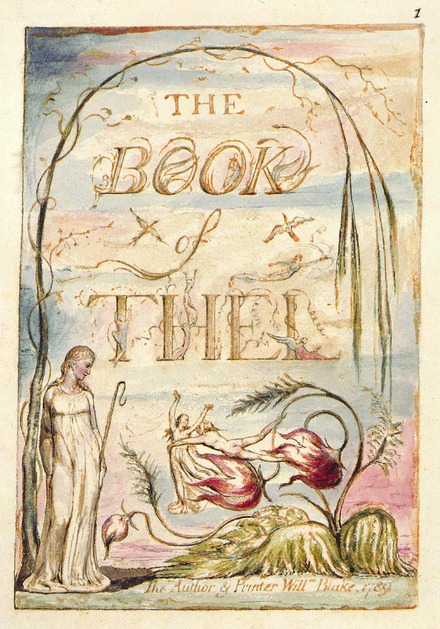
Five Wise Lines from The Book of Thel by William Blake
Can Wisdom be put in a silver rod? / Or Love in a golden bowl?
from Thel’s Motto
I am a watery weed, / And I am very small and love to dwell in lowly vales: / So weak the gilded butterfly scarce perches on my head. / Yet I am visited from heaven and he that smiles on all / Walks in the valley.
from Part I
Then if thou art the food of worms, O virgin of the skies, / How great thy use, how great thy blessing
from Part II
every thing that lives. / Lives not alone nor for itself
from Part II
Why cannot the Ear be closed to its own destruction? / Or the glistening Eye to the poison of a smile!
from Part IV
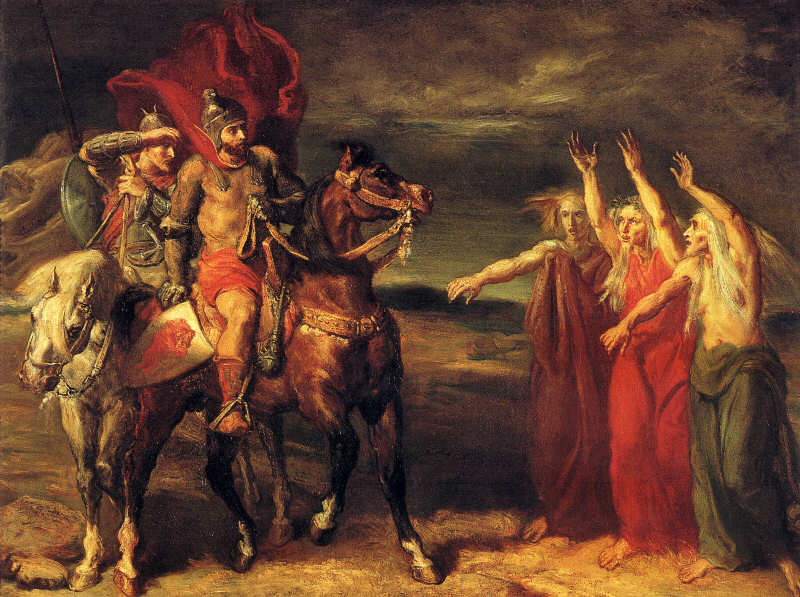
Five Wise Lines from Macbeth
“There’s no art to find the mind’s construction in the face.”
Duncan in Act I, Scene 4
“Bloody instructions, which, being taught, return to plague the inventor.”
Macbeth in Act I, Scene 7
“when our actions do not, our fears do make us traitors”
Wife of Macduff in Act IV, Scene 2
“Then the liars and swearers are fools, for there are liars and swearers enough to beat up the honest men and hang them up.”
Son of Macduff in Act IV, Scene 2
“Life ‘s but a walking shadow, a poor player, that struts and frets his hour upon the stage and then is heard no more. It is a tale told by an idiot, full of sound and fury signifying nothing.
Macbeth in Act V, Scene 5
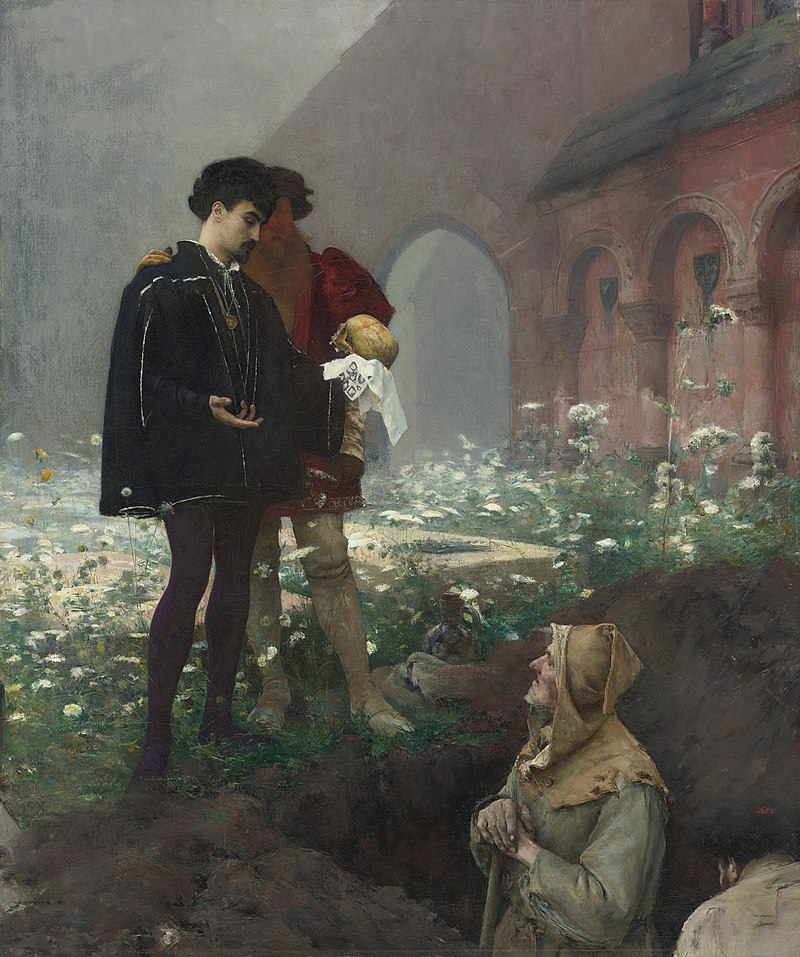
Five Wise Lines from Shakespeare’s Hamlet
We fat all creatures else to fat us and we fat ourselves for maggots… a king may go a progress through the guts of a beggar.”
HamLet to Claudius in Act IV, Sc. 3
One may smile, and smile, and be a villain.
Hamlet to Queen Gertrude in Act I, Sc. 5
I could be bounded in a nutshell and count myself a king of infinite space, were it not that I have bad dreams.
Hamlet to rosencrantz & Guildenstern in Act I, sc. 2
Brevity is the soul of wit.
Polonius to claudius & gertrude in act II, sc. 2
A knavish speech sleeps in a foolish ear.
hamlet to rosencrantz in act IV, Sc. 2
Hamlet’s Revenge [Limerick]
Orwell’s Politics and the English Language
Politics and the English Language by George OrwellMy rating: 5 of 5 stars
Available online at The Orwell Foundation
In this essay, Orwell decries a scourge of weak writing in the English language, writing marked by cliched phrases, imprecise descriptors, meaningless words, and pretension. In short, he tells us that writing is becoming simultaneously more verbose and less meaningful.
While the essay isn’t as fun to read as George Carlin’s rants on the same subject, it’s a clear and well-organized discussion of this flaw. Orwell presents the problem, offering examples of random unreadable passages and discussion of where each goes awry. He also contrasts a clear and concise Biblical passage with how its message would sound translated into this corrupt modern form of the language. (That’s the most comedic portion of the essay.) Next, Orwell offers writers simple questions they might apply to making their writing less bloated and more impactful. The key insight of the essay is that thought corrupts language, but language also corrupts thought.
The essay is almost eighty years old, but the problem persists — particularly among politicians, a class of people who love to both sound impressive but without saying anything definitive, anything that might pin them down. That said, since Orwell we’ve developed new linguistic afflictions unique to the internet age, and the essay could probably use updating. Still, it’s an excellent place to start one’s reflection on what’s going wrong in the English language.
View all my reviews
A Quick & Dirty Guide for Reading William Blake’s Prophetic Poetry
It’s been said that Blake’s poetry is nearly impenetrable. When people say this, they’re referring to a series of long poems that are often called Blake’s “prophetic books.” It’s not that people struggle much with Songs of Innocence, Songs of Experience, or The Marriage of Heaven and Hell. I doubt anyone is stumbling their way through “The Lamb” or “The Tyger.” In fact, some of Blake’s poetry is highly readable for eighteenth century work.
The challenge is that Blake created his own mythology and he launches in with all these characters that have no sticking power for a reader. This is unfortunate as Blake remains well worth reading for his ideas, his language, and his sui generis worldview. [Even if he doesn’t win you over, Blake will give you something to think about that you’ve probably never considered before.] Blake’s mythology forces the reader to choose between a painstaking read (making notes, re-reading sections multiple times, stopping dead to make connections, etc.) or a casual read that misses most of what Blake is saying because it floats over the connections he is making.
As I’m re-reading Blake, I constructed a chart that helps me track who’s who and what each major character is about. I won’t claim it makes Blake’s prophetic work completely simple and transparent, but it has made reading it more productive and insightful. If you’re reading “Valas,” “Milton,” “Jerusalem” or any of the other prophetic books, I hope it will benefit you as well.

Em/F: these are emanations (i.e. characters that flow from the character from which the pointer originates.) Some refer to these as the feminine forms, hence the “F.”