“Spring Rise” by Fan Chengda [w/ Audio]

In Spring, the waters rise --
Shore grass sways with breezes,
And geese drift right beside;
Boats glide as the stream pleases.
Yon pagoda looks far,
but feels quite close.

Streamside, one feels a chill.
Fields have yet to be plowed --
Not while the torrents spill.
Mulberry limbs are bowed.
Soon we'll have a taste,
and harvest cocoons.

NOTE: The title of this poem is 蝶 戀 花. Xu Yuanchong uses the quite literal “Butterflies in Love with Flowers” as his translated title. I chose differently because a wet Spring is the throughline of the poem and, well, there are no explicit butterflies (or flowers) in the poem [only their potential.] Of course, maybe that’s exactly why the original is a great title.

“Broadminded” [Poetry Style #23 (旷达)] by Sikong Tu [w/ Audio]

One may live a century --
Short span though it may be:
Joys are bitterly brief
And sorrows are many.
You may take a wine jug
On your wisteria rounds:
See flowers grow to the eves
As sparse rains wet the grounds.
And when the wine is gone,
One strolls with cane and croons.
We become wizened with age;
South Mount, fair through countless moons.

NOTE: The late Tang Dynasty poet, Sikong Tu (a.k.a. Ssŭ-k‘ung T‘u,) wrote an ars poetica entitled Twenty-Four Styles of Poetry (二十四诗品.) It presents twenty-four poems that are each in a different tone, reflecting varied concepts from Taoist philosophy and aesthetics. Above is a crude translation of the twenty-third of the twenty-four poems. This poem’s Chinese title is 旷达, which has been translated as: “Illumed” [Giles,] “Big-hearted and Expansive [Barnstone and Ping,] “Expansive,” and “Open-minded.”

“Transcendent” [Poetry Style #21 (超诣)] by Sikong Tu [w/ Audio]

With no god, but with spirit;
With no mass of tiny things;
Up on high, with the white clouds --
Borne aloft on breezy wings.
From afar all seems in place.
When you arrive it's not there.
Just like acting with the Way
Leaves customs beyond repair.
Chaotic mountain woodlands,
Sweet green moss in the sunshine.
Keep reciting your mantra,
Till it's lost among the pines.

NOTE: The late Tang Dynasty poet, Sikong Tu (a.k.a. Ssŭ-k‘ung T‘u,) wrote an ars poetica entitled Twenty-Four Styles of Poetry (二十四诗品.) It presents twenty-four poems that are each in a different tone, reflecting varied concepts from Taoist philosophy and aesthetics. Above is a crude translation of the twenty-first of the twenty-four poems. This poem’s Chinese title is 超诣 and it’s been translated as “The Transcendental” and “Super”

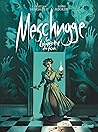
BOOKS: “Meschugge” by Benni Bodker

Meschugge: Le Labyrinthe du fouMeschugge: Le Labyrinthe du fou by Benni Bødker
My rating: 4 of 5 stars

Seller Site

This graphic novel reminded me of “The Alienist” TV series (based — itself — on a popular novel,) particularly the Sara Howard (Dakota Fanning) arc in which a young, upper-class woman becomes a detective in the (turn of the 20th century) world which sees women as too delicate to be subjected to such horrors.

While the lead in this book bears striking resemblance to Sara Howard and the settings are quite similar, the book also features major differences that make it its own unique story. First of all, Kabbalistic Judaism plays a central role in the crimes in this book. Secondly, this story creates the impression that the supernatural might be involved. I don’t believe it is unambiguously supernatural, one could explain things in a rational way as well, but “The Alienist” takes a clear rationalist approach.

I enjoyed the story, and it kept me reading. There were a couple points in the story that didn’t make sense to me, particularly an occurrence in which a character is being pursued and seems to be in a dire situation, and then suddenly is free. This mechanism is sometimes used with characters who’ve been established as being extremely capable individuals because it is as if to say, “I don’t even need to show you this person getting out of this spot because it’s not a big enough trouble to fuss about,” (it’s also often done in poor TV and movies for budget reasons,) but this character is not a master escape artist (being out of her depths is part of what creates such great tension throughout the story.)

An exciting premise and interesting characters, but with a few rough edges in plotting.

View all my reviews

“Sad” [Poetry Style #19 (悲慨)] by Sikong Tu [w/ Audio]

Strong winds ripple water;
Forest trees are laid low...
A bitter urge to die --
One can't come; one can't go.
Ten decades flow, stream-like;
Riches are cold, gray ash.
Life 's a death procession --
Unless you're adept and brash,
And can take up the sword
To hasten the anguish...
No rustling dry leaves, or
Leaky roof as you languish.

NOTE: The late Tang Dynasty poet, Sikong Tu (a.k.a. Ssŭ-k‘ung T‘u,) wrote an ars poetica entitled Twenty-Four Styles of Poetry. It presents twenty-four poems that are each in a different tone, reflecting varied concepts from Taoist philosophy and aesthetics. Above is a crude translation of the nineteenth of the twenty-four poems. This poem’s Chinese title is 悲慨, and it has been translated as: “Despondent,” and “Sorrowful.”

“Tortuous” [Poetry Style #17 (委曲)] by Sikong Tu [w/ Audio]

Climbing Taihang Mountain,
On the green winding way.
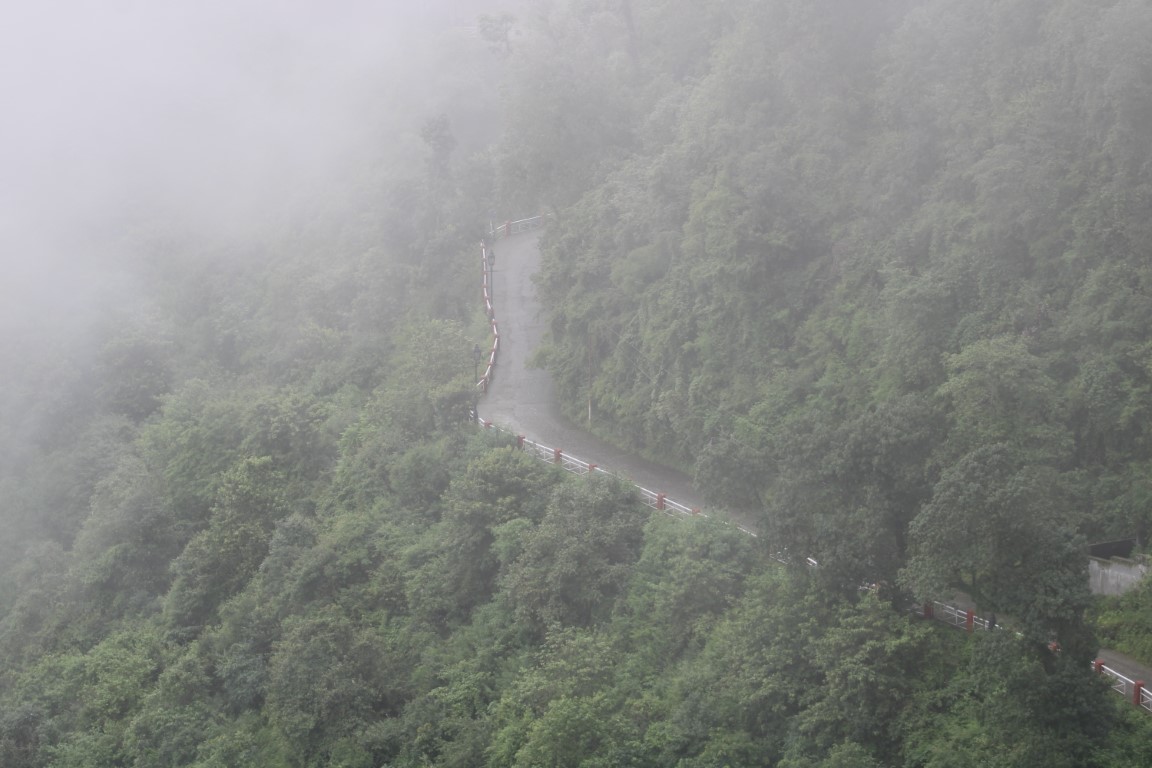
The jade-lined trail in fog,
Floral scents from the gray.
Stuck in unflowing time,
'Til a song sung bright and gay...
I'm steered back to my past
With the grace of ghosts at play.
Skirting roiling waters,
A Roc soars after prey.
The Tao is unbounded --
Round or square as it may.

NOTE: The late Tang Dynasty poet, Sikong Tu (a.k.a. Ssŭ-k‘ung T‘u,) wrote an ars poetica entitled Twenty-Four Styles of Poetry. It presents twenty-four poems that are each in a different tone, reflecting varied concepts from Taoist philosophy and aesthetics. Above is a crude translation of the seventeenth of the twenty-four poems. This poem’s Chinese title is 委曲, and has been translated as: “Grievance” and “In Tortuous Ways.”

“Sparse” [Poetry Style #15 (疏野)] by Sikong Tu [w/ Audio]

Ah, make nature your home;
Be true and be unchained.
Enrichment by control
Can never be sustained.
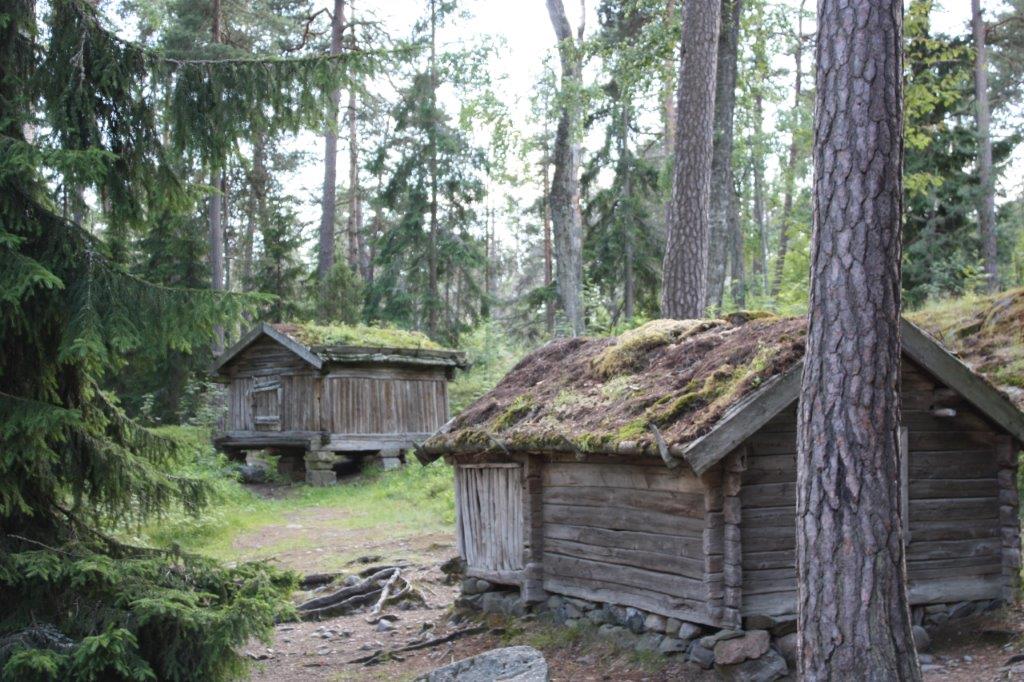
Build your hut in the pines:
Toss your hat and read verse.
Know the dawn from the dusk,
But not time -- cradle to hearse.
If your life suits you well
Why must you strive and strain?
If you're unbound as sky,
This style you have attained.

NOTE: The late Tang Dynasty poet, Sikong Tu (a.k.a. Ssŭ-k‘ung T‘u,) wrote an ars poetica entitled Twenty-Four Styles of Poetry. It presents twenty-four poems that are each in a different tone, reflecting varied concepts from Taoist philosophy and aesthetics. Above is a crude translation of the fifteenth of the twenty-four poems. This poem’s Chinese title is 疏野 and it has been translated as “Seclusion” [Giles,] “The Carefree and Wild Style” [Barnstone / Ping,] as well as, “Unrestricted,” “Seclusion,” and “Sparse Wilderness.”

“Jade Gate Pass” by Wang Wei [w/ Audio]

Dawn rain has washed the city of its dust;
The refreshed hotel willows tremble in a gust.
My friendly advice, you dry up another glass,
You have no acquaintance beyond The Jade Gate Pass.

“A Recluse” by Wang Changling / Amy Lowell [w/ Audio]

A cold rain blurs the edges of the river.
Night enters Wu.
In the level brightness of dawn
I saw my friend start alone for the Ch'u mountain.
I gave him this message for my friends and relations:
My heart is a piece of ice in a jade cup.
This is the Amy Lowell translation of a poem by Tang Dynasty Poet, Wang Changling (王昌齡) --a.k.a. Shaobo (少伯) 

“Spritual” [Poetry Style #13 (精神)] by Sikong Tu [w/ Audio]

All wish to return,
Hoping others will come:
A clear water ride
Where strange flowers bud,
And lime-green parrots fly
The willows, to and from --
The mountain folk arrive
Deep bowls fill with wine...
To take a life beyond
And not end in ash,
But still be of nature;
Who's up to that task?

NOTE: The late Tang Dynasty poet, Sikong Tu (a.k.a. Ssŭ-k‘ung T‘u,) wrote an ars poetica entitled Twenty-Four Styles of Poetry. It presents twenty-four poems that are each in a different tone, reflecting varied concepts from Taoist philosophy and aesthetics. Above is a crude translation of the thirteenth of the twenty-four poems. This poem’s Chinese title is 精神, and it has been translated as: “Essential,” “Animal Spirits,” and “Spirit.”