“Impromptu Lines Written on a Spring Day” [春日偶成] by Cheng Hao [程颢]

Towards noon fleecy clouds waft in the gentle breeze;
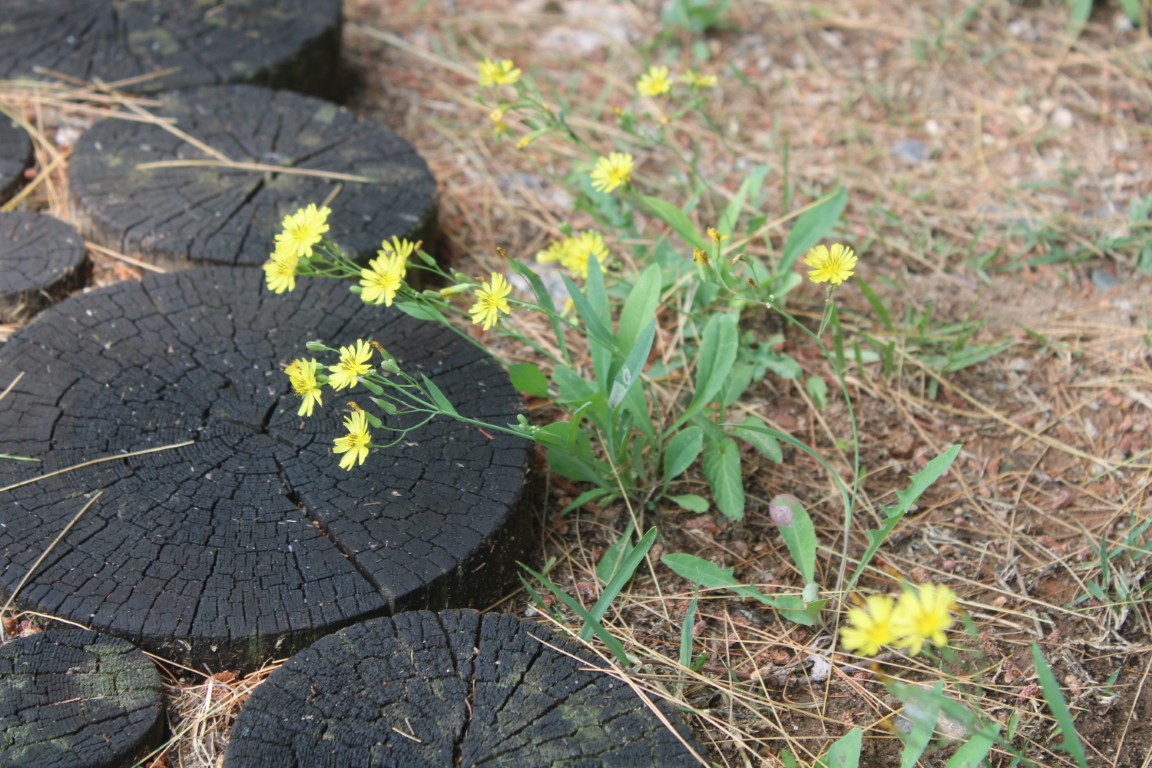
I cross the stream amid flowers and willow trees.
What do the worldlings know about my hearty pleasure?
They'd only take me for a truant fond of leisure.

Note: This is the joint translation of Xu Yuanchong and Xu Ming found in the edition of Golden Treasury of Quatrains and Octaves on which they collaborated (i.e. China Publishing Group: Beijing (2008.))

“We should not mind so small a flower” by Emily Dickinson [w/ Audio]

We should not mind so small a flower 
Except it quiet bring
Our little garden that we lost
Back to the Lawn again -

So spicy her Carnations nod -
So drunken, reel her Bees -
So silver, steal a hundred flutes
From out a hundred trees -

That whoso sees this little flower
By faith, may clear behold
The Bobolinks around the throne
And Dandelions gold.

“America” by Claude McKay [w/ Audio]

Although she feeds me bread of bitterness,
And sinks into my throat her tiger’s tooth,
Stealing my breath of life, I will confess
I love this cultured hell that tests my youth.
Her vigor flows like tides into my blood,
Giving me strength erect against her hate,
Her bigness sweeps my being like a flood.
Yet, as a rebel fronts a king in state,
I stand within her walls with not a shred
Of terror, malice, not a word of jeer.
Darkly I gaze into the days ahead,
And see her might and granite wonders there,
Beneath the touch of Time’s unerring hand,
Like priceless treasures sinking in the sand.

“America” by Walt Whitman

Centre of equal daughters, equal sons,
All, all alike endear’d, grown, ungrown, young or old,
Strong, ample, fair, enduring, capable, rich,
Perennial with the Earth, with Freedom, Law and Love,
A grand, sane, towering, seated Mother,
Chair’d in the adamant of Time.

BOOK: “The Adventures of Tom Sawyer” by Mark Twain

The Adventures of Tom SawyerThe Adventures of Tom Sawyer by Mark Twain
My rating: 5 of 5 stars

Available Online – Project Gutenberg

This is Twain’s best-known and probably most beloved work — though arguably neither his best nor most impactful piece. It tells the tale of a mischievous but warmhearted boy, Tom Sawyer, and a series of formative events in Sawyer’s youth from learning how to trick other kids into doing his chores to being trapped deep in a cave with his sweetheart. While there is a plot throughline involving the closest thing the novel has to a villain, Injun Joe, for the most part the story is episodic. That’s for the best because if too much weight were placed on that throughline, it’s resolution would feel flat. As it is, we see Sawyer and his friends, particularly Huck Finn, subjected to trials and challenges (often of their own making) that present moral dilemmas and the need to steel themselves for the occasion.

It’s often been said that this book isn’t as powerful or influential as its sequel, Adventures of Huckleberry Finn, which this book sets up nicely I should point out. It is probably true that Huck Finn is more profound. That said, Tom Sawyer could be said to be a cleaner read in that Huck Finn gets a bit muddled, particularly toward its end.

I’d highly recommend this book for all readers.

View all my reviews

“Sundown” by Henry Wadsworth Longfellow [w/ Audio]

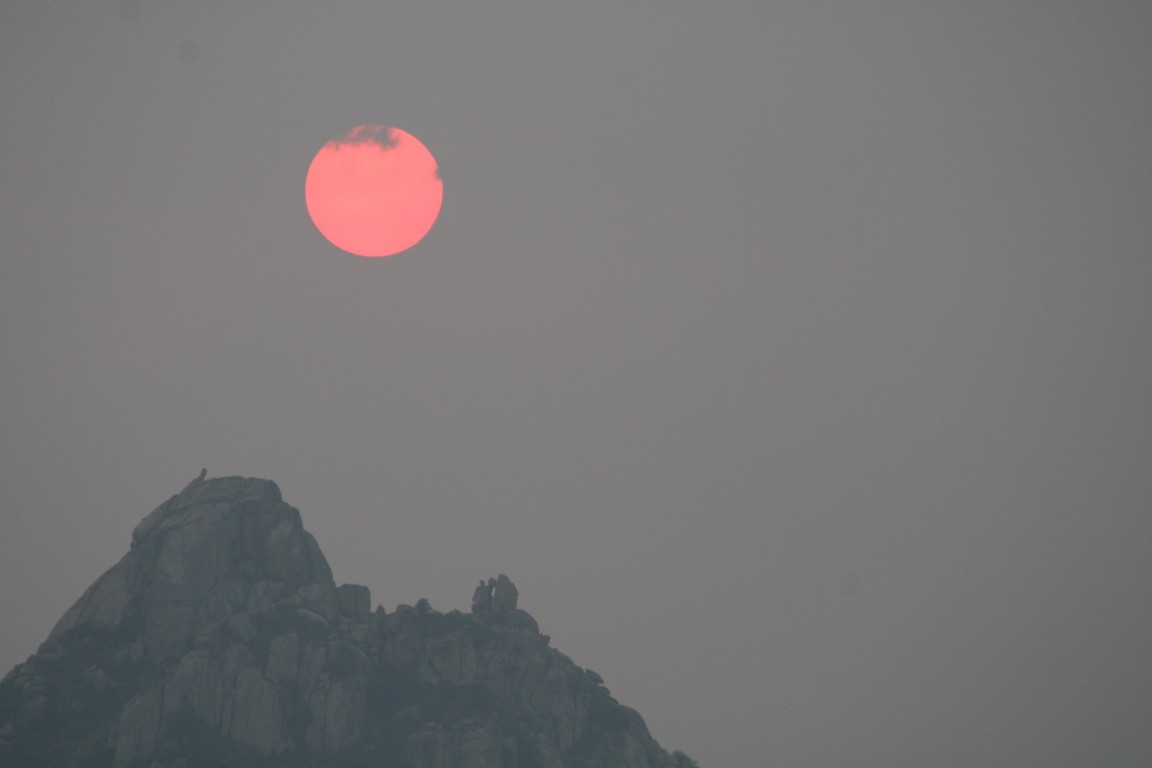
The summer sun is sinking low;
Only the tree-tops redden and glow:
Only the weathercock on the spire
Of the neighboring church is a flame of fire;
All is in shadow below.

O beautiful, awful summer day,
What hast thou given, what taken away?
Life and death, and love and hate,
Homes made happy or desolate,
Hearts made sad or gay!

On the road of life one mile-stone more!
In the book of life one leaf turned o'er!
Like a red seal is the setting sun
On the good and the evil men have done,--
Naught can to-day restore!

“To a Husband” by Amy Lowell

Brighter than fireflies upon the Uji River
Are your words in the dark, Beloved.

BOOK REVIEW: “New Story of the Stone” by Jianren Wu [Trans. by Liz Evans Weber]

New Story of the Stone: An Early Chinese Science Fiction NovelNew Story of the Stone: An Early Chinese Science Fiction Novel by Jianren Wu
My rating: 5 of 5 stars

Publisher Site – Columbia University Press

This book is presented as a sequel to the Chinese literary classic (alternatively) known as Dream of the Red Chamber or Story of the Stone. The central character is a scholarly traveler by the name of Baoyu. The first part of the book is set in China around the time of the Boxer Rebellion, an event that features in the story. Throughout this portion, the book reads like historical fiction. However, Baoyu’s travels eventually bring him to a hidden realm, a technologically advanced utopia within China. It is here where Baoyu’s adventures get fantastical and otherworldly, and the book ventures into the domain of Science Fiction.

The setting of the book reminds me a little of Marvel’s Wakanda from Black Panther. Perhaps both instances of worldbuilding were motivated by the humiliated colonists’ fantasy of being more advanced than those who pull the strings for once, or of showing their (respective) lands to be places of “crouching tigers and hidden dragons” (i.e. where great talents exist but remain unseen.) (Note: While China wasn’t on-the-whole colonized by a Western country, its interaction with England and other Western nations left it forced to accept terms unfavorable and undesirable to China (not to mention the outright colonized enclaves such as Hong Kong and Macau.) While the publisher has emphasized the science fiction aspect of this work, it is an anticolonial work through and through. The book can come across as xenophobic and nationalistic in places, but this only reminds the reader of how such positions might be arrived at under the boot of foreign influence.

The book is readable though philosophical and is well worth reading for those interested in developing a deeper insight into Chinese perspectives.

View all my reviews

Song – “My silks and fine array” by William Blake [w/ Audio]

My silks and fine array,
My smiles and languish'd air,
By love are driv'n away;
And mournful lean Despair
Brings me yew to deck my grave:
Such end true lovers have.

His face is fair as heav'n,
When springing buds unfold;
O why to him was't giv'n,
Whose heart is wintry cold?
His breast is love's all worship'd tomb,
Where all love's pilgrims come.

Bring me an axe and spade,
Bring me a winding sheet;
When I my grave have made,
Let winds and tempests beat:
Then down I'll lie, as cold as clay.
True love doth pass away!

“The Taoist Temple Revisited” [再游玄都观] by Liu Yuxi [刘禹锡]

In half of the wide courtyard only mosses grow;
Peach blossoms all fallen, only rape flowers blow.
Where is the Taoist planting peach trees in this place?
Only I come again after my new disgrace.

Note: This is the joint translation of Xu Yuanchong and Xu Ming found in the edition of <em>Golden Treasury of Quatrains and Octaves</em> on which they collaborated (i.e. China Publishing Group: Beijing (2008.))

The “new disgrace” referenced was Liu Yuxi’s second exile.