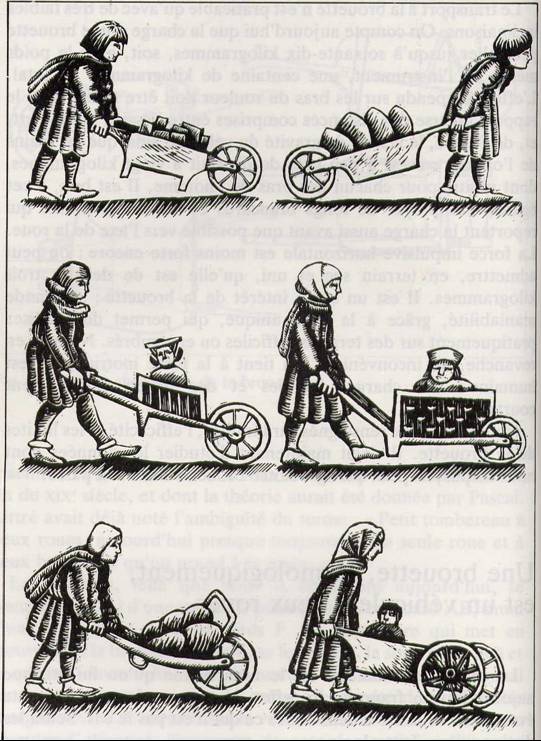
so much depends
 upon

a red wheel
 barrow

glazed with rain
 water

beside the white
 chickens
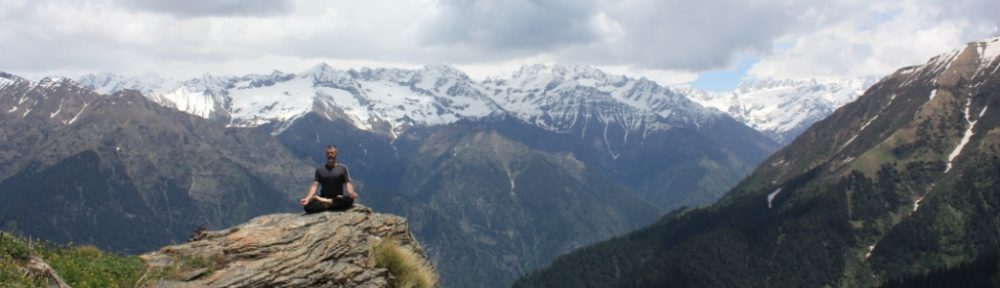
so much depends
upon
a red wheel
barrow
glazed with rain
water
beside the white
chickens
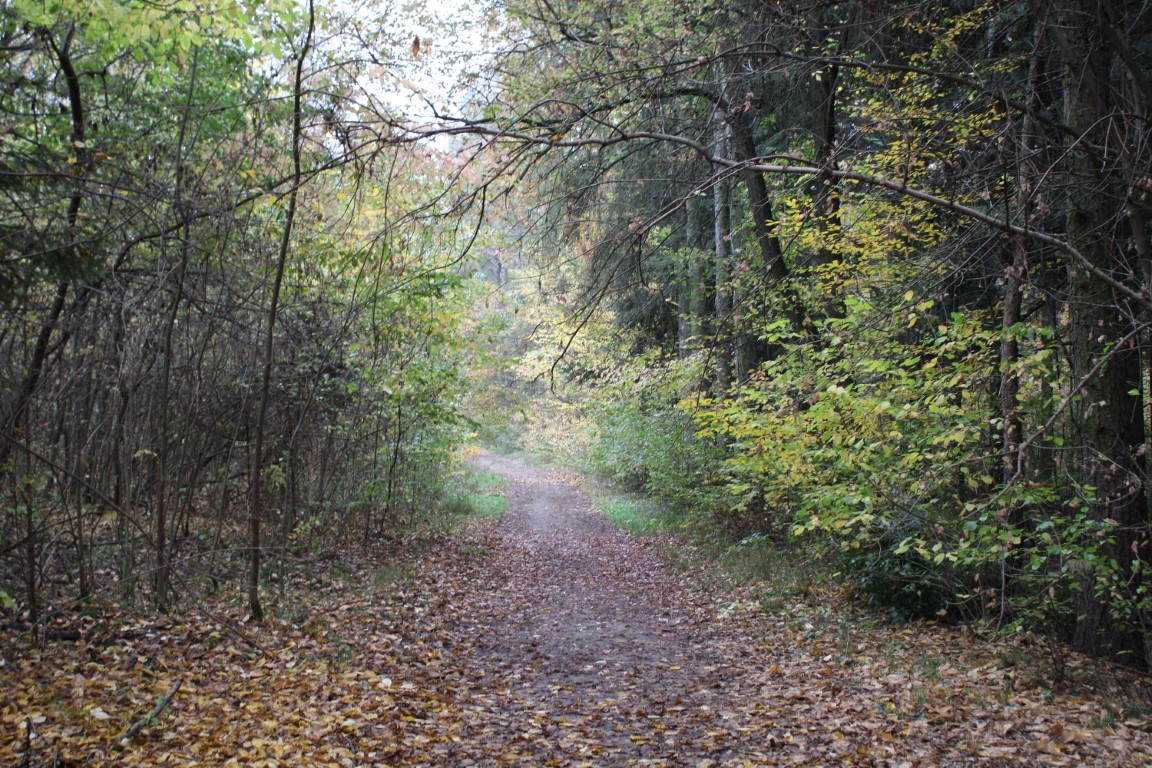
Two roads diverged in a yellow wood,
  And sorry I could not travel both
 And be one traveler, long I stood
  And looked down one as far as I could
 To where it bent in the undergrowth;

Then took the other, just as fair,
  And having perhaps the better claim,
 Because it was grassy and wanted wear;
  Though as for that the passing there
 Had worn them really about the same,

And both that morning equally lay
  In leaves no step had trodden black.
 Oh, I kept the first for another day!
  Yet knowing how way leads on to way,
 I doubted if I should ever come back.

I shall be telling this with a sigh
  Somewhere ages and ages hence:
 Two roads diverged in a wood, and I --
  I took the one less traveled by,
 And that has made all the difference.
If you could meet a historical figure, who would it be and why?
Assuming no babel fish technology – i.e. that we’d need a common language – I’d say William Blake, Walt Whitman, or Mark Twain. The latter would probably be the most fun, the middle the most uplifting, and the first the most insightful (or perhaps most mystical.)

Not like the brazen giant of Greek fame,
 With conquering limbs astride from land to land;
 Here at our sea-washed, sunset gates shall stand
 A mighty woman with a torch, whose flame
 Is the imprisoned lightning, and her name
 Mother of Exiles. From her beacon-hand
 Glows world-wide welcome; her mild eyes command
 The air-bridged harbor that twin cities frame.
 "Keep, ancient lands, your storied pomp!" cries she
 With silent lips. "Give me your tired, your poor,
 Your huddled masses yearning to breathe free,
 The wretched refuse of your teeming shore.
 Send these, the homeless, tempest-tost to me,
 I lift my lamp beside the golden door!"

I hear America singing, the varied carols I hear,
 Those of mechanics, each one singing his as it should be blithe and strong,
 The carpenter singing his as he measures his plank or beam,
 The mason singing his as he makes ready for work, or leaves off work,
 The boatman singing what belongs to him in his boat, the deckhand singing on the steamboat deck,
 The shoemaker singing as he sits on his bench, the hatter singing as he stands,
 The wood-cutter's song, the ploughboy's on his way in the morning, or at noon intermission or at
   sundown,
 The delicious singing of the mother, or of the young wife at work, or of the girl sewing or washing,
 Each singing what belongs to him or her and none else,
 The day what belongs to the day -- at night the party of young fellows, robust, friendly,
 Singing with open mouths their strong melodious songs.

Tell all the truth but tell it slant --
   Success in Circuit lies
 Too bright for our infirm Delight
   The Truth's superb surprise
 As Lightning to the Children eased
   With explanation kind
The Truth must dazzle gradually
   Or every man be blind --
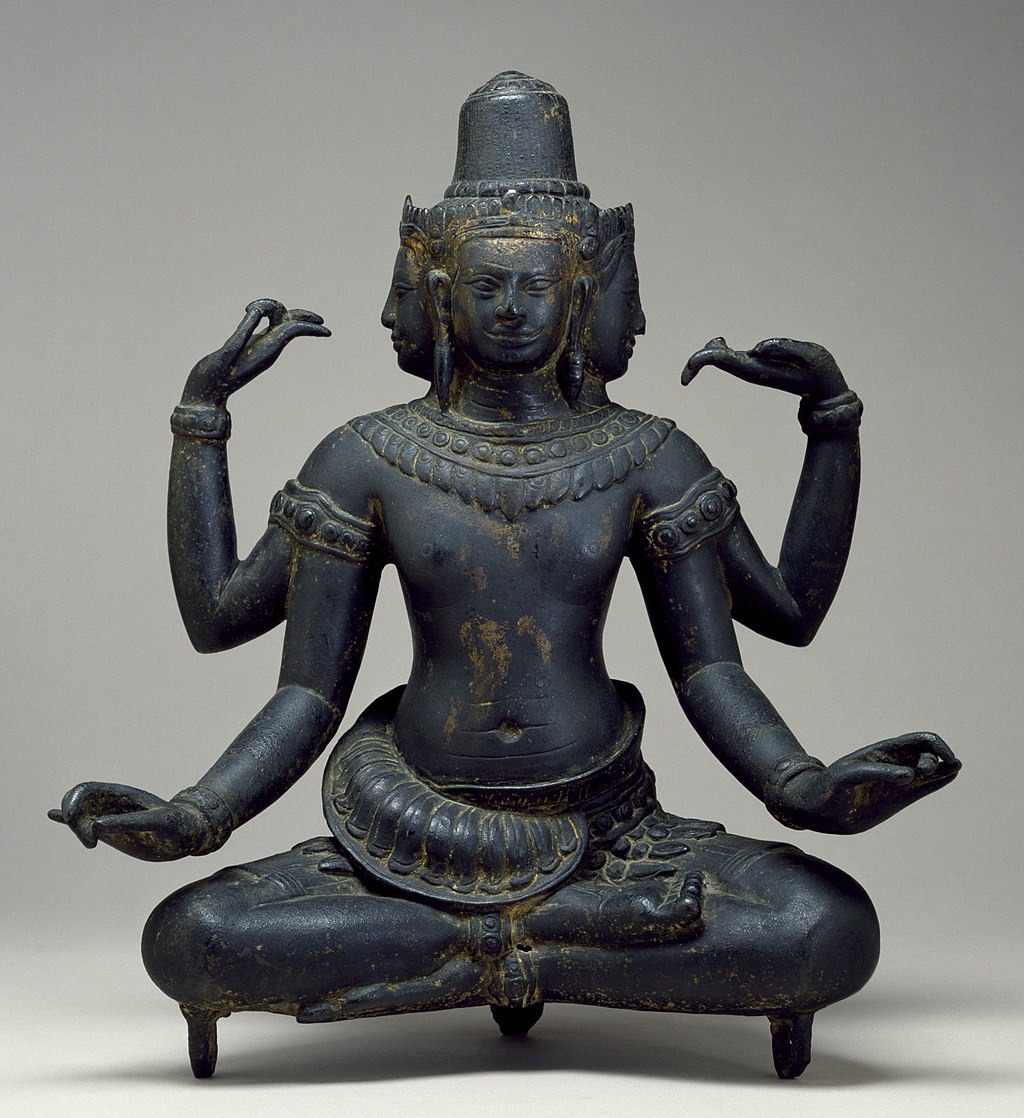
If the red slayer think he slays,
   Or if the slain think he is slain,
 They know not well the subtle ways
   I keep, and pass, and turn again.

Far or forgot to me is near;
   Shadow and sunlight are the same;
 The vanished gods to me appear;
   And one to me are shame and fame.

They reckon ill who leave me out;
   When me they fly, I am the wings;
 I am the doubter and the doubt,
   I am the hymn the Brahmin sings.

The strong gods pine for my abode,
   And pine in vain the sacred Seven;
 But thou, meek lover of the good!
   Find me, and turn thy back on heaven.
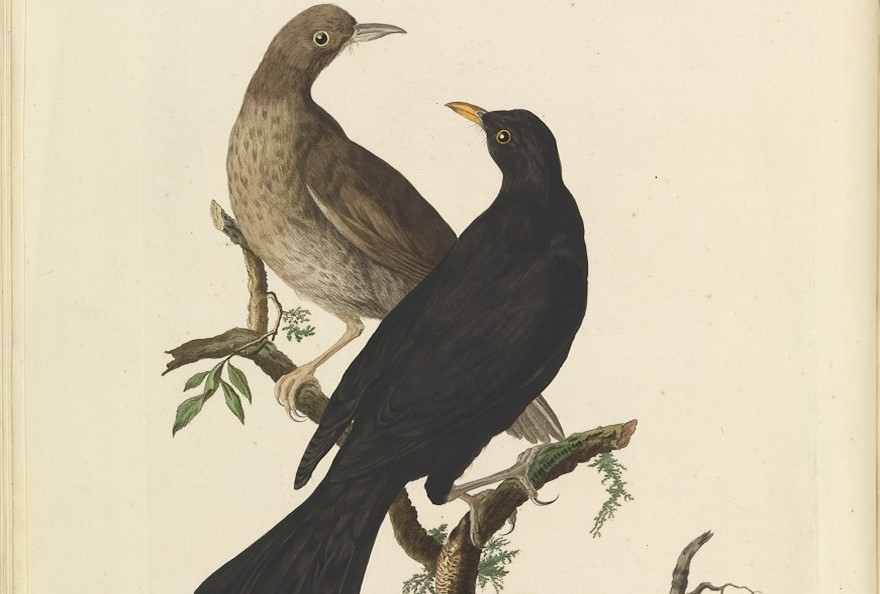
I
 Among twenty snowy mountains,
   The only moving thing
  Was the eye of the blackbird.

II
 I was of three minds,
   Like a tree
  In which there are three blackbirds.

III
 The blackbird whirled in the autumn winds.
   It was a small part of the pantomime.

IV
 A man and a woman
   Are one.
 A man and a woman and a blackbird
   Are one.

V
 I do not know which to prefer,
   The beauty of inflections
 Or the beauty of innuendoes,
   The blackbird whistling
     Or just after.

VI
 Icicles filled the long window
   With barbaric glass.
 The shadow of the blackbird
   Crossed it, to and fro.
 The mood
   Traced in the shadow
     An indecipherable cause.

VII
 Old thin men of Haddam,
   Why do you imagine golden birds?
 Do you not see how the blackbird
   Walks around the feet
     Of the women about you?

VIII
 I know noble accents
   And lucid, inescapable rhythms;
 But I know, too,
   That the blackbird is involved
     In what I know.

IX
 When the blackbird flew out of sight,
   It marked the edge
 Of one of many circles.

X
 At the sight of blackbirds
   Flying in a green light,
 Even the bawds of euphony
   Would cry out sharply.

XI
 He rode over Connecticut
   In a glass coach.
 Once, a fear pierced him,
   In that he mistook
 The shadow of his equipage
   For blackbirds.

XII
 The river is moving.
   The blackbird must be flying.

XIII
 It was evening all afternoon.
   It was snowing
 And it was going to snow.
   The blackbird sat
     In the cedar-limbs.
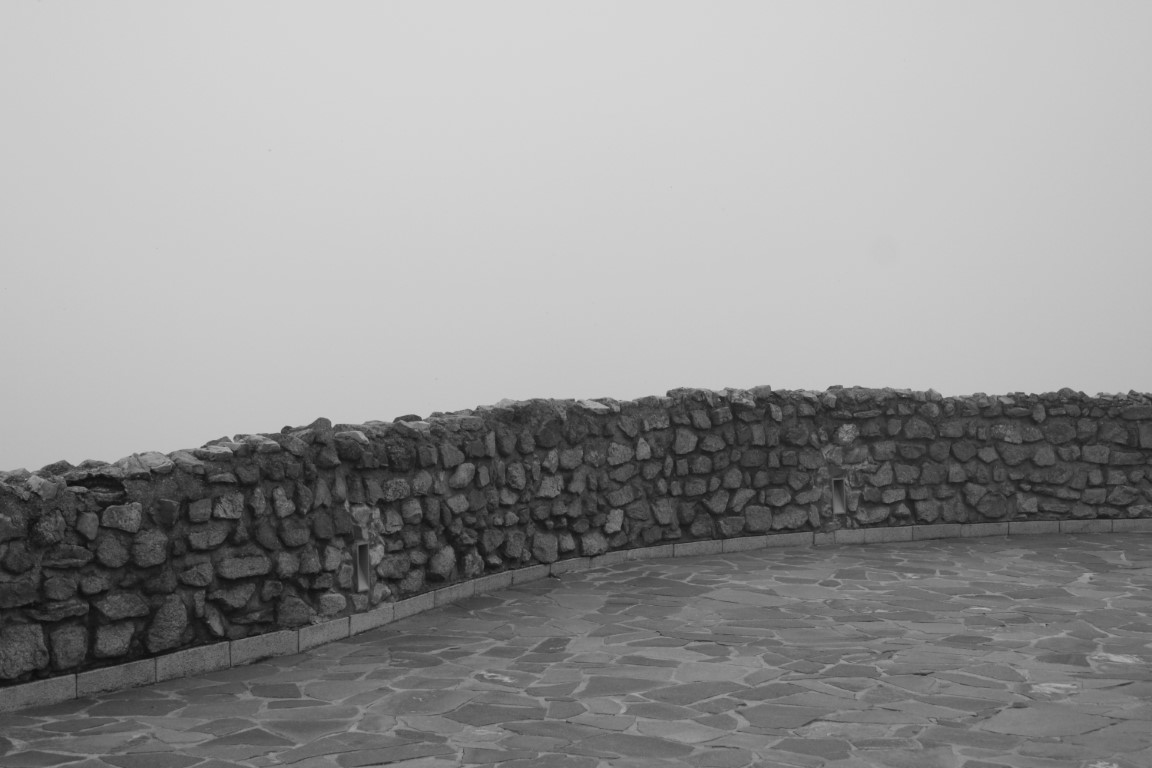
The fog comes
 on little cat feet.

It sits looking
 over harbor and city
  on silent haunches
 and then moves on.
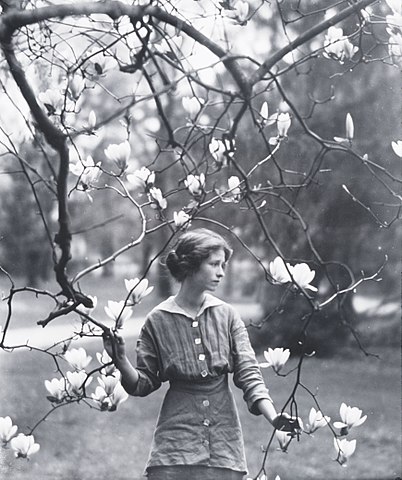
What lips my lips have kissed, and where, and why
   I have forgotten, and what arms have lain
 Under my head till morning; but the rain
   Is full of ghosts tonight, that tap and sigh
 Upon the glass and listen for reply,
   And in my heart there stirs a quiet pain
 For unremembered lads that not again
   Will turn to me at midnight with a cry.

Thus in the winter stands the lonely tree,
   Nor knows what birds have vanished one by one,
 Yet knows its boughs more silent than before:
   I cannot say what loves have come and gone,
 I only know that summer sang in me
   A little while, that in me sings no more.


 Tiger Riding for Beginners