BOOK REVIEW: “War is a Racket” by Smedley D. Butler

War is a Racket: The Antiwar Classic by America's Most Decorated SoldierWar is a Racket: The Antiwar Classic by America’s Most Decorated Soldier by Smedley D. Butler
My rating: 5 of 5 stars

PDF available online

This impassioned essay is a call for a more restrained — some would call it isolationist — application of military force. Regardless of how one might feel about the isolationist stance, you’ll likely be moved by the essay’s central premise that we have too much war because it’s profitable — not profitable for those who fight and die in wars but for businessmen and politicians.

Butler, a US Marine Corps General, was a fascinating character — a two-time Congressional Medal of Honor recipient who served in the Philippines, Tianjin (during the Boxer Rebellion,) at various places across Central America and the Caribbean, and in the First World War in Europe. He was also a whistleblower about a plot to unseat FDR. Butler writes in a conversational style that exudes a commanding presence.

I’d highly recommend this essay for its critical insights by one of the most impressive Marine Corp officers of all time.

View all my reviews

BOOKS: “Idle Thoughts of an Idle Fellow” by Jerome K. Jerome

Idle Thoughts of an Idle FellowIdle Thoughts of an Idle Fellow by Jerome K. Jerome
My rating: 5 of 5 stars

Project Gutenberg Site

This is a collection of fourteen humorous essays on a range of topics related to human existence. Besides the titular topic of living a life of idleness, other discussions include: love, poverty, vanity, attire, eating, pets and babies. (The latter two being distinct topics addressed in different chapters, though not with an altogether different attitude.)

Much of the humor holds up well considering this book originally came out almost a hundred and forty years ago. That said, it must be acknowledged that some of the humor and a number of the attitudes have not aged well and will not necessarily be relatable.

If you’re looking for a collection of essays on life that are humorous, if not contemporary, this book is worth looking into.

View all my reviews

BOOK: “Toleration and Other Essays” by Voltaire

A Treatise on Toleration and Other Essays (Great Minds Series)A Treatise on Toleration and Other Essays by Voltaire
My rating: 5 of 5 stars

Project Gutenberg — Free Access

This collection gathers together eight essays and a poem. The theme that interconnects these works is a petition to avoid petty tribalism and irrationality / superstition in the practice of one’s religion. The titular essay, “On Toleration,” sets the collection’s tone, beginning with its detailing of the murder of Jean Calas on religious grounds and its exploration of many more acts of savagery attributable to sectarian forces in alliance with authoritarian governments. The poem, “Poem on the Lisbon Disaster,” echoes the central idea of “Candide” — i.e. the idea that we live in the best of all possible worlds is patently false.

As one would expect of Voltaire, there is plenty of humor and satire throughout these pieces. The arguments are also generally well supported by facts. It is clear that Voltaire possessed a great deal of the knowledge of his day. That said, the reader may well find some factual errors. Most notably, Voltaire tends to attribute a kind of enlightened utopian vision to cultures with which he was likely largely unfamiliar as he builds a case against many within the culture with which he is familiar. This isn’t to say that there isn’t some truth to Eastern traditions being historically more tolerant of other sects than the Abrahamic religions, but the degree to which he extends these idyllic views of those outside of Europe (and the details, thereof) don’t always seem to comport with the historic record.

While some may be inclined to dismiss this book as a collection of anti-religion writings, it is really not anti-belief at all. (Though he does poke holes in many a Biblical myth, so too does he actually provide a deist argument in favor of the existence of a god or gods in the book’s final essay.) Instead, the collection is anti-intolerance, anti-superstition, and anti-authoritarianism. I’d highly recommend this book for all readers. Whatever flaws it may contain are outweighed by the great importance of its message and the cleverness with which Voltaire conveys said message.

View all my reviews

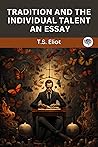
ESSAY: “Tradition and the Individual Talent” by T.S. Eliot

Tradition and the Individual Talent: An EssayTradition and the Individual Talent: An Essay by T.S. Eliot
My rating: 5 of 5 stars

Read for free at the Poetry Foundation

Amazon.in Page

While this is a controversial essay and I don’t accept it wholesale, myself, I would wholeheartedly recommend it as required reading for poets (and other artists.) What is Eliot’s controversial thesis? It’s that poetry should be less about the poet. That broad and imprecise statement can be clarified by considering two ways in which Eliot would make poetry less about the poet. First, Eliot proposes that poets should be in tune to the historic evolution of their art and — importantly — should not be so eager to break the chain with the past masters. He’s not saying a poet needs to be a literary historian, but rather that one be well-read in the poetry of the past. Second, Eliot advocates that a poet avoid packing one’s poetry with one’s personality, and – instead – let one’s personality dissolve away through the act of creation.

A quote from the essay may help to clarify — Eliot says, “Poetry is not a turning loose of emotion, but an escape from emotion; it is not an expression of personality, but an escape from personality.”

One can imagine the accusations of pretension and dogmatism that Eliot received in 1919 from the mass of poets who were moving full speed ahead into poetry that was suffused with autobiography, was avant-garde, and which was free of meter, rhyme and other compositional elements that had once been seen as the defining characteristics of poetry.

I don’t see this essay as being the map to our new home, but rather as the catalyst of a conversation that could move us to a more preferable intermediary location. I have, too often, picked up a collection by a young poet that was entirely autobiographical and (also, too often) of the “everybody hates me, nobody loves me, I think I’ll go eat worms” variety of wallowing in personal feelings. And I always think, when I want to read something depressing, I’ll read something from someone who has lived tragedy — e.g. a Rwandan refugee, not something from a twenty-four-year-old MFA student at some Ivy League school.

So, yeah, maybe we could use more connection to the past and a bit less autobiographical poetry from people who haven’t lived a novel-shaped life.

View all my reviews

BOOKS: “Simple Passion” by Annie Ernaux

Simple PassionSimple Passion by Annie Ernaux
My rating: 5 of 5 stars

Amazon.in Pge

I’ll admit, I picked up this book because Ernaux won the 2022 Nobel Prize for Literature and I’m uncomfortable being ignorant of the work of a Literature Nobel Laureate. Her work is atypical of Nobel Prize winners. She is primarily known as a memoirist rather than a novelist, poet, or even essayist, and while she has a large body of works, many are quite short for prose work — i.e. under 100 pages.

This is a straightforward story of obsession, the author’s obsession with a married man, a diplomat from Eastern Europe during the late days of the Cold War. (The book doesn’t get into any Cold War intrigues, so don’t expect any. It’s a completely personal story.) The autobiographical narrative describes the lifecycle of obsession and is loaded with psychological insight. One sees the degree to which Ernaux’s yearning to be with this man intrudes on all aspects of her life, in as much as she can be said to have a life, so much of it being laid aside for their periodic dalliances. It is the kind of compulsion known mostly to young first lovers and those of addictive personalities.

A couple of the most compelling insights come as fourth wall breaks when Ernaux offers insight into her thoughts on writing. (One is that writing should have an effect like pornography [not necessarily be pornographic,] and another is that she writes to learn if anyone else does the things she does.)

I enjoyed read this. It’s an extremely fast read as it’s only around sixty pages and puts the reader in that compulsive mindset. I’d highly recommend it. I can’t speak to how typical it is of her work because it’s the first I’ve read from her, but it was mentioned prominently in the “best of” lists that came out around the time of her Nobel win.

View all my reviews

Five Wise Lines from In Praise of Shadows by Jun’ichirō Tanizaki

Have you never felt a sort of fear in the face of the ageless, a fear that in that room you might lose all consciousness of the passage of time, that untold years might pass and upon emerging you should find you had grown old and gray?

But our thoughts do not travel to what we cannot see. The unseen for us does not exist.

This was the genius of our ancestors, that by cutting off the light from this empty space they imparted to the world of shadows that formed there a quality of mystery and depth superior to that of any wall painting or ornament.

I wonder if my readers know the color of that ‘darkness seen by candlelight.’ It was different in quality from darkness on the road at night. It was a repletion, a pregnancy of tiny particles like fire ashes, each particle luminous as a rainbow.

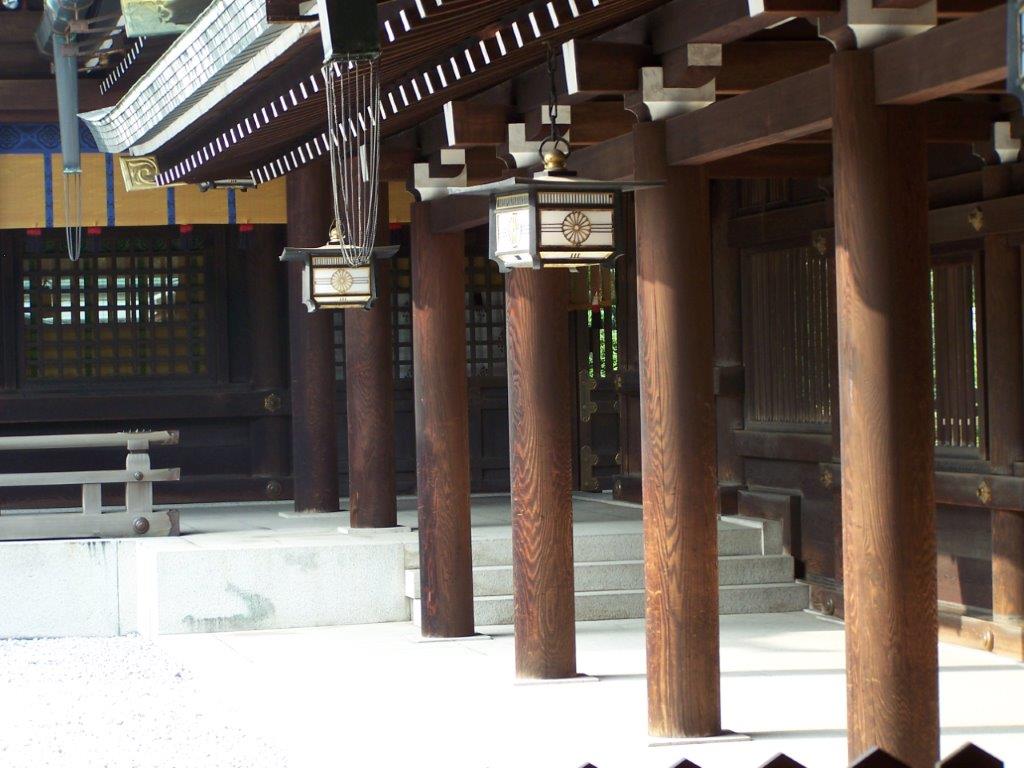
Whenever I see the alcove of a tastefully built Japanese room, I marvel at our comprehension of the secrets of shadows, our sensitive use of light and shadow.

BOOKS: In Praise of Shadows by Jun’ichirō Tanizaki

In Praise of ShadowsIn Praise of Shadows by Jun’ichirō Tanizaki
My rating: 5 of 5 stars

Amazon.in Page

Tanizaki’s essay on Japanese aesthetics doesn’t just show the reader the simple, rustic, and weathered traits of Japanese beauty, it fully submerges them in an otherworldly place ruled by different principles of seeing. So enamored with this pre-modern Japanese aesthetic was Tanizaki that we are convinced he would give up all present-day conveniences to see the world this way (but, alas, he recognizes the impossibility of maintaining a household or business in today’s world that way.)

While the book is principally a tour of this Japanese shadow world, moving from architecture to toilets to lacquerware to Noh plays to skin tones to hotels (with other stops along the way,) it is also a critique of modernity, and particularly a modernity shaped by the West by virtue of Western countries building a lead in a number of key technologies. The most crucial of these technologies, and the one Tanizaki most decries, is electric lighting, which does away with the artistic beauty that derives from the interplay of varied toned shadows (and occasionally a little bit of light.) [I should say, he’s not bashing the Western technology or ways, but rather how poorly they work with maintaining Japanese aesthetic ways.]

I’d highly recommend this book for all readers. If you’re interested in aesthetics, art, architecture, culture, or “things Japanese,” then all the more so, but I can’t remember the last time description pulled me into a book as hard as this one. The essay can be a bit rambling and shifts from euphoria to rant and back, rapidly, but that is part of its magic.

View all my reviews

BOOKS: A Few Rules for Predicting the Future by Octavia Butler

A Few Rules for Predicting the Future: An EssayA Few Rules for Predicting the Future: An Essay by Octavia E. Butler
My rating: 5 of 5 stars

Amazon.in Page

Release Date: April 16, 2024

This brief essay by one of science fiction’s greats, Octavia Butler, discusses her thoughts about forecasting the future and why it’s worth doing even though it’s so difficult (at some level of precision– even impossible.) Butler tells a few stories about questions from fans, being prescribed medication, and growing up during the space race and Cold War, stories that cleverly present her thoughts on the challenging art of anticipating the future.

It should be pointed out that this is a very short work. Even the sixty-ish page count is deceptive as that is accomplished with lots of white space, with large fonts, and even with colorful blank pages (and / or artwork.) If you’re paying full book price for it, be forewarned that, as clever and quotable as it is, it’s essentially magazine article length (and not a long article at that.)

If you can get your hands on this essay for a price commensurate with its word count, I’d highly recommend reading it.

View all my reviews

Five Wise Lines from Tsurezuregusa by Kenkō

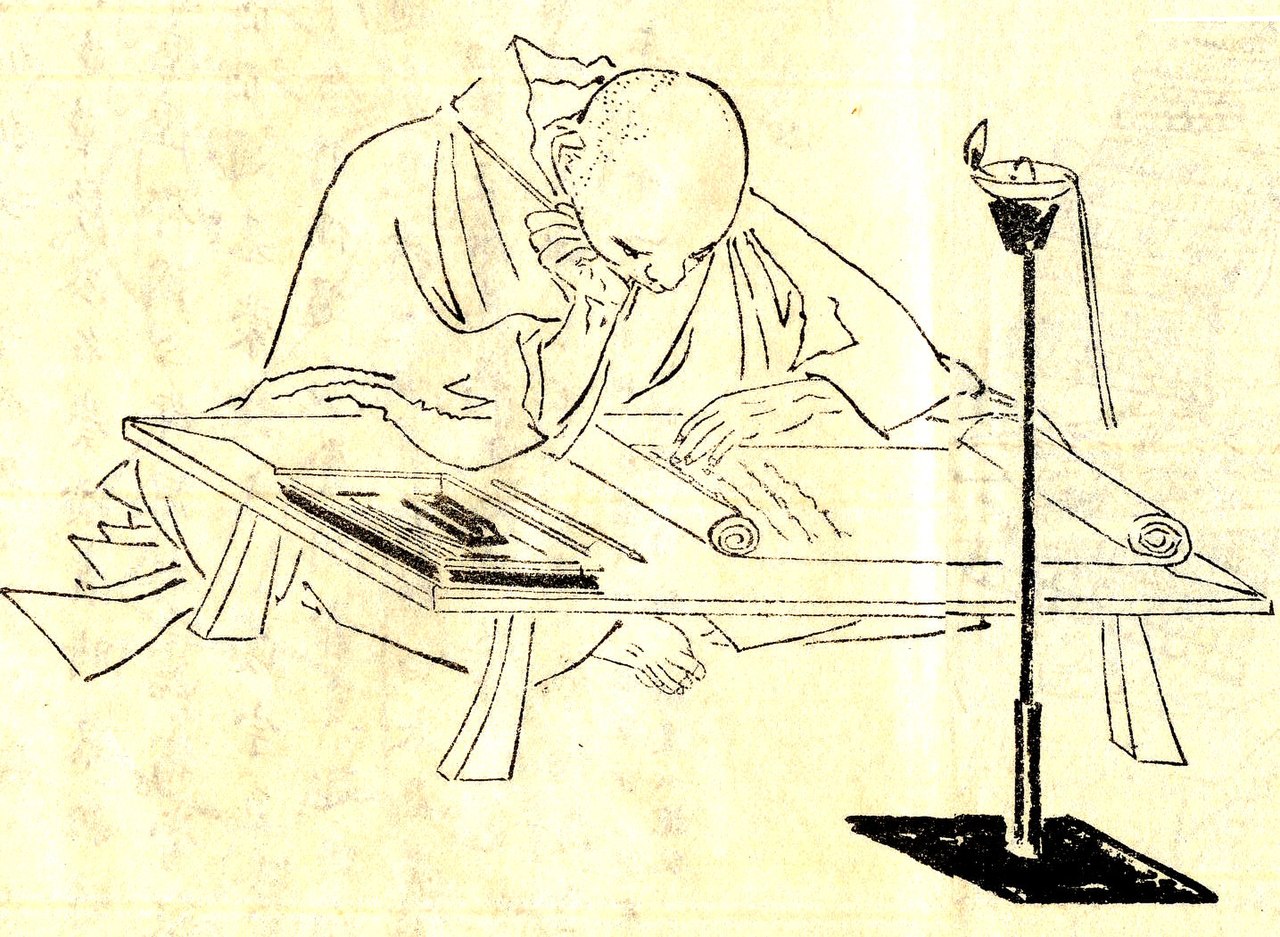
Yoshida Kenkō by Kikuchi Yosai [Date Unknown]

There is much to admire, though, in a dedicated recluse.

Kenkō Yoshida, Essays in Idleness (No. 1)

Going on a journey, whatever the destination, makes you feel suddenly awake and alive to everything.

Kenkō Yoshida, Essays in IdleNess (No. 15)

You can find solace for all things by looking at the moon.

Kenkō Yoshida, Essays in Idleness (no. 21)

Something left not quite finished is very appealing, a gesture toward the future.

Kenkō Yoshida, Essays in Idleness (No. 82)

It’s in easy places that mistakes will always occur.

Kenkō Yoshida, Essays in Idleness (No. 109)

CITATION: Kenkō Yoshida & Kamo no Chōmei. 2013. Kenkō and Chōmei: Essays in Idleness and Hōjōki. London: Penguin. 206pp.

Five Wise Lines from Chōmei’s Hōjōki

drawing by Kikuchi Yōsai

On flows the river ceaselessly, nor does its water ever stay the same.

 Kamo no Chōmei, Hōjōki

No one owns a splendid view, so nothing prevents the heart’s delight in it.

Kamo no Chōmei, Hōjōki

Knowing what the world holds and its ways, I desire nothing from it, nor chase after its prizes. My one craving is to be at peace; my one pleasure is to live free from troubles.

Kamo no Chōmei, Hōjōki

These days, I divide myself into two uses — these hands are my servants, these feet my transport.

Kamo no Chōmei, Hōjōki

When I chance to go down to the capital, I am ashamed of my lowly beggar status, but once back here again I pity those who chase after the sordid rewards of the world.

Kamo no Chōmei, Hōjōki

Reference: Saigyō Hōshi, Kamo no Chōmei, Yoshida Kenkō. 2021. Three Japanese Buddhist Monks. New York: Penguin Books. 112pp.

Available Here