PROMPT: First Name

Daily writing prompt
Write about your first name: its meaning, significance, etymology, etc.

Having been raised in a Catholic household, I wouldn’t have this name if one or more saints hadn’t already. In my case, there are several Saint Bernards, and I don’t know that my parents had any particular one in mind. As far as I know, none were associated with Ireland, from whence my ancestry lies. [St. Bernard of Clairvaux seems to be the most famous St. Bernard – he’s “The St. Bernard,” if you will – excepting of course Chris the St. Bernard dog who starred in the 1992 movie “Beethoven” whose name was actually Chris and his breed was “St. Bernard” so, technically, Clairvaux is still king of the St. Bernards.] I also know that it’s not the first time this name appeared in my genealogical line, but don’t know much more than that.

I understand the etymology of the name is Germanic and that it means something like “Bear Hardy,” with which I’m pleased. (Could have been much worse — e.g. “Squirrel Brave” or “Bear Smelling.”)

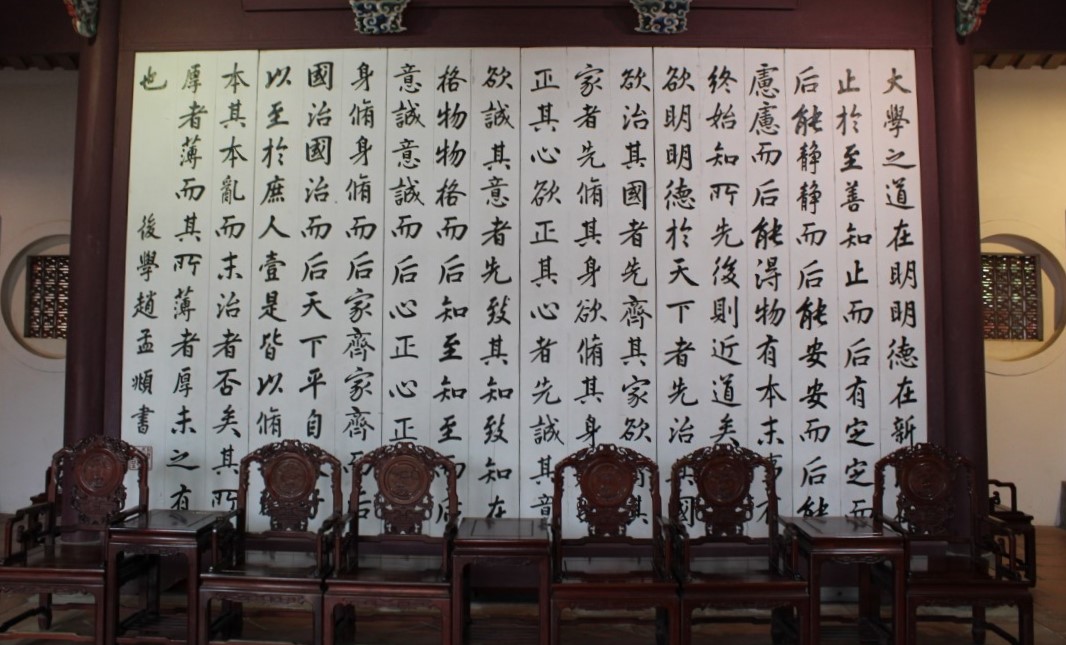
“The Joy of Words” by Lu Ji [w/ Audio]

Writing is joy --
so saints and scholars all pursue it.

A writer makes new life in the void,
knocks on silence to make a sound,
binds space and time on a sheet of silk
and pours out a river from an inch-sized heart.

As words give birth to words
and thoughts arouse deeper thoughts,
they smell like flowers giving off scent,
spread like green leaves in spring;
a long wind comes, whirls into a tornado of ideas,
and clouds rise from the writing-brush forest.

Translation by Tony Barnstone and Chou Ping in The Art of Writing (1996) Boston: Shambhala.

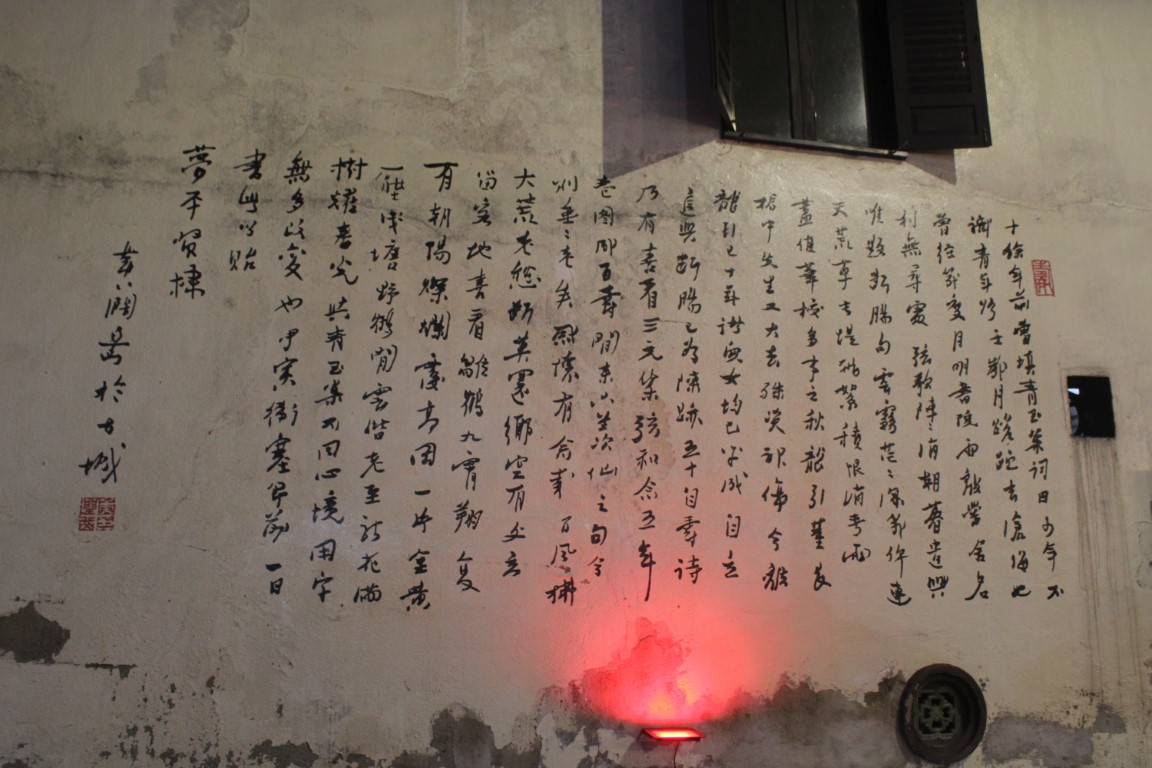
The Writing on the Wall [Free Verse]

I see the writing on the wall,
and find it untrustworthy
because of all the stories
of valiant warriors
framed for treason
with forged poems
scrawled on tavern walls.

And of the virtuous men
who did write rancorous poems,
but did so while blackout drunk.

And I wonder whether the words
I am seeing are forged or written
under the influence
of intoxicants,
or -- possibly -- they are the truth.

But I cannot read them,
so I find them irrelevant,
though they may convey
crucial information,
such as:
- the existence of a vampire infestation, or
- the presence of cholera in the town well.

So, I can see the writing on the wall,
but I find it neither trustworthy
nor relevant --
(though my life may depend
on its contents.)

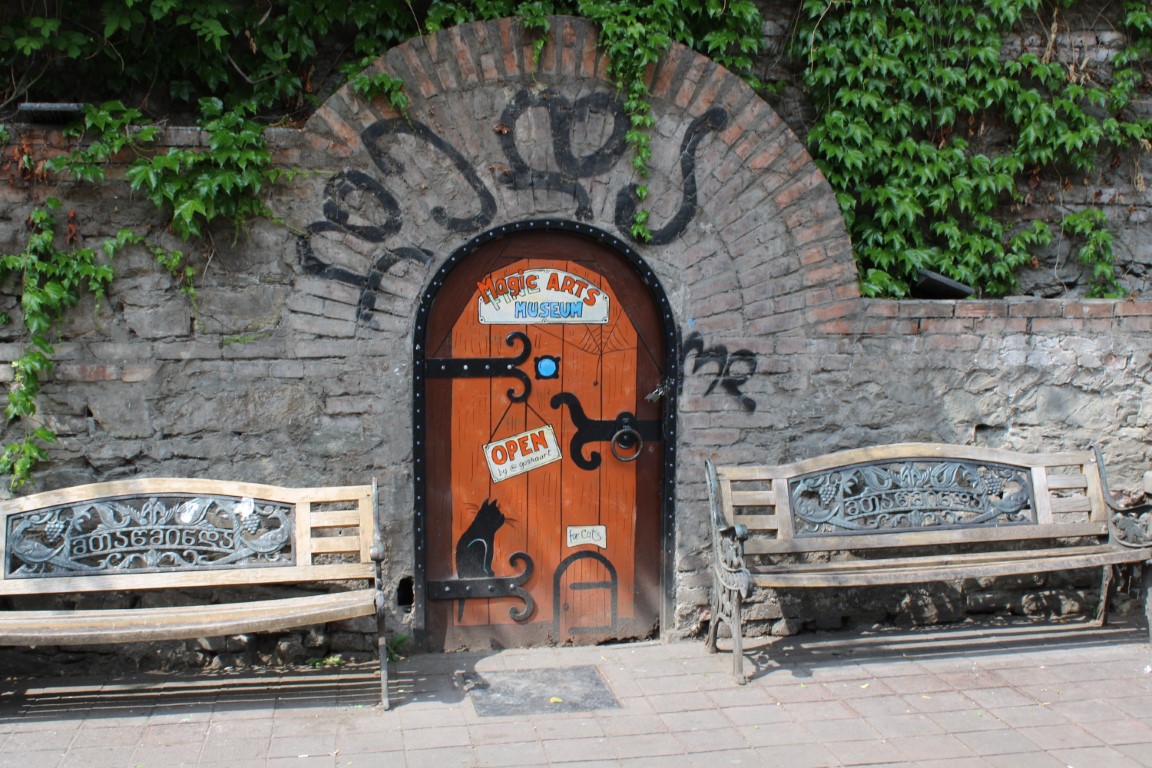
Introduction to Spellcasting [Lyric Poem]

We cast our spells by way of words --
Each sound, sacred. Its magic blurred
By mundane ways and untrained ears --
Failure to feel one's way to tears.

So, we're lost upon silent seas
Even when one could hear with ease:
Because boundless is speech's spread,
And boundless, still, within one's head.

Some seek their way to the magic
By means that are truly tragic,
When all they really need to do
Is listen as it passes through.

PROMPT: Ban

If you could permanently ban a word from general usage, which one would it be? Why?

I would ban the word ban because banning is not a thing that should exist. It is not an impulse one should have.

Waiting [Free Verse]

Waiting.
   A space between.

Neither doing,
    nor resting. 

There's something in waiting
    that lies beyond being.

An expectation without promise:

As with Vladimir & Estragon,
    waiting on Beckett's Godot, or
    the Old Man waiting
    at Gao's Bus Stop,
  There may not be a payoff. 

Whatever it is in "waiting" that
    distinguishes it from "being"
    or "resting,"
   it sucks!

All the excitement of expectation,
    nullified by the possibility
    that nothing will happen --
   nothing good, nothing bad...
     just a soul-sucking nothing. 

PROMPT: Favorite Word

What’s your favorite word?

I like the German word “Schadenfreude,” meaning to take joy in another’s misfortune.

I like the idea that a person can be so in touch with their dark side that they can express that bit of pettiness in a single word. So much of language is obfuscation and deceit. Southerners use four words (i.e. “God bless his soul”) to say a person is an idiot, and – even then – the meaning is masked.

Schadenfreude is authentic, and we need more authenticity in language.

PROMPT: Word

If you had to give up one word that you use regularly, what would it be?

THE. Having a definite article contributes to an overly developed sense of specialness and entitlement, bordering on the narcissistic [or should I say, “bordering on A narcissistic” ? ]

Seriously though, I’d like to believe I’ve already jettisoned words with no value-added, or attempt to do so.

Carlin discussed a huge list of euphemisms and weasel words contributing to the weakening of the language, but I try to only use those words to poke fun at the people who use them – e.g. “pre-owned.” Those words function to point out attempts to be manipulative, and so I wouldn’t eliminate them, because that’s an important function.

PROMPT: Word Over Use [i.e. Weasel Words]

What is a word you feel that too many people use?

“Pre-owned” or any other weasel word used to: a.) make people feel better about a decision they shouldn’t feel bad about in the first place. b.) squeeze more money out of the pockets of dimwitted sheeple. Especially when the people developing / using the term were the ones who (re: item “a”) established the psychological taint in the first place, and (re: item “b”) used said taint to manipulate more money out of purchasers of the competing product. [And – having maximized that manipulation – decided to back over the original victims to shake out some more dimes.]

As far as I’m concerned, users of “pre-owned” and similar weasel words should be treated, legally, in the same way as con men who bilk special needs kids or simpletons out of their life savings (because as far as I can see, that’s all they’re doing.)

Rickety Gibberish [Free Verse]

A long time ago,
 I listened to the audiobook of
    Kerouac's "On the Road."

In that format, 
   I became aware of how often
     Kerouac used the word
       "rickety." 

Almost as aware as I became
   of how often Twain uses
      the N-word in Huck Finn
      when I unwisely listened to 
      that audiobook while driving
      through downtown Atlanta
      with my windows rolled down. 

I'm now reading Hunter Thompson's
   "Kingdom of Fear," and I've become
      aware that Thompson had a love
      of the word "gibberish" almost on par
      with Kerouac's love of "rickety."

And I think about how much beautiful
   rickety gibberish I've read from those
      authors, and what a fine 
      thing it is if one can write 
      rickety gibberish that stands up 
      under its own weight.