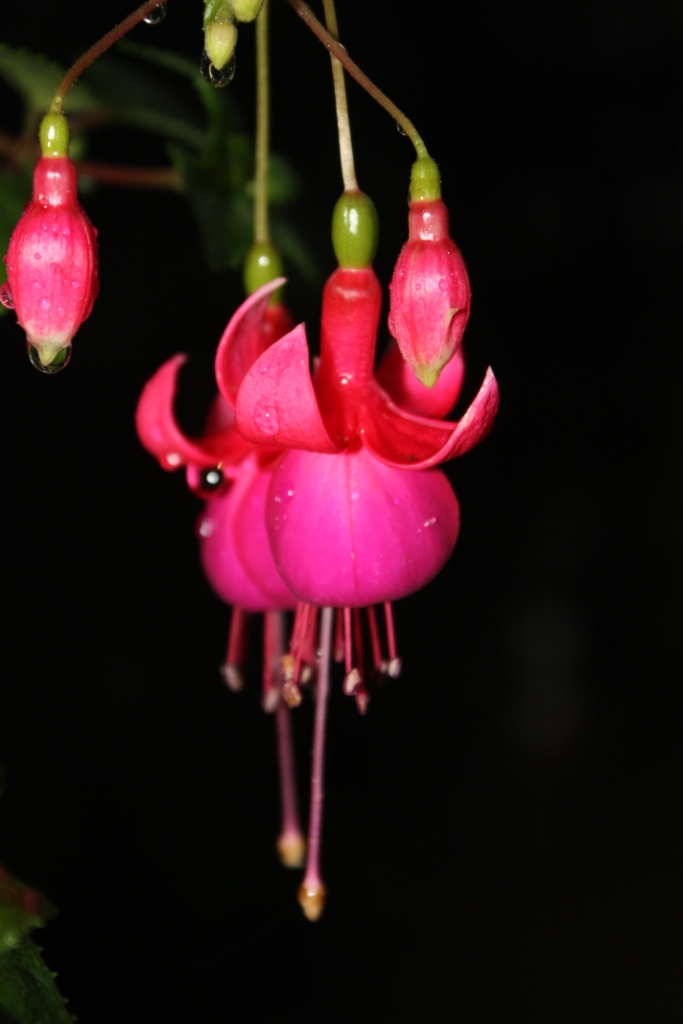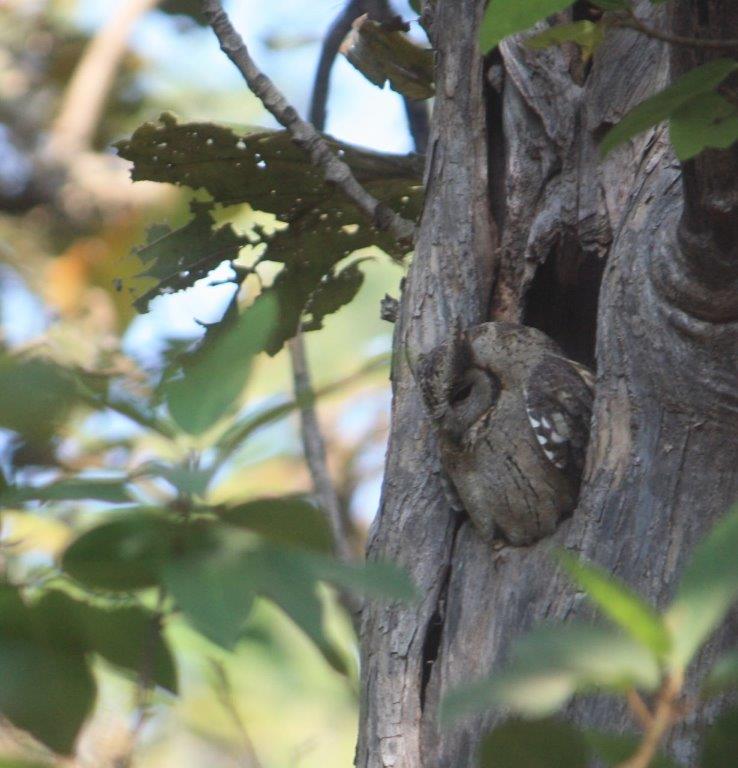
“Night Rain” by Bai Juyi [w/ Audio]

Chirp of an early cricket. Silence.
The lamp dies then flares up again.
Night must be raining outside the window:
plink, plink on the banana leaves.

Translation: Barnstone, Tony and Ping, Chou. 2005. The Anchor Book of Chinese Poetry: From Ancient to Contemporary. New York: Anchor Books.
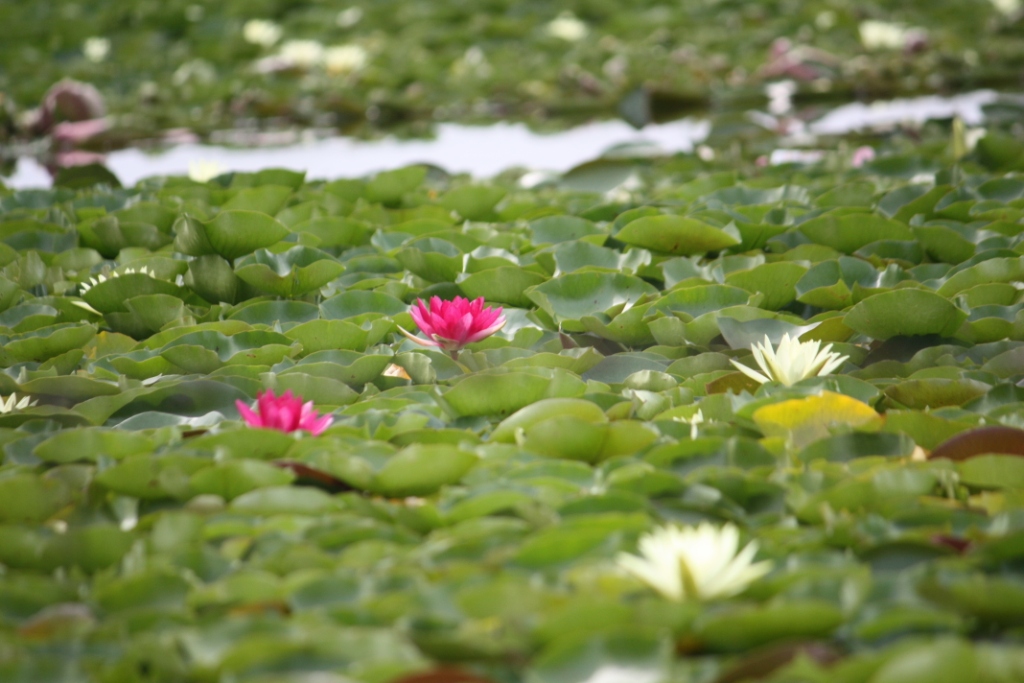
“Treading on Grass” by He Zhu [w/ Audio]

On winding pool with willows dim,
At narrow strait the lovebirds swim.
Green duckweeds float,
Barring the lotus-picking boat.
Nor butterflies nor bees
Love fragrance from the withered trees.
When her red petals fall apart,
The lotus bloom 's bitter at heart.

The setting sun greets rising tide,
The floating clouds bring rain.
The swaying lotus seems to confide,
Her sorrow to the poet in vain.

Then she would not be wed to vernal breeze.
What could she do now autumn drives away wild geese?

Translation: Xu Yuanchong [translator]. 2021. Deep, Deep the Courtyard. [庭院深深.] Cite Publishing: Kuala Lumpur, p.226.
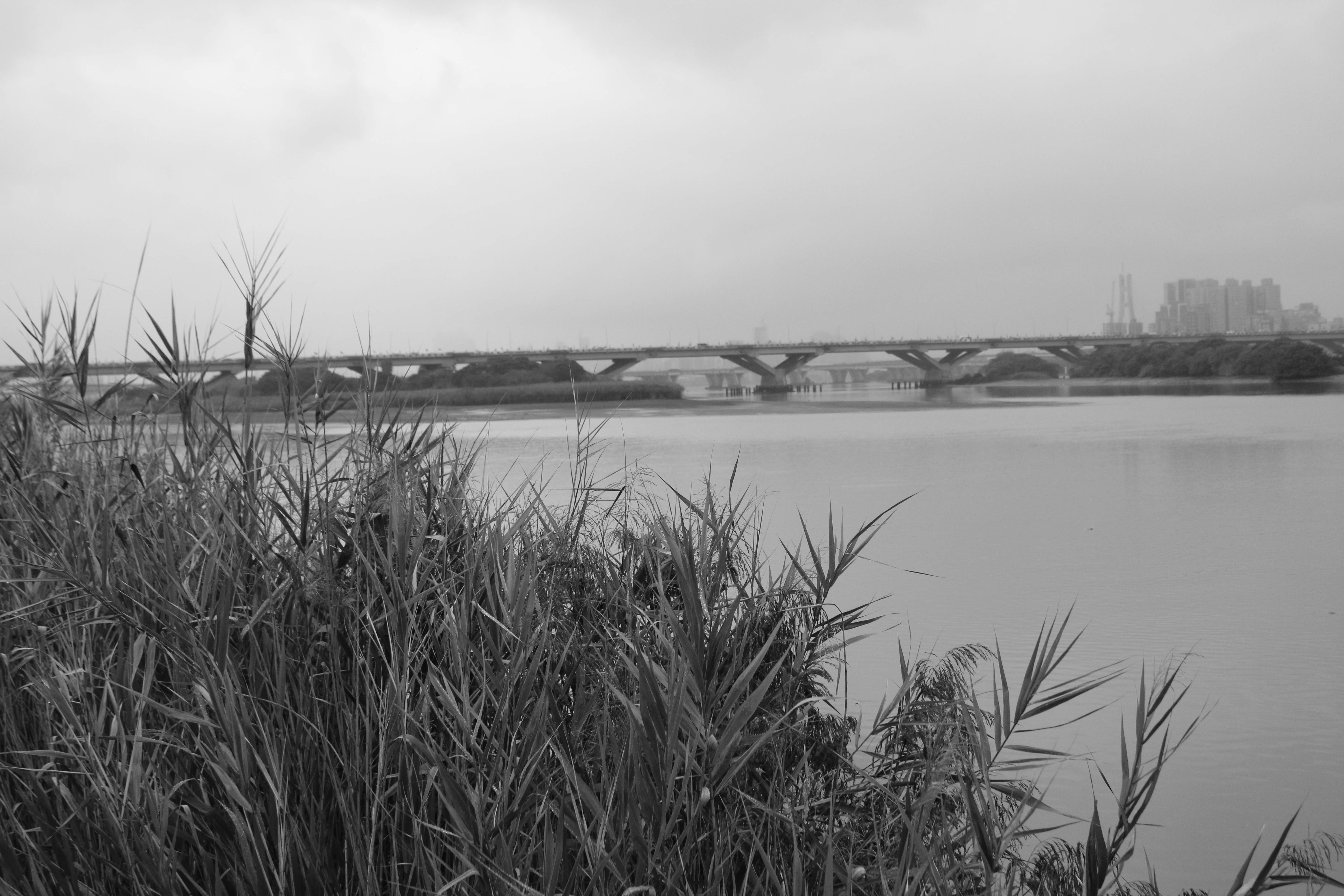
“West River Moon” by Su Shi [w/ Audio]

Wavelet on wavelet glimmers by the shore;
Cloud on cloud dimly appears in the sky.
Unsaddled is my white-jadelike horse;
Drunk, asleep in the sweet grass I'll lie.
My horse's hoofs may break, I'm afraid,
The breeze-rippled brook paved by moonlit jade.
I tether my horse to a bough of green willow.
Near the bridge where I pillow
My head on arms and sleep till the cuckoo's song awakes
  A spring daybreak.

Translation: Xu Yuanchong [translator]. 2021. Deep, Deep the Courtyard. [庭院深深.] Cite Publishing: Kuala Lumpur, p. 238

Four Seasonal Haiku of Yosa Buson [w/ Audio]

SPRING*

The spring sea;
gently, quietly,
 all day long.

SUMMER

what a joy!
wading through summer rivers,
 sandals in hand.

AUTUMN

vacant teahouse,
atop the mountain:
 a harvest moon.

WINTER

neighbors detest me
for my whistling kettle:
 a cold winter night.

* Translation by: Wilson, William Scott. 2023. A Beginner’s Guide to Japanese Haiku. Tuttle Publishing: North Clarendon, VT.
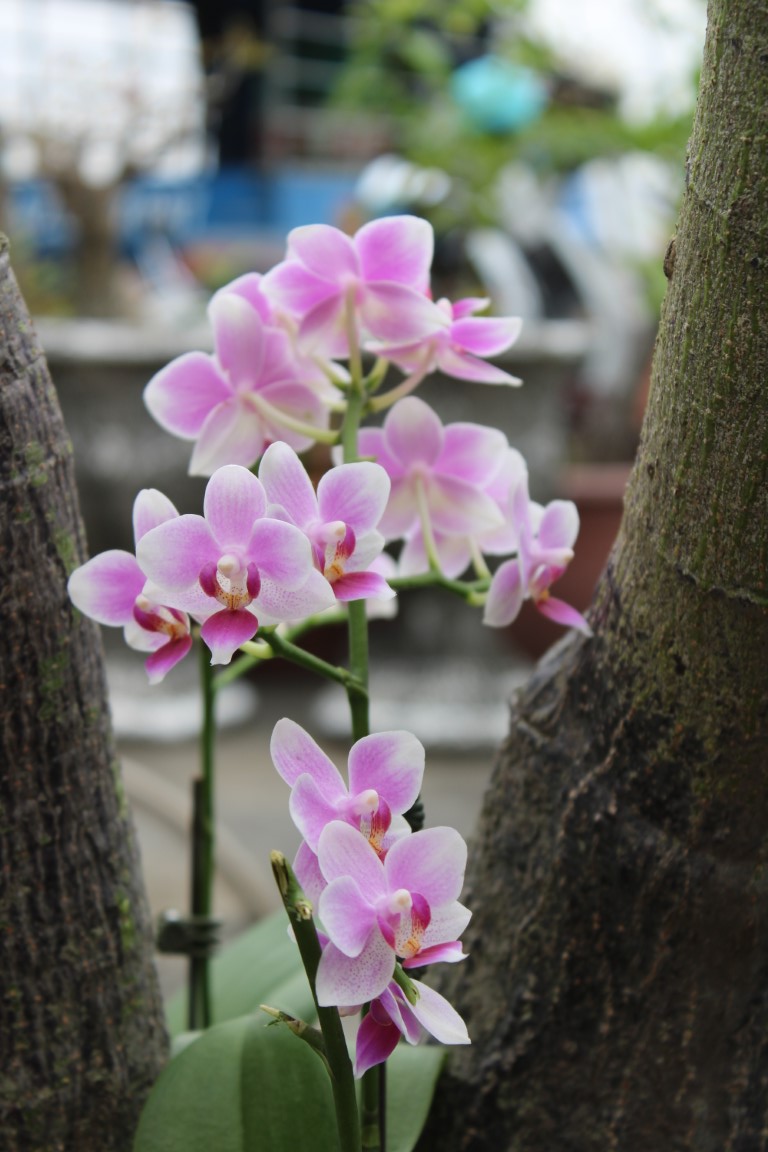
“The Gardener – 85” by Rabindranath Tagore [w/ Audio]

Who are you, reader, reading my poems my poems an hundred years hence?
I cannot send you one single flower from this wealth of the spring,
  one single streak of gold from yonder clouds.
Open your doors and look abroad.

From your blossoming garden gather fragrant memories
  of the vanished flowers of an hundred years before.
In the joy of your heart may you feel the living joy that sang one spring morning,
  sending its glad voice across an hundred years.

BOOKS: “Hōjōki” by Kamo no Chōmei; Trans. by Matthew Stavros

Hojoki: A Buddhist Reflection on Solitude: Imperfection and Transcendence - Bilingual English and Japanese Texts with Free Online Audio RecordingsHojoki: A Buddhist Reflection on Solitude: Imperfection and Transcendence – Bilingual English and Japanese Texts with Free Online Audio Recordings by Kamo no Chōmei
My rating: 5 of 5 stars

Amazon.in Page

Release Date: May 7, 2024 [for Tuttle’s bilingual edition]

This is the Japanese Walden, except that it was written several hundred years before Thoreau’s essay and was predominantly philosophically informed by Buddhism rather than Transcendentalism. (Though those philosophical systems do agree on a number of points, most relevantly that materialism is not a sound route to happiness.) Like Walden, Hōjōki is an autobiographical promotion of the hermitic lifestyle. Both works sing the virtues of life in a simple, rustic cabin in a natural setting, a life of minimalism and subsistence living.

There are many translations of this work available, and so I’ll spend the remainder of this review on what differentiates this edition from the two others that I’ve read. First and foremost, the other versions I’m familiar with were presented as prose essays. This edition is presented in verse, which I understand to be the form that the original Japanese work employed. I should say that in some places the work comes across as poetic in the conventional sense, though in others it seems like a versified essay.

Secondly, this edition has a few handy ancillary features. One is that it is bilingual. Romanized Japanese allows the reader to experience the sound quality of the original. This edition also has graphics in the form of maps, artwork, and photographs. Some of the graphics support or expand upon the information delivery while others seem to be more a matter of creating atmospherics. Also, there are explanatory endnotes that help readers unacquainted with Kamakura Period Japan to understand some of the book’s references that might otherwise remain unclear.

I enjoyed and benefited from reading this edition, even having read others. If you are looking for insight into the ascetic life, I’d highly recommend it.

View all my reviews

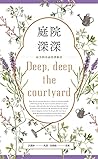
BOOKS: “Deep, Deep the Courtyard” [庭院深深] trans. by Xu Yuanchong

庭院深深:最美的宋詞英譯新詮 (Traditional Chinese Edition)庭院深深:最美的宋詞英譯新詮 by 吳俁陽(賞析)
My rating: 5 of 5 stars

Publisher Website

This is a bilingual (Chinese / English) anthology of Song Dynasty poetry. It features more than 140 poems by almost fifty poets of the Song Dynasty, but a few of the Song poetic rockstars are particularly well represented (e.g. Su Shi, Qin Guan, Ouyang Xiu, and Xin Qiji.) The principal language of the book is Chinese (Mandarin) and so, while the poems themselves appear in English as well as Chinese, the ancillary matter is only in Chinese. Said ancillary matter includes notes, contextual information, bio-blurbs on the poets, and brief front and back matter.

I learned after reading the translations, that the translator was Xu Yuanchong and that he was (i.e. he’s now deceased) a very big deal as a translator, translating classical Chinese poetry into both English and French. All in all, I enjoyed the translations and found them to be sound as poems in their own right. That said, my personal preference would have been to have had less effort put into maintaining rhyme. I suspect a closer transmission of the ideas of the originals could have been achieved without the forced constraint of rhyme. Furthermore, while in many cases metering was attended to, sometimes it was not, leaving those poems to have a doggerel quality. [I come to this conclusion by comparing a few of the poem’s translations to those by other translators as well as to literal translations.] That said, the translator was clearly no slouch, and his stylistic choices were likely informed by what was popular during his career.

This book is part of a series. Other volumes include: In the Thick Woods a Deer Is Seen at Times (Tang Dynasty poems) and A Pair of Swallows Fly (from The Book of Songs, a.k.a. The Classic of Poetry.) I picked this book up in Taipei’s Zhongshan Book Street (Eslite Bookstore,) and don’t know how widely available the books of this series are outside of Taiwan, but if you are interested in Classical Chinese poetry and can find a copy, I’d recommend it.

View all my reviews

BOOKS: “Silk Dragon II” ed. & trans. by Arthur Sze

Silk Dragon: Translations from the Chinese (Kage-an Books)Silk Dragon: Translations from the Chinese by Arthur Sze
My rating: 5 of 5 stars

Amazon.in Page

Release Date: May 28, 2024

Let me begin with a note of clarification: The edition that I read was the “Silk Dragon II” collection, which is due out in May of 2024. I mention this because there is potential for confusion in that this book looks like a sequel (i.e. a completely new set of poems,) but really it is something between a new edition and a sequel. That is to say, while it has a substantial amount of new material, it is built on the original “Silk Dragon” volume. This edition adds eighteen new poem translations, most of which are from poets of the modern era (I mean that loosely, not technically, so 20th century onwards.) I’d recommend readers get this edition, but not both this and the original.

This collection includes a wide range of poems from ancient times through China’s various dynasties to the modern day. It includes translations that are extremely well-known, such as Li Bai’s “Drinking Alone with the Moon” and Liu Zongyuan’s “Snow on the River.” But it also includes many pieces that are likely to be new to most poetry readers, particularly given they will be reading translations (i.e. Non-specialists in Chinese poetry.) As mentioned, the bulk of the new poems are from recent decades and tend to be free verse. [Though there are four new classical poems, as well.]

I found the translations to be evocative and approachable. I am unable to comment on how well Sze captures the feel of the original, but I can say that the translations of poems I’m familiar with were at least on par with other translations that I’ve read. The translations don’t always display the sparseness one sees in classical Chinese poetry, but the challenge of conveying form and meaning and metaphor through translation is immense and, at some level, impossible.

I’d highly recommend this poetry collection for readers of poetry and translated literature.

View all my reviews

“Poet on a Mountaintop” by Shen Zhou [w/ Audio]

Art and Poem by Shen Zhou, a Ming Dynasty Artist
White clouds engird the mountain.
Stone steps climb to nothingness.
Alone, the poet leans on his staff,
 gazing into the expanse,
 and accompanies the stream:
  bamboo flute joining murmurs
  of unseen flowing water.

“Grass of the Ancient Plains” by Bai Juyi [w/ Audio]

Lush grass covers the plains.
  One year it withers; the next, it thrives.
Wildfires burn, but not to eradication.
   With Spring winds, it's rejuvenated.
Its aroma floats in to subdue derelict paths.
  Vivid green overtakes the ghost town.
I say farewell to departing friends
  as intense feeling swells within.
In Chinese [Simplified]:

离离原上草  一岁一枯荣
野火烧不尽  春风吹又生
远芳侵古道  晴翠接荒城
又送王孙去  萋萋满别情