


That’s like asking me to pick my favorite breakfast meat.
PROMPT: Teacher
Reply

That’s like asking me to pick my favorite breakfast meat.

Please allow me a conjecture:
   One Meerkat stood to give lecture,
 But as with me, as a pupil,
   Other Meerkats lacked the scruple
 To make a show of listening,
   Finding the walls more interesting.
What makes a teacher great?
If students choose the teacher, that is an excellent first indicator. In the typical top-down selection of teachers, it is easy to produce an abundance of shitty teachers. Of course, there is still the danger of charismatic bullshitters and easy people-pleasers, problems ever-present. But among students (as opposed to followers) they usually reveal themselves in time.
I’d say my first full-time martial arts teacher, because I was young enough to have considerable open domain in which said teacher could be influential and because the lessons were so diverse — from kinesthetics to ethics to culture to psychology.
By “most influential” I think one means having had either the broadest or most profound influence. (I favor the importance of the latter, the lessons that stick with one and which inform one’s philosophy of life.) This definition favors earlier teachers, but as I don’t remember any specific lesson taught by a specific elementary school teacher, they’re out (though I learned useful things from them and they ranged from competent to quite skilled as teachers go.) The earliest profound lesson I received through scholastic education, one that became a core tenet in my philosophy of life rather than just a skill, was in high school — and in my junior or senior year at that.
As with books, if I can take away one profound lesson from a teacher, I consider my experience well worth the time and energy. And most influential isn’t necessarily the prime criterion for a teacher — and certainly doesn’t necessarily mean best or most skilled or most in command of a diverse array of knowledge.
What makes a teacher great?
If a student (or students) voluntarily and enthusiastically come to learn from an individual, that individual is a great teacher.
The emphasis is on “to learn” because some people confuse great charisma with great pedagogy, but such people go to the charismatic person to take comfort from being in that person’s presence, not to learn — despite whatever truisms or clever-sounding parallel grammatical structures the charismatic individual might spout.
So, if one would go to an individual seeking knowledge, knowing the experience will be challenging and not merely comforting, one has found a great teacher.
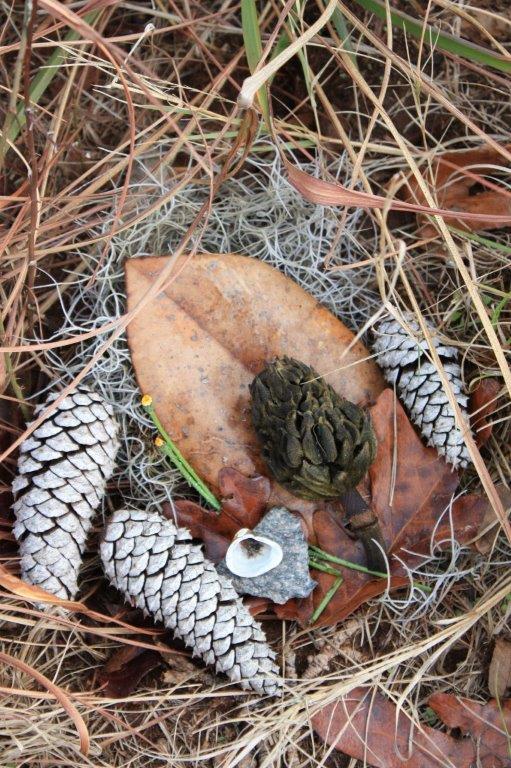
A falling leaf is my teacher.

It craves nothing.
It fears nothing.

It surrenders itself,
 but does not submit.

It will not be hemmed in
for long,
for its patience is infinite.







Sonny was a stray who hopped up into my lap one day as I was reading on the back porch. He petted himself against me, and moved in shortly thereafter. He was between kitten and cat then, and so we estimate his age was approaching 12 when he left us.
Being a gruff, introverted stoic, I realize that I am an acquired taste as a friend. I have few non-contextual friends: that is, friends outside of a common endeavor such as a workplace or a school. Not that there’s anything wrong with friendships born of a common workplace or pastime, but Sonny’s out-of-the-blue arrival created a special fondness. That was Sonny’s nature.
He was a little dirty at first. A tiny notch in his ear–one that would be made symmetric later in life, marked him as a fighter as well as a lover. All about the love in the home, but ready to scrap to defend his adopted lair at a moment’s notice.
The books said his breed wasn’t inclined to be lap cats, but—being a cat—Sonny didn’t read much. And, therefore, he would spend hours curled into a torus on my lap, until my legs fell completely asleep and I had to stumble through pins and needles to refresh his throne.
Sonny developed a growth in his head. It was removed and biopsied, and then once more. Though Sonny’s Chi was strong, each time his nemesis grew back with greater ferocity. He fought it quietly and calmly. Making no complaints; demanding no sympathy. He was unflappable.
Sonny was a bundle of virtue: patient, kind, forgiving, strong, and stalwart. If the religions that believe in transmigration of souls are right, Sonny has earned the right to be whatever the hell he pleases in his next life. He was a Bodhi-cat-va, helping us to eliminate stress and teaching us how to accept upset.
Your gentle head-butts will be missed. Your popcorn bowl conformity will be missed. You, my friend, will be missed.
We never knew where Sonny’s scars and nicks came from, but I imagine it quite like that of Neil Gaiman’s The Price
 Ishmael: An Adventure of the Mind and Spirit by Daniel Quinn
My rating: 4 of 5 stars
A man answers an ad that says, “Teacher seeks pupil. Must have an earnest desire to save the world. Apply in person.” Expecting to find a charlatan, the man is surprised to find his new teacher is, in fact, a gorilla.
Like Socrates, this gorilla, Ishmael, uses questions to guide his pupil toward crucial knowledge. Ismael teaches his student to challenge some of his most deep-seated beliefs such as, the world was made for humans, humans are the ultimate culmination of biology, humans are inherently separate from (and above) nature, and that humans are fundamentally flawed in such a way as to make ruination of the planet inevitable.
The core of the book differentiates two human cultures. The author calls them the “takers” and the “leavers,” but they correspond to what we might call “us” and the “aboriginal peoples.” Takers are specialized, agricultural, and technologically advanced (if you’re reading this review on a computer and not chiseled on a cave wall, you, my friend, are a taker.)
The lives of “Leavers” aren’t that different from those of humans 10,000 years ago. They are tribal as opposed to (to borrow Desmond Morris’s term) super-tribal. [In a tribe everyone knows everyone else. Morris suggests that things go to shit –re: war, crime, and deviant behavior– in super-tribal societies.] Leavers live like animals in that they tend towards equilibrium within their ecosystem. Takers do not.
If you long for thrillers or potboilers, this isn’t the book for you. It’s a thinking person’s book. The nice thing about Ishmael’s use of the Socratic method is that one can think through the questions in parallel to the narrator’s discovery. In this way, the reader can install himself or herself into the conversation.
At the most generic level, the book’s value is in showing one how much one takes for granted. We can’t see forests for trees.
One may agree or disagree with the author, but either way one will be subjected to powerful food for thought. Some of the discussion may evoke a visceral emotional reaction that one may have trouble reconciling with logic, such as the discussion of the morality of feeding the starving.
The downside of the book is that the dialogue can be strained in places and it can get a bit repetitive. The latter serves to reinforce key concepts, but some of them feel as though they are reinforced inordinately. In making the narrating protagonist struggle, Quinn creates a lead who seems a bit dense sometimes. Also, as I indicated, the journey is by-and-large in the mind, and so the tension is limited. There is some drama when the narrator shows up one day to find that Ishmael has been evicted. However, this is resolved without too great a difficulty and they resume lessons with Ishmael’s irritability being the only change to be seen. There is drama at the end that will remain unspoiled herein.
I’d recommend this book as a thought-provoking exercise for the mind.


 Tiger Riding for Beginners