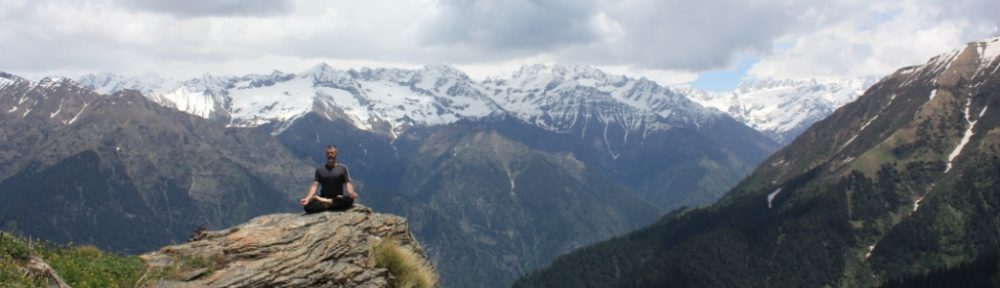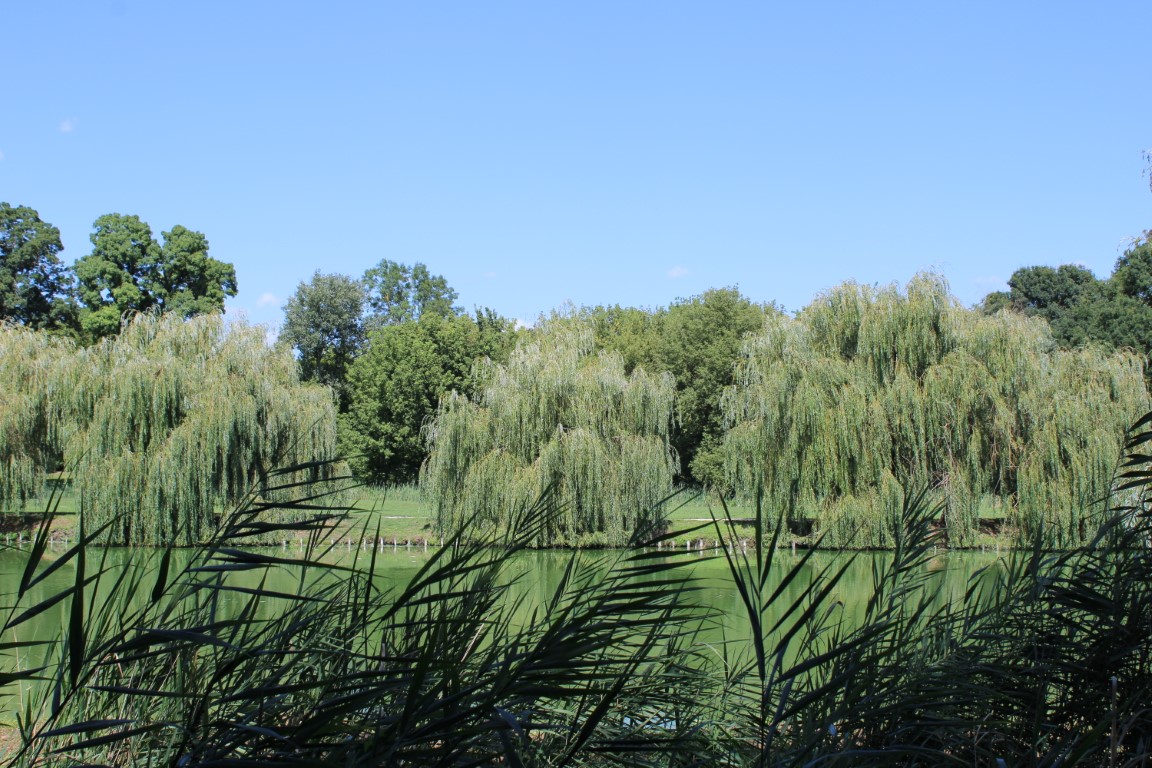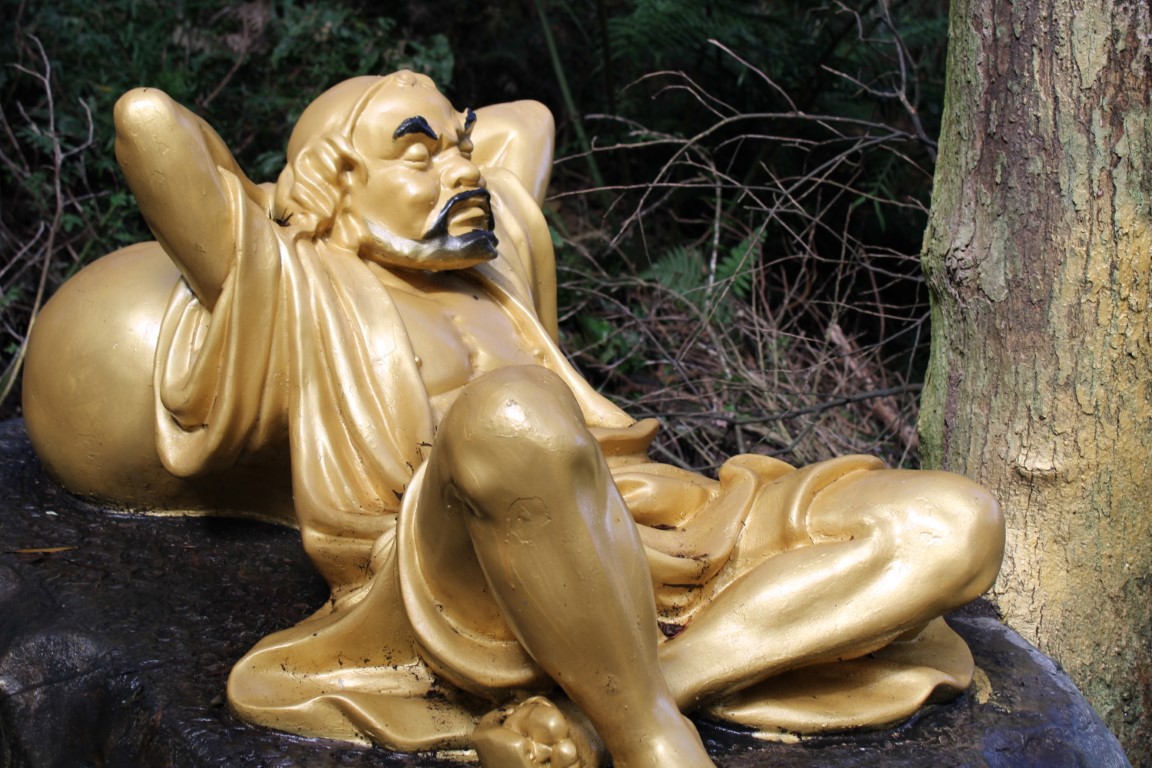
“Spritual” [Poetry Style #13 (精神)] by Sikong Tu [w/ Audio]

All wish to return,
Hoping others will come:
A clear water ride
Where strange flowers bud,
And lime-green parrots fly
The willows, to and from --
The mountain folk arrive
Deep bowls fill with wine...
To take a life beyond
And not end in ash,
But still be of nature;
Who's up to that task?

NOTE: The late Tang Dynasty poet, Sikong Tu (a.k.a. Ssŭ-k‘ung T‘u,) wrote an ars poetica entitled Twenty-Four Styles of Poetry. It presents twenty-four poems that are each in a different tone, reflecting varied concepts from Taoist philosophy and aesthetics. Above is a crude translation of the thirteenth of the twenty-four poems. This poem’s Chinese title is 精神, and it has been translated as: “Essential,” “Animal Spirits,” and “Spirit.”

“Beauty” [Poetry Style # 9] by Sikong Tu [w/ Audio]

When one makes god of wealth,
Light glows from yellow "gold,"
But the lavish withers --
Even as its deeps take hold.

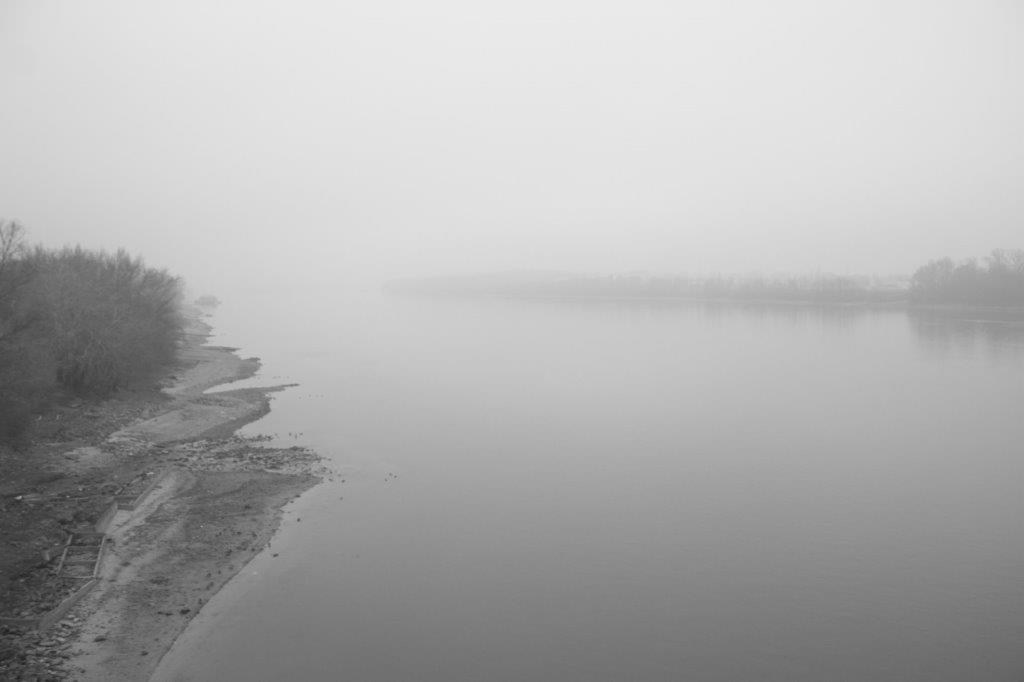
Fog at the river's edge.
Red apricots, woods enfold.
Moon shine on bower's flowers.
Painted bridge in green shadow.
An old bowl full of wine,
As a friend's lute song unfolds.
Make your bliss of such things,
And they will be your true gold.

NOTE: The late Tang Dynasty poet, Sikong Tu (a.k.a. Ssŭ-k‘ung T‘u,) wrote an ars poetica entitled Twenty-Four Styles of Poetry. It presents twenty-four poems that are each in a different tone, reflecting varied concepts from Taoist philosophy and aesthetics. Above is a crude translation of the ninth of the twenty-four poems. This poem’s Chinese title is 绮丽, and its translated titles include: “Beautiful,” “Intricate,” and “Embroideries.”

“Cleansed” [Poetry Style #7] by Sikong Tu [w/ Audio]

It's as if ones gone mining --
From lead, silver refining.
That's how one cleanses a heart:
With pure love, not pining.

Like a pond from Spring rainfall:
Mirror to heavens and all,
Without defect of image --
True as the moon's bright, white ball.

Stargazing across night skies;
Singing songs of hermits, wise;
The water flowing today
Will know that bright moonrise.

NOTE: The late Tang Dynasty poet, Sikong Tu (a.k.a. Ssŭ-k‘ung T‘u,) wrote an ars poetica entitled Twenty-Four Styles of Poetry. It presents twenty-four poems that are each in a different tone, reflecting varied concepts from Taoist philosophy and aesthetics. Above is a crude translation of the seventh of the twenty-four poems. This poem’s Chinese title is 洗炼, and it has been variously entitled: “Clean,” “Refining,” and “Wash — Smelt.”

“Ancient” [Poetry Style #5] by Sikong Tu [w/ Audio]

Immortals ride truth
With lotus in hand,
As chaos unfolds
Unlogged above land.

Moonrise in the East
As good winds are fanned.
Hill shrine in blue night,
Bell rings clear and grand.

The god is now gone
Beyond border lands
Huangdi* is not there
Great Age to wasteland.

NOTE: The late Tang Dynasty poet, Sikong Tu (a.k.a. Ssŭ-k‘ung T‘u,) wrote an ars poetica entitled Twenty-Four Styles of Poetry. It presents twenty-four poems that are each in a different tone, reflecting varied concepts from Taoist philosophy and aesthetics. Above is a crude translation of the fifth of the twenty-four poems. This poem’s Chinese title is 高古 (Gāo Gǔ,) and it was translated as “Height – Antiquity” by Herbert Giles.

*Huangdi is a name for the Yellow Emperor that is more syllabically friendly than “Yellow Emperor.” In a great oversimplification for the sake of speed and alignment of context, the Yellow Emperor was China’s King Arthur — a mythical leader of great virtue and heroism. The Tang emperors tried to trace lineages back to the Yellow Emperor, but such imagined linkages to the perfect leader are hard to maintain when an Emperor like Xuanzong crashes the ship of state.

“Swordsman” by Jia Dao [w/ Audio]

Ten years honing this fine blade,
And it has not drawn blood.
Now, you'll see of what we're made:
Who, wronged, is owed in blood?

The Original: 劍客: 十年磨一劍, 霜刃未曾試. 今日把示君, 誰有不平事.

“Slender” [Poetry Style #3] by Sikong Tu [w/ Audio]

Picking, picking where water flows
From a distant fountainhead.
Moving up the narrow valley,
One may see a stunning beaut.
Peachtrees laden with ripe fruit
As breezes blow by the water
And willows wind along the stream,
While warblers consult with branch-mates.
The more one walks, the more Truth joins,
And more Truth may reveal the Way.
If this world is without end,
The old must be made new again.

NOTE: The late Tang Dynasty poet, Sikong Tu (a.k.a. Ssŭ-k‘ung T‘u,) wrote an ars poetica entitled Twenty-Four Styles of Poetry. It presents twenty-four poems that are each in a different tone, reflecting varied concepts from Taoist philosophy and aesthetics. Above is a crude translation of the third of the twenty-four poems. This poem’s Chinese title is 纤秾. Giles translated the title as “Slim — Stout” and it’s also been translated as “Delicate – Rich.”

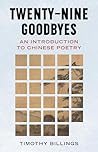
BOOK: “Twenty-Nine Goodbyes” by Timothy Billings

Twenty-Nine Goodbyes: An Introduction to Chinese PoetryTwenty-Nine Goodbyes: An Introduction to Chinese Poetry by Timothy Billings
My rating: 5 of 5 stars

Publisher website

The premise of this book is simple, Billings presents twenty-nine different translations of a famous farewell poem by the Tang Dynasty poetic genius, Li Bai, and compares, contrasts, and critiques them in detail. The included translations weren’t all crafted in the English language, but English translations (of the translations) are presented as needed. There are translations from French, Spanish, Japanese, and even modern Mandarin Chinese — among others.

Despite how that may sound, it is a tremendously readable book. Billings writes with engaging prose, employs humor (especially when critiquing his own contribution in the final chapter,) and uses complicated jargon only when necessary and with comprehensible explanations.

Still, it does take a certain level of passion to read because one is repeatedly examining the same poem, and one has to have an interest in the minutiae of said poem and – more importantly — an interest in the broader lessons conveyed about translation. If whether a color is translated as green or blue (or what symbolic object tumbles on the ground, or what sound a horse makes) doesn’t seem change the emotional experience of the poem for you, then you’ll probably have a hard time getting into this book. That said, the ability to take a longitudinal view –seeing same points in a given poem through the lens of different poets and translators cross time and cultures, does offer insight that one would be unlikely to get from reading any of the twenty-nine translations in isolation as part of a single translator’s collection of translations.

The most useful thing the book did for me was to increase my understanding of the nature of translation and its tradeoffs, as well as to elucidate how easy it is to miss the mark when one is translating from a perspective so different in time and worldview.

I’d highly recommend this book for anyone interested in Tang Dynasty poetry, translation, and the interface of culture and language.

View all my reviews

“Absolute” [Poetry Style #1] by Sikong Tu [w/ Audio]

With wear you will decay outside,
But inside resides the vital force.
Approach the Absolute through the Void:
One's strength will grow, and vim will course.
You can know the world and its Way,
Across space and time -- to the Source.
To desolation range hang dark clouds,
Air still as latitudes of the horse,
Move beyond all one knows by sight,
And gain the Center -- but not by force --
Hold onto this strength by hook or crook,
And flow the Endless by watercourse.

NOTE: The late Tang Dynasty poet, Sikong Tu (a.k.a. Ssŭ-k‘ung T‘u,) wrote an ars poetica entitled Twenty-Four Styles of Poetry. It presents twenty-four poems that are each in a different tone, reflecting varied concepts from Taoist philosophy and aesthetics. Above is a crude translation of the first of the twenty-four poems. This poem’s Chinese title is 雄浑, and its translated titles include: “Energy – Absolute” [Giles] and “Vigorous.”

“Fluid” [Poetry Style #24] by Sikong Tu [w/ Audio]

Like water spilling over rocks?
Like a bead's roll across the floor?
Cliches, they fail to tell the story,
As no doll shows life's splendor.
But the Earth' unsupported spin through space,
As the heaven's pivot and sprawl for more...
If you could find how it all began,
You'd see it'll be as it was before.
The high and bright realm of the gods
Returns to nothing and nevermore.
And if you lived ten-thousand years,
You might find yourself in days of yore.

NOTE: The late Tang Dynasty poet, Sikong Tu (a.k.a. Ssŭ-k‘ung T‘u,) wrote an ars poetica entitled Twenty-Four Styles of Poetry. It presents twenty-four poems that are each in a different tone, reflecting varied concepts from Taoist philosophy and aesthetics. Above is a translation of the twenty-fourth of the twenty-four poems. This poem has been alternately titled “The Flowing Style,” “Fluid,” “Motion,” etc. by varied translators from its Chinese title of 流动.

“Goose Chant” by Luo Binwang [w/ Audio]

Goose, Goose, Goose,
Look skyward and let your song loose.
White feathers float on the green lake
As red feet paddle through clear waves.

NOTE: This poem’s title is often translated as “An Ode to the Goose” but the Chinese title 咏鹅 (Yǒng é) is “Chant[ing] Goose.”