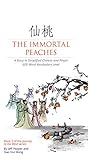
BOOK: “The Immortal Peaches” [Vol. 3 of “Journey to the West”] Ed. by Jeff Pepper / Trans. by Xiao Hui Wang

The Immortal Peaches: A Story in Simplified Chinese and Pinyin, 600 Word Vocabulary (Journey to the West Book 3)The Immortal Peaches: A Story in Simplified Chinese and Pinyin, 600 Word Vocabulary by Jeff Pepper
My rating: 5 of 5 stars

Publisher Site – Imagin8

This is the third volume in this Journey to the West series aimed at language learners. It covers Chapters 5, 6, and 7 of the book, which includes events from Sun Wukong’s return to heaven acknowledged with the title “Great Sage Equal to Heaven” through the conflicts that result from his lack of control and decorum to Buddha’s bet with Monkey King.

I’ve enjoyed this series. The pinyin is interspersed with an abridged and linguistically simplified Chinese telling of the story on a paragraph basis, and the English translation is at the end. This allows one relatively quick access to the pinyin without continually cheating by stray glance. Also, one can determine whether one wants to read the English translation before or after reading the Chinese, as is appropriate to one’s level and language learning strategy. The book also has a glossary of all the Chinese words it uses, and the words beyond the most basic (beyond HSK3, or so) are footnoted. (I read on kindle, so looking up translations of any words is as quick as highlighting them.)

This is a great language learning tool, featuring one of Chinese literature’s most engrossing stories. I’d highly recommend it for those learning Mandarin Chinese with Simplified script.

View all my reviews

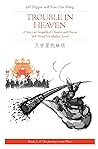
BOOK: “Trouble in Heaven” [Vol. 2 “Journey to the West” (西游记) Series] ed. by Jeff Pepper / trans. by Xiao Hui Wang

Trouble in Heaven: A Story in Simplified Chinese and Pinyin, 600 Word Vocabulary Level (Journey to the West in Simplified Chinese)Trouble in Heaven: A Story in Simplified Chinese and Pinyin, 600 Word Vocabulary Level by Jeff Pepper
My rating: 5 of 5 stars

Publisher Site – Imagin8

This is an abridged and linguistically simplified telling of the story of chapters three and four of the Chinese classic novel, Journey to the West. It is written and organized for learners of Chinese who would like to start reading in Chinese.

The events covered in this volume are Monkey King’s (a.k.a. Sun Wukong’s) acquisition of weapons for himself and his companions, his discovery that his name is on the registry of the underworld (and, thus, he’s not as immortal as he’d believed at the end of Vol. 1,) his ascension to heaven where he is given the job of stable manager (a life and job he is happy with until his discovery that it is the lowest level job in heaven,) and his skirmishes with the forces of heaven when he takes on the title “Great Sage Equal to Heaven.”

The story is conveyed in Simplified Chinese script, and has pinyin interspersed at the paragraph level. I like this arrangement because one has access to the pinyin as needed, but it’s not immediately adjacent (as it is with many starter readers,) such that it’s not possible to “cheat” by seeing the pinyin in one’s peripheral vision. It also offers an English language telling of the story, but after the entirety of the Chinese. The book also has three glossaries that collectively define all the terms used in the book. The first contains all the proper nouns, the second is all the basic words, and the last is all the words that are a little outside the most basic reading level. (The latter are also footnoted throughout the text.)

I’m enjoying this series. It’s a gripping story, it’s arranged in a way that encourages one read by the Chinese characters alone, and it is readable by the most beginning level student. That’s a combination that isn’t readily found. I’d highly recommend this series for those learning to read Chinese.


View all my reviews

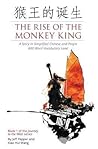
BOOKS: “Rise of the Monkey King” ed. / trans. Jeff Pepper & Xiao Hui Wang

The Rise of the Monkey King: A Story in Simplified Chinese and Pinyin, 600 Word Vocabulary Level (Chinese Edition)The Rise of the Monkey King: A Story in Simplified Chinese and Pinyin, 600 Word Vocabulary Level by Jeff Pepper
My rating: 5 of 5 stars

Publisher Site – Imagin8

This is an abridged and linguistically simplified telling of the first two chapters of Journey to the West. It contains the birth story of Sun Wukong (i.e. the Monkey King) and describes his studies with a sage in an attempt to become immortal.

As someone learning Chinese but at a point where I can only read grammatically and lexically simple content, it’s not easy to find reading material that is both fun to read and readable. The discovery of this series was a godsend. It’s hard to get more thrilling than the story of the Monkey King, and it helps that I’ve already read translations – and so have a bit of context to piece together challenging sentences and to avoid the misunderstandings that can arise when reading a new language. It’s much easier to be a disciplined reader when reading something that is neither a children’s book nor the life story of a preternaturally typical person [which is the usual adult equivalent of a beginner level reader.]

I was pleased by how this book was laid out. Often reading material for learners puts the Chinese characters (hanzi,) the Romanized phonetics (pinyin,) and the English translation all in adjacent rows. While this has its advantages, it also makes it too easy to cheat by eye saccade and not be reading as well as one thinks one is. This book does have all three elements, but it alternates paragraphs of hanzi and pinyin but then puts the translation in an unbroken format after the Mandarin. The book also has a glossary of the book’s vocabulary.

Whether you’ve already read Journey to the West or not, if you’re just learning to read Simplified Chinese, I’d highly recommend this book.

View all my reviews

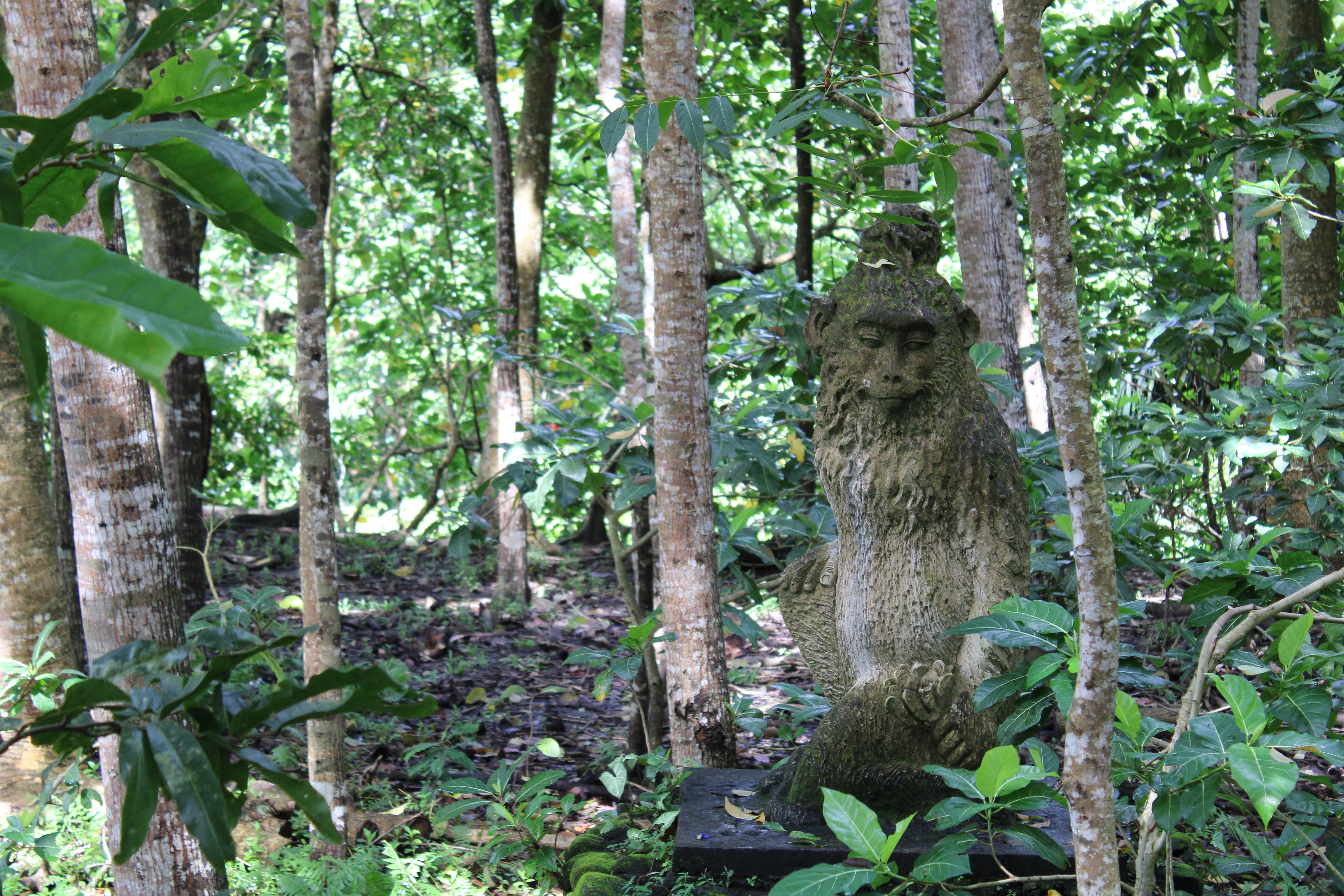
Monkey Forest [Free Verse]

in the monkey forest,
i think of 
Sun Wukong & Hanuman
as a macaque 
steals my sunglasses

Sun Wukong [Common Meter]

The Monkey King with magic staff
outmatched monsters and gods,
defying the Jade Emperor's
edicts against all odds.

He erased himself from out of 
The Book of Life and Death,
and lived through the Crucible --
nearly holding his breath.

Finally, the gods called Buddha,
though some had their qualms,
but the one thing Monkey couldn't do
was leap from Buddha's palm.

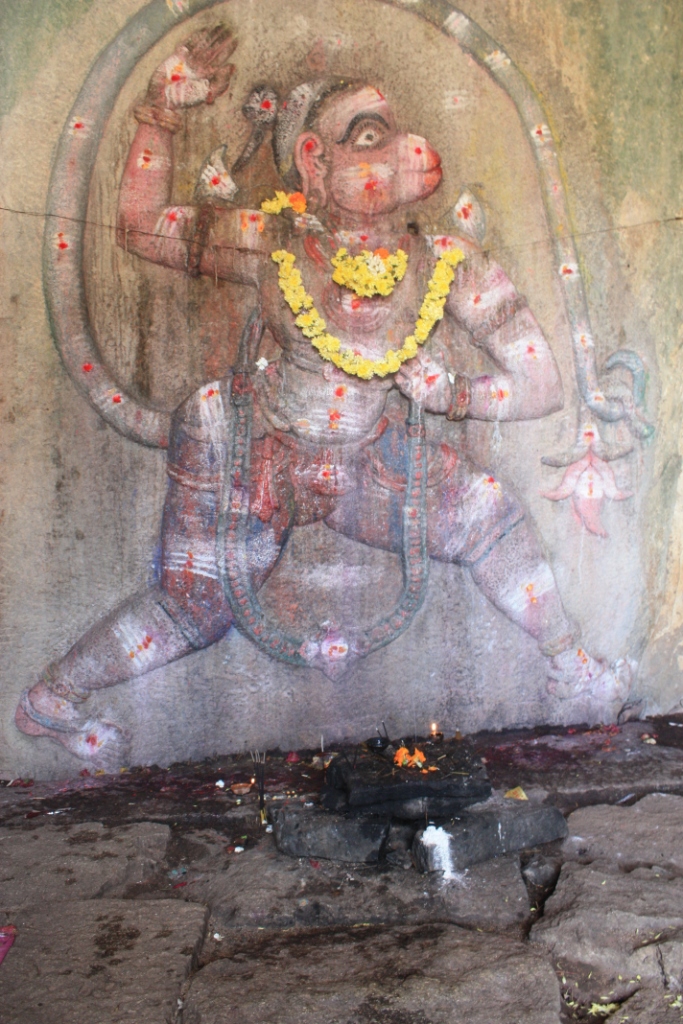
DAILY PHOTO: Hanuman

Taken November 2, 2013 at Hampi.

Taken November 2, 2013 at Hampi.

Among the many devotees of this Hindu deity are wrestlers, who admire the monkey-god for his reputed strength. In Rama’s war against Ravana, he was said to have picked up a mountain and carried it a great distance, which is pretty strong.

He’s not whimsical and mischievous like Sun Wukong, the Taoist monkey-king (who also has god-like powers), but some believe that Sun Wukong’s myth was partially influenced by Hanuman’s myth. (Of course, the more irreverent and anti-authoritarian Taoists had a different take than the caste-conscious Hindus. (Whimsicality and mischievousness are considered more virtuous among the former than the latter.)

This Hanuman temple is a small, stone-block affair abutting a giant boulder on the trail from Hampi Bazaar to Achyutaraya temple. As you can see, it still has local devotees.