“To be, or not to be” [Soliloquy from HAMLET] by William Shakespeare [w/ Audio]

To be, or not to be, that is the question:
Whether 'tis nobler in the mind to suffer
The slings and arrows of outrageous fortune,
Or to take arms against a sea of troubles
And by opposing end them. To die -- to sleep,
No more; and by a sleep to say we end
The heart-ache and the thousand natural shocks
That flesh is heir to: 'tis a consummation
Devoutly to be wish'd. To die, to sleep;
To sleep, perchance to dream -- ay, there's the rub:
For in that sleep of death what dreams may come,
When we have shuffled off this mortal coil,
Must give us pause - there's the respect
That makes calamity of so long life.
For who would bear the whips and scorns of time,
Th' oppressor's wrong, the proud man contumely,
The pangs of dispriz'd love, the law's delay,
The insolence of office, and the spurns
That patient merit of th' unworthy takes,
When he himself might his quietus make
With a bare bodkin? Who would fardels bare,
To grunt and sweat under a weary life,
But that the dread of something after death,
The undiscover'd country, from whose bourn
No traveller returns, puzzles the will,
And makes us rather bear those ills we have
Than fly to others that we know not of?
Thus conscience doth make cowards of us all,
And thus the native hue of resolution
Is sicklied o'er with the pale cast of thought,
And enterprises of great pith and moment
With this regard their currents turn awry
And lose the name of action.

“Suicide in the Trenches” by Siegfried Sassoon [w/ Audio]

Photo by Ernest Brooks (Imperial War Museum)
I knew a simple soldier boy
Who grinned at life in empty joy,
Slept soundly through the lonesome dark,
And whistled early with the lark.

In winter trenches, cowed and glum,
With crumps and lice and lack of rum,
He put a bullet through his brain.
No one spoke of him again.

You smug-faced crowds with kindling eye
Who cheer when soldier lads march by,
Sneak home and pray you'll never know
The hell where youth and laughter go.

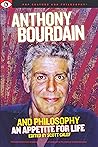
BOOKS: “Anthony Bourdain and Philosophy” ed. by Scott Calef

Anthony Bourdain and PhilosophyAnthony Bourdain and Philosophy by Calef Scott
My rating: 5 of 5 stars

Amazon.in Page

Release Date: December 26, 2023

These pop philosophy books that examine philosophical ideas through the lens of a particular pop culture personality or entity have become, well, popular. It’s not hard to see why; it’s an easy way to take your medicine, your medicine being to learn philosophical concepts. And, let’s face it, scholarly philosophical books are often nigh unreadable, being laden with jargon and having a tendency to get so lost in the minutiae of razor fine points that they display no relevance to the human experience. I am not immune to the appeal of such books, though when I see a book like “Miranda Sings and Philosophy” I figure I can take a hard pass. But this one caught my eye because Anthony Bourdain did live a life shaped by his own particular philosophy, and an intriguing one at that.

Like most of these books, this is a collection of essays written by different authors. As such, the quality and relevance of the included chapters does vary somewhat.

The book is divided into four parts. The first part looks at the subject of the work for which Bourdain was best known — i.e. at the intersection of food and travel. In these four chapters, authors explore the aesthetics of food and questions like: Do “expert” views on food matter? What is disgusting? And what role does culture play in the culinary experience?

The second part is entitled, “life,” and these five chapters look at Bourdain, the man. That is, they shift away from his work, and look at Bourdain as a martial arts student, a storyteller, and -generally – as a person. These chapters also offer insight into his epistemological perspective — i.e. how he viewed (and engaged in) the pursuit of truth, as well as touching upon his philosophical views more broadly.

The third part takes another turn to examine Bourdain’s addiction and his death by suicide. The chapters present broader philosophical frameworks on suicide and freedom, as a means to put Bourdain’s experience in perspective.

The final part is really kind of a grab-bag of subjects that don’t fit neatly into the other sections. Probably not coincidentally, this is where most of the book’s rough spots are located. It sometimes seems that Bourdain’s philosophy is not so much the subject anymore, and some authors convey their ideas more clearly and effectively than others. This is not, by any means, to say that any of the chapters are completely stinkers, nor to say that all of the chapters are defective. Chapter 13 [which, BTW, I think could have found a spot in Part II] does an interesting job in clarifying Bourdain’s approach to ethics, no easy task as it can seem like an odd mix of spiteful nihilistic impulses and compassionate humility (and it certainly evolved over time.) But even Chapters 14 and 15, which are not only the least flattering discussions of Bourdain but also the most didactic, have something to offer. The first lays out the scandal involving Bourdain’s girlfriend who was a MeToo leader but who also paid off a young actor who accused her of statutory rape, a pay-off made by Bourdain and which seems to be a factor in his suicide. Chapter 15 offers examples of what the author believed Bourdain did right and wrong in discussing the historical context of the places he visited that had been colonized. Ch. 16 was a discussion of the ethics of engaging in luxuriant fine dining in a world with starving people. I thought this chapter would stay the course set by the previous two, but it did shift back into academic objectivity by producing a more complete discussion of competing viewpoints. The penultimate chapter goes more niche than the others, but is a fascinating look at the ethics of AI generated voicework for the “Roadrunner” documentary — i.e. using AI to make it sound like Bourdain said things that he wrote in emails or books but never said [at least not into a recording device.] The last chapter involves climate change and episodes Bourdain did in Madagascar and Bhutan. This was both one of the longer chapters and definitely the most muddled. It remains unclear to me exactly what the author was trying to say, exactly. It’s perfectly readable, and yet unclear.

All in all, I enjoyed this book (as much as one can “enjoy” a book that is about a deceased beloved figure,) and thought it offered some excellent food for thought.

View all my reviews

BOOK REVIEW: Buddhist Ethics: A Very Short Introduction by Damien Keown

Buddhist Ethics: A Very Short IntroductionBuddhist Ethics: A Very Short Introduction by Damien Keown
My rating: 5 of 5 stars

Amazon.in Page

Most people, if they know anything about Buddhist ethics, have heard of the Eightfold Path (right + view, intention, speech, action, livelihood, effort, mindfulness, and concentration.) However, just knowing that can lead to the impression that Buddhist ethics are blurry and that it’s all a matter of doing as one pleases within one’s personal interpretation of rightness. This concise guide offers an overview of the Buddhist ethics and morality, focusing on issues of global and modern interest (as opposed to those issues only of interest in places where Buddhism is practiced or at the time in which Buddha was teaching – i.e. issues like abortion, vegetarianism, war, suicide, and cloning and not subjects like caste, traditional family roles, etc.)

The first two chapters present a broad overview, and the rest focus on particular ethical issues. I found the second chapter beneficial; it asks how Buddhist ethics fit in the categorization scheme employed by Western Philosophy. I considered it useful even though the answer was that Buddhist ethics aren’t neatly contained by this way of thinking, but rather can be seen as a mix of multiple approaches. (e.g. Buddhism has sets of precepts – ala deontology, has a karmic doctrine that is arguably consequentialist, and, also, has elements similar to the virtue ethics of ancient Greece.)

Chapters three through eight investigate specific issues: animal rights and environmental ethics (ch. 3,) sexuality and gender (ch. 4,) war and violence (ch. 5,) abortion (ch. 6,) suicide / euthanasia (ch. 7,) and upcoming technologies that will change what it means to be alive and conscious (i.e. cloning, artificial intelligence, cryogenics, and CRISPR.) As with chapter two, there’s often no tidy answer. For one thing, the author tries to contend with what is common across various sects, and this is often reflected in the laws of countries, laws which are only partially informed by Buddhist philosophy. Also, it’s not like the Buddha had anything to say on many of these issues, which either weren’t issues (e.g. cloning) or were considered radically differently (e.g. gender.) Still, one does get an idea of how these questions relate to ideas such as karma and dharma, and how contemporary Buddhist thinkers might begin to consider them.

One will note that there are ethical territories that aren’t addressed (e.g. justice / punishment, ethics of governance, business ethics, etc.,) but a brief guide needs filters, and this one chose to focus heavily on modern, individual ethical questions of broad international interest.

If you’re looking to better understand Buddhist ethics, this book is worth reading.


View all my reviews

BOOK REVIEW: Karmen by Guillem March

KarmenKarmen by Guillem March
My rating: 5 of 5 stars

Amazon.in Page

Out: May 17, 2022

My tagline for this book would be: Neil Gaiman’s “Death” [i.e. from “The Sandman”] meets Paulo Coelho’s “Veronika Decides to Die.” For those unfamiliar with either of those points of comparison, the former is a character that subverts the traditional scary Grim Reaper, replacing the faceless hood with a personable and endearing lass, and the latter is the story of a young woman whose actions force her to learn the lesson of that old chestnut: suicide is a permanent solution to a temporary problem.

While it’s convenient for me to present the book in this “X meets Y” summation, it’s a unique story, diverging from both of those tagline references in many important ways. For example, the model of the afterlife is not Judeo-Christian like Gaiman’s, but is more Buddhism meets bureaucracy. [There I go again with the X meets Y.] I found the story captivating, and thought the character development was skillfully presented, particularly as regards the character of Cata.

I struggled with whether I liked the tone of the ending, but I’ll say no more about that to avoid spoilers — except to say that it grew on me. The art was beautiful and I found it to be an all-around entertaining read. Highly recommended.

View all my reviews

Suicide Slide [Free Verse]

One burning moment --
taffy-stretched to the edge of reason:

stretched so broadly that one 
can't fathom escape -
like Monkey on the Buddha's palm

One burning idea --
cloned, and then carved
to make infinite variants,
and painted infinite shades:
the dark tone of each
darker than the last

Burning ideas populating
the vast expanse of a
burning moment,
until the urge to escape
insists that one carve a hatch 
into living tissue

But what is it that does
the stretching of the burning moment
&
the cloning of the burning idea?

Can't that stretcher and cloner
 be wound back,
scaling all to proper proportions?

And can't it be done before 
that terminal instant 
is carved in jagged stone?