PROMPT: Instincts

Daily writing prompt
Do you trust your instincts?

More and more each day. And I’m starting to trust reason less and less.

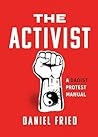
BOOKS: “The Activist” by Daniel Fried

The Activist: A Daoist Protest ManualThe Activist: A Daoist Protest Manual by Daniel Fried
My rating: 4 of 5 stars

Publisher Page — Prometheus Books/

Release date: March 3, 2026

Taoist philosophy has been applied to many a subject over the centuries, from war to business to governance to relationships, but this is the first time I’ve seen it applied to activism in a substantive way. The book caught my eye because I’ve long recognized the central truth behind Fried’s work, which is that the tactics and mindsets of protesters often does them no favors and may even ensure failure (if one presumes the objective to be to change behavior and attitudes on a given topic into line with the protesters’ stance.) The problem is that protesters are often angry and combative, characteristics which may keep the choir (preaching to itself) warm and feeling self-righteous, but which seldom brings in new converts from among the undecided [let alone from the opposing side.] And if you didn’t need converts to your side, you wouldn’t have to protest in the first place. Given this tendency, Taoism could be argued to be an ideal source of strategy. Taoism proposes going with the grain, not leading with a fight, and avoiding useless activity.

This book provides interesting food-for-thought about how protesters might have more impact by adopting fewer belligerent and self-serving tactics. Unfortunately, the book also has stretches of stream-of-consciousness writing that — while perhaps consistent with the Taoist love of spontaneity — can be a bit of a strain on the reader’s ability to follow. This mostly takes place in the latter chapters.

I found this book to be intriguing. I can’t say that I came away from it having answered the question of whether Taoist philosophy is reconcilable with activism on a practical level. Taoism asks one to let the natural unfold, while protest movements want to guide a society in a particular direction (notably one by definition at odds which that which has fallen into place organically.) It’s not for lack of discussion that I haven’t reached a conclusion, but rather that questions remain for me on the pragmatic level (rather than the level of theory.) That said, I found the book well worth reading, despite a few points of low readability.

View all my reviews

PROMPT: Working On

What have you been working on?

Being…. POW!… more spontaneous. 自然 (zìrán) in the Taoist conception.

Two Trails [Senryū]

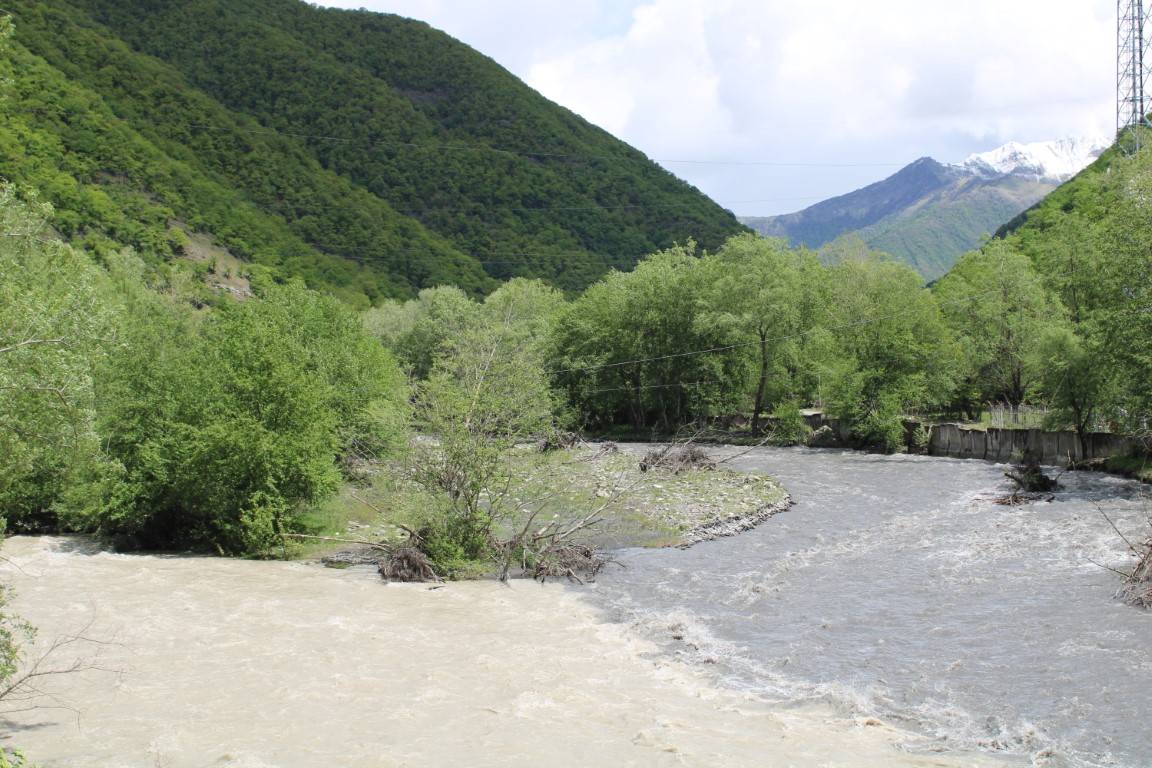
two rivers converge.
two trails diverge.
I flip a coin.

BOOKS: “Improv Wisdom” by Patricia Ryan Madson

Improv Wisdom: Don't Prepare, Just Show UpImprov Wisdom: Don’t Prepare, Just Show Up by Patricia Ryan Madson
My rating: 4 of 5 stars

Publisher’s Website

One might expect this to be a book about how to perform improvisational comedy, but it’s better described as a philosophy of life that employs lessons from improv. There are books that take a much more tailored approach to building an improv act. This one, rather, broadens its target demographic from those interested in theater and comedy to everybody. It discusses applying lessons such as default to positivity (the famous “Yes, and…” of improv) both on and beyond the stage.

Each of the thirteen chapters is built around a maxim that might be heard in an improv theater or troupe. The crux of the matter is building the confidence and sense of freedom to be able to behave spontaneously in an environment that’s stressful and somewhat chaotic. Most of the lessons approach an aspect of the problem of surrender and free response action, though there are broader lessons such as the benefits of gratitude and helpfulness. While I call the book’s content a philosophy of life, the author doesn’t spend a lot of time drilling down into established philosophies, with the exception of Buddhism — specifically of the Zen variety. As one might imagine, Zen — with its emphasis on non-attachment and avoidance of overthinking — has a substantial overlap with the approach to living that Madson is proposing.

“Improv Wisdom” is set up as a self-help book, featuring not only lesson-based organization but also offering a few exercises in each chapter.

This is a quick read and might prove to be of great benefit to those who have never thought much about the challenges and lessons of improv. The book can’t be said to be groundbreaking in terms of the lessons it presents, but its focus on what improv elucidates about these lessons is interesting and unique.

View all my reviews

BOOKS: “Imagination: A Very Short Introduction” by Jennifer Anna Gosetti-Ferencei

Imagination: A Very Short Introduction (Very Short Introductions)Imagination: A Very Short Introduction by Jennifer Anna Gosetti-Ferencei
My rating: 5 of 5 stars

Amazon.in Page

This is a concise guide to the subject of imagination, the capacity to conceptualize that which does not exist in reality. Philosophy is the primary dimension through which the subject is investigated, though the insights of poets (particularly Romantics,) authors, and artists are frequently presented — in several cases, in detail. Also, the author does discuss ideas from other disciplines as relevant (e.g. psychology, anthropology, science.) This is notable, for example, in Chapter 2, which looks at early signs of imagination in the human record and the evolution of this capacity.

Philosophical views on imagination have varied to the greatest possible extent, from Plato’s belief that imagination represents untruths and is therefore dangerous to various views suggesting that imagination is a good thing, is fundamental to what it means to be human (e.g. to empathy,) and is inescapable for humans. This Plato against the world dispute is revisited in several places throughout the book. Besides those of Plato, the views of Kant, Nietzsche, Wittgenstein, and Sartre are particularly extensively examined.

Creative types will find the final chapter (Ch.6 “Creativity from invention to wonder”) the most engaging part of the book as it deals with what makes for creativity. The chapter discusses topics such as whether constraints help or hinder creativity? Take, for example, poetry: does free verse poetry produce more imaginative material, or — on the contrary — is rhymed and metered verse more innovative and novel. If you think you know the answer, you might be surprised by the arguments that have been put forth.

I enjoyed reading this book and found it thought-provoking and worthy of the time.

View all my reviews

PROMPT: Creative

How are you creative?

By nudging letters into words, words into lines, and then dancing the mess into something that sings. By trying to tune into the Great Spontaneous.

BOOKS: The Creative Act by Rick Rubin

The Creative Act: A Way of BeingThe Creative Act: A Way of Being by Rick Rubin

My rating: 5 of 5 stars

Amazon.in Page

This book offers Rick Rubin’s philosophy of creativity and art. For those unfamiliar with Rubin, he’s a ZZ Top-looking music producer who contributed to a lot of successful albums, ranging from hip hop to the rock-n-roll of Tom Petty. He was a major player behind the Run DMC cover of Aerosmith’s “Walk This Way” that blew peoples’ minds in the 80’s. Interestingly, Rubin is neither a musician nor a technologist, and I heard him say in an interview that his great value-added was having an extremely high level of confidence in knowing what he liked. Rubin has a persona that is as much guru as music producer, and this book reflects this broad insight and wisdom.

In the book, Rubin lays out his view of the creative process and the mistakes people make with it, but along the way he offers insight into such interesting questions as why some artists only seem to have one major work in them. While Rubin’s experience is mostly with music (though he also worked with comedian Andrew Dice Clay on Clay’s albums,) his book is broadly targeted towards all artists, and he seems to use as many examples from literature and graphic arts as he does from music.

Rubin does sound a bit woo woo here and there, but I found that many statements — e.g. those that spoke of the universe’s role in artistry — could be interpreted in a way that wasn’t necessarily superstitious. While woo woo sounding statements often get on my nerves, I felt Rubin’s use was poetic and spoke to a broader truth.

I’d highly recommend this book for artists and creative types, regardless of field.

View all my reviews

Blanket of Clouds [Haiku]

mountain clouds
move with spontaneity --
like blanket fort kids