Walk with a mind that's clear and unburdened,
   With life force that flares -n- flows like rainbows,
 Traversing the witch's gorge through the mountains --
   Among the floating clouds and blowing winds.
 Drink up the spiritual; dine on the real;
   Let them ever build up in your body.
 Emulate the health and might of the gods,
   Preserve your energy through harmony.
 Be one with Heaven, be one with the Earth.
   See in yourself divine transformations.
 Know all this to the utmost -- be all this,
 And hold on to it 'til the bitter end.
NOTE: The late Tang Dynasty poet, Sikong Tu (a.k.a. Ssŭ-k‘ung T‘u,) wrote an ars poetica entitled Twenty-Four Styles of Poetry. It presents twenty-four poems that are each in a different tone, reflecting varied concepts from Taoist philosophy and aesthetics. Above is a translation of the eighth of the twenty-four poems.
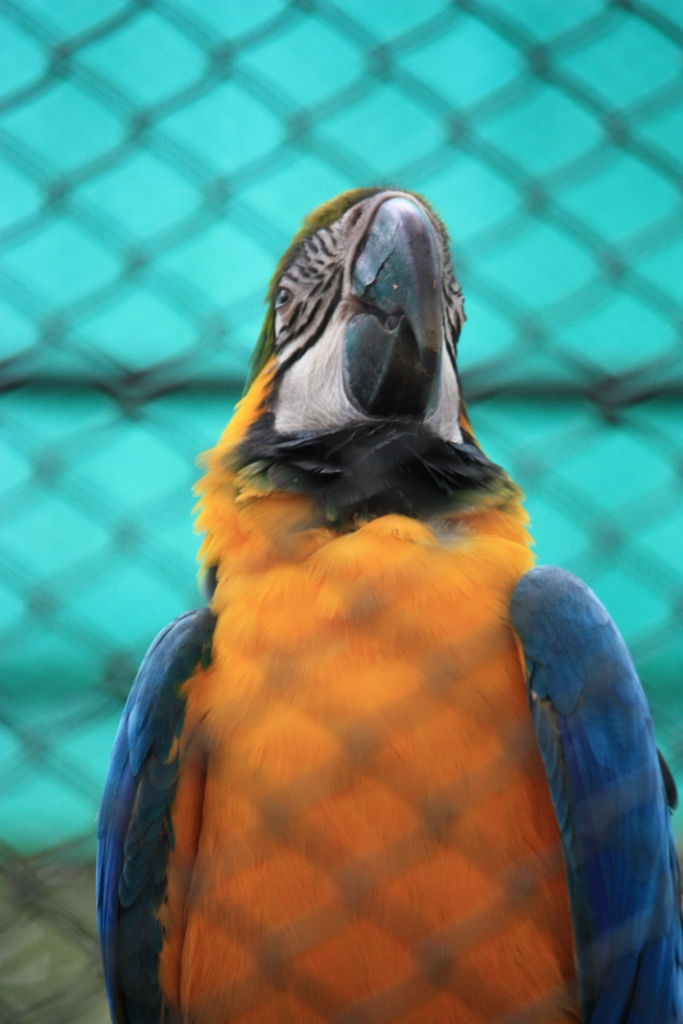
I know what the caged bird feels, alas!
 When the sun is bright on the upland slopes;
 When the wind stirs soft through the springing grass,
 And the river flows like a stream of glass;
 When the first bird sings and the first bud opes,
 And the faint perfume from its chalice steals --
 I know what the caged bird feels!

I know why the caged bird beats his wing
 Till its blood is red on the cruel bars;
 For he must fly back to his perch and cling
 When he fain would be on the bough a-swing;
 And a pain still throbs in the old, old scars
 And they pulse again with a keener sting --
 I know why he beats his wing!

I know why the caged bird sings, ah me,
 When his wing is bruised and his bosom sore, --
 When he beats his bars and he would be free;
 It is not a carol of joy or glee,
 But a prayer that he sends from his heart's deep core,
 But a plea, that upward to Heaven he flings --
 I know why the caged bird sings!
Half a league, half a league,
   Half a league onward,
 All in the valley of Death
   Rode the six hundred.
 "Forward the Light Brigade!
   Charge for the guns!" he said:
 Into the valley of Death
   Rode the six hundred.

"Forward the Light Brigade!"
   Was there a man dismay'd?
 Not tho' the soldier knew
   Some one had blunder'd:
 Their's not to make reply,
   Their's not to reason why,
 Their's but to do and die:
   Into the valley of Death
     Rode the six hundred.

Cannon to right of them,
   Cannon to left of them,
 Cannon in front of them
   Volley'd and thunder'd;
 Storm'd at with shot and shell,
   Boldly they rode and well,
 Into the jaws of Death,
   Into the mouth of Hell,
     Rode the six hundred.

Flash'd all their sabres bare,
   Flash'd as they turn'd in air
 Sabring the gunners there,
   Charging an army, while
 All the world wonder'd:
    Plunged in the battery-smoke
 Right thro' the line they broke;
   Cossack and Russian
 Reel'd from the sabre-stroke
   Shatter'd and sunder'd.
 Then they rode back, but not,
   Not the six hundred.

Cannon to right of them,
   Cannon to left of them,
 Cannon behind them
   Volley'd and thunder'd;
 Storm'd at with shot and shell,
   While horse and hero fell,
 They that had fought so well
    Came thro' the jaws of Death
 Back from the mouth of Hell,
   All that was left of them,
      Left of six hundred.

When can their glory fade?
   O the wild charge they made!
 All the world wonder'd.
   Honour the charge they made!
 Honour the Light Brigade,
   Noble six hundred!
One sleepless night:
   I sit up to strum my lute.
 The moon shines through thin curtains,
   A gentle breeze rustles my robe.
 A wild goose honks in the wilderness,
   Stirring a cascade of other birdcall.
 I pace and peek out windows --
   Alone, and burdened with sorrows.
Drunk, I'd keep a lamp lit to find my sword,
 The blare of horns sounded throughout the camp.
 Soldiers ate meat under waving banners;
 The military band played boisterous tunes.
 Autumn brought our troops to the battlefield.

Carried by a charger at full gallop,
 My bow thwipped, sending swift arrows flying.
 We restored Imperial lands, boldly,
 And won great fame for fighting gallantly,
 But fame grows thin and gray just like my hair.
Now winter nights enlarge
 The number of their hours;
 And clouds their storms discharge
 Upon the air towers.
Let now the chimneys blaze
 And cups o'erflow with wine,
 Let well-turned words amaze
 With harmony divine.
Now yellow waxen lights
 Shall wait on honey love
 While youthful revels, masques, and courtly sights
 Sleep's leaden spells remove.

This time doth well dispense
 With lovers' long discourse;
 Much speech hath some defense,
 Though beauty no remorse.
All do not all things well;
 Some measures comely tread,
 Some knotted riddles tell,
 Some poems smoothly read.
The summer hath his joys,
 And winter his delights;
 Though love and all his pleasures are but toys,
 They shorten tedious nights.
That is no country for old men. The young
 In one another's arms, birds in the trees,
 -- Those dying generations - at their song,
 The salmon-falls, the mackerel-crowded seas,
 Fish, flesh, or fowl, commend all summer long
 Whatever is begotten, born, and dies.
   Caught in that sensual music all neglect
   Monuments of unageing intellect.
II
An aged man is but a paltry thing,
 A tattered coat upon a stick, unless
 Soul clap its hands and sing, and louder sing
 For every tatter in its mortal dress,
 Nor is there singing school but studying
 Monuments of its own magnificence;
   And therefore I have sailed the seas and come
   To the holy city of Byzantium.
III
O sages standing in God's holy fire
 As in the gold mosaic of a wall,
 Come from the holy fire, perne a gyre,
 And be the singing-masters of my soul.
 Consume my heart away; sick with desire
 And fastened to a dying animal
   It knows not what it is; and gather me
   Into the artifice of eternity.
IV
Once out of nature I shall never take
 My bodily form from any natural thing,
 But such a form as Grecian goldsmiths make
 Of hammered gold and gold enamelling
 To keep a drowsy Emperor awake;
 Or set upon a golden bough to sing
   To lords and ladies of Byzantium
   Of what is past, or passing, or to come.









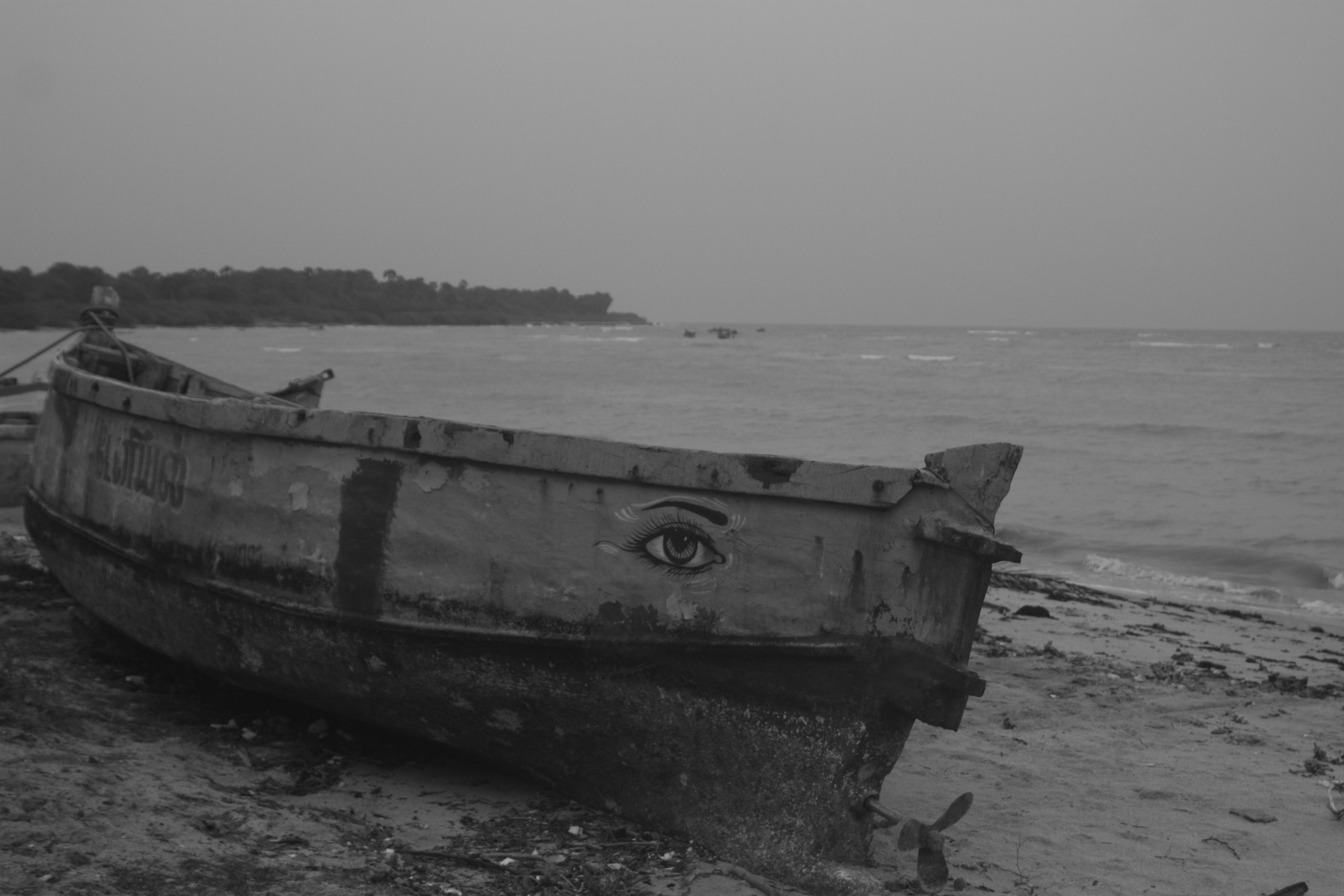

 Tiger Riding for Beginners