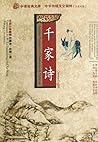
BOOK: “Golden Treasury of Quatrains and Octaves” [i.e. 千家诗] Trans. by Xu Yuanchong and Xu Ming

Golden Treasury of Quatrains & OctavesGolden Treasury of Quatrains & Octaves by Xu. Yuanchong (translator)
My rating: 5 of 5 stars

Publisher Site — China Translation Corp

This is the bilingual (Chinese-English) edition of an anthology of Tang and Song Dynasty poems commonly known in Chinese as 千家诗 (it has a much longer formal title,) which was jointly translated by Xu Yuanchong and Xu Ming (no relation.) The book is organized into four parts by the form of poem: 7-character line quatrains, 7-character line octaves, 5-character line quatrains, and 5-character line octaves. The anthology includes poems by Li Bai, Du Fu, Wang Wei, Meng Haoran, Jia Dao, Ouyang Xiu, Yang Wanli, Su Shi, and many other important Tang and Song poets — from Emperors to Hermits. That said, while the aforementioned Chinese title suggests there are works of a thousand poets involved, that’s an exaggeration. (And that’s probably all the better. While this was the golden age of Chinese poetry, going that wide into surviving poetry might involve hitting the dregs.)

Each entry has a title, byline, the poem in Simplified Chinese script and pinyin (Romanized phonetic script,) an English language translation, notes in Chinese, and a line or two of commentary in English. All but the seven-character line octaves take up just one page per poem. (Seven-character line octaves take two pages per poem.)

This is a great anthology. There’s an introduction to give insight into what approach the translators took. They stuck to rhyming verse to emulate the originals in form, but more can be learned from the introduction.

I’d highly recommend this anthology for poetry readers.

View all my reviews

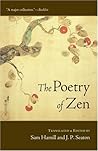
BOOK: “The Poetry of Zen” Ed. / Trans. Sam Hamill & J.P. Seaton

The Poetry of ZenThe Poetry of Zen by Sam Hamill
My rating: 5 of 5 stars

Publisher Site – Shambhala

This poetry anthology consists of translations of Chinese and Japanese poetry that play in the Zen aesthetic. They are not Zen Buddhist poetry in the sense of being sutras or sutra-like expositions on Buddhist philosophy or theology (at least, not mostly.) And while there are many monks and Buddhist layperson poets represented, not all of those included were Buddhists. (In fact, there is even some verse from the Daodejing included, though Taoism is certainly philosophically related to Zen.)

About half the book is Chinese poetry, including pieces from Han Shan, Li Bai, Bai Juyi, Wang Wei, Du Fu, and many other greats of Chinese poetry. (Note: my spellings of author names varies from those used in the book because Hamill and Seaton use Wade-Giles spellings.) The other half of the book consists of works by Japanese poets, including: Saigyo, Dogen, Basho, Ryokan, Buson, Issa, and others. The Japanese part includes a few haibun (prose poems interspersed with haiku,) adaptations of Chinese-style poems, as well as the various Japanese fixed form styles (i.e.. haiku, tanka, etc.)

The two translators, Sam Hamill and J.P. Seaton, initial the poems that each translated (some were dually translated and others singularly.) I enjoyed the translations and felt they were fine reading in their own right. With haiku and tanka, the translators stuck fairly close to the traditional form (in as much as the aesthetic could be maintained doing so,) but with Chinese lyric styles they often took a freer approach to form.

If you’re interested in poetry that conveys Zen sentiment, this book is worth investigating.

View all my reviews

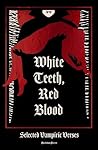
BOOK: “White Teeth, Red Blood” by Various

White Teeth, Red Blood: Selected Vampiric VersesWhite Teeth, Red Blood: Selected Vampiric Verses by Lord Byron
My rating: 5 of 5 stars

Publisher Site – Pushkin Press

This anthology gathers poetry with at least a vaguely vampiric theme. About half of the poets fit into the category of well-known to a general readership (e.g. Goethe, Byron, Coleridge, Tennyson, Yeats, Dickinson, Kipling, Baudelaire, Millay, etc.) and the others will be less familiar to most readers — either by virtue of being modern poets or having a body of work that didn’t age as well, on the whole. Even the pieces from familiar poets don’t tend to be among those artists’ most anthologized works by virtue of the specialized theme of the selection. Most of the pieces are older works, but there are modern poems included as well, and it follows that most of the works are rhymed / metered, with free verse mostly seen among the newest poems.

The twenty-nine poems in the anthology are arranged between three sections. The first is the longest part, taking up about 3/4th of the book, and consists of nine poems (including a few excerpts of book-length narrative poems,) all of long format. The second section includes eleven shorter poems (between one and a few pages long,) and the last section contains nine poems, most of which are quite short (as short as a quatrain.)

There is a brief introduction by Claire Kohda, but otherwise there is no ancillary matter. That was fine by me. There is no padding, and — even though there are fewer than thirty poems — the poems fill out the book because so many of them are long pieces or excerpts.

I enjoyed this book and its varied selection of poems. While I read poetry extensively and have read my share of vampire fiction, this was the first work I can remember reading at their intersect. This meant that, for me, there was a good amount of unfamiliar material (despite there being relatively few recent poems.) If you’re in the same boat, you’ll probably enjoy this anthology.

View all my reviews

BOOKS: “How to Love in Sanskrit” Trans. by Anusha Rao & Suhas Mahesh

How to Love in SanskritHow to Love in Sanskrit by Anusha Rao
My rating: 4 of 5 stars

Amazon.in Page

As one can tell from the title and cover, this is an anthology of poems translated from Sanskrit to English on the subject of love, relationships, and eroticism. The source poems come from a diverse collection of writings.

The translators made an editorial / translation decision to place the translations in a modern context. By that I mean that the poems, most of which were written hundreds of years ago, have references to cell phones and dating apps, as well as many colloquialisms and expressions du jour. Some readers will love how this makes it readable and relatable in the present-day. Others will find that it distracts and takes one out of the experience of reading classical literature. I’m not saying the decision is good or bad, but it is something of which a potential reader should be aware. The only critical comment I have on the matter is that, if you should be reading the book ten years from now, there will likely be both language and technical references that have not aged well, and which you will probably have to go to your AI historian to figure out. (Some expressions are cliched now.)

I did enjoy how much ground the collection covered. The poems are grouped into categories sticking to the “How To” motif of the book, e.g. “How to Flirt,” “How to Yearn,” etc. I will say I went through a period early in the reading in which it seemed like poem after poem was confusing teeny-bopper lust for love, seemingly celebrating pathologies like jealousy and co-dependence. Throughout this phase of the book there were a number of poems that read like bad schoolboy poetry. However, in later chapters there were more poems that were dignified and reflected a more mature grasp of the subject.

There were some features of the book that I loved. First of all, most of the poems have explanatory notes at the end that can be very helpful both because (as mentioned) most of the poems were written long ago and because I am a foreign reader. Secondly, there is an appendix with romanizations of the original Sanskrit.

Ultimately, I’d say a major factor in whether this anthology is for you will be whether you enjoy the colloquial tone and free verse form or find it off-putting.

View all my reviews

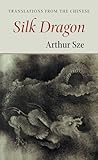
BOOKS: “Silk Dragon II” ed. & trans. by Arthur Sze

Silk Dragon: Translations from the Chinese (Kage-an Books)Silk Dragon: Translations from the Chinese by Arthur Sze
My rating: 5 of 5 stars

Amazon.in Page

Release Date: May 28, 2024

Let me begin with a note of clarification: The edition that I read was the “Silk Dragon II” collection, which is due out in May of 2024. I mention this because there is potential for confusion in that this book looks like a sequel (i.e. a completely new set of poems,) but really it is something between a new edition and a sequel. That is to say, while it has a substantial amount of new material, it is built on the original “Silk Dragon” volume. This edition adds eighteen new poem translations, most of which are from poets of the modern era (I mean that loosely, not technically, so 20th century onwards.) I’d recommend readers get this edition, but not both this and the original.

This collection includes a wide range of poems from ancient times through China’s various dynasties to the modern day. It includes translations that are extremely well-known, such as Li Bai’s “Drinking Alone with the Moon” and Liu Zongyuan’s “Snow on the River.” But it also includes many pieces that are likely to be new to most poetry readers, particularly given they will be reading translations (i.e. Non-specialists in Chinese poetry.) As mentioned, the bulk of the new poems are from recent decades and tend to be free verse. [Though there are four new classical poems, as well.]

I found the translations to be evocative and approachable. I am unable to comment on how well Sze captures the feel of the original, but I can say that the translations of poems I’m familiar with were at least on par with other translations that I’ve read. The translations don’t always display the sparseness one sees in classical Chinese poetry, but the challenge of conveying form and meaning and metaphor through translation is immense and, at some level, impossible.

I’d highly recommend this poetry collection for readers of poetry and translated literature.

View all my reviews

BOOK REVIEW: 100 Poems to Break Your Heart ed. Edward Hirsch

100 Poems to Break Your Heart100 Poems to Break Your Heart by Edward Hirsch
My rating: 5 of 5 stars

Amazon.in Page

Release Date: January 31, 2023

This anthology (and the accompanying analytical essays by Hirsch) covers over two-hundred years of poetry and works with a large set of translated languages as well as poems of English language origin. Therefore, the poems include an eclectic set of forms and schools of poetry. There are narrative poems and philosophical poems. There are sparse poems and elaborate poems. Besides the fact that they are all short to intermediate length poems (a few pages, at most,) the only thing the included poems have in common is some serious subject matter at each poem’s core. There are elegies and cathartic poems of illness or ended relationships, as well as tales of various types of tragedy (personal, global, and of scales in between.)

That said, not all of the poems feature a dark and melancholic tone. There are several poems that are humorous — in a gallows humor sort of way. Such poems include: Dunya Mikhail’s “The War Works Hard,” Harryette Mullen’s “We Are Not Responsible,” and Stanley Kunitz’s “Halley’s Comet.”

Of course, there are many poems that are as devastatingly sad as the title leads one to expect. Of these, Eavan Boland’s “Quarantine,” the story of a man carrying his illness-ravaged wife in search of survival during a famine in Ireland in 1847 takes the award for saddest. There are poems in this book that are more brutal, encompass vaster scales of suffering, or combine lyrical skill and emotional experience more artfully. But none of those poems socked me in the chest like Boland’s. One thing that struck me during my reading was what an intense force multiplier story is in creating poignant poems. Several others among my favorites told stories that made for visceral reads. These include: “Song” by Brigit Pageen Kelly, “The Race” by Sharon Olds, “Terminus” by Nicholas Christopher (also among the most savage tear-jerkers,) and “The Gas-Poker” by Thom Gunn.

Other favorites include: Langston Hughes’s “Song for a Dark Girl,” Miklós Radnóti’s “The Fifth Eclogue,” Stevie Smith’s “Not Waving but Drowning,” and “Mendocino Rose” by Garrett Hongo.

I’d highly recommend this book for poetry readers.


View all my reviews

BOOK REVIEW: There Once Was A Limerick Anthology Ed. by Michael Croland

There Once Was a Limerick Anthology: Lewis Carroll, Robert Frost, Edward Lear, Mark Twain, Carolyn Wells, Woodrow Wilson and OthersThere Once Was a Limerick Anthology: Lewis Carroll, Robert Frost, Edward Lear, Mark Twain, Carolyn Wells, Woodrow Wilson and Others by Michael Croland
My rating: 5 of 5 stars

Amazon.in Page

Release Date: August 17, 2022

This little book gathers a diverse collection of about 350 limericks. [Limericks are a five-line poetic form with an aabba rhyme scheme and short -b lines, and are often humorous – or, at least, punny, quirky, or absurd. The form often uses forced rhymes or contorted language as part of the humor, leaning into the genre’s lowbrow image.] For those who’ve read Edward Lear and may be concerned that these limericks will, like much of Lear’s work, lack punch and humor to the modern ear, that’s not the case. The selected limericks include many clever and witty examples that land as well today as ever. [Lest it sound like I’m dissing Lear, I agree with Langford Reed’s limerick included in this edition – i.e. “We should never forget // That we owe him a debt”]

The limericks are grouped by a classification scheme. The book starts with the most common categories — those that feature locations or proper names in the lead line. It has a few chapters that play with language, twisting it about through misspellings or plays on abbreviations. There’s a chapter that is all tongue twisters. Two of the more popular chapters are toward the end. One is a collection of limericks written by famous writers and personalities, such as: Shakespeare, Lewis Carroll, and Robert Frost. The other features ribald limericks. For many, ribald and risqué is what comes to mind when one thinks of limericks – e.g. “There once was a young man from Nantucket.” This book aims for a general audience, and – therefore – avoids the edgiest of material, but it’s good that they realized they couldn’t dodge bawdy and raunchy material altogether, and still claim to be an overview of the form.

I enjoyed reading this collection tremendously. With so much public domain content, I thought there might be a lot of limericks that wouldn’t land, but – on the contrary – most were clever and fun. If you’re a fan of the form, this book is definitely worth reading. And it’s part of the Dover Thrift Edition collection, so no doubt you can pick it up for a song.


View all my reviews

BOOK REVIEW: Embodied ed. by Wendy Chin-Tanner & Tyler Chin-Tanner

Embodied: An Intersectional Comics Poetry AnthologyEmbodied: An Intersectional Comics Poetry Anthology by Wendy Chin-Tanner
My rating: 5 of 5 stars

Amazon.in page

Out: May 18, 2021

This is a poetry anthology in graphic novel form. All of the poems offer a feminine perspective, some considering the feminine in conjunction with other issues (race – e.g. “Red Woman;” or gender – e.g. “Gender Studies.”) As one might expect of an anthology, the poetic and artistic styles vary considerably from one entry to the next. That said, the 23 poems are predominantly short (most written or excerpted to fit one page) free verse poems that focus heavily on human experiences that are either unique to womanhood (e.g. motherhood) or for with the feminine perspective is quite distinctive (e.g. migration, war, etc.) While the artistic styles are quite varied, they are of a range one would see as a reader of graphic novels — some rough, some cartoonish, and some elaborate.

While the anthologized works all conform to a common feminist motif, there is quite a variety of topics and tones across the various pieces. The most widespread topic is that of motherhood, though from various perspectives (i.e. new mother, mother-to-be, prospective mother, a daughter’s relationship with mother, etc.) and attitudes. There are visceral entries that deal in various traumas – e.g. “Speak-House” (deals with the question of whether one speaks of trauma of living in a war zone freely) or “University Toxic” (which describes an incident of sexual harassment.) Love and relationships is another recurring theme (e.g. “To the Cherry Blossoms on 16th and Wharton” and “Drown.”) Other topics touched upon include menopause and wicca / witchcraft. [On a related note: While it does have a serious side, “Capitalism Ruins Everything, Even Witch Craft” is probably the most humorous of the poems, dealing with the issue of how quickly spiritual practices that propose to eschew materialism become the most outlandishly materialistic domains of all.]

The included artistic styles reflect realism (e.g. “Good Bones,”) surrealism (e.g. “Rubble Girls” and “Gender Studies.”) My favorite artwork of the book was in “Half Girl, Then Elegy.” Its panels are vivid, evocative, and beautifully rendered. (It’s also one of my favorite poems of the collection.) That said, favorites are very personal, and your view may vary. “Settlement” (which deals with immigration) is another of the more attractively illustrated works, as well as being quite an intense poem.

There aren’t a lot of poetry collections that employ graphic novel style illustration. Besides making the anthology more aesthetically pleasing, this approach offers a couple of other benefits. The most obvious is that the illustrations offer another reader’s (the illustrator(s)) perception of the poem — presumably a take on the poem that came about via discussion with the poet. [Note: this might not be seen as a benefit to all readers. Some might want to take the poem in without being subject to the interpretation of another. A nice feature of this book is that each poem is presented in text form after the illustrated version, giving the reader an opportunity to take the poem in without being flavored by a third-party perspective. Thus, one can read the poem straight first, and then go back and take in the illustrated edition (granted it would be a more awkward reading experience,) but it would let one compare one’s own picture of the poem with that of another.] A less apparent benefit is that it makes it easier to influence the pacing and pausing of reading. Dramatic use of white space for just this purpose has been used by poets for a long time, but building the textboxes around the art can make pacing changes all the more apparent.

There is a study guide and sketch art included as ancillary material. The former consists of a few questions about each poem that might be used by a book club or the like.

I thought this was a splendid collection of poems, and the art all worked – whether it was simple and chaotic or stunningly beautiful. I’d recommend readers of poetry check this anthology out, particularly if one likes the idea of merging the graphic and poetic arts.

View all my reviews