BOOK: “The Life of an Amorous Man” by Ihara Saikaku [Trans. by Chris Drake]

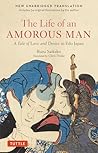
The Life of an Amorous Man: A Novel of Love and Desire in Old JapanThe Life of an Amorous Man: A Novel of Love and Desire in Old Japan by Ihara Saikaku
My rating: 5 of 5 stars

Publisher Site – Tuttle

On sale October 14, 2025

Original Title: 好色一代男

As the title suggests, this novel is presented as the biography of a man who is — shall we say — a horndog. Actually, it would be more correct to say that it is the story of the man’s sex life, as it begins with his sexual awakening as a boy of seven and tells stories of his relationships and dalliances throughout his life until he reaches the age of sixty and is no longer physically capable of the act. Of course, the novel does describe non-amorous life events such as the protagonist’s (i.e. Yonosuke’s) brief time as a monk and as (what in modern terms would be called) a “trust-fund kid.” Yonosuke is from a wealthy merchant family, though his inability to keep his mind on task sees him disowned for many years. So, he leads lives both rich and poor, but never without lust in his heart.

Given that the book focuses on Yonosuke’s interactions with geisha and varied sex workers, one might expect that it is a work of erotica (or even pornography.) It is neither. There is no graphic description of sexual activities and often those events are glossed over altogether. This book will be of much more interest to those interested in what life in Edo Period Japan was like, and particularly how sex work operated as a regulated industry with licit and illicit domains, than to anyone wishing to read erotica for sensual or prurient purposes.

The book has a series of illustrations (one per chapter) that were drawn by the author and appeared in the original (1682) edition. There are also poems (tanka and haiku) sprinkled in here and there, many of which were invocative in their own right.

If you are interested in historical Japan and / or its “floating world,” you’ll find this book to be an interesting read. It’s highly readable and entertaining.

View all my reviews

BOOKS: “A Short Stay in Hell” by Steven L. Peck

A Short Stay in HellA Short Stay in Hell by Steven L. Peck
My rating: 5 of 5 stars

Publisher Site: Strange Violin Editions

If you enjoy books like Joseph Heller’s Catch-22 or Douglas Adams’ The Hitchhiker’s Guide to the Galaxy this book will probably be right up your alley. It may not be as unrelentingly (and hilariously) absurd as H2G2, but it’s clever, amusing, and thought-provoking.

The premise is that a devout Christian finds himself in hell because it turns out that Zoroastrianism was actually the one true religion. Fortunately, Zoroastrian hell is neither as grim nor (perhaps, ironically) as fire & brimstone-oriented as the Biblical version, but it is tedious, demoralizing, and — while it might not last forever –it lasts long enough to seem like forever.

Jorge Luis Borges fans (such as myself) will find a nod to his work in the shape of said hell.

I’d highly recommend this book for readers of irreverent and humorous literary fiction. It’s funny. It’s clever. And it’s a quick read.

View all my reviews

BOOKS: “Letters from a Seducer” by Hilda Hilst

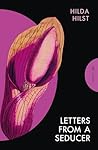
Letters from a SeducerLetters from a Seducer by Hilda Hilst
My rating: 5 of 5 stars

Publisher Site – Pushkin Press Classics

Release Date: May 27, 2025

This is an upcoming English translation of a 1991 novella from Brazilian author, Hilda Hilst, from what has been called her “obscene cycle.” It is mostly an epistolary novella in which a man, Karl, writes his sister, Cordelia, informing her about his recent sexual adventures and attempting to coax a confession out of her about her own activities long in the past. We never see any replies from Cordelia. (And that is part of what makes the book fascinating.) The only indication of her responses that we get are Karl’s references to Cordelia’s comments from her last letter in his present letter. However, we can’t necessarily be certain that even those occasional suggestions of dialog represent the truth.

To understand why one might have doubt, one must be aware of what else is going on in this book. There is one other narrative voice, and that is of Stamatius. Stamatius is in socio-economic terms the opposite of Karl. Karl being of the gentlemanly class — his behavior and letters to his sister notwithstanding — and Stamatius is a starving artist (a writer, to be precise.) The two men speak of each other, though always in deprecating terms. However, there’s reason to think the two men might be one. Stamatius, while condemning Karl’s sex obsession, also mostly engages in tales of his own sexual adventures as well as presenting those of others. In fact, the end of this novella is a collection of short vignettes of the nature one might see in a smutty letter magazine, only better (and sometimes poetically) written.

By the author’s own description, this novella is intentionally pornographic. While the same thing is said of Hilst’s The Obscene Madame D I did not find that book particularly graphic or sex-centric. This book, however, is quite graphic and if one took away references to sexual activities
nothing of substance would remain. (Not true of The Obscene Madame D.)

I found this book to be intriguing, despite the fact that it is quite sloppily arranged (presumably on purpose,) but it does present some splendid use of language (at least in this translation — the original is in Brazilian Portuguese) and character psychology.

I’d recommend this book for readers of literary fiction who don’t mind plotlessness and pornographicness.

View all my reviews

BOOKS: A Double-Barreled Detective Story by Mark Twain

A Double Barrelled Detective StoryA Double Barrelled Detective Story by Mark Twain
My rating: 5 of 5 stars

Amazon.in Page

This novella is Mark Twain’s satirical jab at the whole Sherlock Holmes concept. In particular, it pokes fun at a detective who eschews everything supernatural in favor of cold rationality, but who produces results so impossible that they are themselves supernatural.

The story has two temporally disjointed parts that almost seem like independent stories until the very end when all is tied up. (Holmes only appears in the second part.) This works nicely for parody of Holmesian detective fiction as it’s an approach that was used by Sir Arthur Conan Doyle on occasion — e.g. in A Study in Scarlet. The first part tells the tale of a woman who is treated foully by Jacob Fuller, the husband she eloped with but who harbored resentment towards her father, a man Fuller believed felt wasn’t good enough for his daughter. The woman makes her son, named Archy Stillman, promise that he will track down Fuller and make the man’s life a living hell.

The second part revolves around a murder that seems to be independent of the case described above, the killing of a man named Flint Buckner. Here Sherlock Holmes, who happens to be in town visiting his nephew – Fetlock Jones, “solves” the case only to be shown to be entirely and humiliatingly wrong by Archy Stillman using only a superior sense of smell and basic observation of the facts (with no elaborated inductions.)

While I never had anything against the Sherlock Holmes stories — in fact, I enjoyed them all — I did find Twain’s satire amusing and compelling as a story. [And it’s true that Arthur Conan Doyle did regularly strain credulity — that’s what made Holmes an intriguing character.]

Well worth reading.

View all my reviews

BOOK REVIEW: Lessons by Ian McEwan

LessonsLessons by Ian McEwan
My rating: 5 of 5 stars

Amazon.in Page

Get Speechify to make any book an audiobook

This book not only shows the characters learning their lessons, it has a few teachings for the reader, as well. The story follows the protagonist, Roland Baines, as he receives a series of harsh life lessons, at the center of each is a woman. There is Miriam, his piano teacher at boarding school, a woman who enters into a manipulative sexual relationship with Roland while he’s still a minor. There is Alissa, the wife who abandons Roland and their seven-month-old child to pursue her writing career. Finally, when a woman, Daphne, comes along with whom he can at last have a healthy relationship with a dependable partner, he has difficulty embracing the relationship because of his earlier experiences. We also witness the intergenerational learning of Alissa, whose mother never made good on her own potential as a writer.

The lessons for the reader are profound. First, after developing an intense and visceral dislike for Alissa because she abandons a baby and seems so oblivious to the suffering her actions have caused (e.g. her husband being suspected of a murder that never happened,) we are reminded that disappearing dads are par for the course; we may think poorly of them, but we rarely have an intense emotional response to such situations. Second, we are offered insight into the “intentional fallacy” – i.e. thinking one knows the author’s intentions and subjective thought processes from what she writes.

I found this to be a powerful story that asks one to confront all manner of intriguing questions. (e.g. If an individual ditches her [or his] family for career, does it make a difference if that person is the best at what she does or if she’s mediocre or if she stinks?) I’d highly recommend this novel for readers of literary fiction.


View all my reviews

BOOK REVIEW: The Torrents of Spring by Ernest Hemingway

The Torrents of SpringThe Torrents of Spring by Ernest Hemingway
My rating: 5 of 5 stars

Amazon.in Page

This novella is atypical of Hemingway’s work in several ways. It’s one of his earlier works of fiction, so it may stand to reason that his style and genre preferences weren’t yet set. The book parodies certain works and authors and satirizes the conceits and affectations seen in some popular writers of the day. Not that Hemingway’s work is otherwise devoid of humor, but it rarely plays the central role that it does herein. The story also has plot points that feel surreal in their absurdity, which is a variation from Hemingway’s usual dramatic realism. The novella also features a number of fourth wall breaks in the form of “Notes to the Reader.”

The book combines two storylines, each featuring a different worker at a pump factory in a Michigan town. Scripps O’Neill is a writer who comes to town after wandering away from his home down a train line after his wife left him. Scripps goes native in the town, getting a job at the pump factory and marrying a local woman, but he’s perpetually restless. Yogi Johnson is already an experienced worker when Scripps arrives, and he’s shaped by his experience in World War I, which other characters continually question amongst themselves. He ends up wandering out of town down the train tracks in a way that echoes Scripps’ arrival.

The book is funny and quirky and oddly engaging. Some of the humor would probably land better for those familiar with the pretentious writers that were the book’s target, but even if one isn’t familiar with the literature of the era, one will come away with an understanding of how Hemingway viewed said writers.

I enjoyed the book and would highly recommend it for readers of American Literature.


View all my reviews

BOOK REVIEW: The Martian by Andy Weir

The MartianThe Martian by Andy Weir

My rating: 5 of 5 stars

Amazon page

If you like suspenseful science-fiction, humor, and are fascinated by science, you must read this book. I’m not kidding.

The premise is a simple cast-away story, except that it takes place on Mars—an environment in which a human can’t last for seconds without a lot of properly functioning technology. Astronaut Mark Watney is left for dead when a severe storm blows in, impaling him with a piece of metal, knocking out his vital statistics monitor, and blowing him into a drift. Having lost visual contact with Watney, showing no vital statistics, and facing the toppling of the crew’s escape vehicle by high winds, the mission commander decides that she can’t risk the lives of the entire crew to cart Watney’s body back home. The thing is; Watney isn’t dead.

The book is a rollercoaster ride of highs and lows associated with events that nearly kill Watney—either in an instant or by making his long-term survival impossible. The botanist / engineer must figure out how to survive for four years (until the next Mars mission is due—if it doesn’t get cancelled) with less than six months of supplies. (The mission was supposed to be one month but was aborted in the first week, but there were five other crew members whose rations were left behind.) If you think Tom Hanks had it bad in Cast Away, imagine having to produce food on Mars.

This book taps into the visceral feeling that works so well in the movie Gravity (but Weir does more homework on the science.) For tension, it’s hard to beat being adrift in space, utterly isolated from one’s species—or any species for that matter–and knowing you will die when your resources run out.

The main character, who is the only character for the first six chapters or so, is intensely likable. Mark Watney is funny, intelligent, self-deprecatingly humble, and can confidently problem solve in the midst of any crisis. If there’s a critique of the realism of this story (as sci-fi goes it is extremely realistic), it’s that Watney is preternaturally skilled at adapting to complete solitude. However, I don’t deduct for this, because if it showed him at the depths of despair that someone in his circumstance would inevitably go through, it wouldn’t be nearly as pleasing a book to read. If you’ve read a lot about sensory deprivation and / or what happens to prisoners over long stints in solitary confinement, I’d suspend the disbelief that might come from that knowledge and just accept that Watney is exceedingly good at saying, “Pity-party over. It’s time to make this work.” In short, humorous Watney is just a lot more fun to read than would be a despondent astronaut.

I think I’ve been clear that this is an outstanding book, and everyone should read it. I guess if you absolutely hate science (of any kind–because there’s botany, biology, physics, chemistry, engineering, etc. all rolled up into this book), you may find that it’s hard to stick with the glut of scientific / engineering discussions coming at you. Still, you shouldn’t hate science that much—what the hell is the matter with you. Weir writes in a readable style and the reader doesn’t get awash in minutiae. (For example, Watney even names the unit kilowatt-hour/sol [sol=a Mar’s day] the “Pirate-ninja” to make it more palatable and humorous.)

Read it. You’ll like it. Also, don’t wait because the movie is supposed to come out in the Fall.

View all my reviews

BOOK REVIEW: The Coroner’s Lunch by Colin Cotterill

The Coroner's Lunch (Dr. Siri Paiboun, #1)The Coroner’s Lunch by Colin Cotterill

My rating: 4 of 5 stars

Amazon page

The Coroner’s Lunch uses a popular and intriguing technique of setting a crime novel in an unconventional landscape. Like Martin Cruz Smith’s Arkady Renko novels (most famously Gorky Park), James Church’s Inspector O novels (e.g. A Corpse in the Koryo), or Laura Joh Rowland’s Sano Ichirō samurai detective novels, Cotterill’s book places a protagonist staunchly devoted to the truth into a sea of ideologues who value appearances more than facts and who will do anything to maintain their precarious grasp on power.

This approach appeals for a couple of reasons. First, it maintains a line of tension in terms of the world against the protagonist on top of whatever other plot conflicts may exist (criminal against investigator.) It also allows us to recognize the virtues that we find appealing amid a people that we think are a world apart.

While crime fiction is plot driven, this particular variant requires strong character development. We must have a lead character that stands out against the bleak landscape of the authoritarian regime that employs him. However, at the same time, the character mustn’t stand out by being bold and defiant in the manner we might expect of a crime novel set in New York City. Such a character is unbelievable amid totalitarian regimes like the Soviet Union, North Korea, feudal Japan, or—in Cotterill’s case—Laos, circa 1975. We can’t believe such a character wouldn’t be killed by leaders who have people summarily executed on a regular basis. So the character must be clever, adroit at manipulating the system, and a quiet anti-ideologue.

Cotterill’s Dr. Siri Paiboun largely fits the mold, but is a little more irreverent than usual. The old doctor is drafted into being Laos’ national coroner because most of the educated class has fled the country–this despite the fact that Paiboun’s medical expertise is not in forensics. The ultimate source of his bold demeanor is that he is an old man, and he figures that there’s not much that they can do to him. If he were to be executed he wouldn’t lose much longevity over his natural lifespan, and if they sent him to camp, it wouldn’t be as foreboding as the places he has once been. Additionally, he has a highly placed friend, and—beyond that–they can’t replace him in short order. Making Paiboun disappear as Communist regimes were known to do is not an option. Still Siri is clever and does know how to ride the line without tipping across it.

The plot revolves around two crimes. The first is the death of the wife of a high-ranking Party official. The second is the discovery of three Vietnamese government agents in a lake in rural Laos. Both of these cases are high-profile and create incentives to keep truth from coming out.

One element of Cotterill’s novel that is outside the mold for this type of book involves supernatural activities. It seems that–like The Sixth Sense’s Macualay Culkin—Dr. Paiboun sees dead people. Perhaps this device was added to set the novel apart from others in the aforementioned class. For me, this approach seemed superfluous and disadvantageous. Siri’s “gift” kind of detracts from his strength of character because it’s not so much his brilliant mind that is solving murders as the victims giving him hints.

I will say that this supernatural element is introduced in a great way and that it could have been used throughout the novel to a much better effect. When the dead people first visit him, it’s in the form of a dream. At first we don’t know whether his subconscious worked out the solution or whether there is something supernatural going on. However, the author adds a manipulation of the material world so that we know this is supposed to have really happened and later this becomes abundantly clear. I think it would have been better to maintain the ambiguity. People reach solutions to difficult problems through sleep all the time, but we don’t live in a world in which the physical is manipulated supernaturally. Not that there is anything wrong with supernatural fiction (I read a lot of it.) However, crime fiction works best in a realistic world, as does historical fiction. This novel straddles those two genres, and throwing in supernatural events muddles the setting a bit.

Overall, I thought the book was well-written and the main character was humorous and intriguing. If you liked the kind of books I mentioned in the first paragraph, I believe you’ll like adding this to the mix.

View all my reviews

BOOK REVIEW: The Naive and the Sentimental Novelist by Orhan Pamuk

The Naive and the Sentimental NovelistThe Naive and the Sentimental Novelist by Orhan Pamuk

My rating: 5 of 5 stars

Amazon page

The Naïve and the Sentimental Novelist is Orhan Pamuk’s theory of the novel, and is based on a series of lectures given by the Turkish Nobel Laureate in 2009. It’s a brief work, consisting of less than 200 pages written across six chapters plus an epilogue. Pamuk explores just a handful of concepts, but he elaborates on each with examples from literature. Having said that, Pamuk has the novelist’s gift for strategic ambiguity, and there are some ideas–such as the “secret center of the novel”–for which the author leaves much for the reader to interpret.

In the first chapter, Pamuk explores what occurs in the mind of a reader as they consume a novel. He proposes nine mental activities that one engages in over the course of reading a novel. These activities range from the essence of reading, such as observing scene and narrative arc, to less essential acts such as self-congratulatory narcissism. A central theme is the novel as a visual medium in that the mind converts words into images and those images are what are experienced in reading. The final action is search for the novel’s “secret center,” an important element of Pamuk’s theory and the topic of the book’s final chapter.

The title subjects are also introduced in the first chapter, i.e. naïve and sentimental novelists. Pamuk borrows this concept from Schiller, who used it to describe poets. The naïve novelist writes spontaneously and with confidence that he or she is capturing reality in the work. The sentimental novelist is much more uneasy about the degree that his work will convey something true. While an oversimplification, this idea corresponds somewhat to the much more commonly known division of writers into outliners and non-outliners, i.e. some writers can’t get started until they’ve done extensive research and outlining, but others begin with—at most—a vague outline in their heads and let the words stream from deep within.

The second chapter discusses the reader’s inability to accept that the novel is complete fiction—and, conversely, what truths a novelist reveals in the process of writing a purely fictitious work. (It should be noted that while Pamuk refers throughout to the “novel,” he’s really referring to the “literary novel.” Much of what he has to say isn’t relevant for either commercial or genre fiction.) Pamuk points out that it’s not just gullible yokels who believe that what he’s writing is autobiographical. Sophisticated readers who work in the publishing industry have been known to think he is living the life of one of his characters. On the other hand, when an avid reader suggested that they knew Pamuk so well because they had read all his books, he found himself being embarrassed. This embarrassment wasn’t because he felt they had learned any details of his life, but that they had developed a psychological insight.

The next chapter is on character, plot, and time. As one would expect, character is the most important and substantially addressed topic. I say that not because it’s listed first, but because we are talking about literary fiction—a medium in which character is of the utmost importance and plotting is loose to optional. However, the portion of the chapter that I found most interesting was the question of time in novel. Time stretches, compresses, and can bounce non-linearly in a novel. The protagonist’s time is on display in the novel, and that can be done artfully or not.

The fourth chapter is the one that most deeply delves into the topic of novel as a visual media, one which is more closely related to painting that to the media to which the novel is more frequently compared. Here he divides novelists not into the naïve and the sentimental, but into visual versus verbal writers. Pamuk suggests that the novel is a series of frozen moments as opposed to a continuous running of time—and thus its connection to paintings. Of course, Pamuk was a painter before being a novelist, and thus may be more prone to see that connection than most

The penultimate chapter is a comparison of novels to museums. No two things might seem farther apart at first blush, but a museum is a themed collection of artifacts that hopefully serve to tell a story—story here being used not as fiction but as a narrative that could contain fact, fiction, or mythology. This discussion really continues on the theme of the visual aspect of the novel. It suggests that those artifacts that are seen or manipulated in a novel convey a great deal of what the author wants to get across and help to create a more real fictional world. Pamuk elaborates on the connection by using three points to connect museums and novels that are all related by pride.

The final chapter elucidates the “center” of the novel. This is a concept that Pamuk has written around since the beginning of the book without providing a clear conceptualization. The first line of the last chapter defines the center as: “…a profound opinion or insight about life, a deeply embedded point of mystery, whether real or imagined.” The idea of a center, we are told, separates literary fiction from genre / commercial fiction. Readers and authors of genre fiction may find themselves becoming miffed with Pamuk for saying that such works either don’t have a center or have one that’s painfully easily found. He does make explicit exceptions for works by Philip K. Dick and Stanislaw Lem, and one would expect that works of speculative fiction by the likes of Vonnegut, Murakami, and LeGuin would meet his approval as well. However, the presence of a tight story arc—one of the factors that makes work salable—is part of the reason genre fiction tends to have a readily discovered center. For Pamuk, the name of the game is writing a work that has a center that isn’t easily discovered, but neither is so deeply hidden as to remain forever beyond the grasp of most readers. He suggests the novel should be a puzzle, which is solved to reveal the center.

The epilogue includes some autobiographical insight and elaboration on what Pamuk was attempting to convey in this work.

I’d recommend this book for writers as well as serious readers of novels. Obviously, it’s well-written, but beyond that it offers insights that make the reader do some of the work—just what Pamuk proposes a novelist should do.

View all my reviews

BOOK REVIEW: Veronika Decides to Die by Paulo Coelho

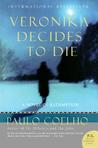
Veronika Decides to DieVeronika Decides to Die by Paulo Coelho

My rating: 4 of 5 stars

Amazon page

Veronika Decides to Die is about a young Slovenian woman, Veronika, who attempts suicide, fails, is institutionalized, and is informed that her attempted suicide damaged her heart and she has only five days to live. In the hospital she has to come to grips with what it means to be dying, but also what it means to be insane.

The book deals with the effect of Veronika’s death sentence diagnosis on her as well as on other patients with whom she interacts. The first patient Veronika comes in contact with is a depressive named Zedka who offers Veronika advice and insight. Then there is Maria, a woman who withdrew from her professional and family life to be institutionalized because she was having inexplicable panic attacks. Finally, there is Eduardo, a schizophrenic who is virtually non-functional when he meets Veronika, but who ends up in a relationship with the young woman nonetheless. These patients come to realize that they are hiding out at the hospital. They stay in the hospital because they are free to defy norms without judgment. When Veronika decides she doesn’t want to die hiding out, it has a profound impact on the others.

The book borrows heavily upon Coelho’s personal experience. He was institutionalized as a young man by parents who were disturbed when he went artsy and began hanging out with undesirables. Interestingly, Coelho has a cameo role in the book as himself. In the book he writes an article that playfully asks the question, “Where is Slovenia?” When Veronika is waiting to die from her overdose, she reads the article and decides to write a letter to the editor claiming that she killed herself because of the depressing effect of Coelho’s suggestion that nobody who’s anybody knows or cares where Slovenia is located.

In the end Veronika finds that she is truly free. Veronika seems to have everything at the beginning of the story: a job, boyfriends, and popularity. However, it’s those things that she comes to feel enslave her, and that’s what leads to the attempted suicide. In a way, Veronika is doubly freed. She is free because she is dying, and what can one do to a dying person. Second, she has been labeled crazy, and, having such a label, people expect her to act oddly. She has the freedom to do those things she has been too frightened to do all her life.

I’d recommend this book. It’s short, readable, and offers clear food for thought.

View all my reviews