No. It’s not that I’m insufficiently petty, but rather that I lack the requisite memory and passion for such things.
I once read about a psychopath who claimed that when he was wronged, he would hold onto it, bide his time, and get his nemesis with a commensurate reply at a later date — often years later when other person had completely forgotten about the matter. Quite frankly, I don’t know how he had the mental energy.
Author’s Book Site
This fascinating work of immersion journalism offers insight into the human memory at its best (and worst,) and throughout the book one follows the author’s experience in preparing for and competing in the American and World Memory Championships. A central theme of the book is how humanity’s attitudes toward (and approach to) memory have changed over time. The tactics that allow competitive mnemonists to perform astounding feats of memorization were well-known in the ancient world and Middle Ages but began becoming less practiced from the dawn of the printing press, becoming almost unheard of by the general population in this, the internet age. Questions such as whether education’s shunning of memorization is, indeed, a sound move are explored. (The mnemonists argue that memorization is done poorly by our educational system, but — if it was done correctly — it would offer tremendous value.)
I found this book to be quite compelling. Foer pulls no punches when presenting individuals who are (or appear to be) charlatans — though in a way that is fair and doesn’t deny things are not always straightforward. (Most of the mnemonists he talks to are clear that they do not have particularly good memories but rather are well-practiced in a set of techniques — e.g. the “memory palace” — that allow even mediocre memories to memorize stacks of cards, chains of random numbers, or even poems at lightening speeds.) Hence the author, with no such background, can learn the skills well enough to be competitive in the US national competition after practicing about a year.
The author speaks to semi-celebrities such as Kim Peek (whom Dustin Hoffman’s character in “Rain Man” is very loosely based upon,) and self-help guru Tony Buzan. But he also interviews a man who has no long-term memory (except from his childhood) and speaks to experts in optimal human performance.
I’d highly recommend this book. It is intensely readable. The stories are riveting and sometimes humorous and the throughline of Foer’s preparation and competition just add icing to the cake.
Drunk, I'd keep a lamp lit to find my sword,
 The blare of horns sounded throughout the camp.
 Soldiers ate meat under waving banners;
 The military band played boisterous tunes.
 Autumn brought our troops to the battlefield.

Carried by a charger at full gallop,
 My bow thwipped, sending swift arrows flying.
 We restored Imperial lands, boldly,
 And won great fame for fighting gallantly,
 But fame grows thin and gray just like my hair.
Remember me when I am gone away,
   Gone far away into the silent land;
   When you can no more hold me by the hand,
 Nor I half turn to go yet turning stay.
 Remember me when no more day by day
   You tell me of our future that you plann'd:
   Only remember me; you understand
 It will be late to counsel then or pray.
 Yet if you should forget me for a while
   And afterwards remember, do no grieve:
   For if the darkness and corruption leave
   A vestige of the thoughts that once I had,
 Better by far you should forget and smile
  Than that you should remember and be sad.
Twelve o'clock. Along the reaches of the street Held in a lunar synthesis, Whispering lunar incantations Dissolve the floors of memory And all its clear relations, Its divisions and precisions, Every street lamp that I pass Beats like a fatalistic drum, And through the spaces of the dark Midnight shakes the memory As a madman shakes a dead geranium.
Half-past one, The street lamp sputtered, The street lamp muttered, The street lamp said, 'Regard that woman Who hesitates towards you in the light of the door Which opens on her like a grin. You see the border of her dress Is torn and stained with sand, And you see the corner of her eye Twists like a crooked pin.'
The memory throws up high and dry A crowd of twisted things; A twisted branch upon the beach Eaten smooth, and polished As if the world gave up The secret of its skeleton, Stiff and white. A broken spring in a factory yard, Rust that clings to the form that the strength has left Hard and curled and ready to snap.
Half-past two, The street lamp said, 'Remark the cat which flattens itself in the gutter, Slips out its tongue And devours a morsel of rancid butter.' So the hand of a child, automatic, Slipped out and pocketed a toy that was running along the quay. I could see nothing behind that child's eye. I have seen eyes in the street Trying to peer through lighted shutters, And a crab one afternoon in a pool, An old crab with barnacles on his back, Gripped the end of a stick which I held him.
Half-past three, The lamp sputtered, The lamp muttered in the dark. The lamp hummed: 'Regard the moon, La lune ne garde aucune rancune, She winks a feeble eye, She smiles into corners. She smoothes the hair of the grass. The moon has lost her memory. A washed-out smallpox cracks her face, Her hand twists a paper rose, That smells of dust and old Cologne, She is alone With all the old nocturnal smells That cross and cross across her brain.' The reminiscence comes Of sunless dry geraniums And dust in crevices, Smells of chestnuts in the streets, And female smells in shuttered rooms, And cigarettes in corridors And cocktail smells in bars.
The lamp said, 'Four o'clock, Here is the number on the door. Memory! You have the key, The little lamp spreads a ring on the stair; Mount. The bed is open; the tooth-brush hangs on the wall, Put your shoes at the door, sleep, prepare for life.'
If you didn’t need sleep, what would you do with all the extra time?
Probably the same stuff. I’m reminded of Parkinson’s Law that states that activities [ie work] expand to fill the time allotted. Plus, there would still be mental housekeeping tasks to be done. It’s not like sleep is just wasted time (contrary to popular belief.) There is a great deal of important stuff that gets done in body and brain during sleep. If you think your memory is bad now…
So, if it’s all the same to you, I think I’ll keep my sleep. I don’t think it’ll make the slightest difference in losing work to AI. (John Henry folklore notwithstanding.)



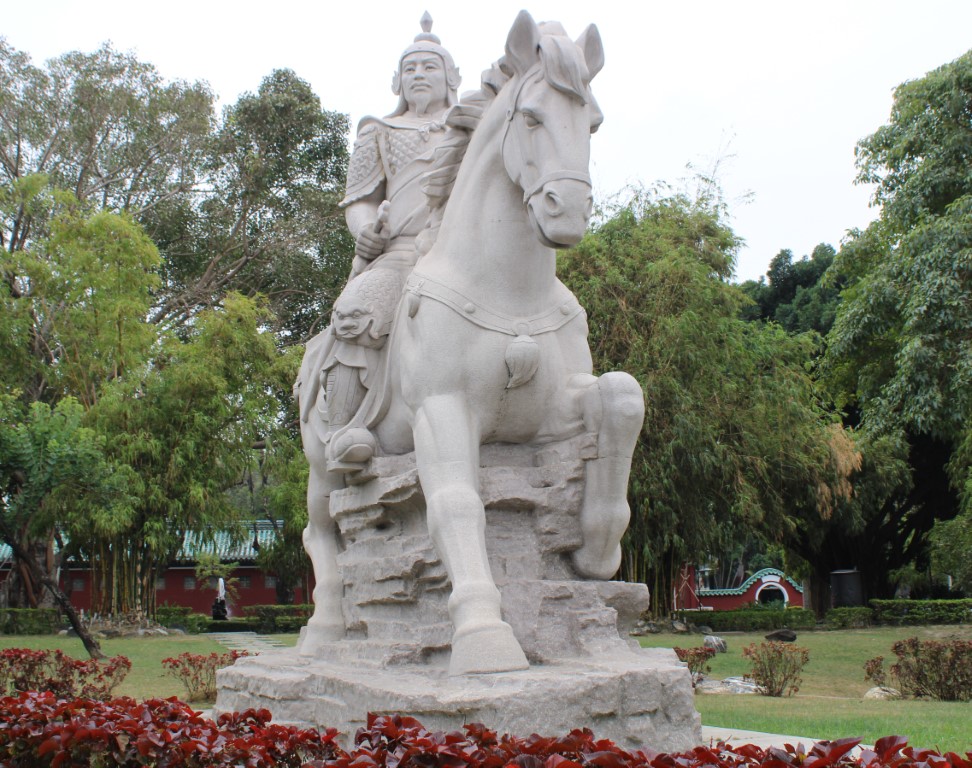


 Tiger Riding for Beginners