“To a Husband” by Amy Lowell

Brighter than fireflies upon the Uji River
Are your words in the dark, Beloved.

Song – “My silks and fine array” by William Blake [w/ Audio]

My silks and fine array,
My smiles and languish'd air,
By love are driv'n away;
And mournful lean Despair
Brings me yew to deck my grave:
Such end true lovers have.

His face is fair as heav'n,
When springing buds unfold;
O why to him was't giv'n,
Whose heart is wintry cold?
His breast is love's all worship'd tomb,
Where all love's pilgrims come.

Bring me an axe and spade,
Bring me a winding sheet;
When I my grave have made,
Let winds and tempests beat:
Then down I'll lie, as cold as clay.
True love doth pass away!

“The Taoist Temple Revisited” [再游玄都观] by Liu Yuxi [刘禹锡]

In half of the wide courtyard only mosses grow;
Peach blossoms all fallen, only rape flowers blow.
Where is the Taoist planting peach trees in this place?
Only I come again after my new disgrace.

Note: This is the joint translation of Xu Yuanchong and Xu Ming found in the edition of <em>Golden Treasury of Quatrains and Octaves</em> on which they collaborated (i.e. China Publishing Group: Beijing (2008.))

The “new disgrace” referenced was Liu Yuxi’s second exile.

BOOK: “White Teeth, Red Blood” by Various

White Teeth, Red Blood: Selected Vampiric VersesWhite Teeth, Red Blood: Selected Vampiric Verses by Lord Byron
My rating: 5 of 5 stars

Publisher Site – Pushkin Press

This anthology gathers poetry with at least a vaguely vampiric theme. About half of the poets fit into the category of well-known to a general readership (e.g. Goethe, Byron, Coleridge, Tennyson, Yeats, Dickinson, Kipling, Baudelaire, Millay, etc.) and the others will be less familiar to most readers — either by virtue of being modern poets or having a body of work that didn’t age as well, on the whole. Even the pieces from familiar poets don’t tend to be among those artists’ most anthologized works by virtue of the specialized theme of the selection. Most of the pieces are older works, but there are modern poems included as well, and it follows that most of the works are rhymed / metered, with free verse mostly seen among the newest poems.

The twenty-nine poems in the anthology are arranged between three sections. The first is the longest part, taking up about 3/4th of the book, and consists of nine poems (including a few excerpts of book-length narrative poems,) all of long format. The second section includes eleven shorter poems (between one and a few pages long,) and the last section contains nine poems, most of which are quite short (as short as a quatrain.)

There is a brief introduction by Claire Kohda, but otherwise there is no ancillary matter. That was fine by me. There is no padding, and — even though there are fewer than thirty poems — the poems fill out the book because so many of them are long pieces or excerpts.

I enjoyed this book and its varied selection of poems. While I read poetry extensively and have read my share of vampire fiction, this was the first work I can remember reading at their intersect. This meant that, for me, there was a good amount of unfamiliar material (despite there being relatively few recent poems.) If you’re in the same boat, you’ll probably enjoy this anthology.

View all my reviews

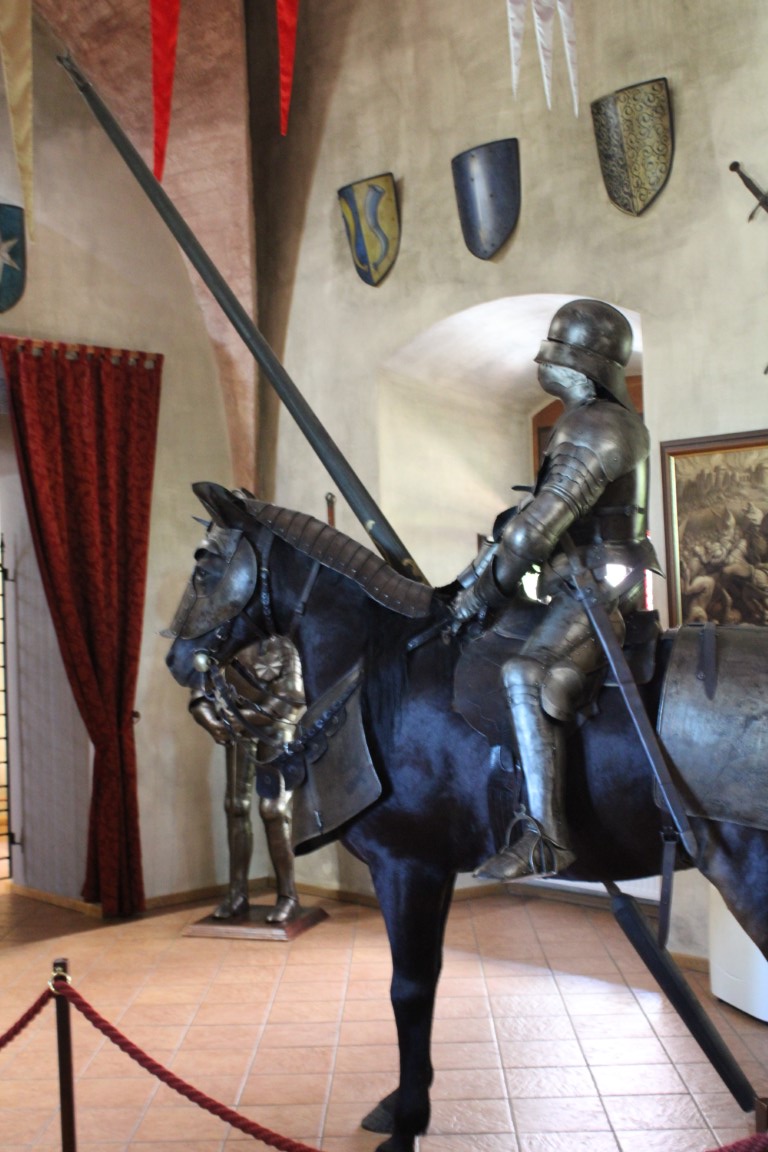
“Fast Rode the Knight” by Stephen Crane [w/ Audio]

Fast rode the knight
With spurs, hot and reeking,
Ever waving an eager sword,
"To save my lady!"
Fast rode the knight,
And leaped from saddle to war.
Men of steel flickered and gleamed
Like riot of silver lights,
And the gold of the knight's good banner
Still waved on a castle wall.
. . . . . . . . . . . .
A horse,
Blowing, staggering, bloody thing,
Forgotten at foot of castle wall.
A horse
Dead at foot of castle wall.

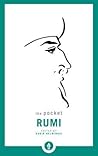
BOOK: “The Pocket Rumi” ed. / trans. by Kabir Helminski

The Pocket Rumi (Shambhala Pocket Library)The Pocket Rumi by Jalal ad-Din Muhammad ar-Rumi
My rating: 4 of 5 stars

Publisher Site – Shambhala

This is a selection of writings (mostly poetry) of Rumi (formal name: Jalāl al-Dīn Muḥammad Rūmī.) Rumi was a mystic of Sufi Islam, and so the poems tend toward the devotional — though with more reference to the experience of intoxication than one might expect from a 13th century Islamic poet.

This selection consists of three sections organized by poetic form, each section progressively longer than the preceding one. The first section is ruba’i, the second is ghazals, and the last is from Rumi’s Mathnawi.

The “Pocket” of the book’s title and series is figurative as the paperback is too big of both format and thickness for any pocket I own, personally, but the point is that it’s a quick read at only about 200 pages of (mostly) poetry [meaning white space abounds.]

I enjoyed reading this selection. I can’t say how true to message the translations are as I have no knowledge of Persian. I can point out that the translators opted to abandon form in favor of free verse. Hopefully, this gave them the freedom of movement to approach the message and tone of the originals.

If you are interested in a short, readable English translation of Rumi’s poetry, this book offers a fine place to start.

View all my reviews

“Disillusionment of Ten O’Clock” by Wallace Stevens [w/ Audio]

The houses are haunted   
By white night-gowns.
None are green,
Or purple with green rings,
Or green with yellow rings,
Or yellow with blue rings.
None of them are strange,
With socks of lace
And beaded ceintures.
People are not going
To dream of baboons and periwinkles.
Only, here and there, an old sailor,
Drunk and asleep in his boots,
Catches tigers
In red weather.

BOOK: “Kim Jiyoung, Born 1982” by Cho Nam-Joo

Kim Jiyoung, Born 1982Kim Jiyoung, Born 1982 by Cho Nam-Joo
My rating: 4 of 5 stars

Publisher Site – Simon & Schuster / Scribner

This fictitious biography explores the tribulations of being a woman in modern-day South Korea. It tells the tale of the titular lead from birth through a middle-aged motherhood. It discusses issues ranging from disappointment at having girl children to feelings of anxiety in a world laden with horny boys to the subtle sexism of the modern workplace.


The book blurb calls this book “riveting, original, and uncompromising.” I’ll give it “uncompromising,” and I have insufficient experience with the book’s “peers” to challenge the “original” claim, but I do have to call BS on the “riveting” bit. In fairness, the point of the book seems to be to offer a brutally typical life experience — not the novel-shaped extremes of a rollercoaster existence. The fact that the book is not riveting doesn’t make it unimportant or unworthy of reading. However, this is not the book one should pick up expecting to read on the edge of one’s seat. It’s well-crafted literary fiction with an important message, but “compelling” is not an appropriate descriptor. The book suffers from a progressive increase in drag as one reads onward.

Still, I’d recommend it for readers of literary fiction interested in varied cultural experiences. It’s a quick read with fine character development.

View all my reviews

“I fear’d the fury of my wind” by William Blake [w/ Audio]

I fear’d the fury of my wind
Would blight all blossoms fair & true,
And my sun it shin’d & shin’d,
And my wind it never blew.

But a blossom fair or true
Was not found on any tree;
For all blossoms grew & grew
Fruitless, false, tho’ fair to see.

“I Asked a Thief To Steal Me a Peach” by William Blake [w/ Audio]

I asked a thief to steal me a peach:
He turn'd up his eyes.
I ask'd a lithe lady to lie her down:
Holy and meek she cries.

As soon as I went an angel came:
He wink'd at the thief
And smil'd at the dame,
And without one word spoke
Had a peach from the tree,
And 'twixt earnest and joke
Enjoy'd the Lady.